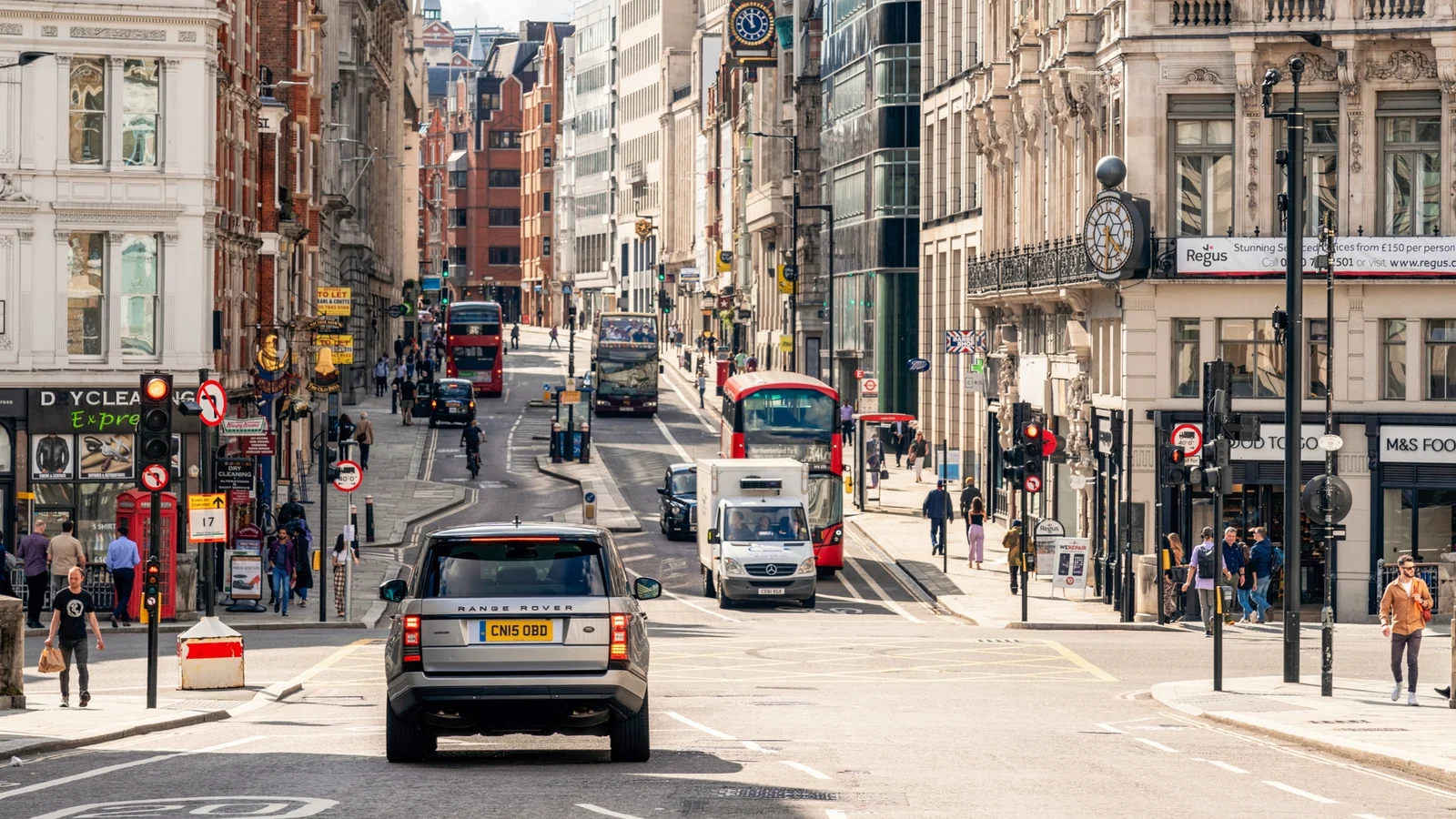
When the Car Gets Bigger Than the Street: London’s Debate Over Large SUVs
Walk down a residential road in south London and you’ll see it: a high, glossy silhouette that seems to own the pavement as much as it does the carriageway. Parked across from a nursery, a large SUV towers over a row of scrappy terraced houses and a line of small bicycles. For many Londoners this has become unremarkable. For others it is a growing worry — a sign that the way we build and move through cities is changing, and not always for the better.
Mayor Sadiq Khan has asked Transport for London (TfL) to take a hard look at large SUVs as part of its Vision Zero action plan, a broad effort to eliminate deaths and serious injuries on London’s roads by 2041. At the centre of the debate is a simple, if unsettling, idea: size matters. TfL’s document points to evidence that large SUVs are more likely to cause death or severe injury to people outside the vehicle, and that their height and heft make it harder for drivers to see pedestrians and cyclists—especially small children.
Numbers that nudge you to look twice
These aren’t just impressions. In the UK, SUVs now account for roughly one in three new car registrations, a shift that has reshaped the urban vehicle fleet within a decade. TfL cites research suggesting that, in collisions, SUVs are about 14% more likely to kill pedestrians and cyclists than standard passenger cars and a striking 77% more likely to kill children. Those figures, repeated in briefing notes and policy papers, make a case that goes beyond emissions and styling: they signal a tangible public-safety imbalance.
“I feel like I’m playing a daily game of hide-and-seek with cars,” says Amira Chowdhury, a mother of two in Tower Hamlets. “When I cross the road with the buggy, there’s a moment of panic — you can’t always see the driver’s face. These vehicles are big. They move differently. And my son? He’s at eye-line with their bumpers.”
From emissions to ergonomics: Why SUVs moved into the spotlight
The surge in SUV popularity is not unique to London. Globally, buyers have favoured higher seating positions and perceived safety benefits, even as many SUVs are less fuel-efficient than smaller cars. In August 2023, Mr Khan expanded London’s ultra-low emission zone (ULEZ) to cover the entire city—an attempt to tackle air quality that already charges drivers of non-compliant vehicles £12.50 per day. On top of that, central London drivers can face an £18 congestion charge at certain times. Yet those policies focus on emissions and traffic—not vehicle geometry.
“We’re looking at a different set of externalities now,” explains Dr. Helen Park, a transport safety researcher at University College London. “Emissions are critical, but the physical dimensions of a vehicle change the severity of crashes and the sight-lines on congested streets. It’s not merely a question of who pays for pollution; it’s a question of who survives a collision.”
Voices from the street: friction, fear and convenience
Not everyone welcomes the idea of penalties based on vehicle type. “We all have different needs,” says Marcus Reid, a carpenter from Croydon who drives a large van-like SUV packed with tools. “Some of us need space for work or family. Singling out a shape of car feels punitive.”
Mike Hawes, chief executive of the Society of Motor Manufacturers and Traders (SMMT), has argued that all cars sold in Britain must meet strict safety and pedestrian-protection standards. “Restricting consumer choice by penalising a car size is unfair to those who genuinely need a larger vehicle,” he said in a recent statement. “Safety is built into vehicle design across the board.”
But on a busy cycle lane in Hackney, a courier named Julian taps his helmet and gestures toward the traffic. “When an SUV squeezes past, there’s less space for me and for the bus. You can feel the pressure,” he says. “We’re not anti-car, but we’re pro-streets where everyone’s safe.”
Possible policy tools on the table
TfL has been commissioned to undertake detailed analysis into the safety risks posed by large SUVs and their wider impact on London’s roads. This could lead to policy proposals in London or advice to national lawmakers and the auto industry. What might those measures look like?
- Targeted charges for oversized vehicles in specific zones or at certain times.
- Design regulations that incentivise lower front-ends and better pedestrian visibility.
- Tax incentives for smaller, safer urban-friendly vehicles and accessible public transport alternatives.
- Infrastructure changes like protected cycle lanes and raised crossings to minimize conflict points.
“There’s no silver bullet,” says Sophie Lang, head of sustainable city policy at a London think tank. “It will be a mix: regulation, urban design, public transportation that feels easier than driving. And a public conversation about what kind of city we want.”
Local color: streets, stories and the bigger picture
Walk any neighbourhood and the stakes are clear. In Clapham Common on a Sunday, pensioners with knitted hats shuffle between cars that glint under the low sun. In East London, families spill out of council estates, pushing prams that seem fragile beside the hulking steel of newer SUVs. London’s narrow, often Victorian streets weren’t designed for 21st-century vehicle tastes, and that tension shows in scratches on lampposts, in conversations over garden fences, in petitions outside town halls.
So what kind of city do we want? A place where the car dominates the street scene, or one where walking and cycling are not acts of bravery? These questions echo beyond London’s borders. Cities from Paris to Bogotá grapple with vehicle mix, road safety, and the balance between personal convenience and collective wellbeing.
Questions to carry home
As London debates whether to penalise large SUVs, several questions linger: Who gets to decide what constitutes a “necessary” vehicle? How do we protect vulnerable road users without unfairly burdening certain groups? And how do measures here ripple across the world—shaping how other cities weigh safety against freedom of choice?
“Change is never comfortable,” says Amira, watching her children cycle slowly down the pavement. “But when I think of my kids playing on the street instead of inside, I’m prepared for discomfort if it makes the roads safer.”
That sentiment—both personal and political—captures the heart of the issue. London’s streets are a living tapestry of commuters, carers, couriers, and children. The question now is how to weave them together so that the weave holds, even as the shapes on the road grow larger. Will size be taxed, redesigned, or regulated out of the cityscape? The answer will say not just something about transport policy, but about what Londoners value when they cross a street and look both ways.