The Price of a Gallon, the Pulse of a Presidency
At 6 a.m., the neon numbers above Ramirez & Son’s service station blink like a heartbeat. The sign reads $3.60 per gallon, and the steady stream of commuters pulling in and out seems to take its tempo from that figure.
“People pay attention to that number more than they admit,” says Maria Ramirez, who has run the corner station outside a midwestern town for 18 years. “My regulars stop at the pump, look up, and you can see them doing the math for the rest of their week.”
This week’s jump — a roughly 23% rise from the month before, according to national pump trackers — has become more than a household irritant. It has crystallized into a political weather vane, flashing red for an administration that, only a few weeks ago, celebrated falling prices from the podium of the State of the Union.
Why a Number Moves Markets — and Votes
Gas prices are not just an itemized annoyance; they are shorthand for how people feel about their economic prospects. Anecdotes add up. A school bus driver tells reporters she’s cutting back on weekend errands. A rideshare driver calculates fewer hours on the road. A single mother says grocery choices have narrowed.
Polls reflect that shift. The latest NPR/PBS survey shows that only 35% of respondents approve of the way the president is handling the economy, with 58% disapproving. For a leader who campaigned on “more money in people’s pockets,” those figures sting.
“You can’t overstate the symbolic power of pump prices,” says Dr. Elena Park, an energy economist who teaches at a U.S. public university. “They are visible, immediate, and taxable to voters’ daily lives. Even small percentage swings translate into real household choices.”
Politics on a Tightrope
Republican leaders find themselves walking a narrow ridge. Senate Majority Leader John Thune put it plainly: “It’s something obviously we’ve got to pay attention to.” Behind closed doors, aides and strategists are crunching the same numbers that wake up former chiefs of staff at 3:30 a.m.
For many voters, the sting is immediate. For strategists, the calculation is grim: if fuel costs erode the tangible benefits from last year’s tax cuts, the GOP’s economic argument around pocketbook gains could fray before November’s ballots are cast.
“If energy costs keep climbing,” a campaign aide conceded over coffee, “you can draw a straight line from the pump to turnout. That terrifies people in the war room.”
Geopolitics: A Choke Point and a Calculated Gamble
The spike isn’t happening in a vacuum. Officials trace the volatility to a military operation in the Gulf that has dramatically changed the calculus in a crucial maritime corridor.
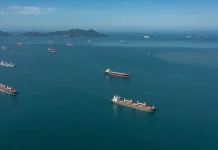
“Operation Epic Fury,” the label attached to recent strikes, has had consequences beyond the battlefield. Iran’s stepped-up response has made transits through the Strait of Hormuz — the narrow throat through which roughly a third of seaborne oil passes at any given time — too risky for many shippers. The result: fewer cargoes, tighter supplies, higher prices.
Tom Wright, a senior fellow at the Brookings Institution who was on the prior administration’s national security team, told RTÉ News, “I think initially he hoped that it would be like Venezuela, that he would get rid of the supreme leader. But then do a deal with whoever was number two, three or four. They didn’t need, from his perspective, to be a Democrat or to be benign to the Iranian people. They just needed to work with him on the nuclear programme, to restrict it maybe cut him in on the oil. It hasn’t turned out like that.”
The picture Wright paints is one of a strategy that misfired and metastasized: what was intended as a sharp, contained operation has expanded into a regional hazard that threatens to keep global energy markets anxious and unstable.
Voices from the Ground — and the Battlefield
“We’re seeing the classic middle-income squeeze,” says Dr. Park. “Fuel is a shock that falls disproportionately on working households. It changes commuting patterns, grocery bills, and the feasibility of attending work in the first place.”
Lieutenant Colonel Daniel L. Davis, now retired, framed the military implications starkly: “We had enormous support or advantages over the north Vietnamese. We just practically bombed them into the Stone Age and yet they never capitulated. What we did for 20 long, painful years in Afghanistan … we did the same thing.” He warned that Iran remains operationally viable and that destruction metrics are not the same as strategic success: “The only thing that matters is can you compel compliance or can you not? And we are in the not category right now.”
On the shoreline in a Gulf port town, a line of tanker crews waits, radios buzzing in languages from Farsi to Filipino. “We’re told to stand by,” one crewmember said through a translator. “No one knows when the order will come. Money burns in our accounts while the ship idles.”
Money, Markets, and the Russian Variable
At the same time, Treasury officials have taken short-term steps intended to steady markets. US Treasury Secretary Scott Bessent told Sky News the easing of sanctions on some Russian oil flows was “narrowly tailored” and temporary — a move described by some outlets as giving Moscow up to an estimated $150 million a day in extra oil revenues during the crisis.
Such calculations underscore how interconnected the system is. A naval confrontation in the Gulf ripples to ship charters, to refinery feedstock, to futures desks in New York and traders in Singapore. Volatility forces policymakers to balance military goals against economic fallout.
Options on the Table — and What They Mean
Washington’s playbook for taming the shock is familiar but fraught: release strategic petroleum reserves, deploy diplomatic channels to reopen shipping lanes safely, adjust tariffs, or provide targeted relief at the pump. Each option carries political and strategic trade-offs.
- Release strategic reserves: immediate supply relief but depletes emergency stockpiles.
- Diplomatic negotiation: slower, requires concessions and credible guarantees.
- Targeted consumer relief (rebates, fuel tax holidays): politically popular but short-term and expensive.
“There’s no magic bullet,” says Dr. Park. “Most measures are stopgaps or slow-moving. The real lever is reducing uncertainty, but that’s the hardest to do in the fog of conflict.”
What This Means for Voters — and the Bigger Picture
For voters like Maria Ramirez and the bus driver, the calculus is simple: pay more, cut back, change plans. For the president and his party, the stakes are structural: can an administration reconcile an assertive foreign policy with the domestic economic stability voters demand?
More broadly, the episode reflects an unsettling pattern: in a globalized world, domestic politics are increasingly exposed to geopolitical shocks. Energy markets are the most immediate translator of those shocks into everyday life. In democracies with close elections, that translation can reshape political futures.
Questions to Carry Home
As you fill your own tank this week, consider what that number means to you. Is it an irritant, an inconvenience, or a vote-changing moment? How much weight should strategic actions abroad carry when measured against the immediate needs people face at home?
Policy answers will arrive in memos and meetings; the human answers arrive at kitchen tables and in service-station conversations. As the season of politics warms toward November, those kitchen-table calculations will matter more than ever.
“We can handle a lot if we see a plan,” Maria says, handing a paper cup of coffee to a busker warming in the station’s doorway. “But what people can’t stand is feeling like they’re paying for somebody else’s gamble.”
And that, perhaps, is the simplest truth beneath the flashing digits: the politics of a presidency can be measured in gallons, but it is felt in the small economies of ordinary life. What will leaders choose — and what will the public forgive — will be among the defining questions of the months ahead.