When a Warning Feels Like a Red Line: Iran’s Message to the World
There is a certain hush that falls over a city when a nation speaks as if it were a living thing—urgent, raw, and certain. Tehran was like that this week, streets humming with routine life even as diplomats and generals issued a tone that left little room for misinterpretation: do not step into this fight.
“We have been clear,” an Iranian foreign ministry official told me, leaning over a chipped cup of tea. “Any outside involvement will not be treated as neutral. Those who fan the flames will be held responsible.” The words were not just rhetoric. They carried decades of accumulated grievances, military investments, and a strategy that has long relied on deterrence through asymmetric power.
Why the warning matters
At first glance it may read like a line in a geopolitics brief—powerful, perhaps routine. But in a fraught region where proxies stretch from Beirut to Sana’a, such warnings are more than statements. They are geopolitical calculations wrapped in public diplomacy. The region’s delicate balance—deliberately precarious for years—can snap in a dozen different places.
Consider the geography. The Strait of Hormuz, flanked by Iran and Oman, is not just a map coordinate: it is a choke point for the global energy market. Roughly a third of seaborne-traded oil has historically transited that narrow waterway, according to assessments by energy analysts. A skirmish there, or a series of attacks on commercial shipping, sets off reverberations in markets, supply chains, and political capitals from Tokyo to London.
“This is not bluster,” said Leyla Hosseini, an energy analyst based in Dubai. “Iran knows how leverage works. Threats to international shipping or to regional bases are designed to make other countries think twice before escalating.”
Voices from the ground
In the bustling bazaar of Tehran, where sellers haggle over saffron and handwoven rugs, people spoke of fear and fatigue more than of victory or bravado. A merchant named Reza, who has run a small carpet stall for three decades, shrugged when I asked what he feared most.
“My son works at the port in Bandar Abbas,” he said. “If war comes, he’ll be on the front lines of whatever happens with the shipping. War is not about ideology for us—it is about bread, petrol, and whether you will be the one to bury your child.”
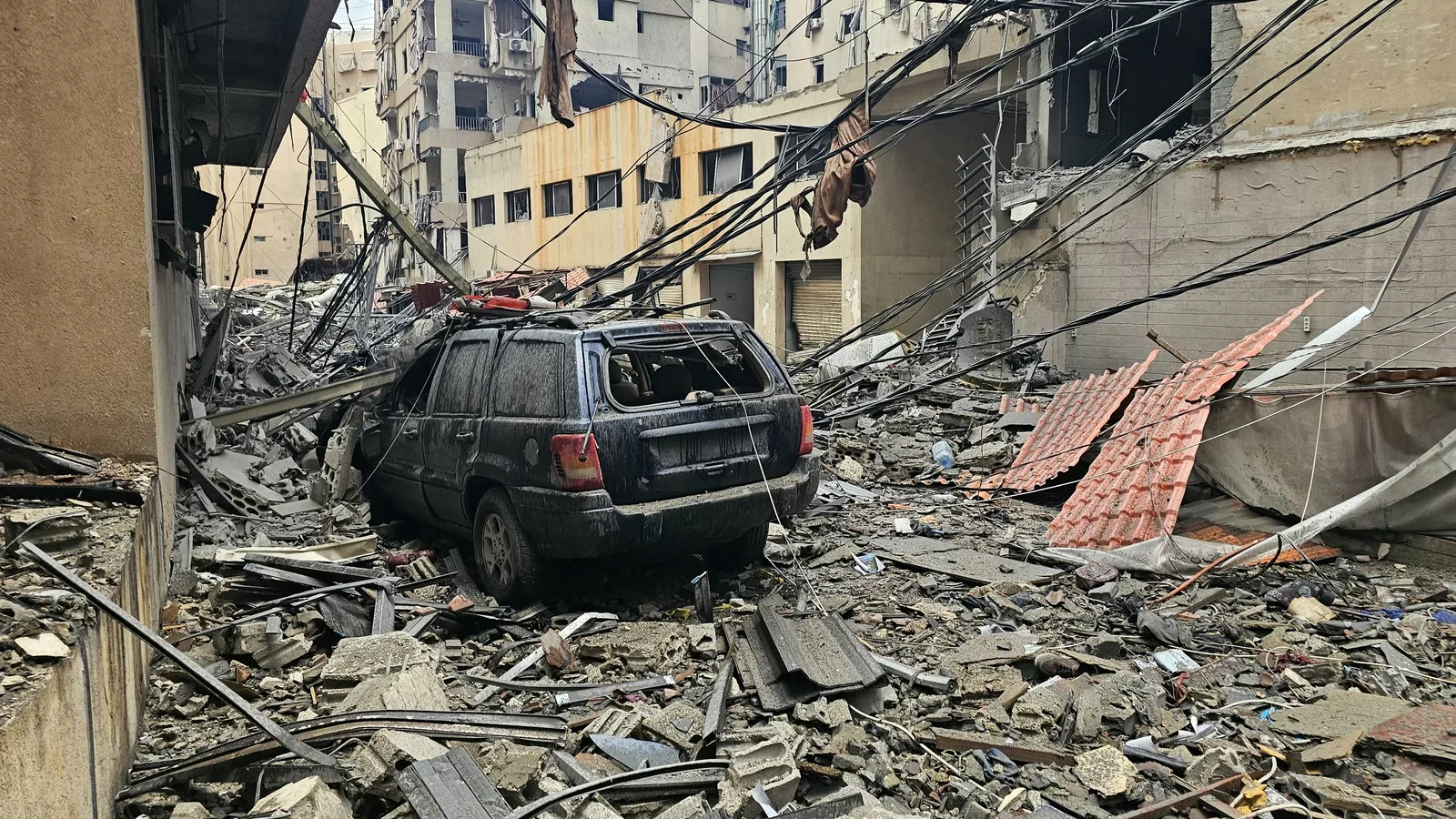
Across the region, voices were equally human and fragmented. A schoolteacher in Beirut, who asked that her name be withheld for safety, described how the last flare-up of violence had shuttered her school for months. “Children learn fear as much as letters,” she said. “Another escalation is not just militarily costly—it destroys lives.”
How Iran projects power
Iran’s reach is not defined solely by tanks or fighter jets. For years it has honed a complex web of influence—state actors, militias, and political alliances across Iraq, Syria, Lebanon, and Yemen. The Revolutionary Guards and the Quds Force have developed capabilities in missiles, drones, cyber operations, and maritime interdiction.
Experts point out that such strategies create ambiguity: who fired that missile? Which group carried out the attack? Ambiguity, in turn, raises the stakes for any outside actor contemplating a direct response.
“Iran’s approach is the textbook of asymmetric warfare,” said Dr. Amir Rezai, a scholar of Middle Eastern security politics. “It avoids direct symmetrical battles with superior militaries, and instead leverages regional actors and deniability. That makes any decision by another country to intervene far more perilous.”
Flashpoints and fault lines
- Strait of Hormuz and Gulf waters—shipping, oil infrastructure, and naval encounters.
- Lebanon and Hezbollah—cross-border strikes and political destabilization.
- Iraq and Syrian theaters—militias, bases, and contested airspace.
- Yemen’s Red Sea outlets—maritime security and humanitarian access.
Each of these arenas is not only strategically significant; they are densely inhabited with civilians. Humanitarian corridors, aid deliveries, and refugee flows are all vulnerable to sudden disruption.
What’s at stake for the world
Beyond the immediate human cost, the stakes are global. Energy markets are sensitive. Insurance premiums for shipping in the region can spike, adding hundreds of millions in extra costs to the world economy. Global powers watch carefully: any miscalculation might draw in allies bound by treaty obligations or prompt a cycle of retaliatory strikes that spills beyond the region’s borders.
“Even countries with no direct interest in the Middle East will feel the ripple effects—higher fuel prices, disrupted trade, and a renewed refugee surge,” said Maria Gutierrez, a policy analyst at an international think tank. “That’s why the language of restraint is not mere diplomacy; it’s pragmatic economics.”
What options exist?
No single answer will keep the region calm. But history suggests some practical levers:
- Diplomatic backchannels—quiet negotiations that let parties step back without losing face.
- Multilateral pressure—coalitions that combine economic and political incentives for de-escalation.
- Targeted confidence-building measures—agreements on maritime safety, prisoner exchanges, or humanitarian pauses.
- Localized ceasefires and guarantees—measures that keep civilian corridors open.
Many analysts caution, however, that these steps require political will. “Absent a credible path to mutual de-escalation, warnings harden into mobilizations,” Dr. Rezai warned. “Once forces are dug in, it’s very difficult to unwind the clock.”
Questions we should ask
As readers, as citizens of an interconnected world, and as witnesses to a region that has long fed the global imagination with stories of resilience and loss, we should ask ourselves: What do we consider acceptable risk? When does deterrence become provocation? And what moral obligation do wealthy, distant nations have when their policies influence the fate of people halfway around the globe?
“We have to remember the human ledger,” said the Beirut teacher. “Every policy, every missile, every threat—someone’s life is on the line.”
Final thoughts
When a country like Iran issues a blunt warning, it is not only a political maneuver; it is an invitation to the world to pause and measure consequences. Will other nations listen? Will cooler heads prevail in back rooms and hotlines? Or will the region spiral into a wider confrontation that changes lives and markets alike?
The answer matters beyond maps and PowerPoints. It matters in kitchen tables, in schoolyards, and at docks where ordinary people like Reza and his son make a living. The urgency is not only military; it is deeply human. As tensions simmer, the question we should keep asking ourselves is simple: what are we willing to risk to avoid a war that no one will truly win?