Glasgow Central: A City’s Great Station Cautiously Creaks Back to Life
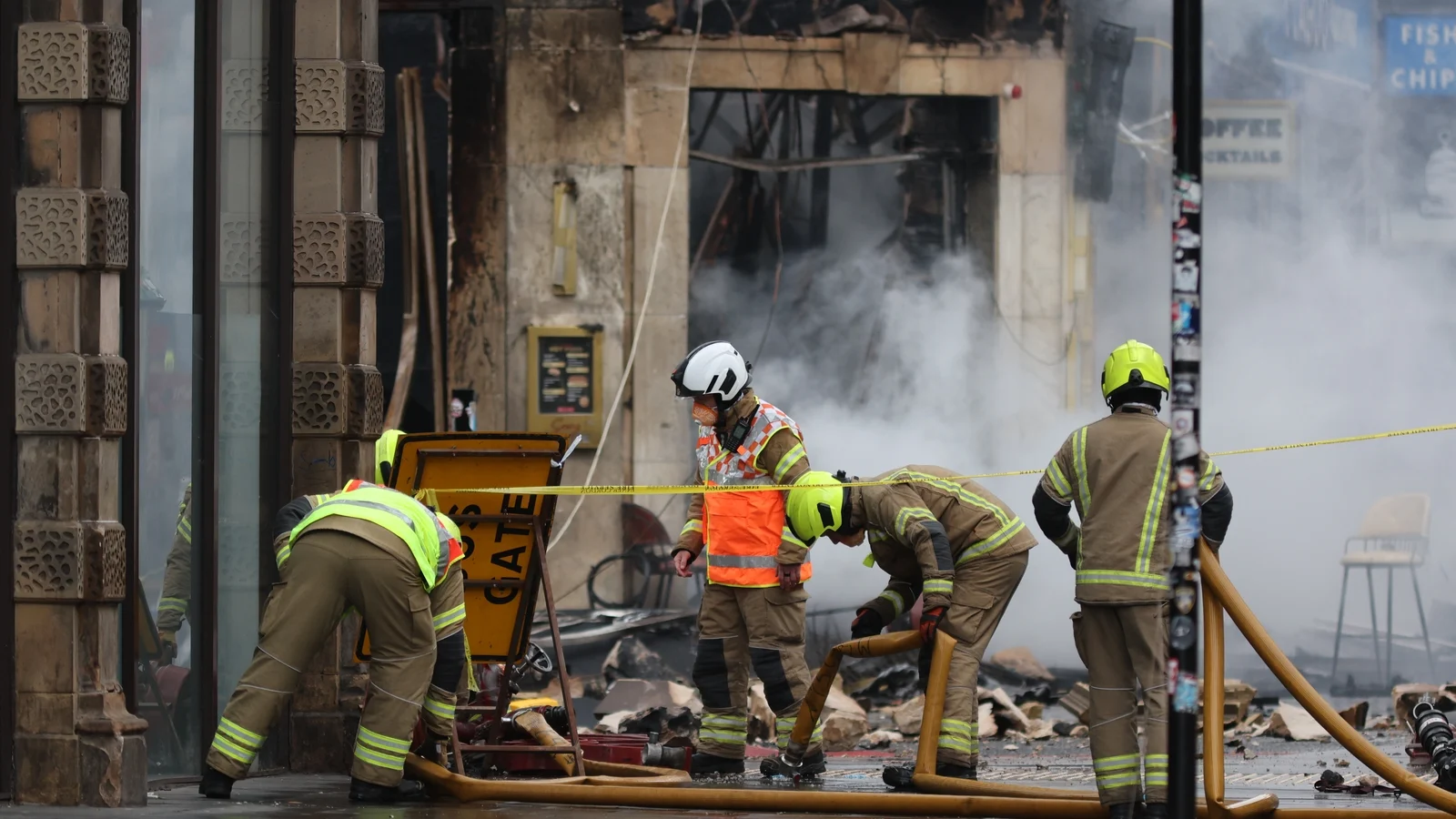
When you stand on Gordon Street at dawn and look toward Glasgow Central, you still feel the city’s heartbeat—bass from the subway, the clatter of tram-serviced buses, the cry of a fishmonger opening up for the day. But for weeks that rhythm has been uneven, punctured by the sight of scaffolding, the tang of smoke, and the slow, stubborn presence of emergency crews. Now, after a fire ripped through a neighbouring Victorian block and forced the station’s closure on 8 March, the high-level platforms are beginning to reopen—partly, cautiously, and with a city holding its breath.
The comeback is not cinematic. It is logistical, painstaking, and human. Concourse flow is reduced. Some platforms remain shuttered behind hoardings and steel beams. But staff in high-visibility jackets are back at the information desks, and a trickle of commuters, tourists and students are once again stepping under the station’s great glass roof toward trains that will take them north, south and east beyond the city—albeit with changed timetables and the kind of uncertainty only a recent shock can instill.
“It’s a relief—not the same, but a relief”
On a cool morning inside the partially reopened high level concourse, a queue forms at the ticket machines. “It’s a relief,” says Aisha Khan, a university lecturer, tugging her scarf tighter. “It’s not the same as before—the signs and the routes all feel new—but at least we can get home by train again. I’ve had to leave earlier, and sometimes take the bus. Today, it feels a bit normal.”
Transport Scotland’s chief executive Alison Irvine, speaking in a short video posted to X, framed the reopening as practical and collaborative. “We’ve brought teams together to make sections of the station usable again,” she said, capturing the mixture of pride and pragmatism that has marked the response. “It will improve access to parts of the network we haven’t been operating from.”
ScotRail’s operations team emphasised safety above all. “Every platform, every corridor has been subject to rigorous checks,” one senior manager told staff briefings. “We won’t ask customers back until we can guarantee they’re safe.” The tone is apologetic and firm—apologetic for the disruption caused to thousands of journeys, firm on the need for patience.
The building that wouldn’t stand—at least not safely
How do you balance two competing instincts—protecting a cherished piece of urban fabric and protecting the public? Glasgow City Council answered that in stark terms after engineers declared the remaining Victorian flank of the affected building “very unstable.” Demolition teams have been working methodically, bringing down dangerous sections brick by brick, controlled and deliberate. The ornate facade at the junction with Gordon Street remains like a theatrical backdrop—beautiful but hollowed out.
Near the site, windows of independent shops show damage from soot and heat. A café across the street has turned part of its seating into a donation point for rail staff and displaced shop workers. “People here look after each other,” said Ewan McIntyre, the owner. “There’s always been a bit of grit in Glasgow’s soul, and you see it now. Commuters swap tips and timetables. Drivers know when to give way. It’s community as much as infrastructure.”
What caused it—and what it tells us
The fire started in a vape shop on Union Street before spreading through adjacent floors and around the corner into old commercial properties. Investigators point to how quickly a small ignition can leap between old timber floors and modern materials, and to the risk posed by lithium-ion batteries in vaping devices. Fire safety specialists have warned for years that the combination of cramped retail units, mixed-use Victorian construction, and powerful portable batteries is a volatile one.
“This wasn’t an isolated technical failure,” says Professor Lorraine Gillespie, an urban safety expert at the University of Glasgow. “It’s a system failure: buildings designed in the 19th century, repurposed without modern compartmentalisation; retail units packed into dense streets; and new technologies—like e-cigarettes—with risks that outpace regulations. We need policies that bridge those gaps.”
Across the UK and internationally, urban centres are wrestling with similar challenges: how to preserve heritage architecture while bringing it up to 21st‑century safety standards. Glasgow’s sandstone façades and ironwork balconies are part of its identity, yet those same features can impede emergency access and conceal hazards.
Practicalities: what passengers should expect
The partial reopening means trains will run with reduced capacity and altered boarding arrangements. ScotRail and Network Rail have urged passengers to check journeys in advance, arrive early, and allow extra time for transit through the station. Staff will be visible and available to guide travelers through temporary signage and alternative routes.
- Expect fewer platforms in operation and altered timetable times.
- Allow at least 20–30 extra minutes for your journey until full services resume.
- Follow instructions from staff and temporary signage—some entrances and exits will be closed.
- Check ScotRail and National Rail Enquiries for live updates before travelling.
For daily commuters, the disruption is more than an inconvenience—it is a reshuffle of routines. “I used to grab a coffee and brain-storm on the concourse,” said Leo Burns, a software developer. “Now I have to time my train, my coffee, and sometimes work from a friend’s desk. Still, it’s worth it to have the trains moving again.”
Wider lessons and a city’s response
This episode raises broader questions about resilience in transport hubs worldwide. Stations like Glasgow Central are not just transit points; they are civic spaces with shops, offices, and homes nearby. When one node falters, the ripple effects are felt in buses, taxis, deliveries and people’s daily lives. Pre-pandemic, major rail stations in the UK served tens of millions of passengers a year; even a partial closure can cascade economically and socially through a city.
There are opportunities embedded in the rubble. City planners and community groups are talking about retrofitting firebreaks, modernising evacuation routes and developing clearer guidance for businesses selling high-risk items. Some locals want to see the rebuild turn into an upgrade—better accessibility, clearer signage, more resilient materials—while still honouring the Victorian character that gives Glasgow its distinctive streetscape.
“We rebuild smarter, not just faster,” says a member of a local heritage group, Fiona MacAlister. “This is a chance to prove that we can protect our past and keep people safe.”
What now—and what you can do
As scaffolding creaks and demolition dust settles, Glasgow is limping back toward normalcy. The partial reopening is a sign of progress, not a finish line. For travellers: plan ahead, be patient, and give extra time. For city leaders: consider this an urgent prompt to accelerate safety upgrades. For the rest of us: remember that the built environment is a living thing, requiring maintenance, investment and civic attention.
So, where do you stand? Have you had your daily routine reshaped by a single incident of unexpected scale? How should cities balance the romance of their old buildings with the uncompromising demands of modern safety? Glasgow is asking these questions out loud—and the answers will matter to cities from Lisbon to Melbourne, where stone and steel, memory and practicality, meet every day on busy streets.
For now, the trains are moving again, slowly, like a city exhaling. And somewhere under the vaulted roof, life—messy, resilient, irrepressible—reasserts itself.