When Spring Air Turns Heavy: Europe’s Invisible Season of Dust and Danger
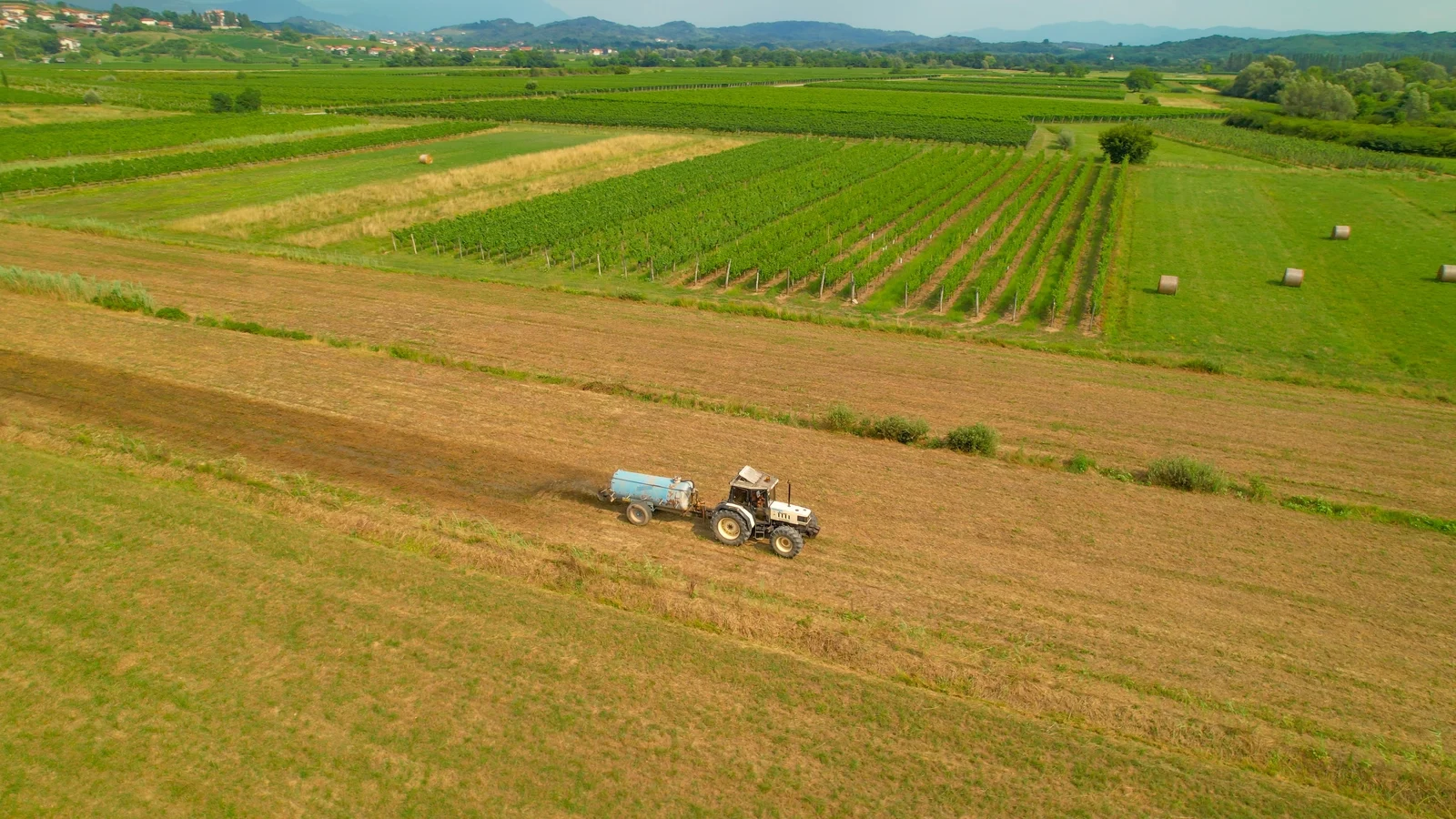
There’s an odd hush to the countryside this week, as if the land itself is holding its breath. Drive out of a city in northern Europe at dawn and you might see tractors rolling across fields, tractors that until recently were barely part of the conversation about air quality. Yet those same agricultural movements—spreading fertilizers as farmers race to make the most of a fickle spring—are part of a brewing problem that will touch millions from Dublin to Düsseldorf and beyond.
The Copernicus Atmosphere Monitoring Service (CAMS) has raised an early-season alarm: over the next few days, pockets across Ireland, the UK, France, Germany, the Netherlands and Belgium are expected to record rising levels of PM2.5—tiny particles of pollution that slip through almost every barrier we put up to protect ourselves.
What exactly are we talking about?
PM2.5 refers to particulate matter smaller than 2.5 micrometers—about one thirtieth the diameter of a human hair. Close your eyes and imagine something so small it rides the currents of breath: it moves into the deepest reaches of the lungs, crosses into the bloodstream, and can seed inflammation in organs far from where it entered.
“We don’t notice these particles because they’re silent,” says an atmospheric chemist working with regional health authorities. “But they’re significant. Short-term spikes aggravate asthma and trigger heart attacks; long-term exposure increases the risk of stroke, heart disease and other chronic conditions.”
Global public-health bodies put the scale in perspective: the World Health Organization estimates that ambient and household air pollution contribute to several million premature deaths each year. And in 2021 the WHO tightened its guideline for annual mean PM2.5 to 5 micrograms per cubic meter—an acknowledgment that even low concentrations matter.
Why now? The recipe for a springtime smog
At the heart of this forecast is a chemical chain reaction ignited by ordinary farming practices. When fertilizer—particularly ammonia-rich compounds or manure—is spread on fields, ammonia volatilizes into the air. Under certain weather patterns—cool mornings, warmer afternoons, and a calm, stable atmosphere—these gases react with nitrogen oxides and other pollutants to form fine particulate ammonium nitrate and ammonium sulfate.
“It’s the meteorology that does the rest,” explains a senior forecaster at CAMS. “A temperature inversion can trap that newly formed aerosol near the ground. Add tree pollen—birch and alder are shedding now—and you have a cocktail that lowers air quality over large swathes of land.”
These aren’t the only players. Routine fossil fuel combustion, especially in parts of Eastern Europe and the Balkans, creates a background level of particulates that primes the atmosphere for worse episodes when conditions align.
On the ground: farmers, parents and city commuters
Walk through any market town in Ireland or a Flemish village and you’ll hear different takes. A farmer in County Meath, who asks only to be called Seán, shrugs when he talks about spreading slurry. “We’ve got to get seed in the ground. If we don’t, we don’t eat,” he says. “People get sick from bad air—no question—but our margins are thin. There’s no quick fix.”
Across the North Sea, in a Belgian suburb, Sofia, a mother of two, watches the air quality index on her phone and tenses. “On bad days my son’s cough gets worse. You feel a little helpless; closing windows helps, but it doesn’t stop the city from breathing it in.”
These intimate snapshots underscore a stubborn truth: environmental health and livelihoods are intertwined. Farmers are both part of the problem and essential partners in solutions.
How bad could it get?
CAMS models don’t always translate to dramatic headlines. Often these events are regional and temporary, driven by short-lived weather patterns. But the cumulative burden matters. Even a few days of elevated PM2.5 can spike emergency-room visits for respiratory and cardiovascular conditions, and repeat episodes add up over years.
Observed data from previous springtime episodes show increases in fine particulate concentrations that temporarily double or triple local averages. For those with heart disease, chronic lung problems or the elderly, that’s not an abstract number—it’s the difference between a comfortable week and a hospital stay.
Practical steps: what governments and citizens can do now
There’s no single lever to pull. This is a system problem—agricultural emissions, transport pollution, and weather patterns converging. But there are pragmatic responses, some immediate and some long-term.
- Health advisories: Local health authorities should issue clear guidance on vulnerable groups reducing outdoor exertion during forecasted spikes.
- Agricultural best practice: Farmers can time spreading to coincide with favorable dispersion conditions, use low-emission application techniques, and increase precision in fertilizer use.
- Transport measures: Temporary traffic reductions or encouraging remote working during peak episodes can reduce the NOx that fuels PM formation.
- Long-term policy: Investment in manure management, better fertilizer formulations, and stricter emissions standards for vehicles reduce the baseline that turns into spikes.
“We have the tools,” says a policy analyst who studies rural emissions. “Controlled-release fertilizers, covered slurry stores, and targeted subsidies can lower ammonia. It requires leadership and an incentive structure that helps farmers change practices without going bankrupt.”
What should you do as a reader?
If you live in a region under the forecast, consider these simple steps: check local air quality indexes, limit strenuous outdoor exercise during peaks, keep windows closed in the morning if an inversion is predicted, and talk to your doctor if you’re in a high-risk group.
Beyond personal steps, ask your local representatives what plans are in place to reduce emissions from agriculture and transport. Air quality is a public good; it needs public stewardship.
Looking beyond the forecast
There’s a broader argument here about how we live with seasonal cycles—how an agricultural rhythm that once was invisible to city dwellers now intersects with industrial emissions and the globalized weather patterns that climate change is nudging into new territory. If spring smells of tilled earth where you live, it might also carry a whisper of a complex trade-off: food production, livelihoods, and the air that sustains us all.
So next time you see a tractor at dawn, or a few days of hazy sunlight, pause and think: how can we build responses that are fair to farmers, protective of health, and honest about the choices ahead? Because when the sky grows heavy, every choice counts.