A Warning in the Dawn: What Israel Means by Iran’s “Ground Component”
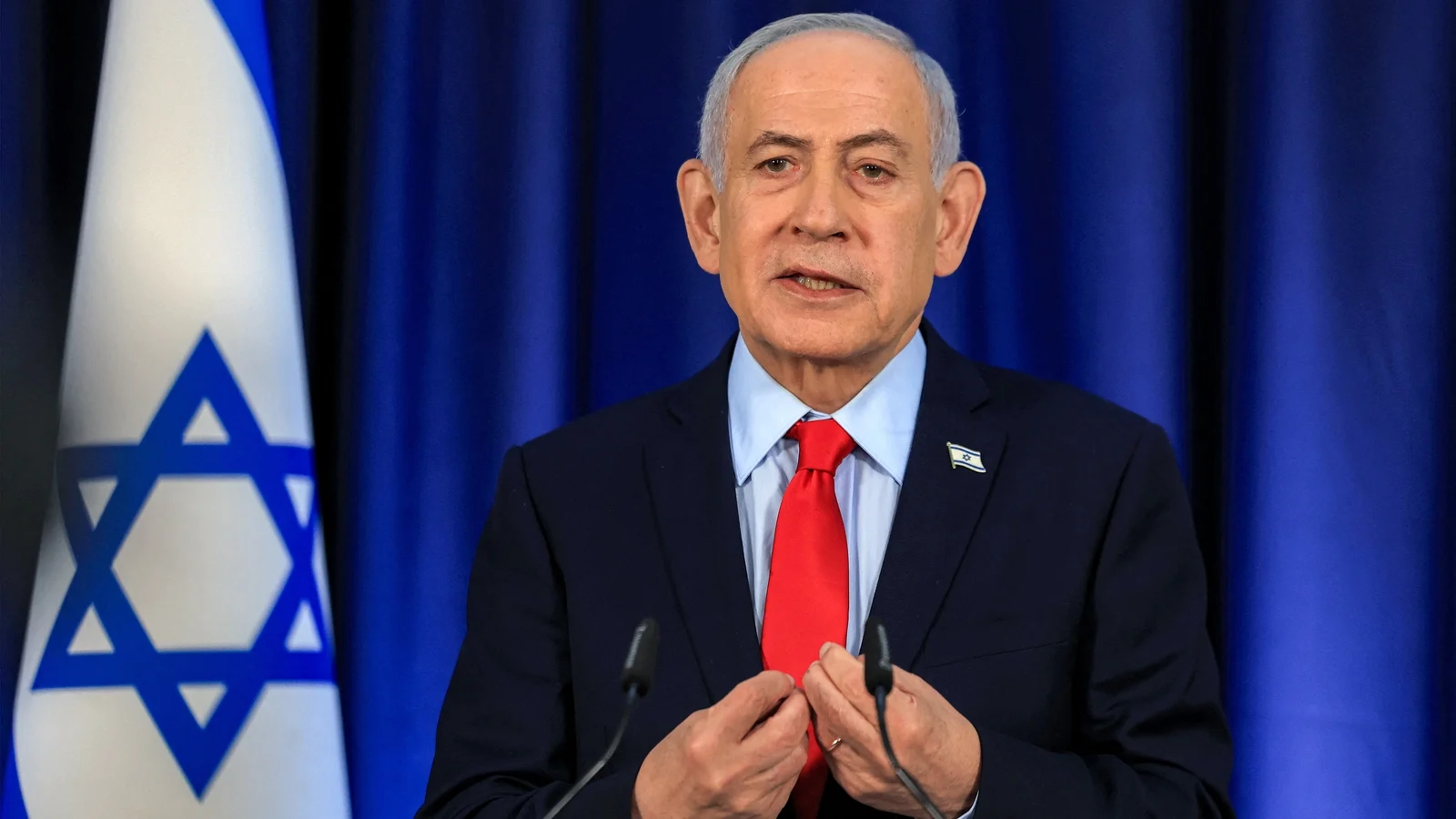
It began, as many uneasy mornings in this region do, with the prickle of sirens and the hush of people checking their phones. But the message that rolled through official channels carried a different weight: Israeli officials are warning of what they describe as a budding “ground component” to Iran’s campaign in the region—an evolution that could redraw the rules of engagement and deepen an already dangerous stand-off.
What does that mean, exactly? For months, the conflict has been fought in the air and at sea, in cyber corridors and through proxy hands. Now, Israeli leaders say, they are tracking signs that Tehran may be preparing—or empowering proxies—to fight on the ground, not merely from afar. It’s a phrase heavy with military possibilities and political consequences.
On the Ground, in the Neighborhood
In communities along Israel’s northern border, where olive groves give way to steep hills and villages cling to roads that have known the rumble of tanks, residents speak of a new anxiety. “We’re not talking about rockets from far away any more,” said Yael Cohen, a woman who helps run a kindergarten in a kibbutz near the border. “It feels like the map could change under our feet.”
Across cityscapes far from the front lines, too, the mood is one of weary apprehension. In Tel Aviv coffee shops, conversations have shifted from the economy to the prospect of troops moving into contested areas. In Tehran, a fruit vendor shrugged when asked about the talk of a ground deployment: “We hear news, we hear warnings. People worry about the price of everything. Politics is politics; life has to go on.”
What “Ground Component” Might Look Like
Military analysts sketch several plausible scenarios. The most straightforward is a direct expeditionary push by Iran’s Revolutionary Guard Corps or allied militias across borders. More likely, they say, is an intensification of proxy warfare: better trained, better equipped fighters—embedded, advised, and possibly led by Iranian operatives—staging incursions or sabotage on land in Lebanon, Syria, Iraq, or Palestinian territories.
“Ground operations change the game,” said Dr. Lena Harper, a senior fellow at a regional security institute. “Airstrikes and missile exchanges are deadly, but they have different escalation dynamics than boots on the ground. Once you have ground forces maneuvering, even if they’re proxies, the risk of miscalculation skyrockets.”
- Proxy mobilisation: More fighters, heavier weapons, and advisory teams on the ground.
- Direct Iranian presence: Special forces or advisory corps engaged in forward operations.
- Hybrid tactics: Coordinated cyberattacks, missile barrages and localized ground raids that overwhelm response capacities.
History as Prologue
This is not the first time the region has stood on the edge of a broader conflict. Since the Islamic Republic’s founding in 1979, Iran has forged an extensive network of allies and proxies—Hezbollah in Lebanon, militias in Iraq, the Assad regime in Syria, Hamas and Palestinian Islamic Jihad in Gaza. Israel, for its part, has carried out hundreds of strikes in Syria and elsewhere over the past decade to blunt what it sees as a growing threat.
These patterns make today’s warnings both familiar and unnerving. Familiar because proxy dynamics have long shaped regional warfare; unnerving because the current geopolitical context—shifting alliances, global strategic competition, and the specter of nuclear proliferation—adds dangerous friction to any spark.
Numbers That Matter
Some facts help to frame the stakes. Israel is home to roughly nine million people, a high-technology economy intertwined with global markets and heavily defended by one of the region’s most capable militaries. Iran, with a population approaching 86 million, wields influence across multiple theatres and retains substantial paramilitary capacity through the Revolutionary Guard and its regional affiliates.
Beyond raw population, the region sees huge military spend and firepower: in recent years, Middle Eastern defense budgets have been among the world’s largest per capita. These are rough brushstrokes—hard numbers ebb and flow—but the core point remains: deeply resourced actors face off in a densely populated region where civilian life and infrastructure are only a hair’s breadth from conflict zones.
Voices from the Field
“If it’s just missiles, at least we have warning and shelters,” said Amir Haddad, a paramedic in a northern Israeli town. “If you have fighters on the ground, it becomes about neighborhoods, about families, about finding safe corridors. That’s terrifying.”
“We don’t want our country to be a battlefield for others,” added Fatemeh Karimi, a teacher in Tehran who asked that her full name not be used for safety reasons. “People want dignity and stability. No one wins when cities become front lines.”
Global Ripples
Any expansion into ground operations would ripple beyond the Levant. The Strait of Hormuz, global energy markets, and supply chains for critical goods could all feel the impact. International actors—Washington, Moscow, Beijing, regional capitals—would be forced into choices: to back, to mediate, or to stay on the sidelines. Each option carries political cost and unintended consequences.
“This is not only a regional spat,” said Michael Rios, a former diplomat who now teaches conflict mediation. “Great powers see strategic interest here. If ground operations begin, the diplomatic threshold for intervention drops dramatically. You are no longer in the realm of cross-border skirmishes; you’re in the realm of occupation and resistance.”
What Now? Scenarios and Questions
The near-term future offers several pathways: limited, tactical ground actions by proxies that remain contained; an escalation prompting broader regional mobilization; or diplomatic containment through back-channel negotiations aimed at deterring further action. Which path materializes will hinge on decisions made in war rooms and in quiet rooms alike.
Consider these questions as you read the headlines:
- How will local communities be protected if fighting shifts to populated areas?
- What role will international mediators play in preventing miscalculation?
- Are economic levers—sanctions, trade, energy diplomacy—sufficient to dissuade more aggressive maneuvers?
For Now, the Region Holds Its Breath
The human element often gets flattened in geopolitics: markets, missiles, briefings. Yet beneath the maps and models are millions of people whose daily lives are punctuated by prayer, work, coffee, school runs, and the quiet hope that today will pass without a siren.
“We live between the things we can control and the things we cannot,” Yael Cohen told me, hands wrapped around a cup of tea as children laughed outside the kindergarten. “If leaders can stop this from spreading, then they must. If not, we’ll be left to pick up the pieces.”
As you follow this story, ask not only what the next headline will be, but what kind of future the region—and the world—should be striving for: one shaped by containment and deterrence, or one that finds the harder work of political solutions to cease the cycle of escalation?
Whatever the answer, the warning of a “ground component” has moved this conflict into a terrain where the consequences are not only tactical; they are deeply human, and far-reaching. The choice, as it always is, will be in the hands of those who decide whether to pour fuel on the flames or to build a bridge—however fragile—that might cool them.