When the Lights Went Out: Cuba’s Latest Blackout and the Quiet Stories Behind the Headlines
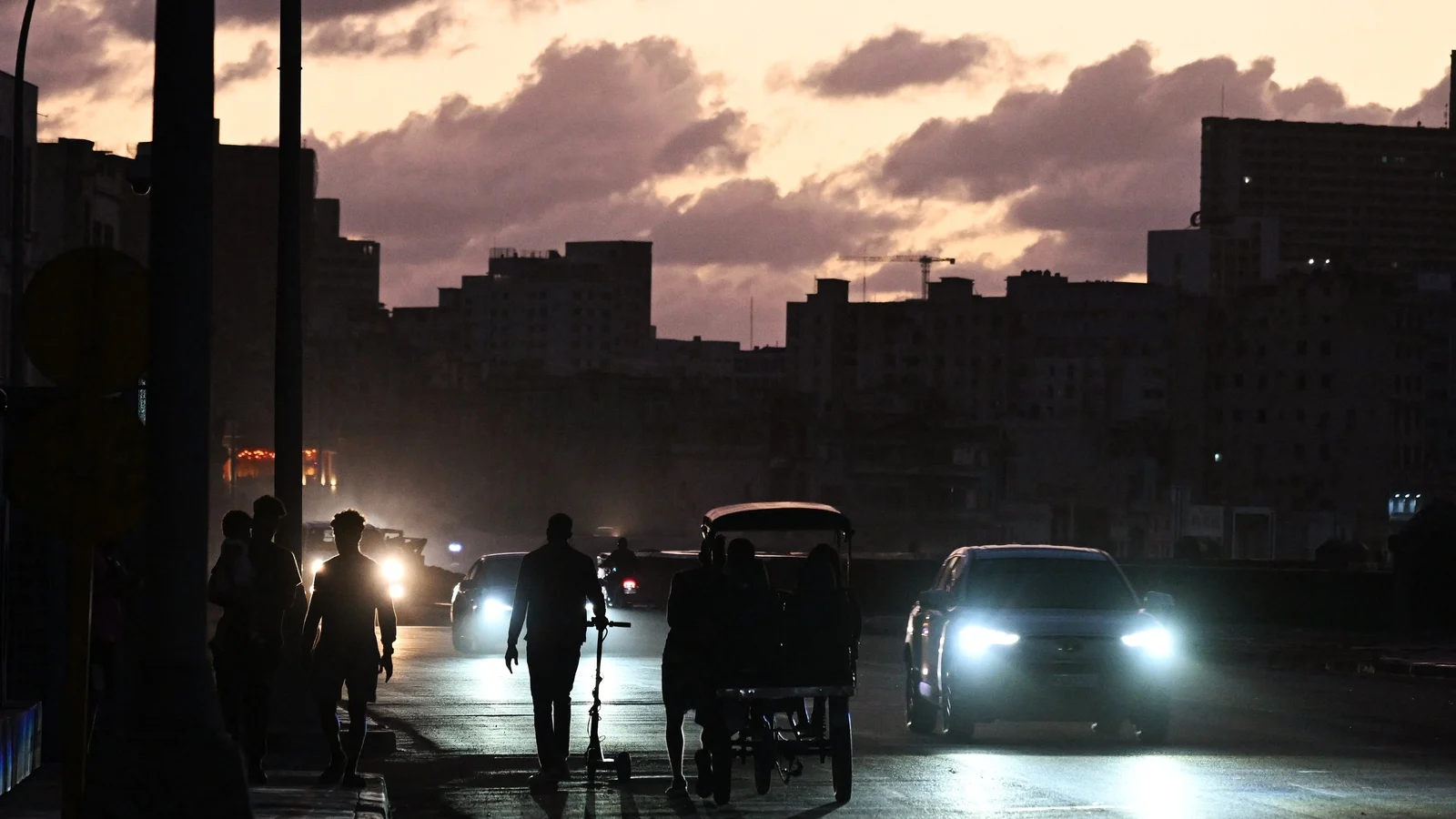
It began like a slow exhale. One streetlight blinked, then the next, and by dusk the familiar lattice of Havana’s warm yellow glow thinned to darkness. The radio went silent in neighborhood bodegas. Apartment towers grew quiet except for the murmur of voices and the clack of candles being lit.
“At first I thought it was just our block,” said Ana María, a seamstress from Cerro who stood on her balcony cradling a thermos of coffee. “Then I saw the whole skyline go. It’s like the city held its breath.”
This was not a single neighborhood failure. Cuba’s energy ministry announced what technicians describe as a “total disconnection” of the island’s electrical grid — a nation-wide blackout that followed a similar collapse just days earlier. For many Cubans, this cyclical darkness is becoming the new normal: refrigerators warming, hospitals scrambling on generator power, schools canceling afternoon classes, and families adjusting routines to a rhythm set by the outage.
A fragile grid under pressure
Cuba’s power system has been creaking for years. Power plants, some built during a different century, are strained by maintenance backlogs, parts shortages and a dwindling fuel supply. In regions of the country, residents report being without electricity for up to 20 hours a day.
“The infrastructure is old, parts are scarce, and when fuel doesn’t arrive the fragile balance breaks,” explained Dr. Luis Moreno, an electrical engineer who once taught at the University of Havana. “You can patch it with generators and temporary fixes, but you can’t run a modern economy that way.”
For an island whose population numbers around 11 million people, the consequences are immediate and visceral. Hospitals have to prioritize patients; the food sector loses cold-chain capacity; small businesses that survive on tourism — restaurants, casa particulares, tour operators — find bookings shrinking as flights are curtailed and visitors rethink their plans.
Life around the blackout
Down a narrow lane off the Malecón, vendors lit kerosene lamps and continued to sell fresh fruit. Children played under the rumble of a borrowed generator. In one apartment block, neighbors gathered in a hallway to share battery-powered fans and stories.
“You meet faces you never saw before,” said Ramón, a retired sailor, laughing despite the circumstance. “We trade coffee for ice now. Everyone asks: do you have extra water? Do you have medication? It brings out the best and worst — generosity and worry all at once.”
Those little acts of solidarity are under strain. Officials acknowledge shortages of food, medicines and basic goods have multiplied public frustration. Protests and acts of vandalism at a provincial Communist Party office last weekend reflected mounting anger among some citizens who feel their daily survival is at stake.
Geopolitics on an island
Of course, no story about Cuba’s electricity crises sits entirely within its borders. In recent months, the island has weathered a diplomatic and logistical storm that has made fuel procurement precarious. International observers and Cuban officials alike point to a de facto oil blockade: shipments halted or delayed, the suspension of key supply lines, and a broader tightening of financial and logistical access.
“Without steady oil deliveries, thermal plants cannot run, and the grid collapses,” said Helena Rodríguez, an energy analyst based in Madrid who monitors Caribbean energy flows. “It’s not just about power; it’s about transportation, food distribution, and hospitals. Energy insecurity cascades.”
Reports this week that an international aid convoy had arrived in Havana with medical supplies, food, water and — notably — solar panels underscore a growing pivot. Solar panels and microgrids can be a potent short-term solution, but they are not a silver bullet for a nationwide system built around centralized thermal generation.
Meanwhile, satellite trackers and maritime analysts have noted two tankers flagged as carrying Russian oil or diesel were reportedly en route to the island. Their status and whether they will be able to offload remain uncertain — a reminder of how geopolitics and logistics can determine whether a light turns on at night.
Voices from the corridors of power
On the diplomatic front, Cuban representatives have publicly signaled openness to talks and greater foreign investment, while making clear that their political system is non-negotiable. “We are receptive to cooperation that alleviates suffering — investment, technology, infrastructure — but the sovereignty of our system is not a bargaining chip,” said a deputy Cuban diplomat in Washington.
In stark contrast, rhetoric from Washington has at times hinted at the desire to pressure for political change. “We are watching developments closely,” a U.S. official said on background, “and the intersection of humanitarian and national security concerns shapes our posture.”
Such comments feed a volatile mixture of hope and fear among ordinary Cubans. Some see pressure as a path to opening, others worry that sanctions and blockades only worsen people’s daily lives.
What does recovery look like?
If the island is to move beyond emergency fixes, experts point to a combination of options: stabilized fuel shipments, international financing for grid modernization, and a rapid scale-up of renewables. Solar mini-grids and battery storage could relieve pressure on the national grid and provide resilient power to hospitals and water systems.
- Short-term needs: immediate fuel for hospitals and water treatment, humanitarian aid distribution, spare parts for plants.
- Medium-term fixes: investment in transmission lines, replacement of aging turbines, and training for maintenance crews.
- Long-term resilience: decentralized renewables, storage, and policy reforms to attract sustainable investment.
“The world knows how to deploy solar and batteries quickly,” said Dr. Moreno. “But it takes money, logistics, and political will. And all of that is complicated when supply chains and diplomacy are tangled.”
Beyond electricity: The human ledger
When we talk about grid collapses, we risk reducing everything to circuits and megawatts. What is lost in the dark is more than electrons. It’s the hum of an air conditioner on a hot night, the refrigerator holding a week’s worth of food, the clinic where a newborn needs a warming lamp, the school where a child studies under a lamp because the family can’t afford internet-connected tutoring.
“Every outage is a debt to the future,” said Ana María, watching the city slowly regain power as technicians worked through the evening. “We pay in fear, in meals spoiled, in medicines delayed. And the hardest thing? We don’t know if tomorrow will be different.”
So what should we ask ourselves, reading this from afar? How do sanctions and geopolitics reconcile with humanitarian urgency? Can international actors find ways to separate political objectives from essential human needs? And finally: how do we build systems that are resilient to both the weather and the whims of diplomacy?
Closing thoughts
The lights will come back on, as they always do, with crews clambering in substations and boilers roaring to life. But each blackout leaves a trace: a new scar on a fragile system, a memory of hunger and improvisation, a political tremor that ripples outward.
Cuba sits at the crossroads of technology and geopolitics, of an aging past and a renewable future that is within reach but blocked by layers of complexity. For the people living through these blackouts, the question is immediate and intimate: how long can daily life bend before it breaks?
As you read this, imagine a Havana nightlife without music and neon, then imagine the same city lit by rooftop solar arrays, humming quietly and independently. Which future will arrive first? The answer depends as much on engineers and diplomats as it does on empathy — and on whether the outside world chooses to light the way.