A razor-thin vote in a small Alpine nation that looms large on Europe’s stage
In a café in Ljubljana’s old town, where the scent of espresso drifts past lacquered wood and the conversation is as likely to turn to soccer as to the EU’s next crisis, people watched the election map blink and breathe on a television screen. The numbers shuffled slowly, as if reluctant to decide. Around the table, friends passed a plate of potica and argued in half-joking, half-terrified tones about what the day would mean.
“You can tell by the silence,” said Ana, a 34-year-old teacher, stirring her coffee with a flat stare. “When the room is quiet, people are thinking about mortgages, schools, whether our children will leave.”
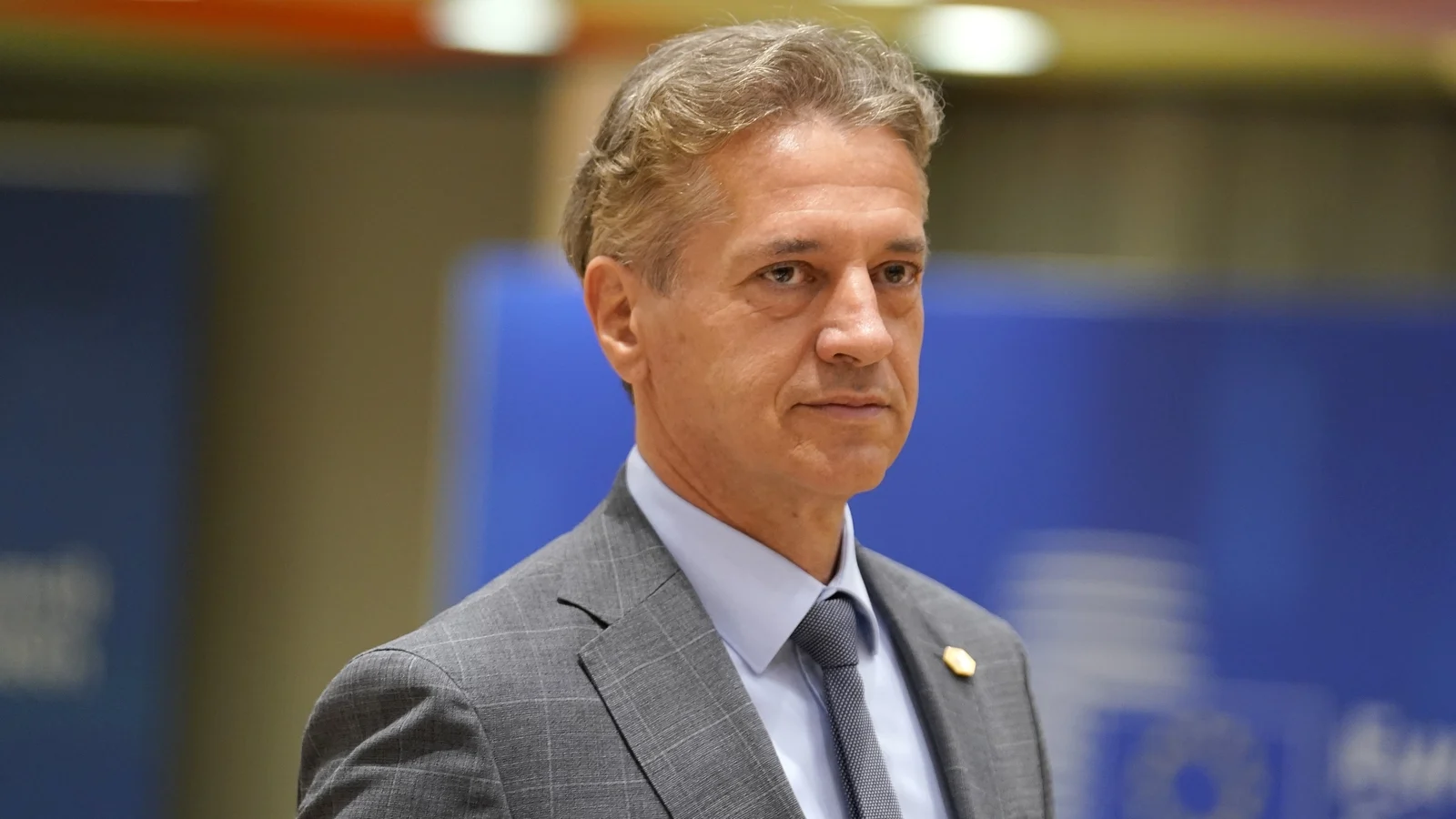
This was not a spectacle of sweeping victory. It was a slow-motion cliffhanger — Freedom Movement (Gibanje Svoboda, GS), the progressive party of Prime Minister Robert Golob, locked in a near dead heat with the conservative Slovenian Democratic Party (SDS) of former prime minister Janez Janša. With 99.85% of ballots counted, the parliament’s 90 seats remained up for negotiation: GS at 29 seats, SDS at 28. Neither side clears the 46-seat majority. The smaller parties — those that barely cross Slovenia’s 4% threshold — suddenly become kingmakers.
The arithmetic of compromise
Numbers make sense and numbers lie. On paper, the distribution is neat enough: GS plus its usual allies would reach about 40 seats; SDS and its backers could muster roughly 43. But politics in Ljubljana is not a math problem solved with a single equation. It’s a mosaic of stubborn personalities, ideological non-negotiables, and small parties whose priorities range from pensions and regional autonomy to environmental protection and tax relief for family businesses.
“We are in for coalition talks that will be complex and potentially fragile,” said Miha Kovač, a political analyst who has watched Slovenian polities shift since the 1990s. “A minority government can govern, of course, but it will require constant trade-offs. Expect nightly horse-trading and very public compromises.”
The sense of uncertainty hung heavy even among those who leaned toward one camp or another. “I want stability,” said Marko, a small-business owner who runs a boat tour on Lake Bled. “We need consistent rules. We need tourists. But I’m also tired of arguments that sound like a TV talk show. I want a plan for workers, not just slogans.”
Voices from the leaders and the streets
Prime Minister Golob moved quickly to cast his party as ready for pragmatic talks. “We will invite all democratic parties to sit down,” he told supporters, promising a focus on health care, education, and revitalizing the economy. “Slovenia needs more than a fragile majority to implement reforms that help people.”
On the other side, Janez Janša held back from immediate coalition maneuvering, saying his party would wait for official confirmation of final results. He also raised concerns about counting discrepancies, telling supporters his party’s monitors had found shortfalls — an allegation election officials have said they would investigate. “We want a transparent and accurate count,” Janša said at a late-night rally. “Our democracy depends on trust in the process.”
Not everyone found the drama political. “This feels personal,” said Nika, a retired nurse who lives in Maribor. “My pension is what it is. I worry about cuts to health care, and I worry about media freedoms. Whoever governs, I hope they remember the people who wake up early and go to work.”
What the small parties might demand
- Greens and left-wing groups will likely press for stronger environmental protections, funding for public services, and social spending.
- Conservative and centrist parties may push for tax incentives for businesses, deregulation, and reduced state funding to select NGOs.
- Regional and pension-focused groups will demand protections for the elderly and investment in rural infrastructure.
Local color and cultural stakes
Slovenia’s political debates often carry echoes of its geography. The Alpine ridges and karst plateaus, the small wineries in the Vipava Valley, the fishermen on the Adriatic coast — all these are woven into conversations about land use, tourism, and economic development. The country of roughly 2.1 million people — a European Union member since 2004 and an early adopter of the euro in 2007 — has long punched above its weight by being outward-facing and industrially diversified.
“Politics here isn’t just about ideology,” said Luka, a beekeeper from the countryside west of Ljubljana. “It’s about how the river is managed, whether the government supports small farms, whether young people can stay or must leave to find a life.”
Local traditions make the stakes feel vivid. During elections, village taverns become salons where policy is debated alongside seasonal dishes. Language matters: Slovenian is a close cousin to neighboring tongues but remains an anchor of identity. Even the ideas about governance are filtered through the nation’s post-Yugoslav memory — independence in 1991 is still a touchstone.
What this means for Europe and beyond
While Slovenia’s population is small, its geopolitical choices matter. Under Golob, foreign policy leaned into European partners and collective responses to crises. Janša, who has voiced admiration for former U.S. President Donald Trump and courted ties with Hungary’s Viktor Orbán, has signaled a willingness to shift alliances and adopt a more nationalist, Eurosceptic tone on some issues. That potential shift has drawn attention across Brussels and beyond.
Smaller EU states often find themselves balancing sovereignty with membership responsibilities. Which direction Slovenia takes could affect EU cohesion on topics like migration policy, media freedom norms, and relations with Hungary and Poland — countries that have tested the bloc’s boundaries in recent years.
“Every vote in a small country can have outsized consequences,” noted Dr. Elena Petrović, a scholar of Central European politics. “A coalition that leans inward will shape how Slovenia votes in EU councils, how it approaches defense spending, and how it frames rule-of-law debates. For neighbors, these are not abstract choices.”
The human question beneath the headlines
Beyond the coalition math and the tweets, the election reveals a deeper tension: how to live together in a world recalibrating after a pandemic, amid climate stress, and under economic anxieties. Do voters want a steady, social-democratic hand that invests in public goods? Or do they prefer a government that looks to the market, trims the state, and promises to shake up established institutions?
“I ask my students this,” Ana the teacher said, looking back at the map on the café screen. “Which future do you want to help build? It’s not just about today’s bathroom banter. It’s about whether your child can go to a decent school, whether your neighbor gets proper care, whether the rivers don’t flood our fields next spring.”
So what happens next?
The next days will be dominated by closed-door negotiations, offers and counteroffers, and an anxious public waiting to see whether a coalition can be cobbled together. Expect appeals to centrist parties, concessions on budgets, and perhaps the odd surprise coalition arrangement. Expect also that whatever government emerges will be tested almost immediately by real-world problems: inflation, energy security, and the slow but inexorable challenge of demographic change.
Ask yourself: when a country the size of Slovenia stands at a crossroads, what should the global community care about? Is it the immediate stability for markets, the long-term health of democratic norms in Europe, or the everyday well-being of those who live in the valleys and cities? Maybe it’s all of the above.
As dusk fell over Ljubljana and the television finally dimmed, the café emptied into cobbled streets. People walked home and fell back into ordinary rhythms — cooking, checking on elderly relatives, planning for tomorrow. But the conversation, as always in this small, proud nation, continued. Because elections, even narrow ones, are not only about who gets the keys to power. They’re about the stories a country tells itself about what it values, and the kind of future it chooses to build.