A crossroads in Copenhagen: Denmark’s election, welfare anxieties and the Arctic at the center
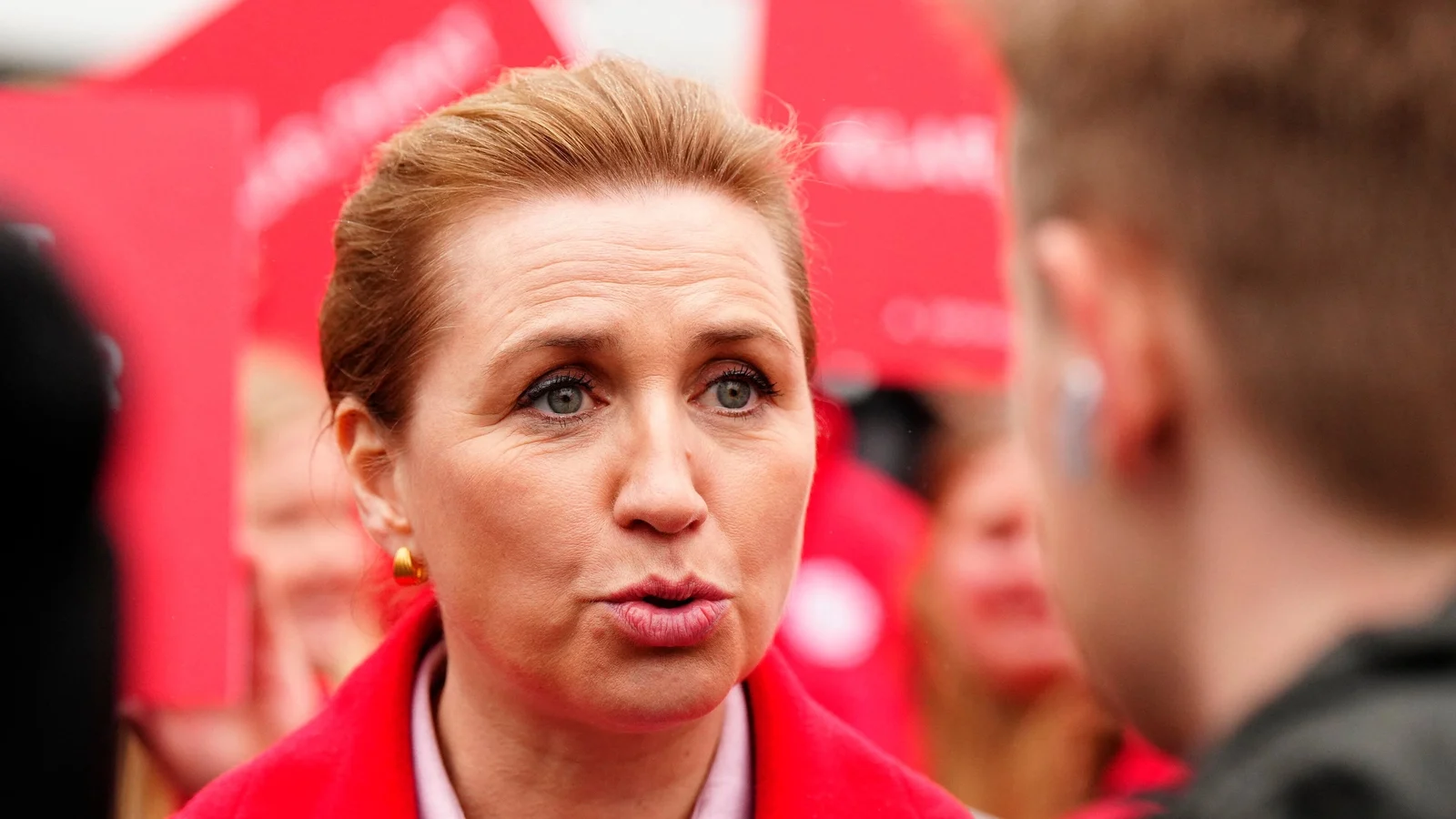
On an overcast evening in Copenhagen, a woman in a thick red scarf pointed to a worn poster of Mette Frederiksen and laughed, not unkindly. “She kept telling us she’d steer the ship,” she said, stirring her coffee. “But this winter our ship felt like it was leaking.”
That image — small, human, a little weary — captures the mood that hung over Denmark as votes trickled in: a country proud of its cradle-to-grave welfare model, rattled by rising costs and cultural friction, and newly conscious of its Arctic backyard as global great powers angle for influence.
Numbers that sting
Early projections suggested a sharp contraction for Ms Frederiksen’s Social Democrats. Where they once held around 50 seats, preliminary tallies pointed to roughly 38 in the 179-seat Folketing — a loss that, if confirmed, would be the party’s worst result in more than a century.
The left bloc, while still narrowly ahead of the right, looked unlikely to command an outright majority. That means weeks of negotiation — of backroom haggling and fragile coalitions — before a stable government could emerge. For a leader who promised steady hands during tumultuous international moments, the domestic picture was suddenly much less assured.
“She is between a rock and a hard place because the numbers are bad for her,” said Andreas Thyrring, a partner at Ulveman & Borsting public affairs advisory firm. “Voters respected her on defence and foreign policy, but the day-to-day economic pinch and immigration debates have cut into that goodwill.”
More than a political swing — a society under pressure
Walk through a market in Aarhus or a ferry terminal on the islands, and the themes are the same: energy bills, grocery prices, and a sense that the economy — even in one of the world’s richest welfare states — must be defended in new ways.
Denmark is not alone. Across Europe, inflation and higher energy costs in the wake of Russia’s invasion of Ukraine have strained household budgets. But in Denmark, where social cohesion and generous public services are central to national identity, the anxieties have political bite.
“People aren’t just worried about their electricity bill,” said Katrine Madsen, who runs a small bakery near Kongens Nytorv. “They’re worried that the system that looked out for their parents and grandparents won’t have the same muscle for them. They ask: who will be left behind?”
- Folketing total seats: 179 (including representatives from Greenland and the Faroe Islands)
- Social Democrats projected seats: ~38 (down from ~50 four years prior)
- Danish People’s Party surge: approximately 9.1% support in early counts — up nearly 7 percentage points
The migration debate that cut across the spectrum
Immigration, always a flashpoint in Danish politics, did something unusual this cycle: it simultaneously pushed some voters away from the center-left and pulled others toward populist promises on the right.
A slice of the Social Democrats’ base — often sympathetic to inclusive welfare principles — felt alienated by policies they considered too harsh. On the other hand, moderate and economically anxious voters questioned whether the government had their backs.
“You can’t please everyone when prices rise and people feel the strain,” said Tobias Engberg, an economics teacher from Odense. “The vote reflects frustration with policies and messaging more than ideology alone.”
The Arctic as bargaining chip: Greenland in the mix
It’s tempting to think of this as a purely domestic story. But the election also unfolded under the long shadow of Arctic geopolitics.
Almost three years ago, former U.S. President Donald Trump famously suggested buying Greenland — a diplomatic oddity that provoked a fierce response from Copenhagen. That episode, and subsequent attention on the island for its strategic importance, has infused Danish politics with questions about sovereignty, climate change, and who gets a say over the Arctic’s future.
Greenland’s influence is outsized relative to its population. Many voters there saw the Danish contest as a chance to stake new claims: greater fiscal autonomy, better local infrastructure, and leverage in dealing with foreign powers who have been flattered by Greenland’s strategic position.
“We’re not a chess piece,” one Greenlandic fisherman told a local journalist. “We’re people who want our voice heard about our destiny.”
A surge on the right — and what it means
Support for the Danish People’s Party jumped dramatically in early returns, rising to about 9.1% with more than 90% of votes counted, the public broadcaster DR reported. That represented a near-tripling of its presence compared to the last election and underscored how migration and tax promises resonated with a subset of voters.
Its leader, Morten Messerschmidt, was unequivocal in his post-exit poll remarks: “The fact that the Danish People’s Party has now tripled its support clearly shows that Danes are fed up with this and that there are a great many people who want a different direction for Denmark.”
Messerschmidt’s platform — pledges to ensure zero net migration of Muslims and to abolish petrol taxes to ease living costs — encapsulated a blend of cultural conservatism and cost-of-living appeal that seems to be working at the ballot box.
Leadership, reputation and the art of governing in a fractured age
Ms Frederiksen retains allies in Brussels and among NATO partners. Her straightforward stance during the Greenland episode and her push to modernize Denmark’s defence commitments after Russia’s war were widely respected abroad. But leadership that plays well on the world stage does not always soothe domestic anxieties.
“She was decisive in foreign policy, but decisions have to translate into tangible domestic relief,” said Dr. Emil Nørgaard, a political scientist in Copenhagen. “When voters’ daily needs are not met, they vote with their feet.”
And yet: Danish politics are never static. Coalitions are the art form of the North. The next government — whether a renewed left-leaning alliance patched together through compromise, or a new right-leaning coalition — will have to wrestle with the same fundamental questions: how to protect an ambitious welfare state in a world of rising prices and climate shocks, and how to manage national identity without tearing at social fabric.
Questions for readers
What should governments prioritize when stability abroad collides with instability at home? How do small countries protect their strategic interests when larger powers circle their resources? And what trade-offs are we willing to make to preserve social safety nets in lean times?
Voting is a blunt instrument, but it speaks. For Denmark, the language of the polls has been clear: voters demand both security and compassion, and they will punish leaders who appear to give them only one. The weeks ahead will be about whether those demands can be translated into policy — and whether the next government can stitch a frayed social fabric back together.
In the end, the election was not merely a tally; it was an argument about who Denmark is and who it aspires to be. That conversation, rich in history and acutely local details, will continue in living rooms, cafés, and municipal halls across the country. And for anyone watching from abroad, it offers a vivid lesson: even in a small, prosperous nation, the pressures of our era — migration, economic strain, climate and geopolitics — converge in ways that test the old contracts between state and citizen.