Nightfall Over Parches: When a War You Can’t See Lands in Your Yard
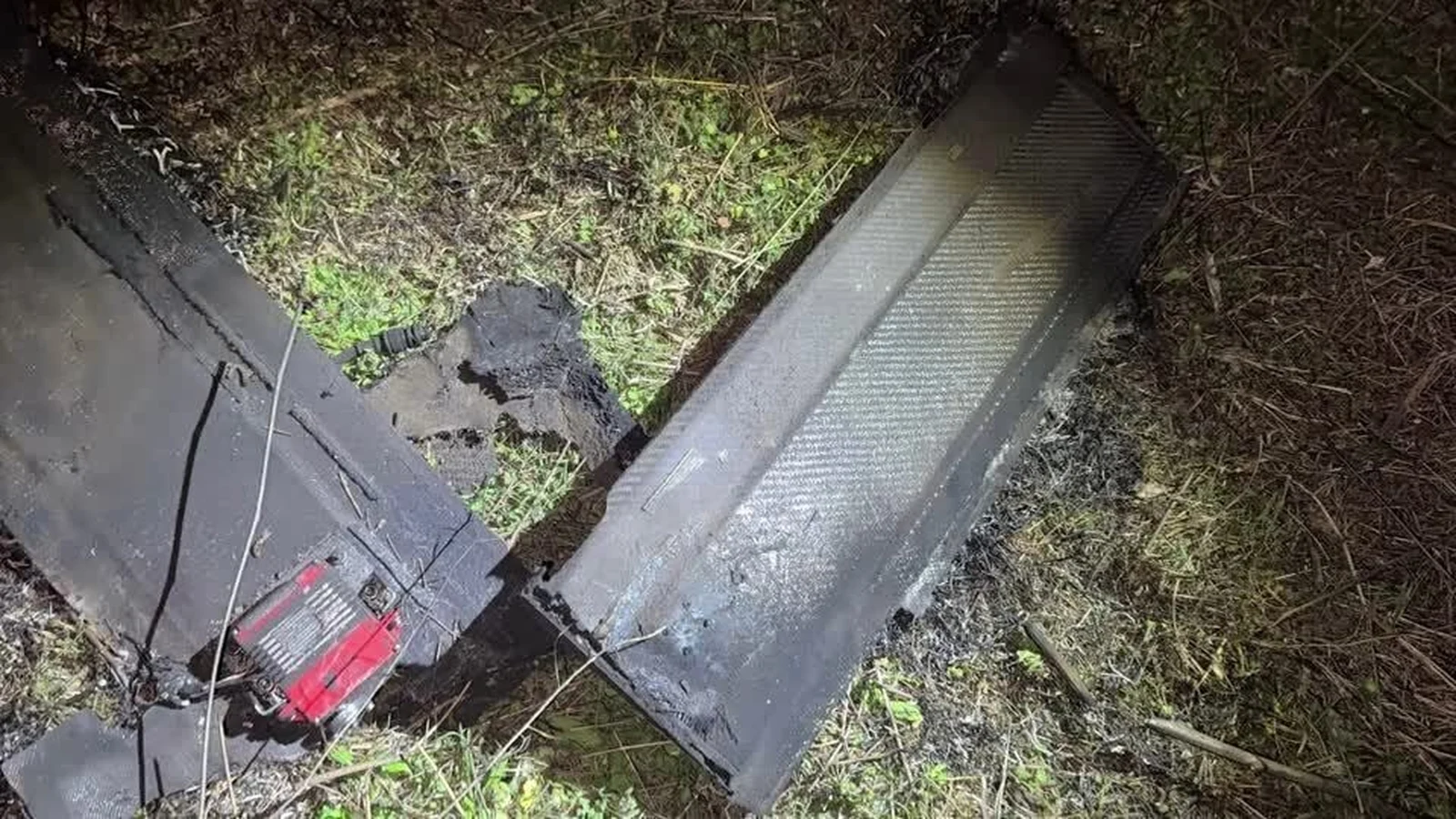
It was a late, ordinary hour in the Romanian village of Parches when the phone alerts woke people in their beds: an unusual warning about potential danger nearby. By the time anyone had put on shoes and stepped outside, a charred ring of meadow waited two kilometres from the village gate—blackened grass, a tangle of carbonized reeds, and the twisted skeleton of a drone. No bodies. No broken windows. Only fragments and questions.
“I thought it was fireworks at first,” said Ana, a schoolteacher who lives three streets from where the drone came down. “Then my neighbour showed me photos. I couldn’t believe something from a war could end up here—like it had a mind of its own.”
The Ministry of Defence was blunt and specific. In the small hours, at 00:44, a drone that Ukrainian air defences had pushed off course crossed into Romanian sovereign airspace for roughly four kilometres and crashed two kilometres from Parches, well outside the inhabited zone. Officials reported only a patch of burned vegetation and debris. No casualties. No property damage. The emergency services say the device was found after a local resident alerted authorities.
Scrambled jets, shaken villagers
Two F-16s were scrambled during the night, a reminder that Romania — a NATO member and close ally of Ukraine — takes even small breaches seriously. “We don’t treat these incursions as isolated incidents,” a defence analyst in Bucharest told me. “Every fragment of technology that drops into our territory is a piece of the conflict, and it raises both tactical and political questions.”
The sight of fighter jets criss-crossing the starless sky is not new here. Since Russia’s full-scale invasion of Ukraine in 2022, Romanian skies have registered multiple airspace violations and scattered debris from drones and missiles. For villagers like Ana, those facts are less abstract and more of the texture of late-night conversations: should you sleep with windows open in the summer? Should children be allowed to play in the fields? The alarms on phones have made strangers of neighbours who now ask one another, “Did you get the alert?” as a way of checking in.
Where borders blur and technologies spill over
This incident is small when counted in strictly military terms, but it is emblematic of a larger, unnerving pattern. Modern warfare—cheaper, more autonomous, and more widely proliferated—doesn’t respect clean front lines. Drones, loitering munitions and electronic warfare can travel hundreds of kilometres, and when they fail, they fall into somebody else’s backyard.
“The asymmetry of drones changes everything,” said Dr. Elena Marin, a security studies professor. “A country can project force in new ways, but the margin of error has grown. Neutral countries find themselves hosting the by-products of high-tech battles, and that can stretch diplomatic patience.”
Romania reacted to this reality in a concrete fashion: in 2025 it enacted legislation permitting the interception and destruction of unauthorized drones that breach its airspace. To date, no such shoot-down within Romanian airspace has been reported under that law. The policy is both deterrent and acknowledgment—an effort to establish rules for a new kind of aerial geography.
Local voices, local rhythms
In Parches, life goes on in the human tempo of cooking and chores, but now with an added nervousness. “Our lives are tied to the fields,” said Ion Popescu, an elderly farmer who has worked the same patch of land his whole life. “When something strange falls into them, you feel like a stranger in your own place.”
Emergency responders praised the community for the quick phone call that located the wreckage. Officials say citizens received alerts about the possible danger ahead of time—an example of how civil defence systems and ordinary vigilance intersect in modern crisis management.
Meanwhile, the wider theatre grows louder
This single drone in Romania is part of a much larger wave of attacks directed at Ukraine. In a recent bombardment, Russian forces launched 153 drones at Ukrainian targets; Ukrainian air defences reportedly neutralised or downed 130 of them. Another strike struck ports on the Danube in Odesa region, damaging warehouses, quays and administrative buildings and injuring at least one person, according to regional authorities.
The port town of Izmail, Ukraine’s largest on the Danube, described a “massive” barrage that left close to 17,000 consumers without power and disrupted water supplies in nearby Vylkove. Local leaders spoke of damaged energy and industrial infrastructure and port operators reporting hits on their premises—yet officials said the port continued to operate despite the disruption.
“The tempo of these attacks has increased,” said Andrii Sybiha, Ukraine’s foreign ministry official, noting that Odesa’s maritime infrastructure has endured more strikes in the past month than in the previous year. The toll here is not just structural; it is economic and humanitarian. Ports are arteries for grain exports, for imports, for livelihoods. Each strike ripples into global food markets and supply chains.
What cooperation looks like: factories, funding and fragile alliances
In response to both threat and opportunity, Romania and Ukraine have taken an unusual step: a plan to co-produce drones in Romania with up to €200 million in funding from the EU’s SAFE Initiative. The two countries signed a statement of intent during a recent presidential visit to Bucharest. The move signals a shift from simply being a neighbour affected by warfare to becoming a partner in defense-industrial response.
“Local production can create jobs, build resilience, and reduce dependence on distant suppliers,” said an EU official involved in the initiative. “But it also deepens political ties and raises questions about the export and control of military-capable technology.”
- Key facts from the recent incidents:
- Drone entered Romanian airspace for approximately 4 km and crashed 2 km from Parches.
- No casualties reported; only vegetation burned and debris found.
- Two F-16 aircraft were scrambled during the night.
- In Ukraine, 153 drones were launched in a recent attack; 130 were downed or neutralised.
- Close to 17,000 consumers were left without power in the Izmail area after strikes on Danube port facilities.
From backyard fragments to global questions
What happens when a speculative weapon like a drone becomes a household nuisance? When a piece of foreign technology smolders in a neighbor’s field, the abstractions of geopolitics become tactile: smoke-stained grass, the smell of burnt insulation, the conversation at the market.
We should ask ourselves: what are the ethical rules of engagement in a world where mistakes land in civilian hands? What obligations do combatants have to prevent spillover? And how do neutral or allied states like Romania balance prudent defence measures with the risk of escalation?
For now, Parches will likely keep an eye on the skies, and Romania will continue to juggle diplomacy, defence policy and community reassurance. The drone in the field is a small object, but it carries big questions—about sovereignty, technology, and the messy bleed of modern conflict into everyday life.
“You get used to many things in these years,” Ana said, wrapping a cardigan tightly around her shoulders as she pointed to the blackened patch of earth. “But you never get used to fear. You only learn how to share it.”