Between a River and a Line: Irish Peacekeepers on the Edge of a New Front
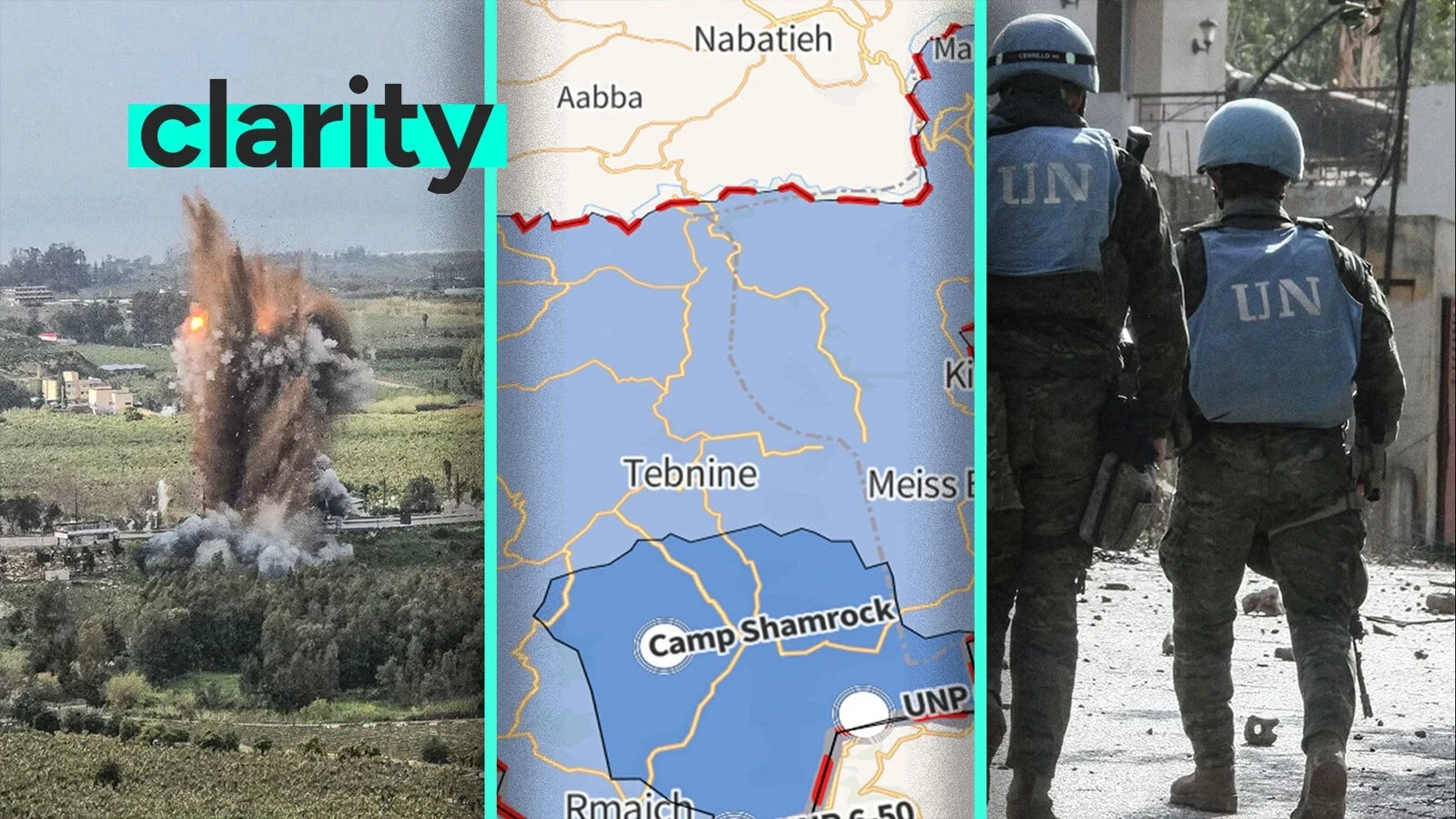
From the shaded courtyard of Camp Shamrock, an Irish blue helmet watches the sky where the smoke of struck bridges still hangs like a bruise. The camp, a neat cluster of white containers and sandbags a few kilometres from Bint Jbeil, has long been a soft, human punctuation between two harder realities: Israeli security concerns to the south and a patchwork of militant groups to the north.
Now those realities are colliding louder than they have in years. Israeli Defence Minister Israel Katz has publicly signalled a plan to seize control of a “security zone” in southern Lebanon up to the Litani River — territory that, until now, was patrolled and monitored by the UN Interim Force in Lebanon (UNIFIL), including Irish contingents. The announcement reverberated through the dusty towns and olive terraces of the Israeli-Lebanese border, prompting evacuation orders, destroyed infrastructure and a tense calm that feels more like the pause before a storm.
What’s on the ground
Irish Defence Forces officials have been clear: their troops remain in place. “Irish personnel are well and accounted for amid ongoing tensions along the Blue Line, where the situation is most intense,” a Defence Forces statement said. The 127th Infantry Battalion, which oversees the Irish area of operations, continues to “observe and monitor the situation, acting as the eyes and ears of the international community.”
But observation is not the same as security. Since mid‑March, geolocated footage and IDF briefings show strikes on bridges across the Litani River and on routes that link southern towns to the rest of Lebanon. Mr Katz has said the Israeli military has blown up bridges and will “control any remaining bridges and the security zone up to the Litani.” The aim, he says, is to deny Hezbollah the ability to move weapons and fighters across the area — a claim that has been repeated at briefings in Tel Aviv.
Hezbollah, for its part, has continued strikes and skirmishes. The group reported operations across southern villages and said it was still targeting Israeli positions. The IDF reported killing five Hezbollah anti‑tank missile operatives in Bint Jbeil — the main urban centre inside the Irish area of responsibility.
The human geography of the “buffer”
Look at a map and the Litani River is a curved line of blue. Walk it and you will find farmers mending terraces, children playing in alleyways, and coffee shops where small talk is a survival skill. Bint Jbeil’s market still smells of za’atar and fresh bread; its streets have been a crossroads for centuries of trade and war. The places the Irish monitor — Maroun El‑Ras, Yaroun, Debl — are ordinary towns with extraordinary politics.
“We were raised with the sea and the mountain and the smell of jasmine in spring,” said Hassan Khalil, a shopkeeper in Bint Jbeil I spoke with by a mobile phone call. “Now you wake to the sound of drones. You learn to count bridges and the sound of engines.”
Those bridges matter. Their destruction isn’t just tactical; it reshapes daily life, severs supply chains and forces families to choose between staying near their homes and fleeing to unfamiliar towns, often with nothing but what they can carry. Katz has warned that hundreds of thousands who fled southward will not be allowed to return until Israel deems the north secure. Whether that is feasible, humane or even possible is another matter.
UNIFIL’s uncertain future
UNIFIL has long been one of the world’s more quietly storied peacekeeping missions. Established in 1978 and expanded after the 2006 war, it has often acted as a buffer between Israel and Hezbollah along the Blue Line — that thin, internationally recognised demarcation drawn by the UN in 2000. It is a mission of details: nightly patrols, negotiated access to villages, mediation of local tensions.
But the mission’s future is precarious. In August, the UN Security Council voted — according to current briefings — to begin winding down the force after nearly five decades. For now, the mandate remains in force until 31 December 2026. Still, the knowledge that the mission will end raises an urgent question: who, if anyone, will do this work when UNIFIL leaves?
“The plan looks eerily like a replacement of UNIFIL with the IDF,” said Dr Cathal Berry, a former commander with Ireland’s Army Ranger Wing. “Even the proposed buffer zone mirrors the current UNIFIL area of operations.” For Berry and others, the presence of Irish troops is not ceremonial; they are a source of impartial monitoring and reporting — the crucial, on-the-ground eyes that feed the UN in New York and governments in Dublin with facts.
When observation becomes exposure
The risk is not only to land and infrastructure but to people — to peacekeepers and civilians alike. UNIFIL reported that bullets, fragments and shrapnel have hit buildings inside its headquarters in Naqoura, about 20km west of Camp Shamrock, forcing peacekeepers to shelter in place. Within the Irish area, towns and villages have been struck repeatedly. In some places, residents are now living in shells of their former homes — patched roofs, shuttered windows, a single plastic chair outside a closed shop.
“We are not here to take sides, we are here to keep civilians safe,” said an officer at Camp Shamrock who asked to be identified only as Lieutenant O’Donnell. “But when supply routes are severed and evacuation warnings are given, that task becomes almost impossible.”
Local stories, global echoes
Across the region, people echo the same fear: an old script repeating itself. Bassel Doueik, a Lebanon and Jordan researcher at the Armed Conflict Location & Event Data Project (ACLED), warned that the isolation of southern Lebanon could presage a deeper ground incursion similar to the war of 1982 — a memory still raw in many households. “People flee because bridges and roads are cut,” Doueik told me. “They fear a slow squeeze that leaves them nowhere to go.”
This is not just a local crisis. It is a study in the erosion of buffers that have globally underpinned fragile peace: multilateral missions, negotiated lines, neutral observers. Around the world, we are seeing an erosion of those mechanisms as states opt for unilateral action and armed non‑state actors gain battlefield sophistication. The result is often the same: civilians pay the price.
What comes next?
Will UNIFIL’s mandate hold until 2026? Will the international community rally to preserve some form of neutral monitoring? Or will we watch as another buffer dissolves, replaced by a permanent security architecture that hardens lines and deepens divisions?
These are not theoretical questions. They matter to the families who watch their children learn the route of evacuation, to the farmers who will watch their terraces become front lines, and to the soldiers in Camp Shamrock who must balance duty with the dread of being caught in crossfire.
As you read this, imagine standing at the Litani’s banks at dusk, the river reflecting the colour of a sky that cannot make up its mind between orange and smoke. Which side would you choose, and who would choose for you?
For now, Irish peacekeepers remain — small, steadfast and watchful — in a landscape suddenly louder. Whether their presence can slow a march towards greater violence or merely chronicle it is a question that the world would do well to answer before the temporary ends and the space between a river and a line disappears forever.