Smoke over the harbour: a morning of sirens in Odesa, Kryvyi Rih and beyond
They say wars are often loud, but mornings like this are different — a hush punctured by the urgency of sirens, the chatter of radios, the muffled shuffle of neighbors pulling on coats. In Odesa, the city’s slate roofs and art-nouveau façades still carry the salt tang of the Black Sea. On this morning, though, that familiar smell was mixed with something harsher: smoke and the metallic tang that lingers after explosions.
Local officials say three people were killed and at least 13 wounded across two Ukrainian cities after strikes in the early hours. In Odesa, a person died in hospital after overnight bombardment; 11 others, including a child, were injured. In Kryvyi Rih, two men lost their lives and two more were wounded when an industrial site was struck. Meanwhile, Russian authorities reported casualties and damage after an alleged Ukrainian drone strike north-east of Moscow, in the Yaroslavl region.
Scenes from Odesa: a maternity roof torn, balconies shattered
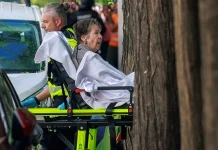
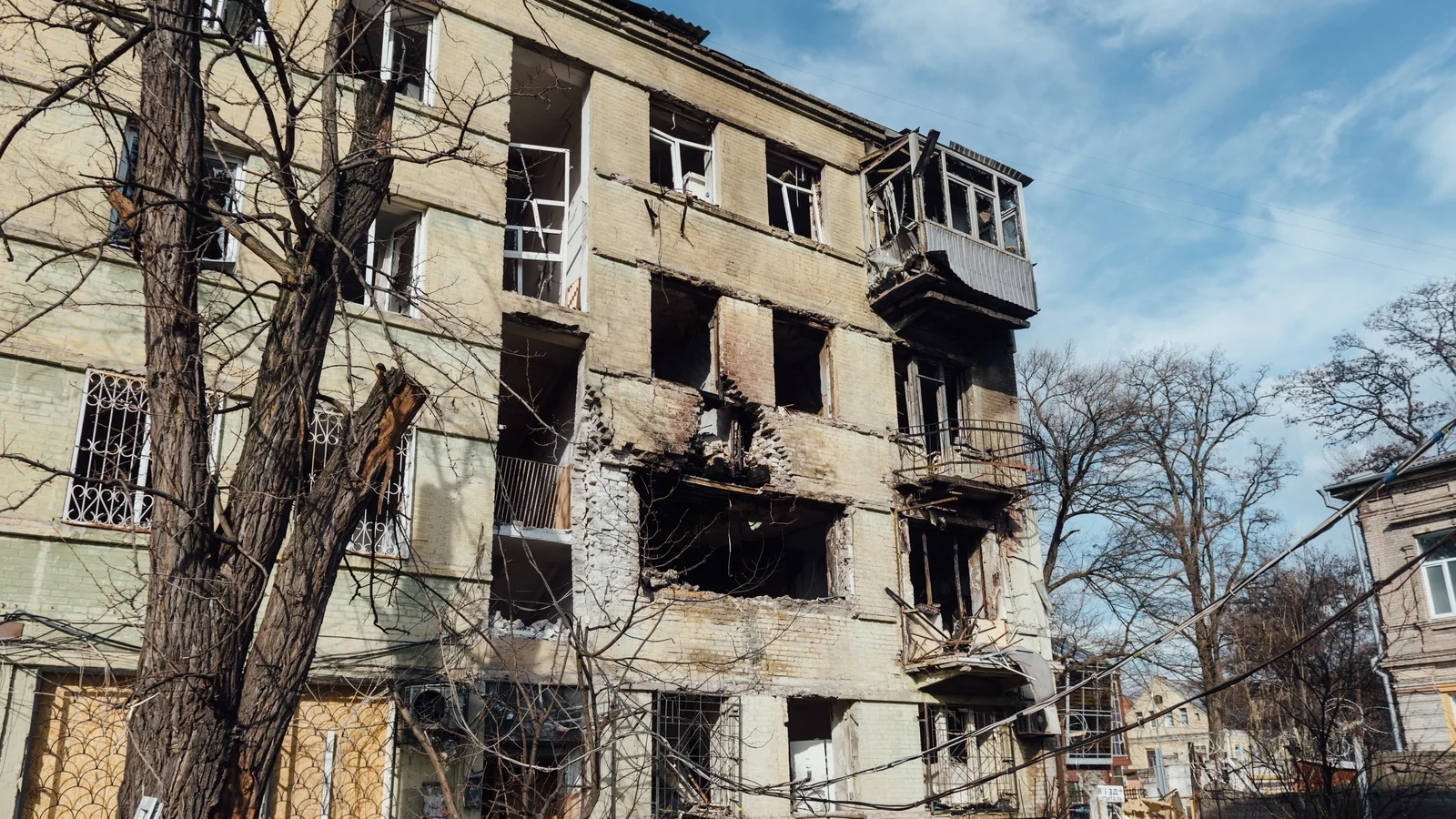
In one Odesa neighborhood, emergency crews picked their way through broken glass on the sidewalk and soot-streaked stairwells.
“The roof of the maternity ward took a hit,” said Sergiy Lysak, head of Odesa’s military administration, in a message that felt equal parts weary and resolute. “Windows blown out in high-rises, fires on upper floors — people were lucky to get out.”
A midwife who asked to be identified only as Olena described the panic. “We had mothers in the ward, babies in bassinets. It was chaos for a while — not because the hospital collapsed, but because everything around us was suddenly very fragile. Who can sleep when the roof itself can betray you?” she said.
Odesa, Ukraine’s oldest and most cosmopolitan port city, has been a magnet for artists, traders and tourists for generations. Its steps along the Primorsky Boulevard, its bustling markets and seafood cafés, are staples of Ukrainian cultural life. And yet the city has also become a frontline of another kind: the slow attrition of infrastructure, the daily calculus of whether to shelter or to flee.
Kryvyi Rih: industry and the human cost
Far inland, Kryvyi Rih — an industrial spine of Ukraine and the birthplace of President Volodymyr Zelensky — woke to the echoes of a different strike. Oleksandr Ganzha, head of the Dnipro regional administration, said the target was an industrial enterprise where fires broke out after the hit.
“Industrial sites are not just machines and metal,” a local union organizer, Petro Ivanov, told me. “There are men with families who clock in and out; there are people whose whole lives are folded into these places. When they are hit, entire communities feel it.”
Two men were killed, he said. Two were wounded. The site itself sustained heavy damage. Emergency teams worked to contain blazes while investigators assessed the structural risk to nearby neighborhoods.
Across the border: drones, denials and rising tensions
It would be a mistake to see these attacks in isolation. On the other side of the conflict line, the governor of Russia’s Yaroslavl region, Mikhail Evraev, reported that a child had been killed and three others injured after a Ukrainian drone struck private homes and a retail outlet. Evraev said the child died in one of the suburban houses; the parents were hospitalized in serious condition.
Russian officials said air defence forces had repelled more than 30 drones during that attack and, according to the Russian Defence Ministry, some 155 Ukrainian drones were downed overnight across several regions, including the Moscow region.
Numbers from both sides — from the count of drones launched to the tally of repelled attacks — are part military narrative, part psychological warfare. They also hint at a grim reality: drone technology has made frontlines more diffuse, turning civilian rooftops, hospitals and shopping areas into collateral in a contest of reach and retaliation.
What the numbers mean
Drone strikes and missile attacks have dramatically reshaped modern conflict. Since the large-scale invasion in 2022, analysts have remarked on the growing role of drones — for reconnaissance, for precision strikes, and for sowing fear far from established frontlines.
“We’re seeing a tactical shift,” said Dr. Nadia Koval, a security analyst at a Kyiv-based think tank. “Precision-guided munitions and drones allow belligerents to strike critical infrastructure and urban targets without massed troop movements. That increases the risk to civilians and complicates humanitarian responses.”
Recent months have also seen global attention diverted to crises in the Middle East, creating a sense — among some observers and residents — that the war in Ukraine is cooling in the international spotlight even as suffering continues. “Conflicts don’t wait their turn for headlines,” Dr. Koval told me. “They persist, they evolve, and people keep paying the price.”
The human ledger: loss, resilience and the everyday
Names and numbers matter. A child injured in Odesa. A man who died after being pulled from twisted steel in Kryvyi Rih. These are not just statistics; they are birthdays missed, futures shortened, parents left to navigate grief and bureaucratic forms alike. Yet in marketplaces and apartment lobbies, life continues: vendors with their morning coffee, neighbors swapping bread and news.
“You can’t live under a bell jar,” said Halyna, a 62-year-old retiree who has lived in Odesa for four decades. She was sweeping her stoop as emergency workers cleared debris from the street. “We adapt. We hold funerals and birthdays and name-day celebrations. But every time there is an attack, the city loses a little bit of its music.”
There is resilience here, but there is also fatigue — a collective weariness that a headline cannot fully convey. Local volunteers now run strike-watch networks and emergency response teams, ferrying the injured to hospitals and offering shelter in basements and subway stations. They speak in weary, practical tones: lists of supplies, maps of damaged areas, names of people to check on.
- Immediate casualties reported: 3 dead and at least 13 injured across Odesa and Kryvyi Rih.
- Odesa: damage to a maternity hospital roof, upper-floor fires in apartment blocks, multiple injuries including a child (per local administration).
- Kryvyi Rih: industrial site struck, two men killed and two wounded (per regional administration).
- Russia’s Yaroslavl region: a child killed and three injured after a reported drone strike; officials say dozens of drones were repelled.
- Russian Defence Ministry claim: 155 Ukrainian drones repelled overnight across various regions.
Asking the hard questions
What does normal look like inside an interrupted life? For the citizens of Odesa and Kryvyi Rih, the answer is provisional. People press on with business and caregiving; they phone relatives abroad and they post updates to social media. But their routines are fragile, dependent on luck and the steady arrival of humanitarian aid, repair crews and psychological support.
And there are broader questions, too: how does the world balance attention among simultaneous crises? How do humanitarian systems cope when disruptions multiply? What responsibilities do states have to protect civilians from the increasingly accessible power of drones?
“We can talk about diplomacy until our voices go hoarse,” said Dr. Koval, “but technology is outpacing institutions. International norms need to catch up, or civilians will continue to be the default targets.”
Where we go from here
On the ground, the immediate work is clear: treat the wounded, repair what can be repaired, and document losses. Long-term, the questions are harder. Rebuilding requires money and political will. Healing requires time, and for many families, permanent recovery may never come.
For readers watching from afar: what responsibility do you feel when a scene like this flickers across your feed? For those of us who write, who collect and contextualize, there is a duty to keep telling these stories with care, to translate headlines into human lives. If you can, ask your representatives what they are doing to support diplomacy, humanitarian corridors and civilian protection. Ask your local aid organizations how to help. Small acts, multiplied, matter.
The evening in Odesa brought a cooling wind off the sea, carrying with it the faint music of a city that refuses to be defined solely by damage. In Kryvyi Rih, factory whistles and the low hum of industrial life returned as firefighters finished their work. And in the quiet of the Yaroslavl suburbs, neighbors tended to the injured and tried to imagine a morning without sirens.
Conflict, like weather, changes the landscape. The task of journalism is to notice those changes — and, perhaps, to remind us all of the human stakes behind the numbers.