At the Edge of the Strait: How a Faraway Flashpoint Is Reshaping Europe’s Energy Life
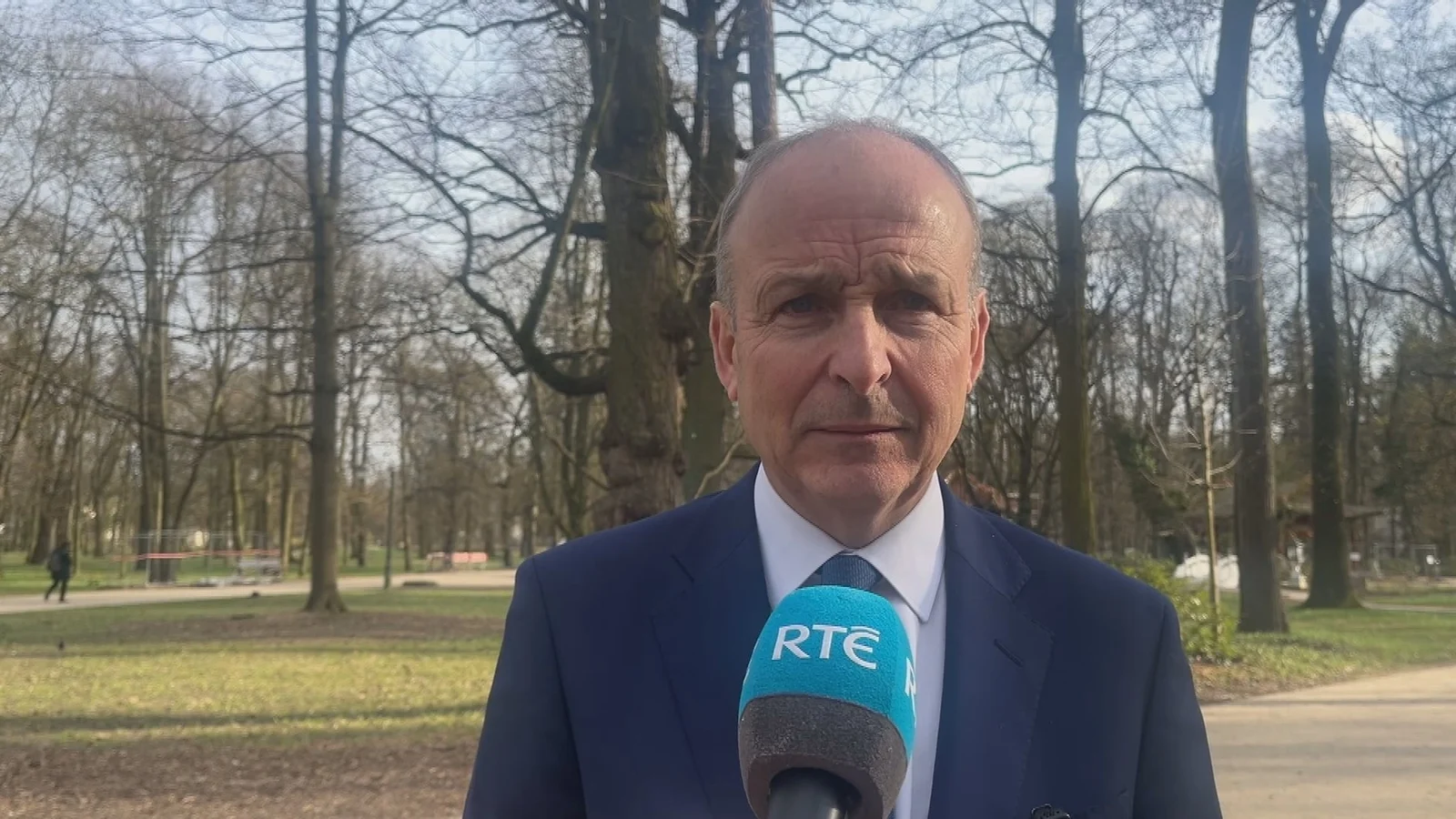
There are moments when geopolitics stops being a line on a map and becomes the thing you breathe: the price at the pump, the flicker of a radiator, the quiet decision to skip a long hot shower. This is one of those moments. The recent escalation around the US–Israeli strikes on Iran and Tehran’s retaliatory closure of the Strait of Hormuz has rippled through Europe in ways both immediate and slow-burning. Ireland’s Taoiseach, Micheál Martin, put it bluntly in Warsaw: “The supply shock is probably the worst ever, much more severe than even the 1970s supply shock.” That kind of language sticks—because it matters to real people with real bills.
Walk the streets of Warsaw or the harbor promenades of Helsinki and you can see the unease in small, human ways: truckers debating whether to cut runs, restaurant owners calculating new food costs, commuters asking if heating will be rationed next winter. It is precisely these local anxieties that brought Mr Martin from Helsinki to Warsaw this week as he prepares Ireland to assume the six-month Presidency of the Council of the European Union in July. The meetings weren’t just diplomatic choreography—they were survival planning. “We have to be cautious in terms of how we intervene,” he said, “but we are very concerned in terms of the secondary impacts on the economy. And that’s why we would urge that the war would end.”
Where the world’s oil meets the world’s nerves
The Strait of Hormuz is a narrow choke point that, for decades, has quietly carried a large share of the world’s seaborne oil. Close it and the shockwaves fan out quickly—higher fuel costs, squeezed supply chains, and inflationary pressure that is already stinging households and businesses. Europe’s leaders are responding on multiple fronts: short-term relief measures, coordination on strategic reserves and pressing for demand reduction where possible.
In Brussels, Ireland’s Minister for Transport, Climate, Energy and the Environment, Darragh O’Brien, joined energy ministers from across the EU in discussions described as being held against a “rapidly evolving geopolitical backdrop.” Officials welcomed a letter from European Commission President Ursula von der Leyen laying out a “toolbox” for tackling high energy prices, and ministers are expecting more concrete proposals on network charges and electricity imminently.
A toolbox, and an ask: use less
The most unglamorous but perhaps most effective instrument in that toolbox is demand reduction. “It is clear that the more you can do to save oil, especially diesel, especially jet fuel, the better we are off,” said EU energy commissioner Dan Jorgensen during a Brussels briefing after video talks with the bloc’s 27 energy ministers. “We are in a situation that might worsen where indeed, demand reduction is necessary.”
That tone—to conserve now to avoid worse later—has filtered down into national decisions. Poland moved swiftly to introduce a daily-set price cap on fuel, a politically attractive move intended to shield households and logistics operators. Ireland, however, has decided not to copy that approach. “We took one of the largest relief packages last week in terms of helping to ease the pressure that’s on people at the pump,” Mr Martin said, pointing to fuel relief and targeted allowances for the most vulnerable. “We have to be cautious in terms of how we intervene.”
There is a geography and an energy-portfolio logic behind that caution. Ireland does not have the same storage facilities or the same energy mix as Poland; it lacks large gas storage sites and relies more heavily on imports and increasingly on renewables for electricity. But even without tanks full of gas, decisions taken on the Continent affect Irish prices and prospects. Dublin will benefit from an EU move considered in Brussels to relax the Gas Storage Regulation, reducing the refill target from 90% to 80%—a small-seeming tweak with potentially meaningful downward pressure on demand for gas across the bloc.
What ordinary people are saying
In Warsaw, a morning market vendor named Ania, pushing a cart of apples and pierogi, summed up the mood with weary pragmatism. “We are watching the news, then we check the prices,” she said. “If petrol rises again, customers buy less. It’s that simple.”
On the outskirts of Dublin, a dairy farmer named Patrick O’Keeffe, up before dawn to feed cattle, said energy costs have become an unpredictable weather system you can’t insure against. “We’re making it through this year because of the winter rains and a good yield, but if diesel goes up much more, it’s our margins that will be squeezed,” he told me. “It’s a global problem with very local teeth.”
And in a makeshift coffee shop near Helsinki Central Station, a young logistics manager named Sofia leaned forward when I asked how businesses can help. “We are rerouting some deliveries, combining loads where we can,” she said. “It’s not glamorous, but small changes add up.”
Numbers that anchor the drama
Context matters. To blunt short-term pain, the International Energy Agency coordinated an unprecedented release of strategic oil reserves earlier this year: about 400 million barrels in total from multiple countries. Still, the Commission has warned that while supplies are sufficient today, high prices—and the risk of prolonged disruption—remain a serious concern. A temporary price cap in one nation may buy political breathing space, but without demand management and coordination, volatility will continue.
- About 400 million barrels of strategic reserves have been released in recent weeks under IEA coordination—the largest such release on record.
- Some EU states are considering relaxing gas storage refill obligations from 90% to 80% to reduce short-term demand pressure.
- Ireland lacks domestic gas storage, making it particularly sensitive to wider EU market movements despite a growing share of renewables in electricity generation.
Big questions, small sacrifices
What should we ask of citizens in the shadow of a war they did not choose? How much can businesses absorb? And how does a bloc of 27 states move in unison when national politics press in opposite directions? These are not theoretical queries. They are urgent, practical, and they cut to the heart of what regional solidarity looks like in a crisis.
As Europe braces, some of the answers will be technical—network tariffs, storage rules, emergency stock releases. But many will be cultural and civic: the decision to share rides rather than drive alone, to fly less, to rehearse energy-saving routines that become habits. “Small behaviour shifts now can prevent blunt, painful interventions later,” said Aisling Murphy, an energy analyst I spoke with in Dublin. “It’s about smoothing the curve of demand so the system doesn’t snap.”
Where this might lead
For Ireland, which will steer the EU presidency through a winter of uncertainty, the coming months are both a test and an opportunity. Mr Martin says his tenure will be shaped by competitiveness, security and values—three ideas that sound abstract until a struggling family must choose between food and fuel. If the presidency can help coordinate a European response that cushions the vulnerable while nudging the whole economy toward lower demand, that will be a political legacy with real moral weight.
So ask yourself: what are you willing to change this week to make your community more resilient next month? It is a small, uncomfortable question. But in the shadow of a closed strait and ringing capitals, small things may be the difference between quiet adjustment and crisis.
That choice—personal and political—will unfold over the months ahead, in parliaments and kitchens, in boardrooms and buses. The actions of leaders matter. So do the choices of ordinary people. Together, they will decide how hard the supply shock bites, and how much of the hardship can be borne with dignity.