Victory by Inches: How Mark Carney Turned a Fractured Parliament into a Clear Majority
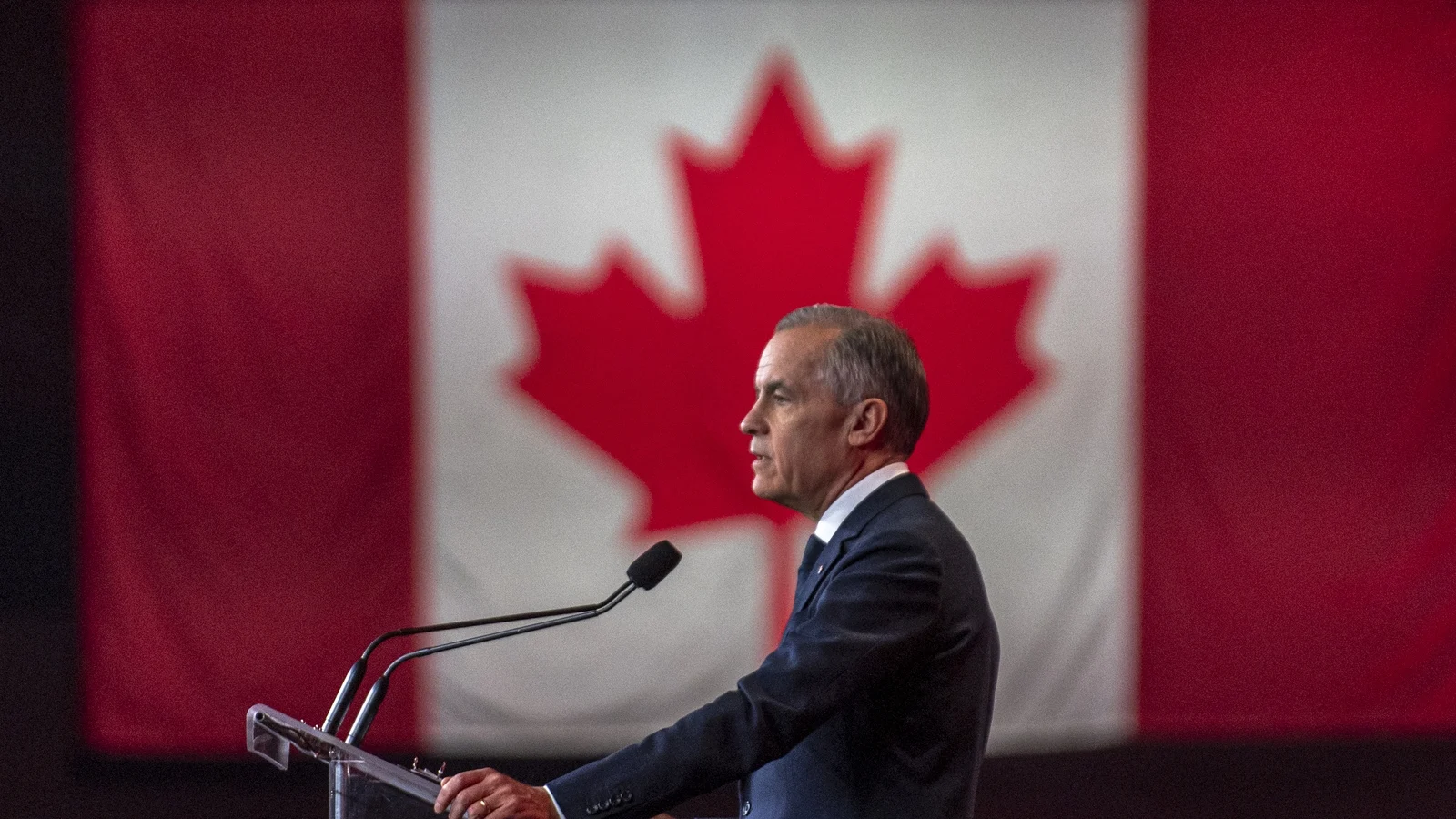
On a warm spring night that smelled of takeout and cherry blossoms in Toronto, the Liberal red flagged up across screens and storefronts as if to say: the long slog of coalition politics is over. Mark Carney, the economist-turned-prime-minister who arrived in Ottawa with more spreadsheets than campaign slogans, quietly clinched a parliamentary majority when two Ontario by-elections swung back to the Liberals.
The wins in University–Rosedale and Scarborough Southwest—ridings that live and breathe the city’s contrast between ivy-league blocks and immigrant high-rises—pushed the party to 173 seats in the House of Commons, according to the party’s announcement on X. For Carney, who campaigned as a steady hand to guide Canada through a tempestuous trade war with the United States, it means he can now shepherd legislation without constantly counting on ad hoc cross-party alliances.
A brittle peace ends, a new stability begins
“What this majority gives him is breathing room,” said Dr. Laila Ahmed, a political sociologist at Dalhousie University. “He no longer has to craft every policy as if it’s a hostage negotiation.”
For months the Liberals found themselves picking and choosing which Conservative votes to court—especially on economic and trade-related measures—creating a fragile legislative choreography. The stakes were tangible: tariffs announced by the U.S. under President Donald Trump had rattled exporters and manufacturers from British Columbia’s ports to Ontario’s auto shops.
Carney, who has been lauded internationally for convening middle powers in opposition to protectionist policies, campaigned on competence: pragmatic trade deals, steady finances, and a calming diplomatic voice. “We need a steady captain in stormy seas,” he said at a neighbourhood town hall last month. “My job is to keep Canada’s economy working for people—right now, that means clarity, not chaos.”
Local color: neighborhoods and narratives
University–Rosedale, once the seat of former deputy prime minister Chrystia Freeland, is a study in contrasts—brownstones and bookshops mingle with student-packed cafes and Ukrainian delis. When Freeland stepped down to take on a role advising Ukraine’s economic recovery, the seat became a symbol: the global and the local intertwined.
Scarborough Southwest, on the other hand, is a patchwork of neighborhoods where first- and second-generation immigrants run small businesses, host multicultural festivals and worry about tuition, transit and the cost of groceries.
“I voted for the person who I thought would steady things,” said Amira Hassan, who runs a halal bakery in Scarborough. “We are tired of the back-and-forth. My rent went up last year, my brother’s factory felt the tariffs. We want someone who will make it less scary.”
Defections, a “large Liberal tent,” and the questions they raise
The path to majority wasn’t just won at the ballot box. In a dramatic, if not entirely unprecedented, string of defections, five opposition MPs switched to the Liberals in the space of five months. Longtime Conservative Marilyn Gladu’s move last week was perhaps the most publicized; she told reporters she wanted “a serious leader who can address the uncertainty that has arrived due to the unjustified American tariffs.”
Carney’s team welcomed her into what Gladu called “the large Liberal tent.” The metaphor sat uneasily with some grassroots activists—tents imply warmth and shelter, but also the sense of a patchwork, provisional solution.
“Parties absorb people when money and markets are under threat,” said Andrew McDougall, an assistant professor of Canadian politics at the University of Toronto. “This isn’t just about ideology. It’s about where you think your constituents’ livelihoods will be best protected.”
Not all observers cheered the defections. Some critics said the mass migration of MPs toward the governing party amounted to opportunism that undermines electoral accountability. Supporters countered that, in a moment of economic peril, what matters most is effectiveness: can the government pass the measures needed to shield workers, stabilize trade and keep factories open?
Fragile wins and tight races
While the celebrations in Ontario were tangible, the story in Quebec remained unresolved. In Terrebonne, a riding whose last federal result was overturned by the Supreme Court over a voter’s envelope misprint, the race between the Liberals and the Bloc Québécois is razor-thin. That contest is a reminder: majorities are not monoliths—they are aggregates of local contests, each shaped by different histories, languages and priorities.
“Quebecers are listening to a different beat,” said Marc-André Pelletier, a high-school teacher in Terrebonne. “The Bloc talks about identity. The Liberals talk about economy and stability. Both messages resonate in different kitchens.”
What Canadians are thinking—and what it means globally
Polling from Nanos Research in recent weeks suggested a tilt toward Carney: more than half of respondents preferred him as prime minister, while only 23% favored Conservative leader Pierre Poilievre. That’s a dramatic swing from the months before Carney’s leadership, when Poilievre was widely projected to lead the next government by a large margin.
“People respond to calm when markets are nervous,” McDougall added. “Carney’s background—previously at central banks, both in Canada and abroad—sells competence in an uncertain world.”
On the international stage, the prime minister’s newfound legislative power reverberates beyond borders. For middle powers—countries like Canada, Australia, the Netherlands—that are not superpowers but punch above their weight in diplomacy, coordinated responses to trade unilateralism matter. Carney’s majority arguably strengthens Ottawa’s hand to negotiate, form coalitions and advocate for rules-based trade frameworks.
Policy priorities: survival, not reinvention
Laura Stephenson, chair of political science at the University of Western Ontario, captures the temper of the moment succinctly. “When you face a storm, you patch leaks. You don’t redesign the ship,” she said. “Carney is not here to remake society. He’s here to help Canada survive the economic turmoil.”
That focus will likely mean measures aimed at cushioning exporters from tariffs, targeted supports for industries most exposed to trade shock, and a steady hand on fiscal policy that reassures markets. But it also raises questions that go beyond balance sheets: how will the government balance reconciliation with Indigenous communities, climate commitments and a need for social programs when budgets are strained?
“There are always trade-offs,” said Miriam Osei, an economist at a Toronto think tank. “A majority gives Carney a chance to set a coherent response. But Canadians will watch to see whether that response is only about short-term stabilization or whether it builds resilience for the long term.”
Looking forward: the choices that will define this majority
A majority government brings clarity: bills will move more easily through the House. Yet power also brings responsibility. Carney’s next moves will reveal whether his leadership will be remembered as the steady captain who steadied the vessel, or the manager who traded long-term transformation for immediate calm.
So ask yourself: what do you want a majority to do? Protect jobs today, or invest in a different economy for tomorrow? Shore up trade routes, or reimagine how Canada fits into a multipolar world? As the applause fades and the first votes under this new balance are called, those are the questions Canadians—and the rest of us watching from abroad—will be answering.