Crans-Montana: The Quiet Resort That Wouldn’t Be Quieted
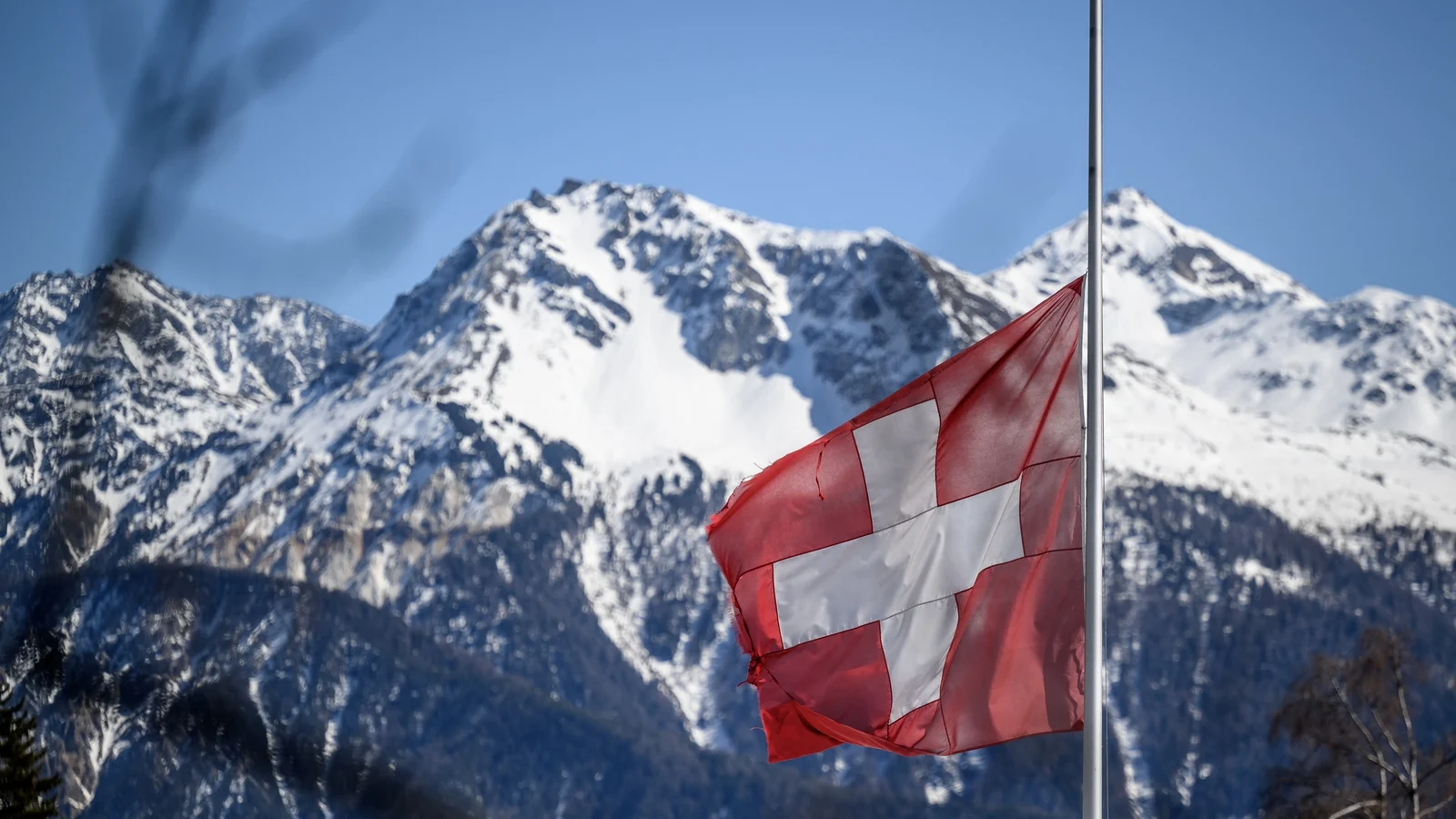
On a frosty January morning, the alpine silence around Crans-Montana was broken not by the crack of skis but by a different kind of echo—siren wails, whispered grief, and questions that have not yet been answered.
More than a year after a New Year’s Eve blaze tore through the Le Constellation bar, taking the lives of 41 people—most of them teenagers—and injuring 115 more, Swiss investigators have widened their net. Four more current and former local officials are now the focus of criminal inquiries, bringing the number of people formally under investigation to 13, according to officials close to the case.
What’s new in the probe
The investigation now includes the sitting municipal councillor responsible for security, the officer who held that post from 2013 to 2016, the current deputy head of the canton’s public safety department, and the mayor who led the neighbouring municipality of Chermignon between 2009 and 2016.
Those four are scheduled to be questioned between 11 May and 3 June, a procedural step that prosecutors say is necessary as they piece together responsibility for a night that has become a symbol of collective trauma.
“Extending the investigation to additional individuals is not about piling blame; it is about reconstructing the full sequence of decisions and omissions that allowed such a catastrophe to happen,” said a spokesperson for the Wallis (Valais) public prosecutor’s office.
Families demand answers
For the relatives who lost children and siblings, the legal cadence—hearings, dates, requests—has a beat of its own: a slow drum that marks progress but also prolongs the ache.
“We have to know who failed them and why,” said Romain Jordan, a lawyer who represents several of the victims’ families. “The hearings are painful but essential. Each testimony brings a fragment of truth, and for parents who still feel their child’s absence at the dinner table, those fragments matter.”
Across the resort, memorials of candles and photographs remain tucked into nooks and window sills. A florist at the main avenue, her breath fogging in the cold, folded paper flowers into small bouquets for visitors who still come to pay respects. “People stop and cry. They ask me about the names,” she said. “This isn’t just a headline. It’s our town.”
How investigators say the fire started
Prosecutors believe the blaze began when celebratory bottles—champagne with sparklers affixed—were raised in the bar’s basement, their sparks igniting the sound-insulation foam that lined the ceiling. The result was catastrophic and rapid: dense smoke, blocked exits, and a crush of people trying to flee a space designed for revelry, not for evacuation.
Experts in fire safety warn that certain kinds of acoustic foam, popular for its sound-deadening properties, can be highly flammable unless strictly controlled. “Indoor pyrotechnics are a known hazard,” said Dr. Anna Keller, an independent fire-safety engineer based in Geneva. “In many jurisdictions, their use is heavily restricted, and the materials used on walls and ceilings must meet rigorous fire-retardant standards. If inspections lapse and the paperwork is never reviewed, the margins for error shrink to zero.”
According to the Federal Office for Civil Protection, 38 victims remain in hospitals or rehabilitation clinics—19 in Switzerland and 19 in neighbouring countries—underscoring the cross-border impact of a tragedy that struck a global tourist destination.
Accountability on trial
Already under investigation are the bar’s owners, a French couple who face accusations including manslaughter by negligence, negligent bodily harm, and negligent arson. Jacques Moretti, one of the owners, is due for further questioning on 5 June.
But the widening probe signals something else: an attempt to understand whether municipal or cantonal lapses—inspections not carried out, permits not followed—contributed to the disaster.
Mayor Nicolas Feraud has told investigators he was unaware that annual safety inspections at Le Constellation had not been completed for six years. “We always believed our teams had the capacity and resources to conduct the necessary checks,” he said in a statement to the press. “If there were gaps, we need to know why.”
Not everyone accepts that explanation. “A town that makes its living from tourism cannot afford to be complacent,” said Isabelle Perrin, who runs a chalet rental agency and lost a niece in the fire. “We tell visitors Crans-Montana is safe. We told our children it was safe. Those promises mean something.”
Prosecutors push back on calls for outside oversight
One of the more contentious legal battles has been procedural. Lawyers for victims’ families asked for an extraordinary prosecutor to be appointed—someone outside the local office to oversee the inquiry, given its international ramifications and intense media scrutiny. The Wallis prosecutor’s office rejected that request, asserting it has the jurisdiction, independence, and extra staff to manage the investigation.
“This case is extraordinary in its human and international dimensions, but that does not automatically strip us of competence,” the office said in a written response. “We have reinforced personnel and remain committed to impartiality and efficiency.”
Bigger questions that stretch beyond the Alps
The Crans-Montana tragedy sits at the intersection of familiar global anxieties: how do we protect young people in public spaces, how do local governments enforce safety in economies built on tourism, and how do we ensure transparency when community trust is shattered?
Nightclub fires are relatively rare in modern Europe, but when they happen the human cost can be devastating. The Station nightclub fire in Rhode Island in 2003—where indoor pyrotechnics ignited flammable soundproofing—killed 100 and fundamentally changed safety rules in the United States. Similar lessons are being sought now in Switzerland: were regulations adequate, were they enforced, and were the people charged with oversight doing their jobs?
These are not abstract problems. They are legal, architectural, cultural, and moral. They ask us to consider how a small Alpine resort, with its glittering hotels and crowded slopes, balances the desire for spectacle with the obligation to keep people alive.
What happens next?
Investigators will continue to call witnesses and comb through documents, receipts, emails, and inspection logs. More hearings are scheduled over coming weeks, and for many families every date feels like a step toward closure, or toward more questions.
“Closure is not a word I use lightly,” said Jordan, the victims’ lawyer. “Justice, accountability, lessons learned—those are what the families ask for. They do not want this forgotten or swept away by the next season of tourists.”
As spring thaws the snow on the slopes, Crans-Montana will open its lifts and welcome skiers. But the resort will be different for a long time: quieter at night, with memorials by the pavement, and with officials under watch as the legal process continues.
What should communities prioritize when rebuilding trust after a disaster? How do we balance economic life—restaurants, clubs, festivals—with the hard, behind-the-scenes labor of compliance and oversight?
Those are not just questions for Switzerland. They are questions for anyone who gathers under low ceilings, who lights candles for celebration, and who assumes that safety is simply given. In Crans-Montana, the work of answering them has only just begun.