Nightfall over the Black Sea: Odesa’s port hit as war’s reach stretches again
When the wind off the Black Sea whistles through Odesa’s warehouses, it usually carries the tang of salt and diesel, the ordinary soundtrack of a working port. On the night of the attack, that familiar air was laced with smoke and the thin, metallic tang of burnt cargo as drones struck berths, warehouses and rail links — the arteries through which Ukraine connects to the world.
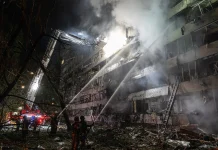
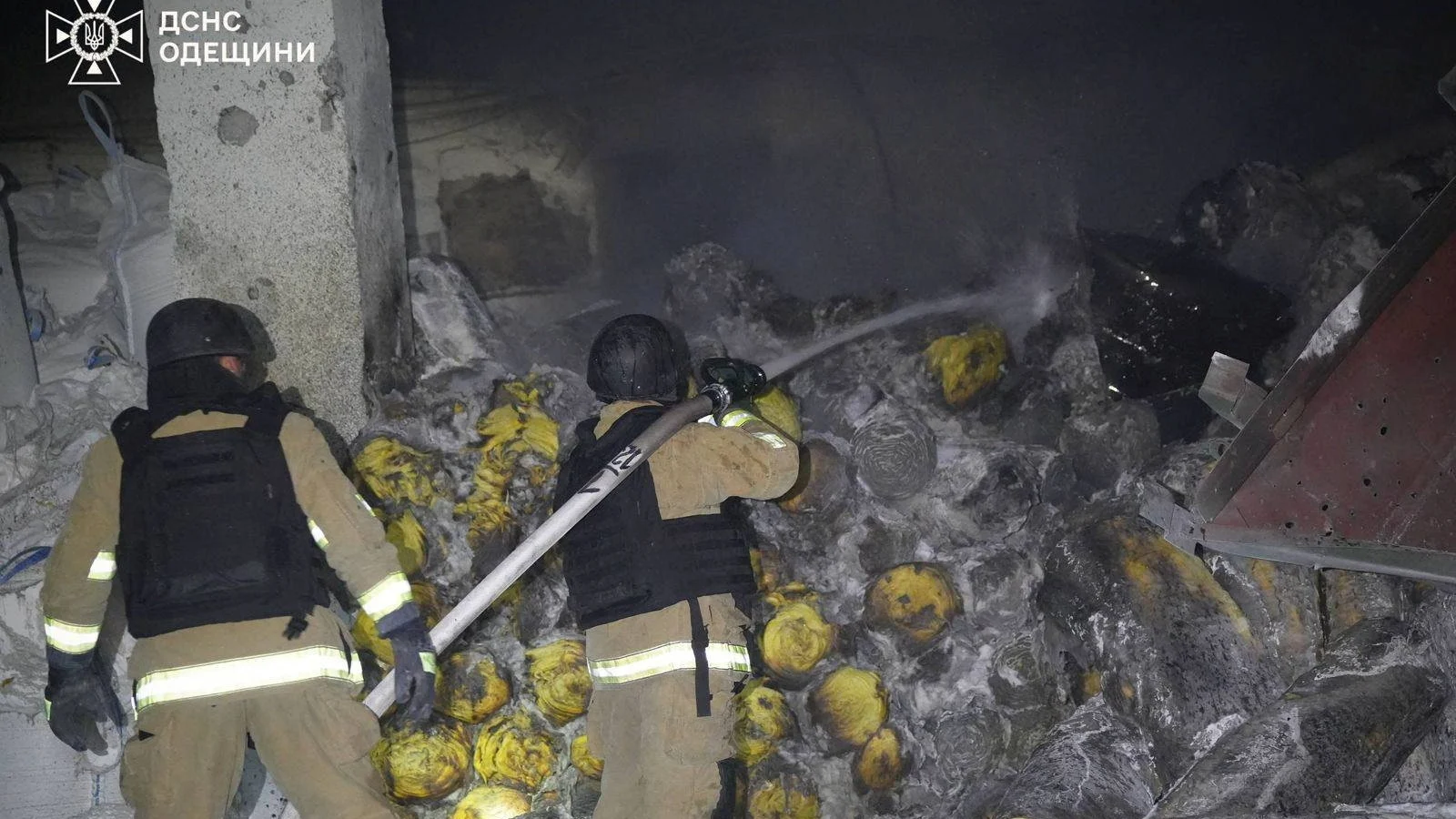
Deputy Prime Minister Oleksiy Kuleba reported the damage on Telegram: berths, warehouses, railway infrastructure and port operator facilities were hit, and a ship’s hold caught fire. Preliminary reports from Ukraine’s seaports authority said the port continued to operate and, thankfully, there were no immediate reports of casualties from the Odesa strike. But the images — burned corrugated roofs, a blackened hold and crews working under emergency lights — tell another story, one of disrupted livelihoods and a logistics chain under siege.
What was struck and why it matters
The pieces of infrastructure hit are not incidental. Berths and warehouses are where export contracts become reality; rail links bind inland farms and factories to the seaboard; port operator facilities are the nerve centers that coordinate cranes, tugs and manifests. Damage to any of these points ripples across markets.
“It’s not just metal and concrete,” said Olena, a longshore worker who has worked on Odesa docks for 18 years. “When a warehouse burns, the people who packed that grain, the truckers waiting at dawn, the families who depend on the wages — everything stops. You feel the pause in the city.”
That pause is not abstract. For more than four years since Russia’s full-scale invasion began, maritime export routes out of Ukraine have been targeted repeatedly. The strikes complicate shipments of foodstuffs and raw materials that feed global markets and underpin Ukraine’s wartime economy. Even when ports remain technically open, the risk of attack hikes insurance costs, deters shipping lines, and forces cargo to take longer, costlier routes.
Sky battles and staggering numbers
The Ukrainian air force said Russia had launched 215 drones since 6pm the previous day; of those, 189 were downed or neutralised. Whether every loss is a clear defeat or a costly attrition on both sides, the volume tells a new story of modern warfare — one fought not just with missiles and artillery but with swarms of lightweight, hard-to-track unmanned systems.
“We’re watching a shift in tactics,” explained Dr. Marta Kovalenko, a maritime security analyst. “Large missile strikes get headlines. But drone swarms are disruptive in different ways: they force continuous air defences, they strain logistical capacity, and they make any infrastructure a potential target round the clock.”
The human price: Zaporizhzhia’s sorting yard
Beyond Odesa, Mr Kuleba also reported a lethal strike at a sorting yard near Zaporizhzhia-Live station in the southern Zaporizhzhia region. An assistant train driver was killed and the primary driver was hospitalized. Train yards are lifelines for Ukraine’s internal distribution — for grain to reach ports and for goods to cross the country — and assaults on them are attacks on the country’s connective tissue.
“I worked as an assistant on those runs,” said Petro, 53, a retired railman from Zaporizhzhia who still has friends on the line. “You trust the tracks, you trust the timetable. When a yard burns, it’s like losing a heartbeat.”
Syzran: Collateral damage inside Russia
War’s collisions are not confined to battlefronts. In Syzran, a city in Russia, local emergency services said a portion of an apartment block collapsed after what they described as a Ukrainian drone strike. Officials reported two deaths and initially said up to 12 people were injured, according to RIA Novosti. The reality of residential buildings reduced to rubble — whether in Ukraine or Russia — is a grim reminder that civilians far from front lines can be pulled into harm’s way.
“Families were inside their apartments,” recalled a neighbor who watched rescue teams sift through debris. “People like you and me. You don’t expect the ground to give way beneath your feet.”
Local color: the human geography of port life
To understand the full impact, imagine the daily rhythm that the attack disrupted: fishermen mending nets at dawn, the sharp calls of foremen, the clack of rail switches, the midday exodus of cranes. Odesa, with its 19th-century Arcadian promenades and Soviet-era warehouses, is a city that marries sea breeze with industry. Markets that trade in sunflower oil, wheat and steel do not merely ship commodities; they move stories — of harvests, of contracts, of families abroad waiting for cargo to arrive.
“There’s a coffee stall near the main quay,” said Marina, a small business owner. “On good days we send coffee to crews who then send money home. On nights like this, the queue is thinner and the faces are tired.”
The wider picture: food security, economics and escalation
Attacks on ports and logistics hubs have consequences beyond immediate damage. Global traders watch the Black Sea lanes carefully: disruptions can inflate prices for grain and vegetable oil, hitting importers in Africa, the Middle East and Asia. For Ukraine, where agricultural exports represent a major portion of GDP and a vital source of foreign currency, persistent hits to ports constrain government revenues and recovery capacity.
“We’re seeing the intersection of military strategy and economic warfare,” said Dr. Kovalenko. “Denying access to ports isn’t only about immediate tactical gain — it’s about reshaping the adversary’s economic lifelines.”
Questions to hold while the smoke clears
As you read this, ask yourself: How do we protect civilian infrastructure in an era of ubiquitous drones? What responsibility do states and companies have to shield supply chains that feed cities thousands of miles away? And what do these attacks tell us about the future of conflict, when a night sky can be weaponised at scale?
There are no easy answers. There are, however, clear choices about fortifying infrastructure, investing in surveillance and missile-defence networks, and supporting humanitarian channels so that food and medicine keep moving even in times of conflict.
After the blast: resilience and repair
In Odesa, workers were already clearing debris, patching roofs and inspecting rail lines in the hours after the attack. There is a practiced resilience here — not a romanticized stoicism, but a pragmatic, often communal response to calamity. Volunteers ferry parts and tea to crews working through the night; local NGOs catalogue damage and help families affected by the disruption.
“We take what’s broken and we fix it, because there’s no other choice,” Olena said. “You rebuild, you load the next ship, you keep the lights on.”
That pragmatic courage is the human story beneath the headlines: communities improvising against uncertainty, port workers who keep global trade moving, families who exchange worry for action. The drones may come in waves, the numbers may climb, but the people who live beside the sea carry on — sometimes quietly, sometimes with a stubborn defiance that looks like breakfast at a sidewalk stall while cranes still turn in the distance.
Where does responsibility lie for protecting these lifelines — and how will the international community balance pressure with practical support? The answers will shape not just the future of these ports, but the endurance of the people who depend on them.