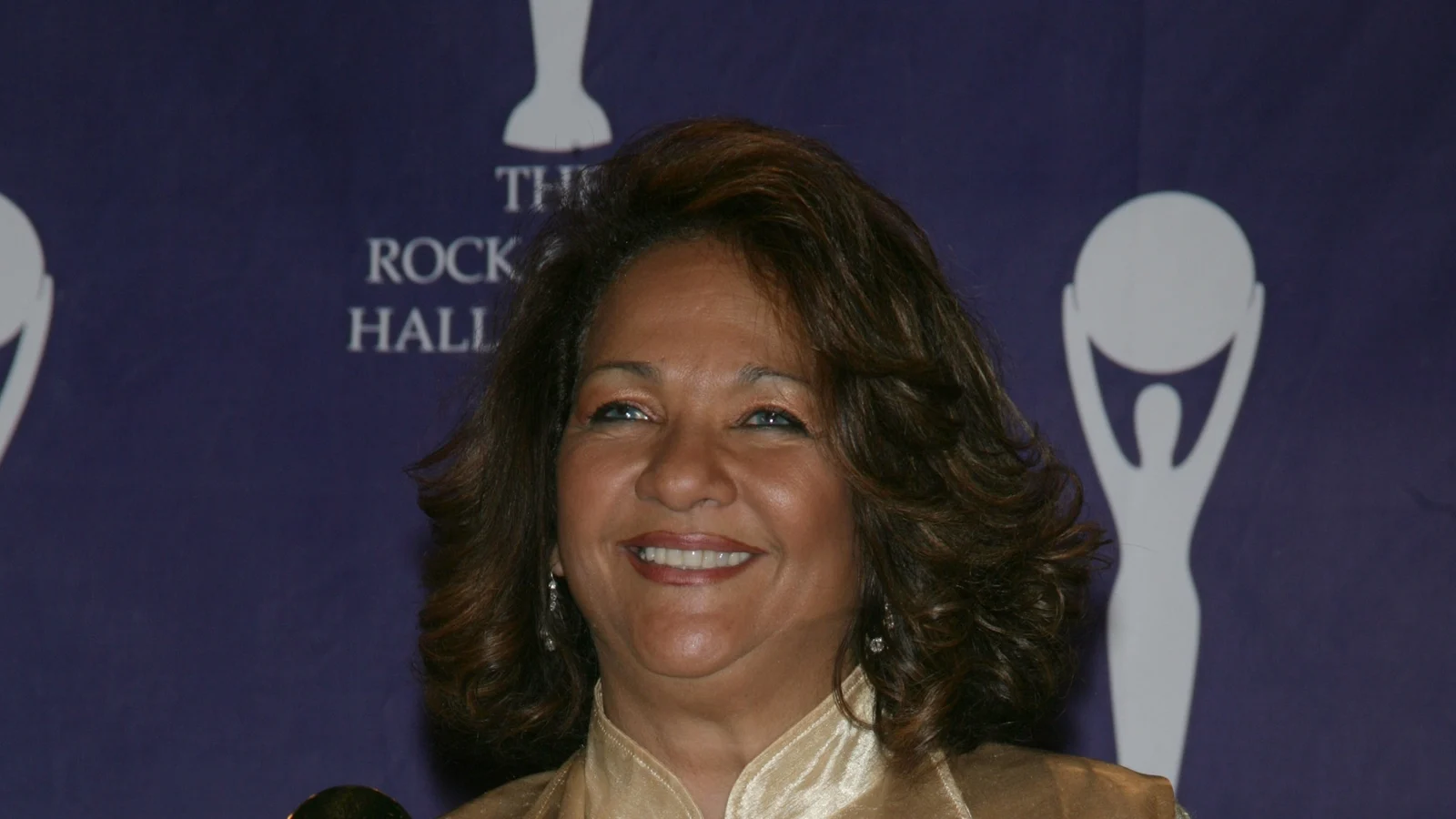
Nedra Talley Ross: The Last Ronette, Gone at 80 — A Voice That Lingers
When a voice that helped shape the soundtrack of the 1960s falls silent, the air seems to hold its breath. Nedra Talley Ross, the last surviving member of The Ronettes, has died at 80. The news landed like a vinyl crackle at the start of a favorite record — sudden, intimate, and impossibly personal for anyone who has ever mouthed the words to “Be My Baby” in a car, a kitchen, or at the back of a classroom.
The family’s note online said she passed surrounded by loved ones, at home and at peace. “She went home to be with the Lord,” her daughter wrote, promising a later celebration of life. Social feeds that once celebrated retro beehives and sequined stage jackets immediately filled with small memorials: photos of teenage girls with blue-shaded eyelids, fathers pointing to a worn single with pride, older sisters twisting their hair into the signature bouffant.
A Sound That Changed the Room
It is hard to overstate what The Ronettes did in the early 1960s. With their dramatic eyeliner, towering hair, and voices that could sound both fragile and indomitable, they turned teenage longing into an art form. Their signature smash “Be My Baby” — released in 1963 — hit No. 2 on the US Billboard Hot 100 and became an enduring masterclass in pop production. Produced by Phil Spector and draped in his so‑called “Wall of Sound,” the record was as much about texture and atmosphere as it was about melody.
“You could feel it in your chest,” a lifelong fan named Maria Blanco in Los Angeles told me. “It was like love had a rhythm, and Nedra’s voice was the echo.”
The Ronettes’ catalogue also includes the rain-soaked romanticism of “Walking in the Rain,” the declarative pleading of “Baby, I Love You,” and the heartbreak‑simmering “(The Best Part of) Breakin’ Up.” Though the group officially released just one studio album — Presenting the Fabulous Ronettes Featuring Veronica (1964) — their influence rippled far beyond a single LP. Artists from Brian Wilson to Bruce Springsteen have acknowledged the group’s impact; the way those harmonies sit atop orchestral swells still serves as a template for dramatic pop production.
The Image and the Era
Think of the beehive and you think of an era: girls swapping gossip in diners, poodle skirts and slim cigarette ads, cities pulsing with new sounds. Yet behind the lacquered hair and matching dresses were young women navigating a music industry that often tried to tidy, package, and profit from their youth. Nedra — alongside cousins Ronnie Spector (born Veronica) and Estelle Bennett — walked that tightrope, building a public persona that was glamour and grit at once.
“They were presented as perfect girls next door, but their story is so much more complicated,” explains Dr. Aisha Reynolds, a music historian who studies 20th‑century American pop. “The Ronettes embodied the contradictions of the era: immense popularity and limited control, exposure and exploitation. Nedra’s voice carried both the joy of stardom and the weight of its costs.”
More Than a Hairstyle: Cultural Echoes
There is something almost religious about the way “Be My Baby” reverberates across generations. John, a record collector I met flipping through a crate in Brooklyn, held up a 45 and said, “You don’t play that record for people — you baptize them.” That is not hyperbole. Musicians and film directors have used The Ronettes’ songs to conjure nostalgia, to create tension, to underscore innocence and longing.
Nedra’s place in that iconography was quieter than Ronnie Spector’s headline-making life, but no less essential. She provided harmonic counterpoints that made the leads bristle with emotion; she was part of a tightly wound machine whose seams were invisible because of the polish. When the Rock and Roll Hall of Fame inducted The Ronettes in 2007, it was an institutional nod to the group’s long shadow. For Nedra, the honor was one among many small corrections history eventually made in acknowledging women whose contributions had been minimized.
Legacy in Numbers and in Memory
Numbers tell part of the story. “Be My Baby” achieved a No. 2 position on the Billboard Hot 100 in 1963 and has been featured on countless “greatest songs” lists since. The group’s induction into the Rock and Roll Hall of Fame came in 2007. Today, their recordings have earned millions of streams on digital platforms, but that figure only hints at an older, analog intimacy — teens pressed up against transistor radios and lovers listening together on dimly lit nights.
“Statistics don’t capture the way a single harmony can take you back to the first time you felt something intense,” said music teacher Marco Alvarez in Miami. “Nedra’s voice is a bookmark in a life.”
Remembering the Human in the Headlines
When the glitz fades, what remains is the human choreography behind the songs: late-night rehearsals, car rides to auditions, the fierce loyalty of family. Several tributes called attention not only to Nedra’s artistry but to her warmth. A neighbor in her community recalled how she would wave to children playing in the street, sometimes with a cassette of old demos tucked into her purse.
“She was always kind,” the neighbor said. “You’d see her and think, there goes someone who made the soundtrack to my mother’s life, my grandmother’s life — and she’s smiling like she knows a secret.”
Questions to Carry With Us
As we say goodbye, there are larger questions to consider: How do we honor artists whose lives were entangled with an industry that both elevated and exploited them? How do we keep those harmonies alive without flattening the people who sang them into icons alone?
For those who grew up with The Ronettes and for younger listeners discovering them for the first time on streaming playlists, Nedra Talley Ross’s passing is a moment to listen differently. It’s an invitation to turn the volume up, to read the liner notes, to remember that behind every recorded note there was a person with a story.
What Comes Next
The family has asked for privacy and promised a Celebration of Life to be announced later. In the meantime, tributes will multiply online and in living rooms, on radio waves and in classrooms where new musicians study the craft of harmony. Nedra’s voice — part of a trio that defined a generation — will continue to be a companion through sorrow, joy, and everything in between.
So, when the next rainstorm rolls in, when a lover knocks on the door, when a record skips to that opening drumbeat, listen. Hear the echo of an era, and remember the woman behind it. What song did you first hear that changed you? How will Nedra’s music sound in your life now?