Rubble Roads: How Gaza’s People Are Turning Destruction into a First Step Toward Rebuilding
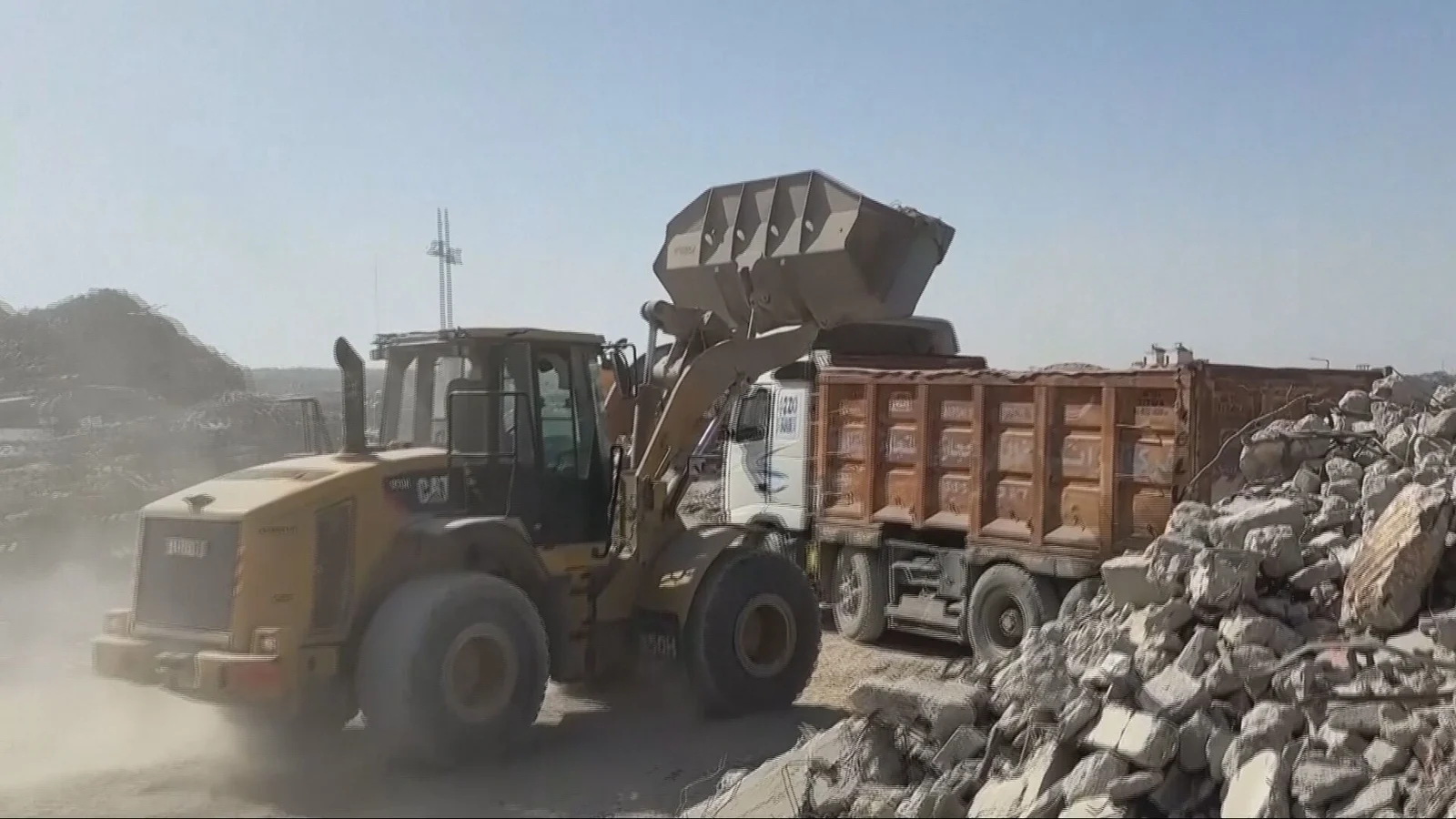
The first thing you notice when you step into southern Gaza is the dust. It hangs in the air like a memory—fine, gray, stubborn—stirred up by the slow, grinding teeth of machines turning deathly silence into a kind of activity. Bulldozers plough through piles of concrete and bent rebar, excavators clawing away at what used to be homes, shops, schools. Men with work boots and tarpaulin hats stand beside them, licking their lips against the grit, eyes glinting with a mix of purpose and fatigue.
“We are making a road out of what was a home,” says Alessandro Mrakic, who runs the UN Development Programme office in Gaza. He speaks with the weathered calm of someone who has seen emergencies before and knows how long the climb back up will be. “We don’t just clear; we sort, crush, and reuse. It’s practical—and it gives people work.”
The idea that could change daily life
It is a blunt, pragmatic solution: crush the wreckage, sift the steel and concrete, and repurpose the gravel and fill to repave streets, pad shelter sites, and lay foundations for community kitchens. Machines reduce giant, jagged ruins to manageable granules. The UNDP has so far removed about 287,000 tons of rubble—an enormous figure until you remind yourself it is barely a splinter compared with the full scale of destruction.
UNDP officials estimate Gaza still houses roughly 61 million tons of debris—one of the largest post-conflict clearance challenges in recent memory. At the current pace, and with unimpeded access to fuel and heavy equipment, clearance could take up to seven years. Those are generous assumptions in a place where fuel is scarce, access is contested, and the threat of unexploded ordnance punctures every day’s work.
On the ground in Khan Younis
In Khan Younis, on a dusty street that used to be lined with citrus trees and small shops, the sound is relentless: metal grinding, engines rasping, workers shouting instructions over the machinery. Men with orange vests sweep and sort. Women walk by carrying thermoses—their bright floral scarves a small defiance against the monotone of concrete.
“We used to sit and sip tea under the old fig tree,” says Fatima, a middle-aged woman from a nearby tent encampment. “Now we sit and watch the diggers. The tea is the same. The stories are the same. The soil tastes different.”
The reclaimed rubble is being used to mend roads that are vital arteries for hospitals and water trucks. Officials say many wells and clinic entrances remain blocked by collapsed structures, and loose rubble makes it almost impossible for ambulances to reach those who need them. The work is not glamorous; it’s a kind of civic triage, rebuilding access before buildings.
Risks and real costs
There is danger in every scoop. Before a single block is lifted, the UN’s mine action teams sweep the site for explosives and ordnance. Hidden beneath the broken facades are booby traps and shells—silent killers lying in wait.
“We check every meter,” says a demining supervisor who asked not to be named for security reasons. “We mark, we clear, and then the heavy equipment comes in. It’s slow, because speed kills in more ways than one.”
For men like Ibrahim al-Sarsawi, 32, the risk is also a daily calculation. “I can’t find any other source of income,” he says, wiping a hand across his dusty face. “I work because I have to. You might get hurt. You might not come home. But what else am I supposed to do?”
That stark pragmatism is echoed throughout Gaza. For many, this is work and survival braided into one. For others, it’s the first step in reclaiming a small piece of their daily life: a smoother path to the cistern, a stretch of road where children can walk without fear of stepping on nails or twisted metal.
Numbers that demand global attention
The scale of rebuilding that Gaza needs is staggering. A recent joint assessment by the European Union, United Nations, and World Bank estimates that recovery and reconstruction will require about $71.4 billion over the next decade. That figure covers housing, infrastructure, water and sanitation, electricity, schools, and health services—everything that makes a normal life possible.
“We removed 287,000 tons so far—but that is just the tip of the iceberg,” Mrakic says. “The real test is sustained support: fuel, equipment, safe corridors for materials, and time.”
Cultural fragments and daily endurance
Walk through any of the temporary camps scattered outside Gaza City and you’ll see how people stitch life back together. A father repairs an oud in a corner, its wood sanded smooth despite the chaos outside. Children draw little chalk houses on flat patches of reclaimed concrete as if rehearsing the architecture of the future. A woman makes mana’eesh—flatbread with thyme—and sells slices to workers for a few shekels. The smoke from a small stove carries a scent of cumin and resilience.
“We are not just clearing rubble,” says Sobhi Dawoud, a 60-year-old displaced man sitting outside his tent. “The war is over, yes. But this is the beginning of another war—a war of rebuilding: schools, water, electricity, sewage. The fight now is to put life back.”
Questions we can’t avoid
What does rebuilding mean when the very soil is contested? How do you plan a decade-long reconstruction while short-term politics and security anxieties keep shifting? And how should the international community balance urgency with care—speeding up aid while ensuring that rebuilding is safe, sustainable, and respects local needs and labor?
These aren’t theoretical questions for Gaza’s residents. They are practical matters of survival and dignity. A road repaired with crushed rubble can be a lifeline, yes—but it is also a stopgap. True recovery will need permanent materials, steady funding, and, above all, political will.
Beyond stones: what rebuilding must include
- Safe, continued access for heavy machinery and fuel;
- Comprehensive demining and unexploded ordnance removal;
- Long-term funding for housing, hospitals, water systems, and electricity;
- Meaningful local employment and capacity-building so Gazans shape their own recovery.
“If everything depended on outsiders, we would never start,” remarks Lila Mansour, an engineer coordinating community repairs. “But people want to work. They want to be part of rebuilding their neighborhoods. That dignity matters.”
What the rubble reveals
Rubble is more than a physical problem; it’s a witness. It tells stories of families interrupted mid-laundry, of storefronts frozen with last week’s goods, of schools where a single desk remains upright among the plaster and glass. Turning crash into road isn’t a solution to all those stories, but it is a beginning—a way to restore movement, connection, and the possibility of commerce and care.
As machines chew and sort, and as workers carry thermoses and small radios, one question settles in: when the dust finally clears, will the world be ready to fund and support the next stages? Will international pledges turn into sustained action? Gaza’s people are doing their part—often with little more than muscle, grit, and ingenuity. The rest is up to the rest of us.
So as you read this, consider the scale: 61 million tons of rubble, seven years of clearance in best-case scenarios, $71.4 billion in rebuilding needs. And then imagine a street—rebuilt, paved with stones ground from the ruins of a home, children walking to school, a vendor selling tea at dusk. What does it take, globally and locally, to make that image durable? What role do we play, right now, in stitching those fragile first stitches into something that lasts?