When the Night Shifted: A Dinner, a Gunshot, and the Quiet Panic at the Washington Hilton
It was supposed to be one of those evenings when Washington performs the ritual it has performed for decades: bright lights, ruffled suits, and cameras flashing as reporters and politicians trade jokes and small talk at the White House Correspondents’ Association dinner.
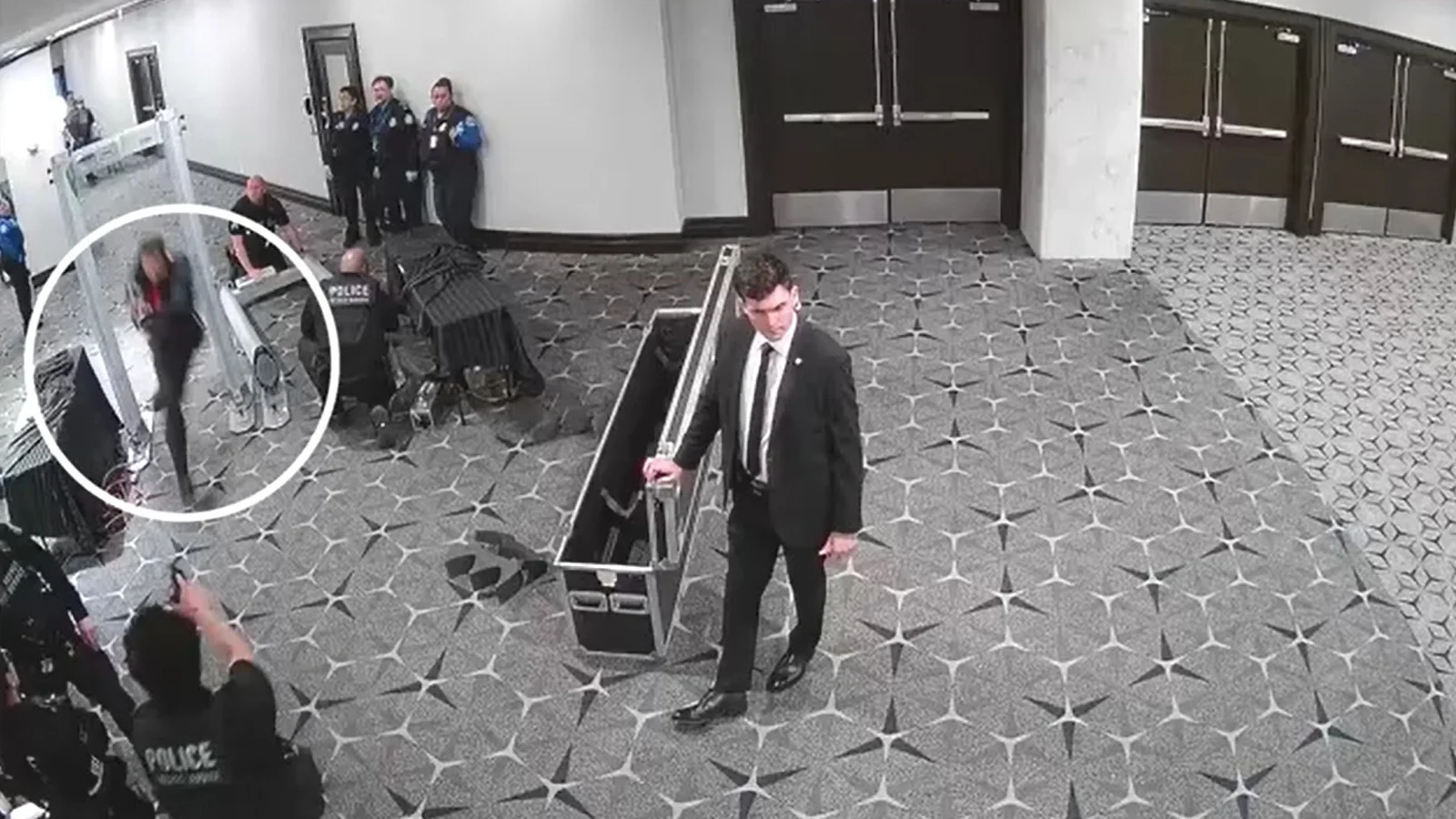
Instead, something jolting and raw broke the choreography. Security-camera footage, later released to the public, captures a fractured, chaotic minute inside the Washington Hilton: a man darting through a security checkpoint, a sudden report of gunfire, and a federal agent falling to the carpet.
From Laughter to Lockdown
The Washington Hilton, with its long history of hosting headline-making events, usually hums with a peculiar mix of nerves and glamour—valet attendants navigating black SUVs, servers balancing trays of hors d’oeuvres, and attendees exchanging easy, sometimes rehearsed, laughter. That evening, witnesses say, the tension was audible in a different key.
“One second people were wrapping up a backlog of small talk, the next people were ducking, hands over their heads,” recalled a hotel staffer who asked to remain anonymous. “You could feel a heartbeat of fear run through the room.”
According to authorities, the suspect—identified in statements as Cole Tomas Allen—moved through a checkpoint in the hotel’s interior and opened fire at point-blank range, striking a federal agent. The footage, released by the U.S. attorney handling the case, drew immediate attention not just for the violence it recorded but for how it exposed the vulnerabilities of public gatherings even in secured environments.
What the Tape Shows—and What It Doesn’t
The released video is not a feature film of context. It is, instead, vertical slices of real time: a man running, a figure dropping, the scramble that followed. Journalists who reviewed the images noted details—floor patterns, window frames, the layout of an adjacent gym—that matched archive photos of the Washington Hilton, corroborating the location.
“Security footage can be both blunt and revealing,” said a security analyst who studies event vulnerabilities. “It compresses decision-making into a handful of frames. You can see where protocols held and where gaps appeared.”
The Human Cost—and a Line About Friendly Fire
When gunfire erupts where officials, reporters, and staff gather, questions come as quickly as sirens. Was the agent struck by a stray bullet? Was anyone else injured? The scene’s initial fog of uncertainty was followed by two firm statements: the White House and the Secret Service both indicated that the injured agent had not been struck by friendly fire.
“We are relieved to confirm that the agent’s wound was not the result of friendly fire,” the head of the Secret Service said in a brief remark that sought to close one avenue of rumor. President Donald Trump reiterated that message in his own comments, underscoring the administration’s focus on the agent’s wellbeing.
There is power in those clarifications. Friendly fire is not just a tactical issue—it feeds public doubt about command, communication, and control. But even with that reassurance, the photograph of the evening remains: a man bolting through a checkpoint, an agent shot, a room of journalists who spent the next hours reconciling their role as witnesses with their vulnerability as people in harm’s way.
Voices from the Scene
In the hours after the incident, attendees and staff circulated small, vivid recollections.
“I remember the slap of my heel on the carpet and the way the laughter just… stopped,” a reporter said. “No one knew if they should run out, hide, or call out. You learn how quickly civility peels away.”
A neighboring vendor, who sells Washington-themed memorabilia outside the hotel on other days, described the aftermath with the blunt sadness of an observer. “This city is built on processions—marches, inaugurations, banquets. You expect security. You don’t expect to see someone shot while people are trying to take selfies in the lobby.”
What Experts Are Saying
Security professionals point to a handful of takeaways that will shape policy discussions in coming weeks: the design of checkpoints, the training and equipment of event personnel, and the technology used to screen entrants at crowded functions.
“High-profile events create predictable crowds. That predictability is both a blessing for logistics and a target for those with malicious intent,” said an academic who studies homeland security. “We might see more emphasis on layered security—combining visible barriers, smart surveillance, and rapid medical response protocols.”
Video, Verification, and the New Public Square
One striking element of this episode is how quickly footage circulated and how rapidly verification followed. Reuters and other outlets were able to corroborate the video’s location by matching architectural and interior details to archive imagery—a modern twist on the old newsroom task of triangulating eyewitness reports.
That speed is a double-edged sword. Instant footage helps tell the truth quickly, but it also accelerates rumor and stresses judicial processes. A video that outruns the facts can harden public opinion before investigators finish their work.
So how should we, as consumers of news, balance our hunger for immediacy with a need for patience and verification? Can a democracy sustain both an open public eye and a fair process for those accused?
Bigger Threads: Media, Safety, and a Shifting Landscape
This incident sits at the intersection of several larger themes. There’s the perennial struggle to protect public figures and spaces without turning every gathering into a fortress. There’s the role of journalists who cover conflict and can, in a flash, become part of the story. And there’s a national conversation about gun violence that refuses to cool down.
Across major U.S. cities, high-profile events have prompted incremental changes in security: more checkpoints, more metal detectors, and often, more friction between hospitality and safety. Yet each adaptation comes with trade-offs—access versus protection, warmth versus barriers.
“We have to ask ourselves: what are we willing to tolerate?” the security analyst asked. “Do we accept heavier screening at cultural and civic events? Or do we find ways to keep venues welcoming while being smarter about risk?”
Looking Ahead
In the hotel’s quieter hours after the incident, custodial staff unrolled new carpets and security teams reviewed footage and logs. The injured agent’s condition, while reported as non-friend-fire, remains a human story—a person whose life is altered by a single bullet and a single bad decision.
As readers, we can do more than absorb the next headline. We can ask how public life adapts to risk, how journalists balance access against safety, and how communities heal after sudden violence. We can demand careful reporting and measured policy, not only swift verdicts cast on social media.
What would you change about public event security in your city? Would you trade a little convenience for a lot more safety—or do you worry about doors closing on the open civic spaces we need? The answers matter, because tonight’s dinner could have been anywhere; tomorrow’s could be in your town.
- Incident: Shooter moved through a Washington Hilton security checkpoint and shot a federal agent.
- Verification: Media outlets matched footage to the hotel’s interior to confirm location.
- Official statements: The Secret Service and the president said the agent was not hit by friendly fire.
It’s a small roster of facts amid a larger, messier human story: the scramble, the aftermath, the questions left behind. And for a few people who were in that ballroom, the evening will never feel the same.