Ramstein at Dawn: The Quiet Before a Transatlantic Storm
There is a rhythm to life around an airbase the size of a small town. Before dawn, shops on the main strip of Kaiserslautern flick their lights on for an early rush of military families grabbing coffee. Dogs trot beside strollers while the faint thrum of C-17 engines slips through thin curtains. A waitress at a pocket-sized bakery—who has watched rotations and goodbyes for a decade—says the comings and goings are part of the community’s heartbeat.
“When the planes fly, you can feel the economy in the air,” she told me, stirring her espresso as if each spoonful held a memory. “Contracts, weekends, kids at school—everything changes when a brigade leaves.”
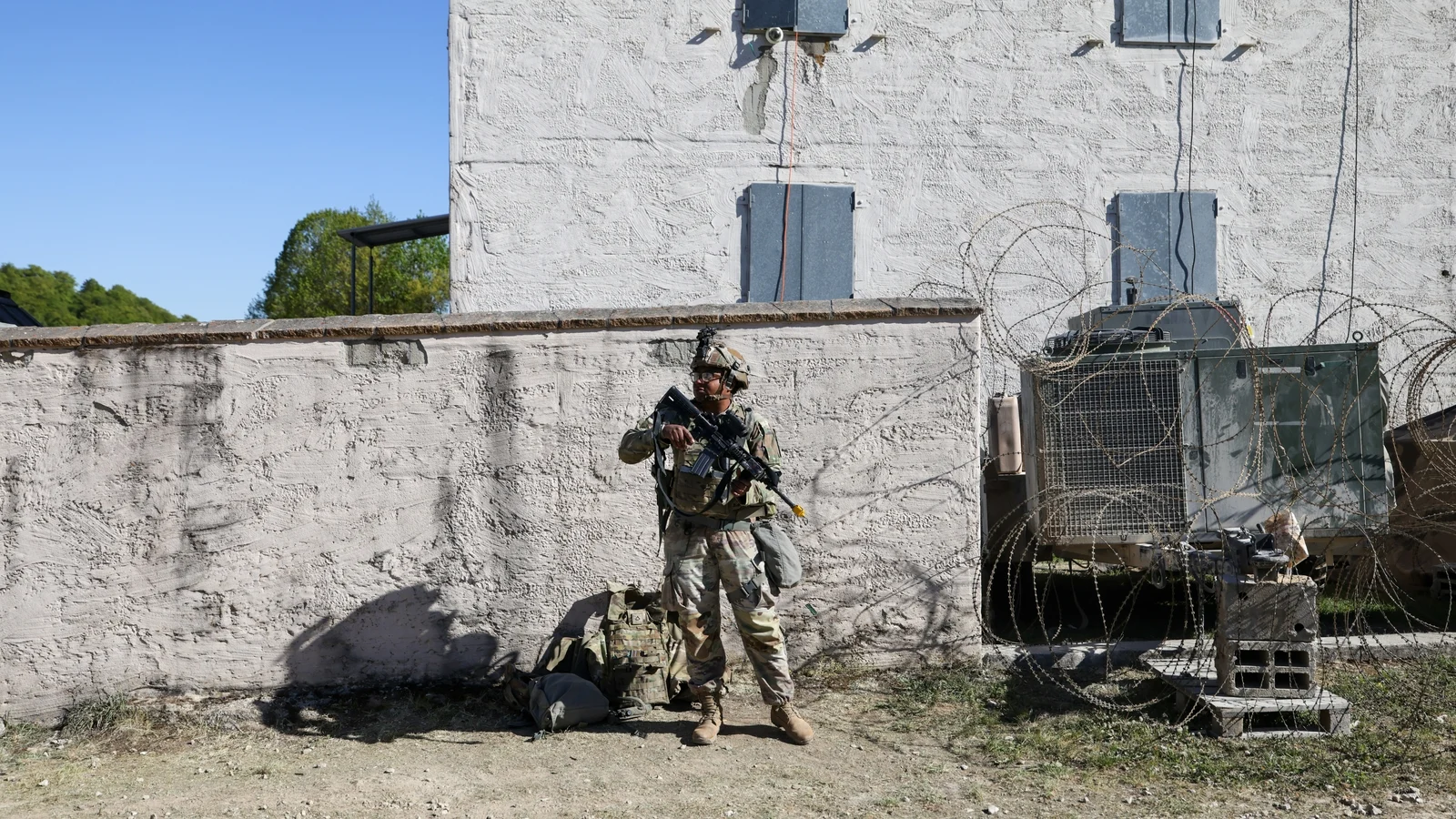
Now, those same streets are bracing. The United States has announced it will reduce its troop presence in Germany by at least 5,000 personnel, with Pentagon officials saying the drawdown could be finished within six to twelve months. But the announcement feels less like a precise surgical move and more like the opening chord of a new era for Europe, America, and the treaty alliances that stitched them together after World War II.
What Was Announced — And What It Might Mean
The numbers are stark: as of 31 December 2025 there were 36,436 active-duty U.S. troops stationed in Germany—far more than in any other NATO ally in Europe. For comparison, Italy hosts about 12,662 and Spain roughly 3,814. The Pentagon’s timeline offers a tangible window: a rebalancing of forces over the next half-year to year.
A Pentagon spokesman, who spoke on background, described the move as a “reassessment of force posture” and emphasized logistical realities in a world where crises emerge quickly and unpredictably. “We’re streamlining assets and redeploying capabilities to reflect current strategic priorities,” he said. But to many Europeans, streamlining reads as stepping back.
At the same time, U.S. policy rippled beyond troop movements. Trade tensions flared after the U.S. announced tariffs on cars and trucks imported from the European Union would rise from 15% to 25%—a sharp increase scheduled to take effect next week. The decision was framed in Washington as a matter of reciprocity and enforcement of a trade deal; in Brussels, it landed like a slap.
Voices on the Ground
Across the street from Ramstein, men in fatigues chat with German shopkeepers about soccer scores; a mechanic named Lars paused to consider what a withdrawal will mean for his small business. “We’ve grown used to the bustle,” he said. “A few thousand fewer uniforms could mean fewer café orders and one less bus to town every morning. That’s not just numbers—this is how families eat.”
A military spouse, who asked not to be named, framed it bluntly: “We move with orders. But what no one told us is whether this is a message to allies, or a precursor to something more permanent.”
In Washington, Capitol Hill voices offered a different tone. A senior Republican on the Senate Armed Services Committee warned that a hasty drawdown could “send the wrong message” to adversaries and complicate deterrence efforts—especially given the ongoing instability in the Middle East and the specter of renewed Russian assertiveness in Europe. “Investing money takes time; building operational capability takes longer,” he said.
NATO’s Tightrope
NATO officials have been brisk but measured. The alliance’s spokespeople said they are “working with the U.S. to understand the details” of the decision and framed it as a reminder of the longstanding call for Europe to shoulder more of its defense burden. “This adjustment underscores the need for Europe to continue to invest more in defence and take on a greater share of the responsibility for our shared security,” a NATO official told reporters.
But officials in Berlin are navigating a delicate diplomatic dance. Germany’s defense minister acknowledged a reduction was possible while insisting that key infrastructure—like Ramstein—serves irreplaceable operational roles for both American and European missions. A German diplomat I spoke with called it “a test of trust,” noting that the base’s satellite-linked command and air-bridge functions are woven into the alliance’s logistics in ways that would be difficult to replicate overnight.
Geopolitics, Protectionism, and the New Bargaining Table
This is not just a military story. The simultaneous tariff hike on EU vehicles signals a broader strategic posture: a blend of economic pressure and military repositioning meant, in the eyes of some U.S. policymakers, to compel allies to align on policy choices, including stances related to the Middle East conflict. The administration’s public rationale is straightforward—push allies to take responsibility. Its critics call it transactional diplomacy at the expense of long-term cohesion.
“We are witnessing a recalibration of American commitments—from guarantor to manager, perhaps even to negotiator,” said an international relations scholar at a European university. “That shift affects everything from supply chains to foreign policy signaling.”
Consider the Strait of Hormuz, where Iran’s naval posture has complicated seaborne trade and prompted calls for multinational security patrols. U.S. frustration with some European capitals’ lack of direct involvement in such efforts has fed into the decision calculus. Yet military capability cannot be conjured overnight, and neither can trust.
What the Future Could Hold
There are a handful of possible outcomes—and each carries costs.
- Europe accelerates defense spending and builds capability, filling gaps over years rather than months.
- The U.S. repositions troops to other regions, leaving a vacuum in forward presence that rivals could exploit.
- A political backlash in allied capitals deepens transatlantic fissures, making coordinated action harder on crises from the Baltics to the Middle East.
Which of these scenarios seems most likely? The answer depends on politics as much as strategy. Will European leaders convert pledges into equipment, joint-training, and interoperable command structures quickly enough to reassure both their publics and hesitant U.S. lawmakers?
Questions for the Reader—and for Leaders
Ask yourself: do you want alliances to be contractual and transactional, refreshed every time a crisis emerges? Or do you prefer relationships built on mutual commitments that outlast partisan cycles? There are no easy answers, but the choices made in the coming months will help write a new chapter in transatlantic relations.
Closing the Loop
Back on the bakery’s terrace, the espresso cooled. The waitress smiled with the weary, practical optimism of someone who has seen cycles of change. “We’ll adapt,” she said. “But don’t pretend this is only about maps and money. It’s about people—the neighbors, the kids, the jobs. That’s what gets traded when heads in faraway rooms play with troops like chess pieces.”
She hit the center of the matter. The reduction of U.S. forces in Germany is a geopolitical pivot, but it will be measured in smaller, human units: a closed café, a reassigned child, a soldier who must bid goodbye twice. As diplomats and defense planners haggle over the next steps, it’s these quiet, everyday shifts that will ultimately reveal whether a transatlantic alliance can transform the politics of the moment into the stability of the future.