When the Mountains Smoked: Inside Iwate’s Long, Hot Fight Against Fire
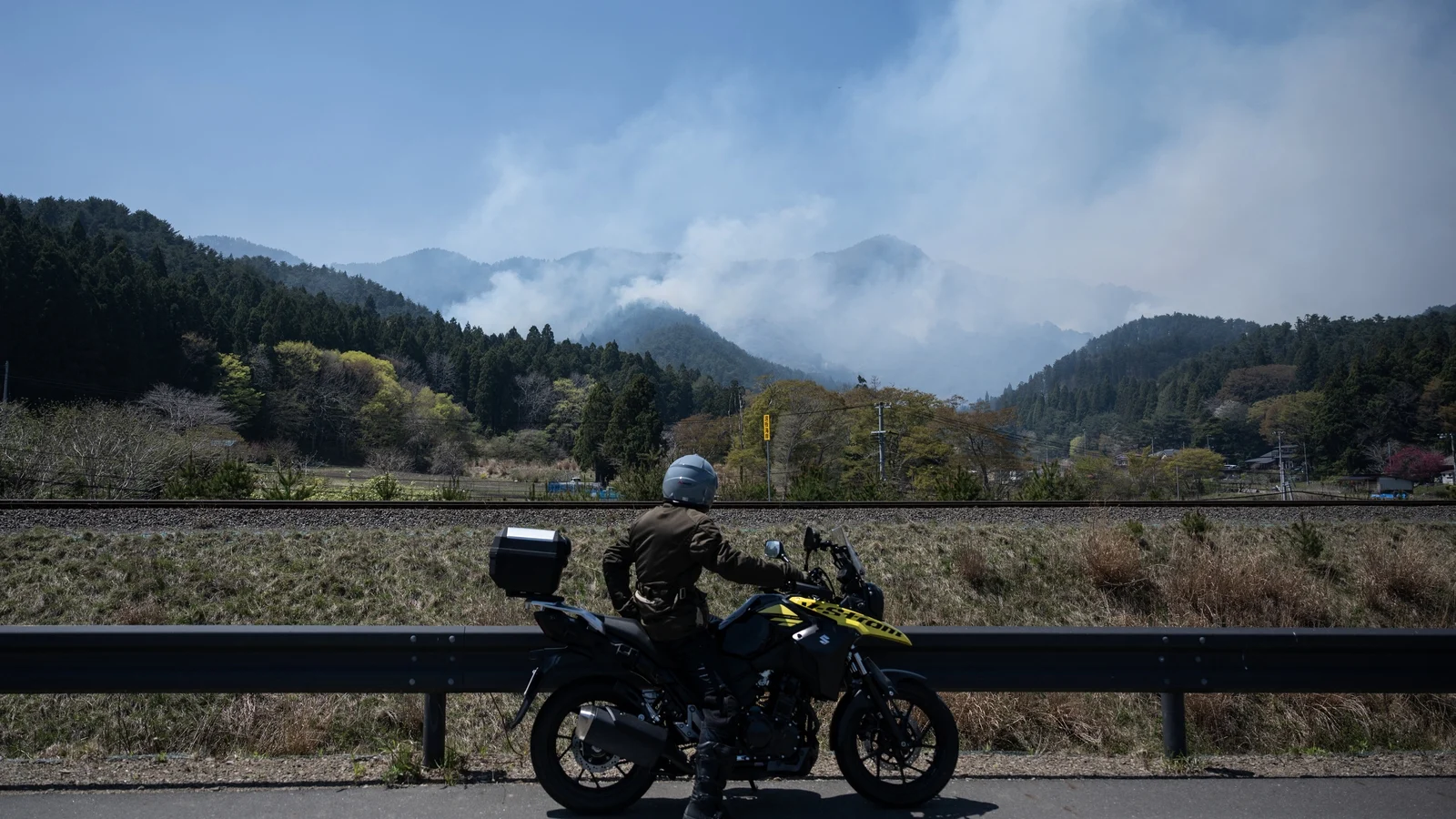
For almost two weeks, a haze hung over the ridgelines of Iwate prefecture that smelled of char and old pine. Helicopters traced slow, impatient circles above the burned saddles; soldiers in camouflage knelt in muddy ravines to wrestle hoses into position. At night, the glow from smouldering peat and scorched brush painted the clouds a weary orange. On day eleven, exhausted crews at last declared the fire “brought under control” — but the ash left behind is not merely a landscape’s scar. It is a measure of how a changing climate is remaking familiar places.
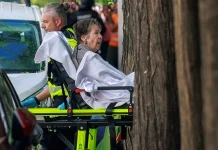
The flames consumed roughly 1,600 hectares of mountainous forest — an area nearly five times the size of New York City’s Central Park. Hundreds of firefighters and more than 1,000 personnel from the Japan Self-Defense Forces, supported by helicopters and ground teams, campaigned against the blaze that leapt through ridgelines and old satoyama woodlands. Eight buildings were damaged and two people suffered minor injuries, officials said. Thousands of residents were forced from their homes as smoke and flames advanced unpredictably through the valleys.
On the Ground: Faces and Voices
“We watched it climb the ridge like a live thing,” said a middle-aged fisherman from a coastal village near Otsuchi, one of the towns most threatened by the blaze. “You feel small. The trees that your father planted are gone in a day.”
Mayor Kozo Hirano, after surveying the scene with fire commanders, told reporters that he had been told the fire had been brought under control. He credited coordinated aerial and ground operations — and an unexpected turn in the weather — for halting the inferno’s spread. “We cannot breathe easy yet,” Hirano added, wary of smouldering embers that can rekindle once winds pick up.
A volunteer firefighter with a local brigade, his face still dusted with ash, described long nights of backbreaking work. “We slept in the trucks. We ate in silence. When the rain came, everyone cried. Not because they were relieved — but because they’d finally had time to think,” he said.
How Big Is This in Context?
Japan’s forests have always been a patchwork of managed woodlots, rice terraces, coastal pines and mountainous reserves. But this year’s wildfire has been described by news agencies as the country’s second-largest in more than three decades — a startling statistic when layered against a recent trend toward larger, more frequent fires.
Last year, another wildfire in Iwate burned roughly 2,600 hectares, making it the largest blaze in Japan since 1975, when some 2,700 hectares were scorched on Hokkaido. These episodes are no longer statistical outliers. They are part of a pattern that regional firefighters, foresters and climatologists have been warning about for years.
Numbers That Bite
- Area burned in this fire: ~1,600 hectares (≈4.7 × Central Park)
- Personnel mobilized: hundreds of firefighters + >1,000 SDF personnel
- Buildings damaged: at least 8
- Injuries reported: 2 minor
- Last year’s Iwate fire: ~2,600 hectares
Why Fires Are Growing Stronger
Scientists have been warning that human-driven climate change is lengthening dry spells and shifting precipitation patterns in temperate regions — conditions that make landscapes more tinder-ready. Winters in parts of Japan have become noticeably drier in recent decades, reducing snowpack and spring soil moisture, which in turn leaves forests vulnerable when lightning, human activity or extreme winds occur.
“Longer, warmer and drier seasons increase the probability that a small spark will escalate into a major wildfire,” said a wildfire specialist at a Japanese university who has studied the Tohoku region’s fire regimes. “It’s a systemic change in the environment: drought stress, weakened trees, more deadwood all add up.”
Globally, wildfire seasons have lengthened by an estimated 18.7% since the 1970s in many regions, and the total area burned has risen in numerous countries. The Intergovernmental Panel on Climate Change (IPCC) has issued repeated warnings that continued warming will intensify drought and fire risk in many mid-latitude and boreal zones unless strong mitigation and adaptation strategies are enacted.
Local Culture, Local Costs
Iwate’s patchwork landscape is stitched together by small rivers, mountain shrines, cedar groves and villages where people still trade goods at weekend markets. Satoyama — the traditional managed woodlands that sit between village and mountain — are not only cultural spaces but also practical buffers against disaster when properly tended. Years of rural depopulation, an aging farming population, and budget constraints have left many of these landscapes less tended, creating fuel ladders of overgrown brush.
“There’s history in these trees,” a retired teacher told me, pointing to a blackened torii gate at a hillside shrine. “My grandparents taught children here. We used to burn pruned branches every spring. Now no one has the time.”
What Resilience Looks Like
Across Japan, communities are experimenting with ways to reduce future fire risk: controlled burns, thinning overgrown plantations, restoring traditional coppicing practices, and building firebreaks. Local governments have also been upgrading evacuation centers and communication networks. But the recent mobilization of the Self-Defense Forces — more than 1,000 personnel this time — underscores the scale of the challenge and the limits of local resources.
- Improve forest management: targeted thinning, prescribed burns
- Invest in early warning and rapid aerial response
- Support community-based preparation: fuel removal, evacuation drills
- Advance climate mitigation to reduce future risk
From Local to Global: Why This Matters Beyond Iwate
Wildfires are not just a local emergency. They are a palpable symptom of a warming planet. Smoke carries health impacts hundreds of miles away; ash alters soil chemistry; burned hillsides increase the risk of landslides and flash floods in the months after. For nations and cities around the world, the growing intensity of fires demands a rethink of land use, emergency response and climate commitments.
When you think about the forests you love — the pines outside your town, the park you walk through at dusk — ask yourself: who maintains them, and what will it cost to keep them safe as the climate shifts? Will we invest in prevention now, or pay far more later?
After the Fire
As the smoke clears, Iwate’s communities will face months — even years — of recovery. Replanting, stabilizing soils, and restoring habitats will require careful planning and funding. For residents whose livelihoods depend on timber, tourism, or fisheries, the economic blow lingers beyond the ashes.
“This will change how we live,” a young volunteer said, looking at charred stumps. “But it also pushed people to help each other. That’s something money can’t buy.”
In the quiet after the flames, there is both sorrow and resolve. The work of rebuilding will be local and intimate — and also part of a global conversation about resilience, responsibility and the limits of what firefighting alone can solve. If a mountain can catch fire in a place where people have lived for generations, what else might our changing climate be preparing us to face?