Smoke over Habboush: When a Ceasefire Becomes a Fragile Curtain
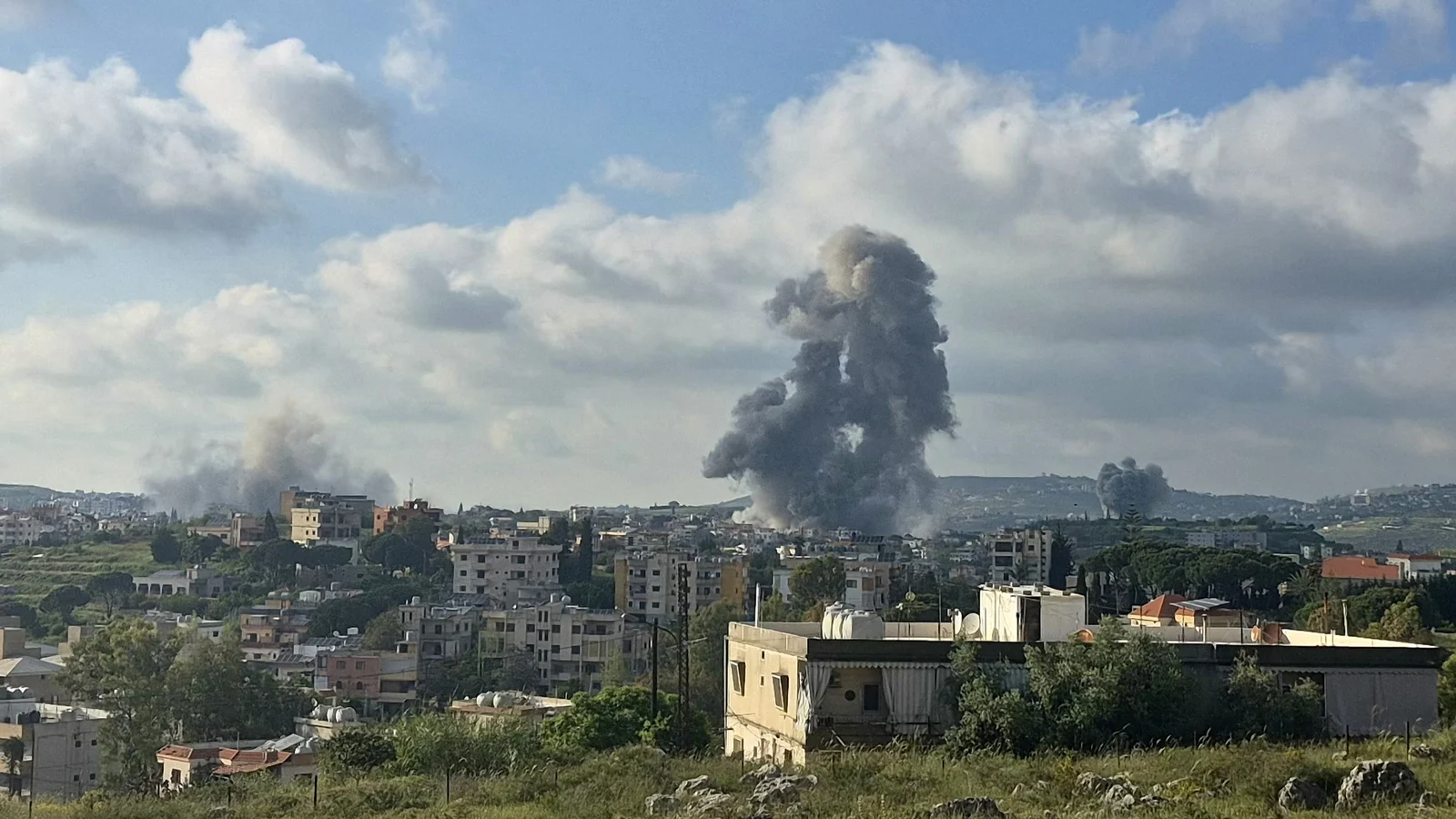
There are moments when the world feels both unbearably small and impossibly large. Drive into the fields of southern Lebanon and you might see the sky full of smoke, plumes rising above olive groves and low stone houses as if the landscape itself were coughing. That’s what an AFP photographer found in Habboush this week — clouds of dark smoke billowing after strikes that left a village raw and stunned.
The Lebanese health ministry tallied the immediate human cost: 13 people killed in southern towns, among them a child and several women, and dozens wounded. Eight died in Habboush, four in Zrariyeh and one in Ain Baal near Tyre. The numbers are cold; the scenes are not. A neighbor I spoke with — Amal, a schoolteacher from a nearby town — described children who once chased stray cats in dusty alleys now sitting silent, their faces “like old photographs.”
What the numbers tell us
Data anchors the story but cannot carry its weight alone. Still, the figures are stark: Lebanon’s health ministry says more than 2,600 people have been killed by Israeli strikes since 2 March, including 103 emergency workers and paramedics. That last detail is seismic: volunteers who answer the phone at three in the morning, who put their hands in the wreckage to pull out strangers, have themselves become casualties.
“When our volunteers go on missions, they fear for their lives,” said Xavier Castellanos, the International Federation of Red Cross and Red Crescent Societies’ under-secretary general for national society development and coordination. “That a person that is trying to save lives… might be killed — this is something I found absolutely unacceptable.” Two Lebanese Red Cross paramedics are among those killed.
- Reported deaths since 2 March: >2,600 (Lebanese health ministry)
- Emergency workers killed: 103
- Casualties in the recent strikes: 13 killed, dozens wounded
- Reported Israeli strikes on Hezbollah: ~70 military structures and ~50 infrastructure sites (Israeli military statement)
The eye of a fragile ceasefire
There is a ceasefire on paper: the agreement of 17 April intended to halt more than six weeks of open conflict between Israel and Hezbollah. But on the ground, the lines are smudged. The ceasefire text itself contains a caveat often invoked in war: Israel retains the right to act against “planned, imminent or ongoing attacks.”
That clause is meant to be a safety valve for self-defense. But in practice, it produces a fog of interpretation. An Israeli military statement described strikes against “dozens of Hezbollah targets” across southern Lebanon, saying roughly 70 military structures and about 50 infrastructure sites were dismantled. Lebanese officials and residents saw them as violations. The National News Agency reported that warplanes struck Habboush less than an hour after Israeli forces ordered evacuations — calls to leave the town by at least one kilometre.
“We were told to leave into open areas,” said Fadi, a farmer who had been standing beneath a 150-year-old fig tree when the warning came. “Where are you supposed to shelter? In the open fields? We have no tents. We have goats. We have memories.”
Detonations, demolitions, and the “Yellow Line”
One of the more unsettling details is the operational footprint of Israeli soldiers inside Lebanese territory. Troops are operating within a so-called “Yellow Line,” a zone that extends roughly 10km inside Lebanon, where authorities say there have been wide-scale detonations and the demolition of buildings.
The state-run NNA reported demolitions in Yaroun — a monastery and a school run by a religious order were among the structures destroyed after detonations of homes, shops and roads. In Shamaa, Israeli troops reportedly carried out detonations. These actions send a message not just of military force but of cultural loss: schools, monasteries and marketplaces are more than bricks; they hold stories, rituals, baptisms, exams, Sunday bread sales.
“They demolished our school,” said Sister Mariam, whose convent runs the small village school. “Children are frightened. We had been trying to teach them mathematics, to count. Now they have to count graves instead.”
Voices from the border: fear, resentment, resolve
Hezbollah has claimed attacks in response to what it calls “ceasefire violations,” pulling Lebanon deeper into the regional maelstrom. The group’s interventions have roots in regional power plays and revenge cycles; local residents trace them back to broader grievances and alliances that transcend national borders.
In Tyre, a coastal city with faded Roman columns and fishermen who find work where they can, the mood is complicated. “We have always been a city of comings and goings,” said Karim, a fisherman mending nets in the market. “But when the sky fills with drones and the navy closes the sea for hours, our nets gather only silence.”
At the same time, diplomats and military monitors have been moving through Beirut and the south. Lebanese army chief Rodolphe Haykal met with US General Joseph Clearfield, head of a five-member committee tasked with monitoring the 2024 ceasefire. Their discussions, officials said, focused on maximizing the committee’s effectiveness and improving operational coordination — but coordination only goes so far when smoke is in the air and ambulances are not safe.
The global ripple
What happens in a small Lebanese town matters far beyond its boundaries. This is not just a regional conflict; it is a human-rights, humanitarian, and legal question that plays out on television screens, at United Nations briefings, and in living rooms worldwide. How do we protect civilians when combatants are embedded among them? How does the international community ensure that ceasefire monitoring is not a paper exercise?
“A ceasefire that allows continual strikes is not a ceasefire at all,” said an international humanitarian worker who asked not to be named for security reasons. “It is a lull before the next danger.”
What now? Questions we must not let fade
There are no easy answers, only choices and consequences. As the dust settles over Habboush and the bodies are counted, readers must confront uncomfortable questions: What do we consider acceptable risk in modern asymmetric warfare? Who is accountable when those who run toward danger to save others are killed? And perhaps most immediately: how do we protect the fragile threads of daily life — schools, markets, faith communities — that keep societies from unravelling?
If there is a stubborn human thing at the center of these statistics, it is the refusal to stop living. Families bake bread, fishermen mend nets, teachers keep insisting on lessons. For now, these small acts are forms of resistance. They are, as one grandmother in Zrariyeh put it, “the only way to show that we still believe tomorrow matters.”
As you read this from wherever you are, consider this: a ceasefire on paper may keep guns quiet for a few hours, but it cannot heal the wounds of a bombed classroom or replace the life of a paramedic. The struggle now is to translate monitoring and diplomacy into protection — real protection — for the people who wake every morning under a sky that could change at any moment.
What would you do if you were told to evacuate with only what could be carried in two arms? Whom would you trust to make that decision for you? These are not theoretical questions; they are the daily dilemmas of villages like Habboush. And until those dilemmas are answered with more than words, the smoke will keep rising.