When a Road Can Re-write a Map: Europe’s Alarm Over the E1 Plan
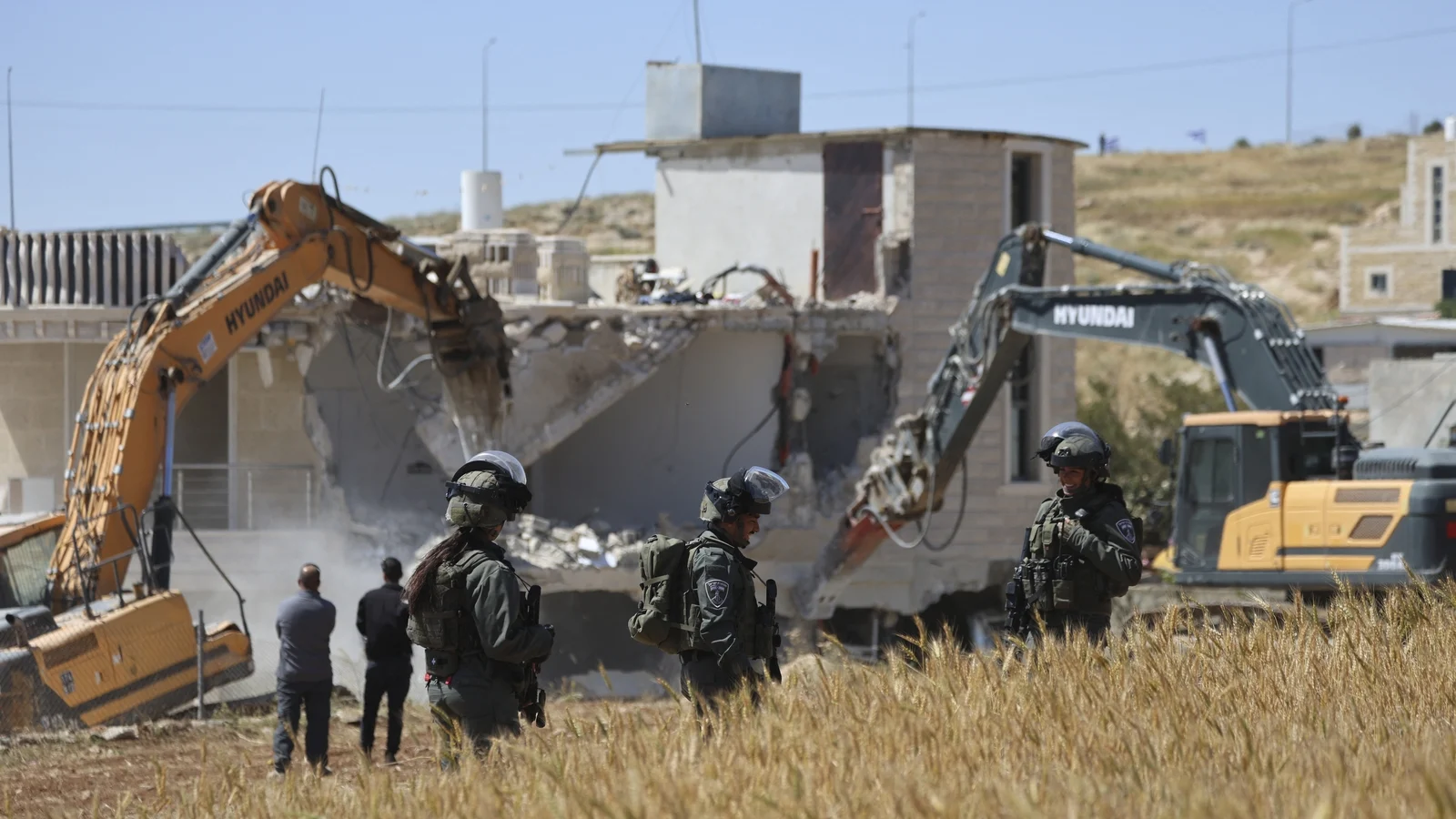
There are places on the map where a single stretch of asphalt — or a cluster of concrete homes — can alter not just geography, but the future of a people. The E1 area, a narrow swathe of land east of Jerusalem, has become one of those places. For decades it has sat at the center of a geopolitical tug of war: a sliver of high ground that, if built over, would stitch Israel’s settlements together and sever East Jerusalem from the main Palestinian population centres of the West Bank.
This spring, nearly 450 former European Union ministers, ambassadors and senior officials sent a wake-up call across capitals and committee rooms in Brussels. Their message was uncompromising: if Israel proceeds with plans to build a new settlement block in E1 — a tender reportedly expected to open for some 3,401 housing units that organisers say could accommodate up to 15,000 people — the EU should respond with targeted measures designed to deter the project.
“This is not about symbolism,” said one veteran diplomat who signed the appeal. “It is about preventing a structural change on the ground that would make a two-state solution geographically impossible.” That blunt assessment captures why so many former insiders—people who once sat around the same tables where policy was made—have chosen to step back into the spotlight.
What the former officials want
The signatories call for smart, targeted sanctions aimed at the individuals and organisations driving settlement expansion: politicians, settler leaders, local planning authorities, developers, engineers, and even the banks and contractors that make construction possible. Measures proposed include visa bans and prohibitions on doing business within the EU.
“We are talking about precision pressure,” explained a retired EU legal adviser. “Not blanket boycotts, but calibrated steps to make clear there are consequences for actions that violate international law and remove the possibility of a negotiated peace.”
The list of suggested targets is wide: planners who approve blueprints, engineers who design access roads, companies that finance projects, and lawyers who create the legal scaffolding for land expropriation. The idea is to turn the usual diffuse economics of settlement expansion into a series of choke points that European governments could exploit.
Why E1 matters
Think of the West Bank as a jigsaw puzzle of enclaves and highways. E1 sits on a sensitive seam. If fully developed, it would knit Ma’ale Adumim — one of the largest Israeli settlements east of Jerusalem — to the city itself, creating a contiguous bloc of Israeli-controlled land that would isolate Palestinian towns like Ramallah and Bethlehem from the capital.
International observers warn that such a change would not be reversible. “It would be a kind of urban annexation without formal annexation,” said Maya Khalil, a Palestinian urban planner in Ramallah. “Once the road networks and housing are in place, reversing them is nearly impossible politically and economically.”
These warnings come on the back of a broader reality. Roughly half a million Israeli settlers now live across the occupied West Bank and East Jerusalem, a dramatic rise compared with 20 years ago. Each new housing project, each new road, alters the living patterns of Palestinians — from daily commutes to water access — and constrains the geography of any future Palestinian state.
From Diplomatic Pleas to the Streets: Voices on the Ground
In Amman cafés and Jerusalem bakeries, the reactions are visceral. “When they speak in Brussels, we hear in our homes,” said Fatima, who runs a small grocery in a Palestinian neighbourhood east of Jerusalem. “We already feel squeezed. Another development in E1 would be like putting a final nail in the concept of two states.”
On the other side of the same coin, an Israeli settler who asked not to be named framed the project as basic housing policy. “People need roofs,” he said. “Families grow. This is about living, not politics. But I understand why people see it differently.”
These local vignettes capture the human texture behind the high-level exhortations. They are what a corridor talk in Brussels or a press release cannot fully convey: the daily worries of commuters, the mathematics of household expansion, the flashpoints created by checkpoints and new roads.
Legal, Moral and Strategic Questions
At stake are questions that echo far beyond one Mediterranean hill. Under international law, Israeli settlements in the occupied territories are widely considered illegal. But enforcement has been inconsistent, and international institutions have struggled to translate law into action.
That is why former European officials are calling for a new playbook. “Sanctions have been used successfully in other contexts to change behaviour,” explained Christophe Legrain, a policy analyst in Brussels. “The challenge is political will: the EU has tools, but it needs unity and appetite to use them in a sustained way.”
There is also an argument about effectiveness. Some analysts fear that sanctions could harden domestic politics inside Israel and be used to rally nationalist sentiment. Others counter that inertia and normalisation without consequences has already emboldened settlement expansion.
Across the Sea: A Flotilla, Two Detainees and Questions of Humanity
While diplomats argued over sanctions, a much smaller, quieter drama was unfolding at sea. A humanitarian flotilla that set off from ports in France, Spain and Italy aiming to break the naval blockade of Gaza was intercepted in international waters. Two activists — a Spanish national of Palestinian origin, Saif Abu Keshek, and a Brazilian activist, Thiago Avila — were taken to Israel and remain in custody.
Their case has become another diplomatic irritant. International human rights groups and the United Nations have called for their swift release, arguing that peaceful attempts to deliver relief or show solidarity should not be treated as war crimes. “Detaining people who tried to carry aid is not justice,” said Elena Fraga, a lawyer with a Mediterranean NGO helping the detainees. “It sends a chilling signal to civil society.”
Adalah, an Israeli human rights group representing the pair, alleges severe mistreatment during detention — constant light in their cells, blindfolding during movements, and prolonged isolation. Israeli authorities reject these allegations and have not filed formal charges, though they have said the two are suspected of links to organisations they deem hostile.
The flotilla episode underscores a broader tension: how democracies balance security concerns with humanitarian impulses and civil liberties. It also raises practical questions about the blockade of Gaza, an eight-year-plus reality (since 2007) that international agencies say has left the territory economically crippled and heavily dependent on aid.
Big Questions Still Open
So where does this leave the reader, sitting anywhere from Lisbon to Lagos, from New York to Nairobi? What does Europe owe — to international law, to the idea of a negotiated peace, to the lived reality of Palestinians and Israelis who must coexist in the same little patch of land?
These are not hypothetical questions. They are invitations to think about how international politics is practised: whether through the blunt instrument of sanctions or the subtler currency of diplomatic pressure, trade, and legal action. They are about whether the international community can find a way to slow, stop or reverse trajectories that are already rewriting maps and lives.
As one retired ambassador put it, “If we do nothing, geography becomes destiny. If we act, there is a chance to keep open the possibility of two peoples living side by side with dignity.” The decision, and its moral calculus, will not be settled in a single meeting or letter. But as the E1 contour grows clearer on satellite imagery and as small boats push against naval lines, the stakes are unmistakable — not only for the region, but for any global order that claims to value law, human dignity and negotiated solutions.