The Morning the Sea Stopped Cooperating: A Gulf Tale of Guns, Diplomacy and a Disabled Tanker
The Gulf of Oman is a place that keeps its own hours. Dawn arrives here as a sheet of molten light over the water, and ships — ghosts of steel and paint — settle into the slow choreography of global trade. On one such morning recently, that choreography was interrupted by the staccato bark of warning rounds and a missile of consequence: a 20mm cannon burst that put the rudder of the Iranian-flagged tanker M/T Hasna out of service, leaving the vessel helpless as it tried to change course toward an Iranian port in apparent defiance of a U.S. blockade.
U.S. Central Command described the action in terse operational language: American forces observed the Hasna in international waters heading for Iran, issued multiple warnings, and when the crew failed to comply, a U.S. Navy F/A-18 Super Hornet launched from the USS Abraham Lincoln fired several rounds that disabled the tanker’s steering. “Hasna is no longer transiting to Iran,” CENTCOM posted on social media.
Up close: what that looks like
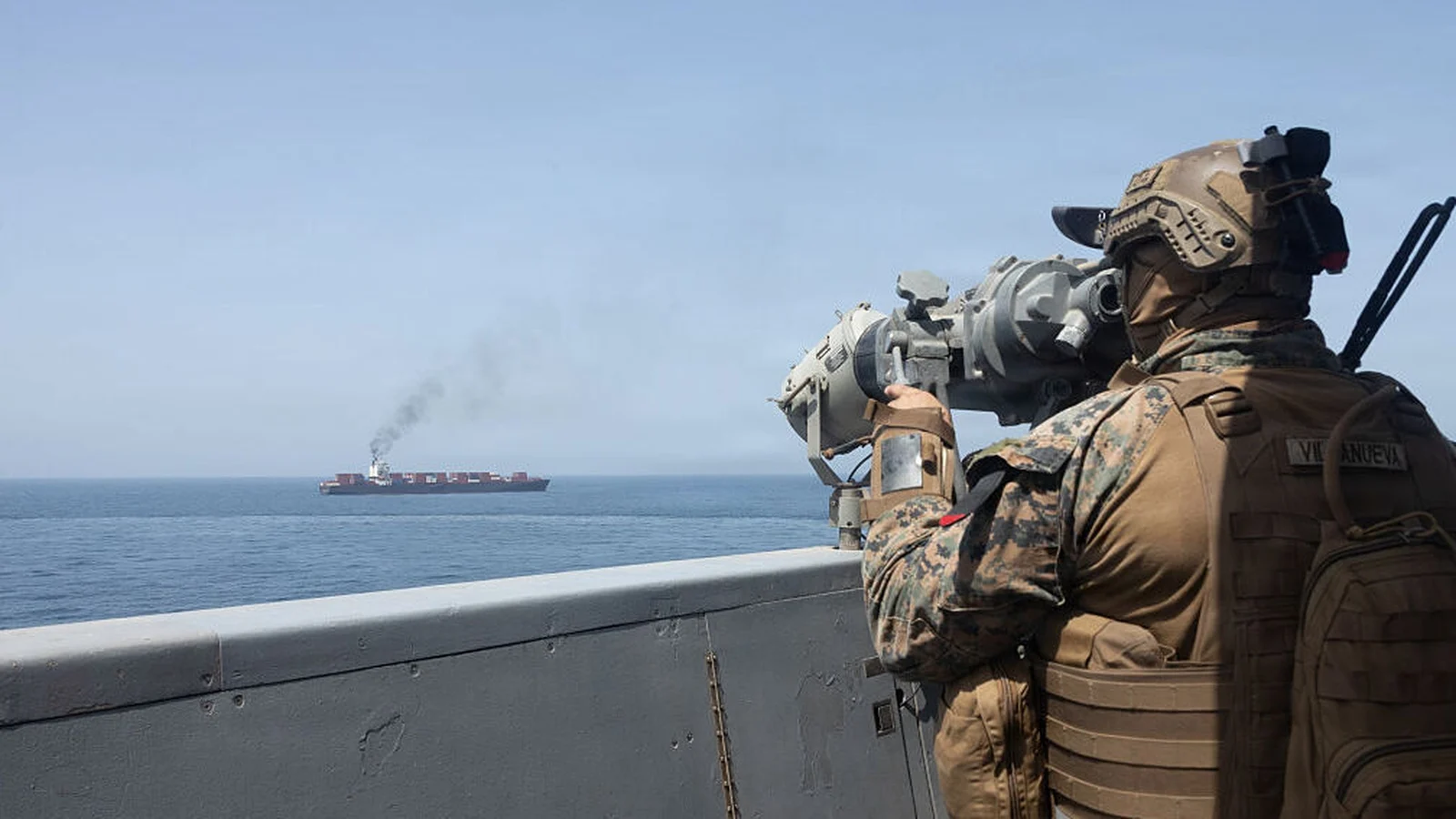
Picture a grey naval carrier forging into the morning haze, jets like predatory birds lifting from its deck. A tanker — long, slow, oiled and proud — rolls in the swell. Words on a radio fail to move men who may have been told other orders. And then metal sings: the sound of cannon fire, a flutter of sparks, an exhausted ship spinning reluctantly as engineers fight a steering jam engineered by another state’s weaponry. For those with binoculars on nearby decks or shored-in spectators in Bandar Abbas or Fujairah, the scene would be chillingly intimate.
“We saw the plane drop down and then the ship stopped responding,” said a crew member on a nearby freighter who asked not to be named. “No one wants to be the next story on the news.”
Between cannons and conference rooms: how a skirmish and talks moved in tandem
What makes this act of force more than another headline is the diplomatic shadow that followed it. Behind closed doors — according to multiple sources — mediators in Islamabad were conveying an emerging, one-page memorandum designed to halt the broader hostilities in the Gulf. The document, reported to be about a 14-point outline, would set out a framework to end the war, while leaving thorny matters like Iran’s longer-term nuclear posture to later discussions.
“We will close this very soon. We are getting close,” a Pakistani source briefed on the talks told a reporter. Pakistan has quietly borne the role of go-between ever since it hosted rare direct peace talks, shuttling messages between Washington and Tehran.
U.S. President Donald Trump amplified the sense of urgency and ultimatum. In a morning post on social media he wrote that the conflict could end “Assuming Iran agrees to give what has been agreed to,” later threatening that “If they don’t agree, the bombing starts,” language that underscored just how fragile any progress remained.
Iran’s reply — cautious, public, private
Tehran’s public posture was a mix of guarded openness and skepticism. Iran’s foreign ministry said it was reviewing the proposal and would respond through Pakistan, while senior Iranian parliamentarian Ebrahim Rezaei dismissed the memorandum reported by U.S. media as “more of an American wish-list than a reality.” Foreign Minister Abbas Araqchi, visiting China, said Tehran sought “a fair and comprehensive agreement,” signalling that Tehran wanted not just an end to immediate hostilities but guarantees for the future.
“The Americans will not gain anything in a war they are losing that they have not gained in face-to-face negotiations,” Rezaei insisted — a reminder that domestic politics and prestige are critical currencies in Tehran.
Markets and mariners: the global fallout
News of a possible diplomatic breakthrough sent markets into a breathless wobble: benchmark Brent crude futures plunged by around 11% to roughly $98 a barrel, and global equities responded with a relief rally. For a world still rebuilding pandemic-era supply chains and grappling with energy transition debates, the prospect of de-escalation in the Hormuz corridor felt like a release valve.
Why the fuss? Because the Strait of Hormuz is not a local road. It is an artery. Roughly one-fifth of the world’s seaborne oil flows through the strait — a narrow choke point that, when threatened, ripples through supply chains, refining margins, shipping insurance, and national treasuries from Tokyo to Rotterdam.
“A disruption here is global by design,” said Leila Mansour, a Dubai-based shipping analyst. “Insurance premiums spike, charters get cancelled, and some owners decide the extra voyage around Africa is cheaper than risking the strait. That adds days, fuel, and cost — and the market prices that in.”
Meanwhile, maritime attacks have kept the threat tangible. A French shipping company reported a container ship struck in the strait and evacuated injured crew members — a reminder that the conflict touches ordinary seafarers who leave loved ones onshore and unwittingly ride the geopolitics of their employers’ cargoes.
Allies, unease, and unread strategic maps
Not everyone in Washington’s alliance network is on the same page. Israel, a principal wartime ally, appeared unalarmed by reports of a deal and instead said it was preparing for an escalation. That fissure highlights competing threat perceptions: for some, the priority is immediate trade and safety through Hormuz; for others, it is ensuring that any deal does not leave strategic shortfalls, such as limits on missiles or regional proxies.
And yet, the proposed memorandum’s architecture — a short agreement followed by 30 days of detailed negotiations — could set a workable sequence: halt the shooting first, then unstick the harder issues like sanctions relief, frozen assets, and nuclear constraints. But as negotiators and commanders know well, sequencing matters, and every delay is leverage for one side or the other.
Local color: lives on the water
On the docks, ordinary people register the news in ways that are visceral, not abstract. A fisherwoman in Bandar Lengeh described the sea as “our paycheck and our prayer.” A port worker in Bushehr said he’s tired of thinking about missiles: “We want children to go to school, not to learn where to hide.”
Mariners who congregate at coffee shops on the water trade stories — of close calls, of a captain who rerouted a voyage at midnight, of insurance forms that now come with a war-risk addendum. These are the human margins of foreign policy: those who earn their living by tides and charts and who pay the immediate price when a state chooses to block a channel or fire warning rounds.
What happens next — a pause or the next act?
The coming days will test the limits of both diplomacy and deterrence. If Iran and the U.S. sign even a preliminary memorandum, the world will watch whether a fragile pause reduces attacks and reopens the strait to shipping. If talks stall, sea lanes remain contested, and regional actors may be drawn into escalation.
Ask yourself: how comfortable are we with the idea that global commerce can be held hostage at a few miles of water? What counts as a fair outcome for a country under years of sanctions, and where do we draw the line between necessary pressure and open conflict?
The Gulf has always been a place of trade and tension, of long memories and sudden crises. The disabled rudder of the Hasna is more than a technical detail: it is a metaphor. Steering remains possible, but only if enough parties agree to hold the wheel together.
- What to watch: Tehran’s reply via Pakistan; any formal signature of a memorandum; movement of commercial traffic through Hormuz.
- Key data points: roughly 20% of world seaborne oil transits the Strait of Hormuz; Iran’s existing stockpile includes more than 400 kg of uranium enriched to near weapons-grade, a persistent issue in past demands.
- Human stakes: seafarers’ safety, regional stability, and global energy prices.
In the career of a journalist you learn that no single image contains the whole truth. But the image of a ship that cannot steer — drifting in international water, its crew uncertain, its future tied to choices made far away — captures the moral and practical dilemma facing the Gulf and the wider world. Will cooler heads steer us back to safe harbor, or will the next shot tip the balance? The answer will arrive not only from conference tables but from those who work on the water and the policymakers who decide whether to extend a hand or clenched fist.