When the Quiet of Court Corridors Is Broken: New York’s Surge in ICE Arrests and What It Means for a City of Immigrants
On a cold morning in lower Manhattan, the marble atrium of 26 Federal Plaza hums with a different kind of tension—a thrum that started to change the rhythm of the city this past year. A city audit, ordered by Mayor Zohran Mamdani shortly after he took office, has lifted the veil on a dramatic rise in federal immigration arrests in New York City: 5,567 people detained by US Immigration and Customs Enforcement (ICE) between January 20, 2025 and March 10, 2026. More than half of those arrests, the report finds, unfolded inside or around the immigration court at 26 Federal Plaza.
That tally represents a 71 percent jump in arrests compared with the same span at the end of the previous administration—a spike that has left neighborhoods anxious, lawyers stretched thin, and immigrant-rights groups scrambling to respond.
The numbers and the places they touch
Numbers, in this context, are not abstract. Each is a person with a job, a family, a place at the kitchen table. The audit’s headline figures are stark; the finer print is equally urgent. Over 5,500 arrests in just over a year mean weekly, even daily, disruptions at precincts, courthouse waiting rooms, and jails. The audit also notes that more than two dozen recommendations are needed to shore up the city’s safeguards—among them, a forensic review of communications between the Department of Corrections and ICE and an immediate halt to daily reporting to federal authorities of the national origin of non-citizens admitted into custody who have qualifying “violent and serious convictions.”
“New York City is home to immigrants from every corner of the world, and no one should live in fear because of their status,” Mayor Mamdani said in a statement accompanying the audit. The mayor’s directive reflects a long-running tension: the collision between federal immigration enforcement and a city that, by any measure, is defined by migration. Roughly a third to nearly 40 percent of New Yorkers are foreign-born depending on the dataset—an immigrant presence sewn into every neighborhood, market, school, and subway car.
Voices from the street
“My mother went to pray at the mosque and never came home for dinner that night,” said Aisha Rahman, a community member from Jackson Heights whose voice trembles when she speaks of her cousin’s sudden arrest at the courthouse. “You expect to be able to go to court, to plea, to check in—with a lawyer, with a social worker—and not be grabbed on the way out. That was the point of ‘safe’ spaces.”
At a bodega on the corner of Elm Street, the owner—who asked to be identified only as Carlos—spoke of customers who now check the news on their phones before leaving the house. “They call to ask if they should come at all,” he said. “If people are afraid to report crimes, to testify, to seek help, the whole city is less safe.”
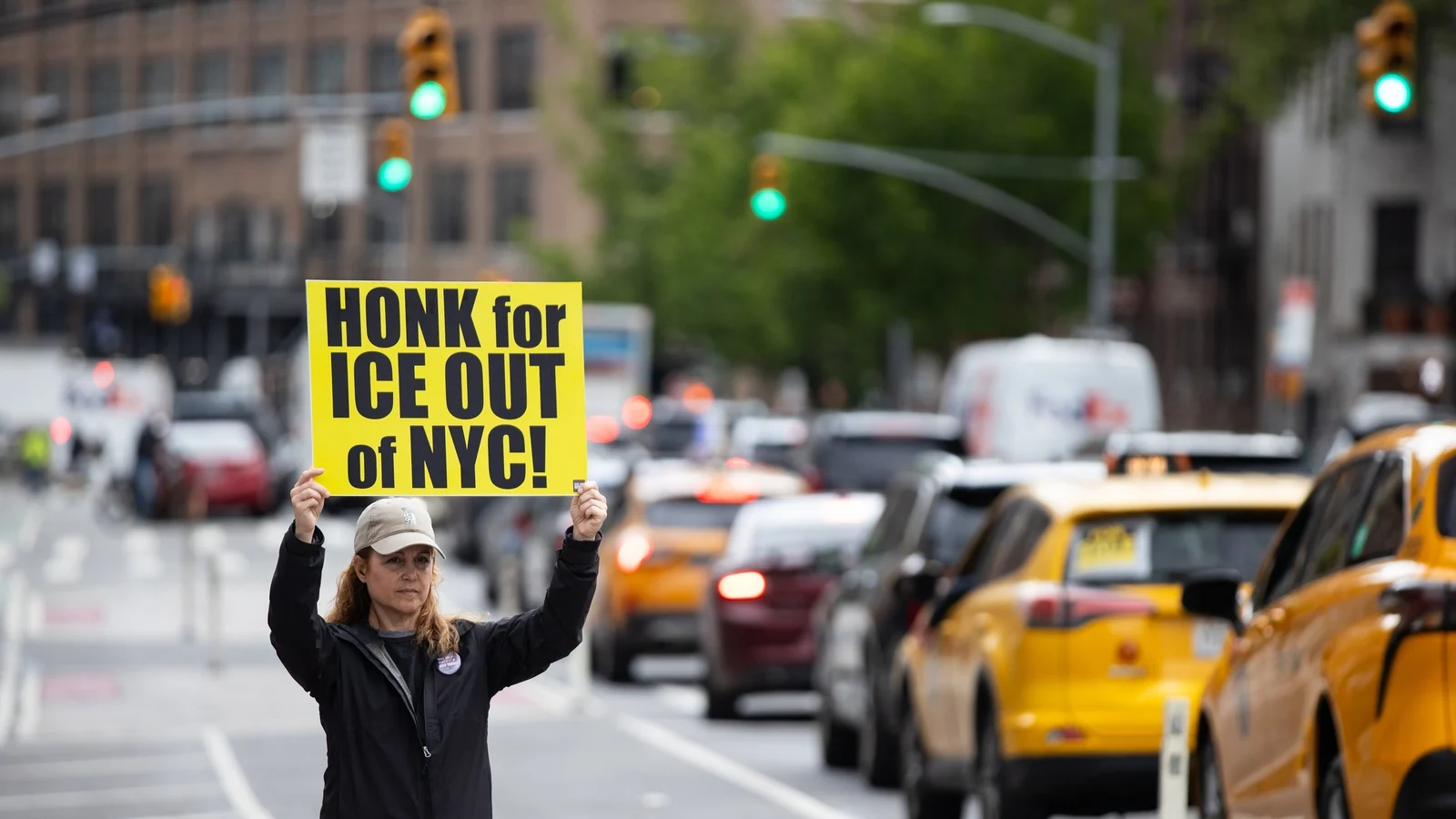
Amid the fear are stories of resilience. “We set up an emergency hotline and a rota of volunteers to accompany anyone who has to go to court,” explained Jorge Delgado, an organizer with a local immigrant-rights collective. “People show up with thermoses, with prayer mats, with muscle—because they’ve seen what happens when someone goes alone.”
What the audit recommends
The document is not only a tally of arrests; it is a roadmap of fixes. Key recommendations include:
- Auditing emails and communications between the Department of Corrections and ICE to identify improper coordination or information-sharing.
- Stopping daily submissions to ICE about the national origin of detained non-citizens with qualifying convictions—information the audit says is not required by law.
- Strengthening legal representation, community alert systems, and in-custody protections so people can exercise legal rights without fear of immediate deportation.
“Transparency is the first step toward accountability,” said a city oversight official who requested anonymity to speak candidly about sensitive negotiations with federal authorities. “If improper channels existed, we have to close them. If data was being shared beyond what the law requires, that stops now.”
Federal silence, local alarm
The Department of Homeland Security, which oversees ICE, did not immediately respond to the audit’s release. In the quiet left by that non-response, the city’s immigrant-serving networks have had to provide answers and solace.
“When the federal government escalates enforcement, it shifts the burden onto cities,” said an immigration attorney who has been working pro bono on dozens of cases since the start of 2025. “It’s not just about detention numbers; it’s about the chilling effect. Witnesses stop coming forward. Kids in school begin to see a parent’s absence. Employers lose workers. Churches and mosques become makeshift legal clinics.”
Sanctuary, safety, and the limits of local power
New York is among several jurisdictions that have enacted laws and policies to limit local cooperation with federal immigration enforcement. The argument of municipal leaders and activists is simple: local resources should prioritize public safety, not federal immigration priorities, and communities flourish when residents feel safe to engage with police and city services without fear of deportation.
But sanctuary policies are not impermeable shields. Federal agents still have wide-reaching powers, and courtrooms—by their nature—remain a flashpoint. The audit’s finding that more than half of arrests occurred at an immigration court underscores the legal paradox: even when cities attempt to carve out protective space, the processes of adjudication can expose people to federal enforcement.
Looking outward: what this means for cities across America
New York’s experience is a cautionary tale for other major metropolitan areas. Cities from Los Angeles to Chicago to Miami host large immigrant communities, and their own local policies are being tested against shifting federal priorities. The question is not merely legal—it is moral and practical.
Are sanctuary policies enough when federal enforcement intensifies? How should cities balance a duty to uphold federal law with their mandate to keep all residents safe? When the courthouse itself becomes a site of apprehension, who is there to catch the falling pieces?
Next steps and a city holding its breath
The audit lays out steps, and the city says it will implement them. But implementation is work that requires time, staff, and political will—commodities that are in short supply when the headlines keep moving. Meanwhile, community groups are doubling down on legal clinics, rapid-response networks, and public education campaigns to help people navigate a fraught system.
“We can track numbers and make policies,” said Delgado, “but the real measure will be whether people wake up tomorrow and feel a little less afraid to go to the courthouse, to call 911, to go to work. That’s what we’re fighting for.”
So ask yourself: What kind of city do we want to be when the law and the lives of our neighbors collide? Will we build systems that prioritize dignity and due process, or will we allow fear to reshape the contours of public space?
In the coming months, New York will test the limits of local safeguards against federal enforcement, and the auditors’ recommendations—if followed—could become a blueprint for other cities. For now, the marble corridors of 26 Federal Plaza stand as a reminder: in a city built on arrival and reinvention, policy decisions ripple into kitchens and classrooms, prayer rooms and bodegas. Those ripples, it turns out, are not abstract. They are very human.