On the Edge of “Almost Peace”: Ukraine’s New Year Between Hope and Alarm
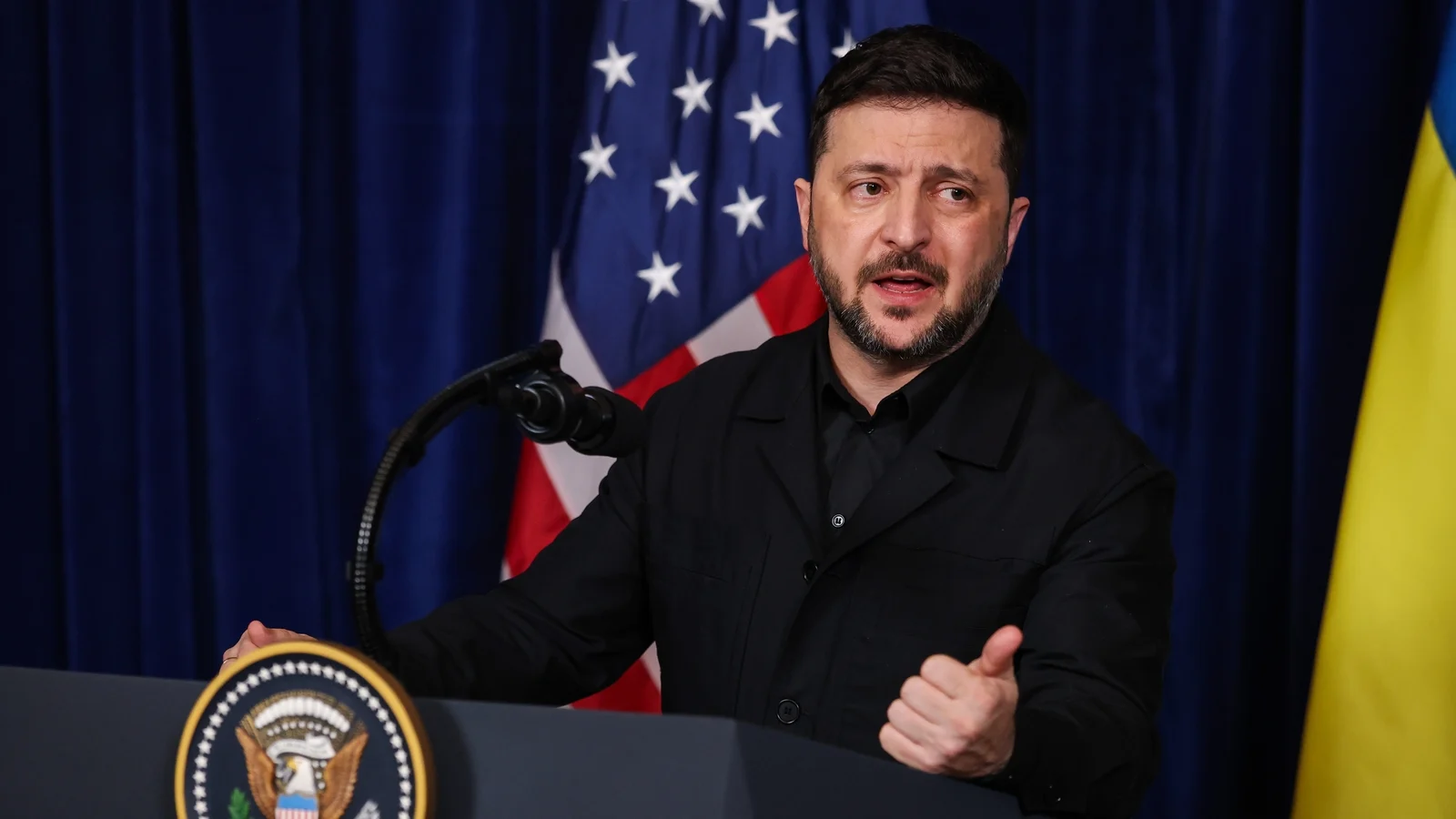
In the blue winter light of Kyiv’s New Year Eve, a familiar voice carried across the city and across the world: President Volodymyr Zelensky’s packed, unadorned message about an elusive peace. “The peace agreement is 90% ready. Ten percent remains,” he said, and the line sounded less like arithmetic and more like a hinge — a small space on which the fate of a country might swing.
Hinges are fragile things. They can creak, they can break. They can also, if treated with care, open the heaviest door.
Not all peace is equal
Zelensky’s words were calm but resolute: Ukraine wanted an end to the war, but not at a cost that would unravel the country’s future. “We want peace? Yes. At any cost? No,” he warned. The president insisted that any accord must include credible security guarantees — the kind that deter a would‑be aggressor from striking again — and must not reward Moscow for its invasion.
There is a kind of moral arithmetic at work here. Give up a little now to stop the bloodshed, and what are you left with tomorrow? Give up too much territory and a decade hence you may be fighting for what remains. Zelensky’s refrain captures that tension: a weary nation, deeply exhausted, but not willing to sign away its existence.
Lines on the map — and the 10% that matters
At the heart of the impasse is territory. Russian President Vladimir Putin has pressed for full control of the Donbas — the industrial swath in eastern Ukraine where Moscow-backed separatists have fought since 2014 — as a bargaining chip. Western mediators and Kyiv have insisted that any settlement must ensure Ukraine’s sovereignty and secure borders.
“If we withdraw from Donbas, will Russia stop there?” Zelensky asked rhetorically. His answer was implicit: history, and recent months of escalation, suggests not.
Negotiations are never only about lines on a map. They are about the future shape of European security: will a continent scarred by a territorial war accept new norms of conquest? Will a successful deal anchor Ukraine to a Western security architecture, or will it leave a vacuum filled by the next crisis?
Smoke, screens, and a diplomatic tug-of-war
The diplomatic atmosphere has been thick with competing narratives. Shortly after Zelensky’s Florida meeting with US President Donald Trump — part of a renewed US push to broker talks — Moscow released footage it said showed a downed drone near Putin’s residence in the Novgorod region, alleging a Ukrainian attack. Kyiv called the claim a fabrication intended to sabotage progress.
European Union foreign policy chief Kaja Kallas branded the claim “a deliberate distraction,” accusing Moscow of trying to derail “real progress towards peace by Ukraine and its Western partners.” The episode looked, to many analysts, like a play from a centuries-old playbook: muddy the waters, change the subject, rally domestic audiences.
“Information operations have become an instrument of war,” said Dr. Elena Kovalenko, a security analyst at the Center for European Security Studies. “Bombs arrive on the ground, and narratives are launched in the air. Both are meant to change behavior — and both can be devastating.”
Between a drone and a line of shells
While diplomats traded claims, the ground told another story. Overnight strikes hit Odesa, wounding six people, including three children: an eight-year-old, a 14-year-old, and a seven-month-old. Local authorities reported damage to residential areas and energy infrastructure. Elsewhere, Russian drones struck in the Dnipropetrovsk region; Belgorod and Tuapse in Russia reported injuries and damaged industrial equipment.
A shopkeeper in Odesa, who asked to be identified only as Olena, described the surreal syllables of life amid strikes: “You learn to sleep with your phone within reach. You learn the difference between a false alarm and a sound you cannot ignore. We want peace. We are tired. But we are not defeated.”
It is a striking image — shopfronts closed against the wind, a stroller left by a doorway, a city that measures holidays in the cadence of air-raid sirens.
What the 10% could mean — locally and globally
That remaining 10% is not merely legal text or a diplomatic compromise. It carries real-world consequences: who controls which towns, whether international peacekeepers will be allowed in, what guarantees will be written into treaties, and what mechanisms will be there to hold violators to account. It is about refugees and reconstruction, about pipelines and ports, about the contours of European security for decades to come.
Consider the human scale. Millions of Ukrainians have been displaced since February 2022; international agencies estimate that tens of thousands of civilians have died and military casualties on both sides number in the tens of thousands as well. The economic cost is in the hundreds of billions of dollars and counting. Rebuilding will take more than money — it will take trust, institutional capacity, and a regional order that can enforce agreements.
“A durable peace requires more than signatures,” said James Alder, a veteran diplomat who has worked on conflict resolution in Eastern Europe. “It requires monitoring, a neutral presence, and incentives that make violation costly. Without that scaffolding, any treaty is at risk.”
Choices for a weary people
As Zelensky’s message implied, the Ukrainian question is also a moral one. Is survival defined as the mere continuation of life, or the preservation of the institutions, language, and culture that make a nation? Is a quiet border worth a compromised future?
These are not academic musings for Ukrainians queuing at bakeries in winter markets. They are urgent choices made under pressure, with families, cities, and livelihoods in the balance. And they carry lessons for the wider world about how peace is pursued and at what price.
What can the international community do?
- Insist on enforceable guarantees: monitoring missions, multilateral sanctions triggers, and the presence of credible peacekeepers where needed.
- Support reconstruction with transparent funds tied to governance and anti-corruption safeguards.
- Keep diplomatic channels open — even when mediators are accused of bias — because the alternative is often escalation.
These are not silver bullets, but they are practical steps that can narrow the gap between “almost peace” and a lasting settlement.
Where do we go from here?
As the calendar turns, the world watches a fragile calculus: 90% ready, 10% that will determine the fate of Ukraine and, to a degree, the balance of power in Europe. The stakes are enormous. The choices, even more so.
Will the remaining 10% be bridged by courage, clarity, and genuine guarantees? Or will it be exploited, delayed, or obscured by theatrics and propaganda?
As a journalist walking past playgrounds where swings creak in empty air, talking to people who mark time in the cadence of headlines, I find myself asking: What kind of peace do we want? One that silences guns but leaves the reasons for war unaddressed? Or one that reckons with justice, with security, and with the dignity of those who have lived through the last three brutal years?
One president says “not at any cost.” The rest of us — world leaders, neighbors, and ordinary citizens — must decide whether to help turn that 90% into something more than a promise on a New Year’s address. The hinge is small. The door it opens will shape lives for generations.