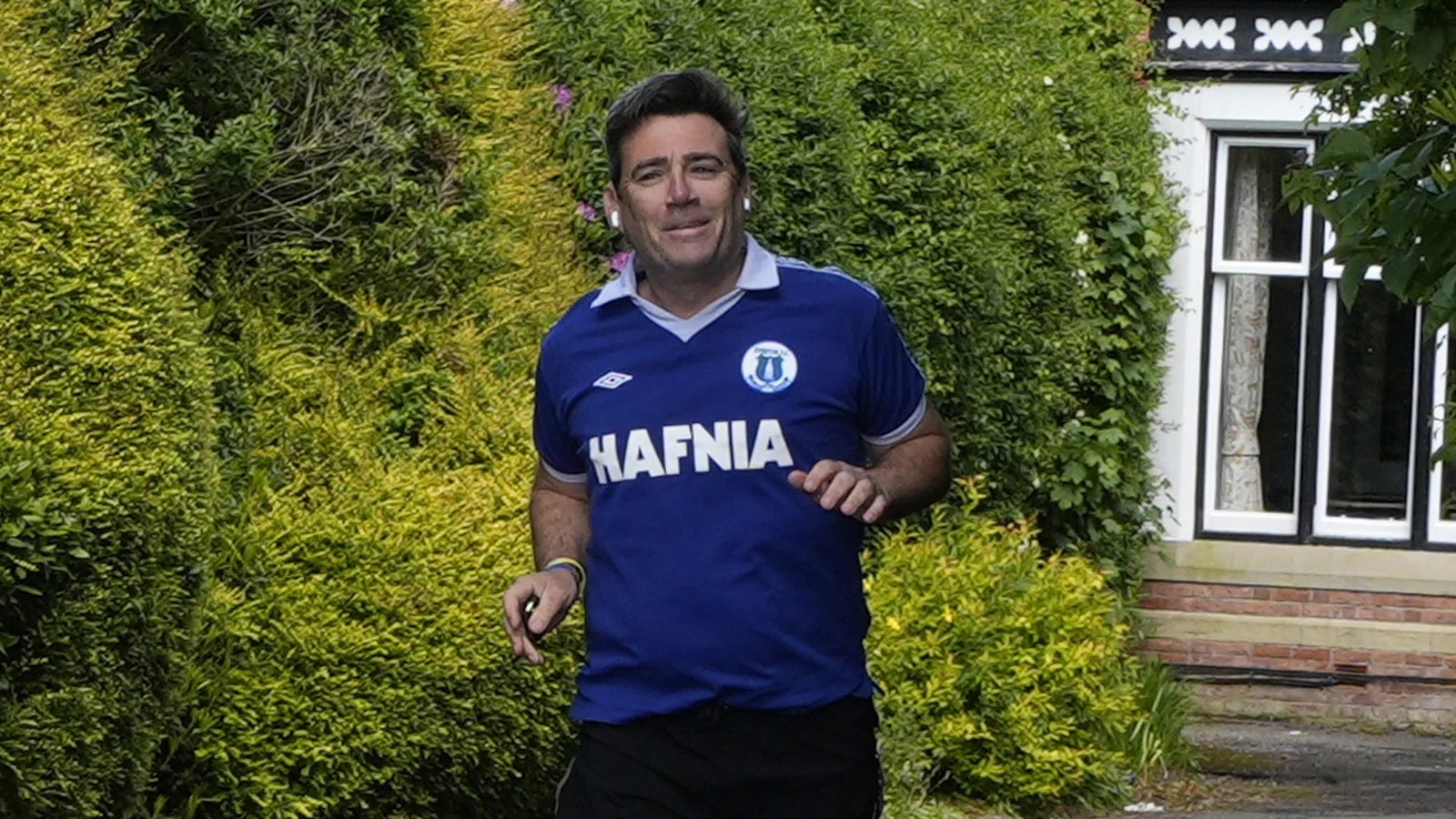
A northern stage, a national reckoning: Andy Burnham’s return to Westminster and the fight for Makerfield
There is a damp, metallic air that hangs over towns like Makerfield — the smell of coal history, chip fat and wet tar from old roofs — and yet, in the cafés and market squares, you can taste a new kind of political electricity. It is the kind of buzz that signals a turning point: not just another by-election, but a potential pivot for the Labour Party that could reshape British politics.
On a drizzly morning, Labour’s ruling body quietly gave the nod that has set tongues wagging across the country. The National Executive Committee (NEC) has allowed Andy Burnham to enter the candidate selection process for the upcoming Makerfield by-election. For many here, it feels less like an administrative footnote and more like the opening of an act that could force a full stop on the current government — or at least a long, uncomfortable comma.
Why Makerfield matters
Makerfield is not Westminster. It is a patchwork of post-industrial towns where terraces still outnumber the new estates, where the local bingo hall knows everyone’s name and where elections are decided by shoe-leather campaigning and kitchen-table conversations. The seat was won for Labour at the 2024 general election by Josh Simons with a majority of 5,399 over Nigel Farage’s Reform UK — but those numbers are now fragile relics in a shifting landscape.
In the months since, national polling has favoured Reform’s surge. Local elections this month were a warning light: Reform reportedly took every council ward in the Makerfield constituency, pulling in around half the vote, while Labour’s share fell to just over a quarter. In the raw arithmetic of politics, that is the difference between comfort and crisis.
Burnham’s gravity
Andy Burnham, Greater Manchester’s mayor and a familiar northern figure, brings with him a different currency: personal popularity. Ipsos polling has him with a net favourability of +24% across the North West — a rating that dwarfs many figures inside the national party. That kind of local affection can make a seat competitive even when national tides run the other way.
“People here know Andy,” said Sharon Ellis, who runs a greengrocer’s stall on a busy high street. “He’s been around longer than most of the MPs. He talks like he’s from here — not like he’s reading a script. That matters to us.”
Wes Streeting, whose own resignation from the health brief has added to the intra-party drama, has been explicit in his backing. “The Makerfield by-election will be tough. Votes will need to be earned,” Streeting said. “Andy is the best chance of winning and that should override factional advantage or propping up one person.”
Behind the headline: resignations, rivalries and rules
What looks like a tidy local contest is in truth a pressure test for Labour’s leadership. Josh Simons — a former loyalist who stepped down amid controversy about a think tank he once ran — said he would leave parliament to make way for Burnham, arguing the mayor could “drive the change our country is crying out for”. That gesture has not quelled the tensions; it has amplified them.
Keir Starmer, the prime minister, finds himself under renewed scrutiny after poor local election results. At least 89 MPs have reportedly publicly called for his resignation, and his critics are not currently united behind a single challenger. The rules of Labour’s leadership contests require 81 nominations from MPs to trigger a formal challenge — a high bar that has so far prevented an all-out coup.
Some within the party appear to be trying to thread a needle: allow Burnham to run in Makerfield, see how he performs, and let the by-election settle questions that are being argued in backrooms and WhatsApp groups. Starmer himself, according to close sources, is not expected to block Burnham’s candidacy — a tacit acknowledgement that the party cannot easily muscle its way out of this moment.
Voices from the ground
“We’re fed up with promises,” said Tariq Khan, a taxi driver who grew up near the mills. “If Andy can be the man who actually does something for the North, then good. But he’s got to show up — in our pubs, in our schools, not just on telly.”
A Labour insider, speaking on condition of anonymity, framed the calculation bluntly: “This is about survival and legitimacy. If we lose Makerfield to Reform, it’s not just one seat — it’s a narrative. It tells voters that Labour has stopped listening.”
At the same time, Conservative and Reform strategists are circling. Reform’s success in the recent local elections has been driven by a message that marries economic insecurity with cultural grievance. The party has consolidated a protest vote that in the past might have simply stayed home. As one local teacher put it: “People feel left behind. They don’t want lectures; they want answers.”
What to watch next
There are several moving parts that will determine whether Burnham’s candidacy becomes a political game-changer or a high-profile detour.
- Selection timetable: Applications for candidacy opened immediately after the NEC decision and close within days — a compressed window that favors heavyweights with ready-made machines.
- Local turnout: Can Labour motivate its base in the face of Reform’s momentum? Recent council results suggested they are currently losing that battle in Makerfield.
- Leadership dynamics: Will other senior figures, such as Wes Streeting or even Ed Miliband as a possible dark horse, enter the fray for the party leadership if Burnham’s bid succeeds?
- National mood: Is this a one-off northern phenomenon, or proof of a broader fracturing of the political centre-left in Britain?
Bigger questions
Beyond seat counts and internal maneuvers, the drama in Makerfield asks bigger questions about politics and identity in 21st-century Britain. What happens when regional leaders with strong local reputations try to translate municipal clout into national change? How does a mainstream party contend with a populist challenger that has learned to harvest disillusionment and amplify it into votes?
And for ordinary people casting their ballots, perhaps the most unsettling question is simple: which institutions still represent me? Is it a party headquarters in London or a mayor who has shared their kitchen-table conversations? Politics, after all, is as much about trust as policy.
So, what do you think? Does a well-liked regional figure do better to build bridges from the outside, or to storm the centre as a challenger? As the country looks on, Makerfield is no longer just a constituency; it has become a theatre for a national conversation about belonging, representation and the future of progressive politics.
Whether Andy Burnham wins the seat, or whether his candidacy simply accelerates a leadership campaign, one thing is clear: the quiet streets of the North are about to have an outsized voice in the direction of the nation. And that, more than any poll or press release, is why this story matters.