When a Halo Cracks: The Fall of a Film Face and the Long Road to Justice
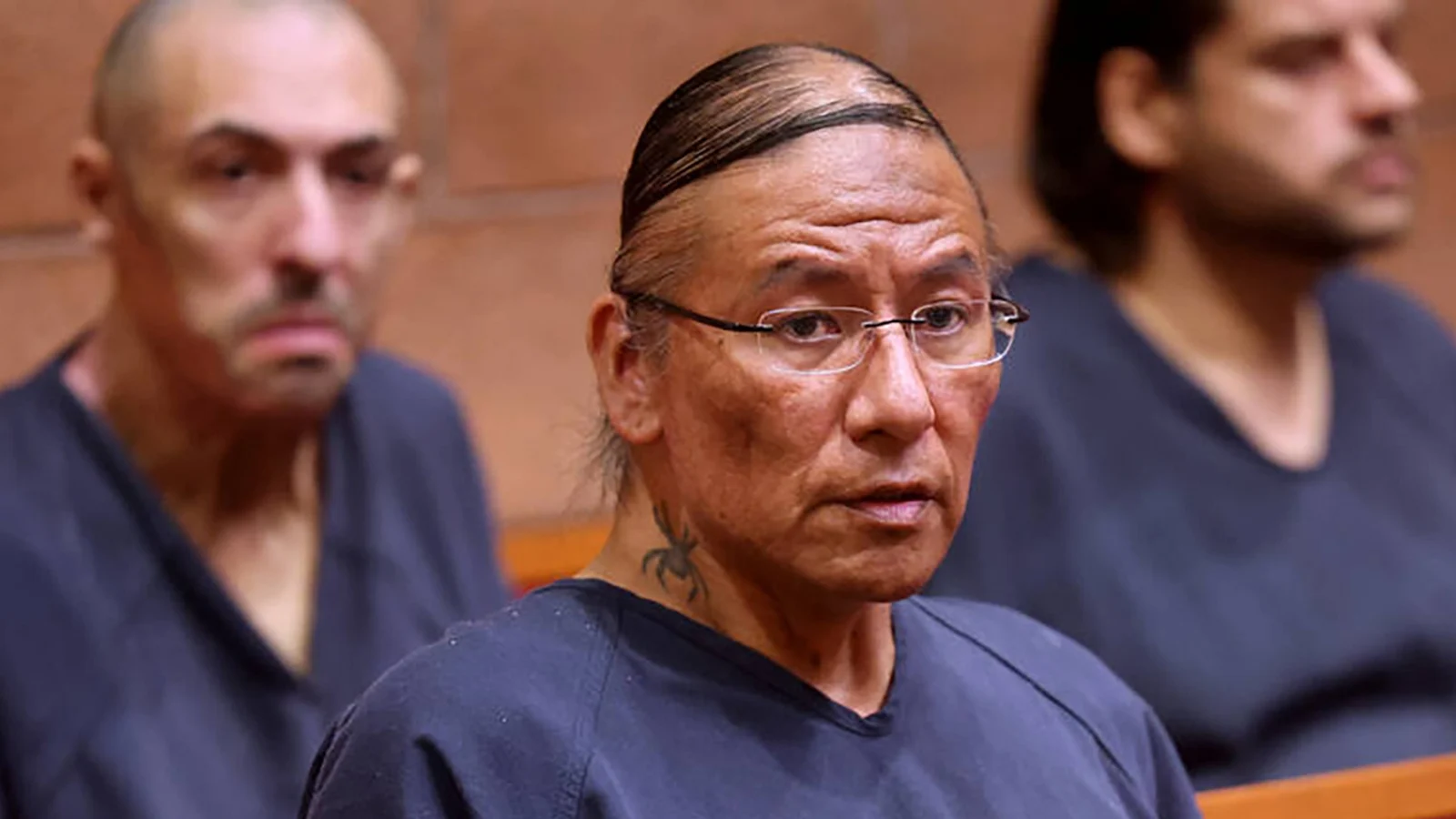
The courtroom was cold in ways both literal and moral. Nathan Chasing Horse — once the sunlit face of a Lakota youth in an Oscar-winning film, now a defendant in handcuffs — sat in a navy jumpsuit and looked ahead as a litany of hurt was read into the record.
“He used our prayers against us,” a woman who stood in front of Judge Jessica Peterson said, her voice steady despite the tremor beneath. “He turned our ceremonies into a weapon.”
On a gray Monday in Nevada, a jury’s earlier verdict was sealed by a judge: life in prison for Chasing Horse, 49, who was convicted on 13 counts largely related to the sexual assaults of Indigenous women and girls. He will be eligible for parole after serving 37 years — a sentence that has rippled through communities across the United States and Canada and reopened raw questions about power, faith and accountability.
From Smiles a Lot to the Witness Stand
To millions, Chasing Horse will always be Smiles a Lot, the young Sioux portrayed in Kevin Costner’s Dances With Wolves. That role, released in 1990, carried him beyond the reservation: film festivals, powwow circles, healing ceremonies and speaking tables where his name conjured recognition and, for some, trust.
To the women who testified against him, that fame became a mask. Prosecutors said Chasing Horse parlayed his public image and his self-styled role as a medicine man to manipulate and abuse — a pattern of exploitation that prosecutors described in court as a “web” spun over almost two decades.
“People came to him seeking relief — from grief, from sickness, from spiritual needs,” a prosecutor told the jury. “He built influence, and then he preyed on that influence.”
Voices from the Inside: Survivors Speak
Impact statements filled the courtroom with intimate detail: of ceremonies that were meant to heal, of instructions couched as spiritual mandates, of threats wrapped in prophecy. One woman recounted being 14 years old when she says Chasing Horse told her a spirit demanded she give up her virginity to save her mother’s life. The assault, the woman said, began that day and was followed by threats should she ever speak out.
“He told me silence kept my mother alive,” she said. “That lie devastated me and my family in ways I’m still pulling pieces back together from.”
Another survivor described complications after an assault that culminated in an ectopic pregnancy and surgery. A mother of one victim spoke into the hush: “We brought our babies to dances and powwows to see hope. We never thought we’d be burying it.”
There is anger, yes, but also a wearying grief. “I have to relearn what it means to be in a sacred space,” one woman told reporters outside the courthouse. “Part of me is afraid of the drums now.”
Cross-Border Justice and Unfinished Cases
The Nevada conviction closes one chapter, but other legal threads remain taut. In Canada, British Columbia prosecutors have charged Chasing Horse in connection with an alleged sexual assault near the village of Keremeos in September 2018; that case was first laid in February 2023. Proceedings there were paused and later resumed as U.S. criminal actions moved forward.
“We continue to coordinate with our partners in the United States,” said a spokesperson for the British Columbia Prosecution Service in an emailed statement. “Once appeals have run their course here, we will evaluate next steps.”
Meanwhile, a warrant remains outstanding in Alberta, the Tsuut’ina Nation Police Service said following the Nevada conviction, noting ongoing communication with provincial Crown prosecutors. In other words: this is not the last legal stage for the accused.
Why This Matters Beyond One Man
There is a familiar sorrow in Indigenous communities across North America when a trusted figure is accused of harming the vulnerable: it is not just the act itself, but the fracture of trust. Spiritual leaders can occupy a space where the lines between authority and intimacy blur, and when that boundary is crossed, the social cost is enormous.
Scholars and advocates point out that Indigenous women face disproportionate rates of sexual violence. While exact numbers differ by study and jurisdiction, public health reports and community organizations consistently highlight elevated risks and systemic barriers to justice — including jurisdictional confusion that can delay or complicate prosecutions when crimes cross tribal, state and national lines.
“This case is emblematic of broader issues,” said an advocate who works with survivors of sexual abuse. “When fame and spiritual authority combine, people can be isolated from other supports. That isolation is where abuse flourishes.”
Community, Culture and the Work of Repair
Outside the courthouse, traditional regalia sat folded like private relics — jingle dresses hung beside park benches, a cedar bundle tucked under an arm. Powwows and healing circles, which many survivors once attended with faith, now carry a complicated weight.
“The powwow drum has always been medicine,” a Lakota elder said. “When that medicine is poisoned, our first job is to purify it — to make space where people can pray without fear.”
Autonomy over ceremony, and who leads it, has become a conversation across tribes. Some communities have tightened protocols: licensing for healers, elders’ councils vetting those who lead ceremonies, and renewed emphasis on consent and community accountability.
Organizations that support survivors are also trying to expand culturally specific services. United Natives, an Indigenous-led group that assists people who have experienced sexual abuse, has emphasized the need for both legal and spiritual healing. “Our focus is on restoring agency,” an advocate from the group told me. “Justice is a part of healing, but so are ceremonies rebuilt on trust.”
Questions We Should Be Asking
As readers, we can ask uncomfortable questions: How often do charisma and celebrity grant a shield? What systems allow a person to move between borders and roles unchecked? How can communities protect the sanctity of spiritual practice while also ensuring transparency and accountability?
And beyond policy: how do survivors rebuild when the places that once gave them solace become reminders of harm? That is a long, living answer that will vary for every person and every community.
Where Do We Go From Here?
This conviction is a milestone for some survivors — a moment of validation in a timeline that has included silence and shame. But for many, it is also a beginning: the start of long healing processes, legal follow-ups in other jurisdictions, and the slow labor of restoring confidence in cultural spaces.
“I don’t want revenge,” one survivor said. “I want to dance again.”
Trust, once broken, can be rebuilt. It requires honesty, structural change and collective care — and an attention to the quiet, ordinary work of making sacred spaces safe. As this case continues to echo across reservation halls and courtrooms, communities will have to keep asking not only who harmed them, but how they will guard against harm in the future.
If you’re reading this and wondering how to help from afar: support Indigenous-led advocacy groups, listen to survivors without presumption, and remember that accountability is more than a headline — it’s a practice that requires patience, vigilance and compassion.