On the Ground Between Two Headlines: Homes Approved, Aid Denied
There is an odd silence that settles over certain stretches of the West Bank just after the sun dips, a quiet broken only by the barking of a shepherd’s dog or the distant thud of a forklift at a new construction site. It’s the sound of change being made — not in the measured cadence of urban planning, but in the raw, unsteady rhythm of politics and displacement.
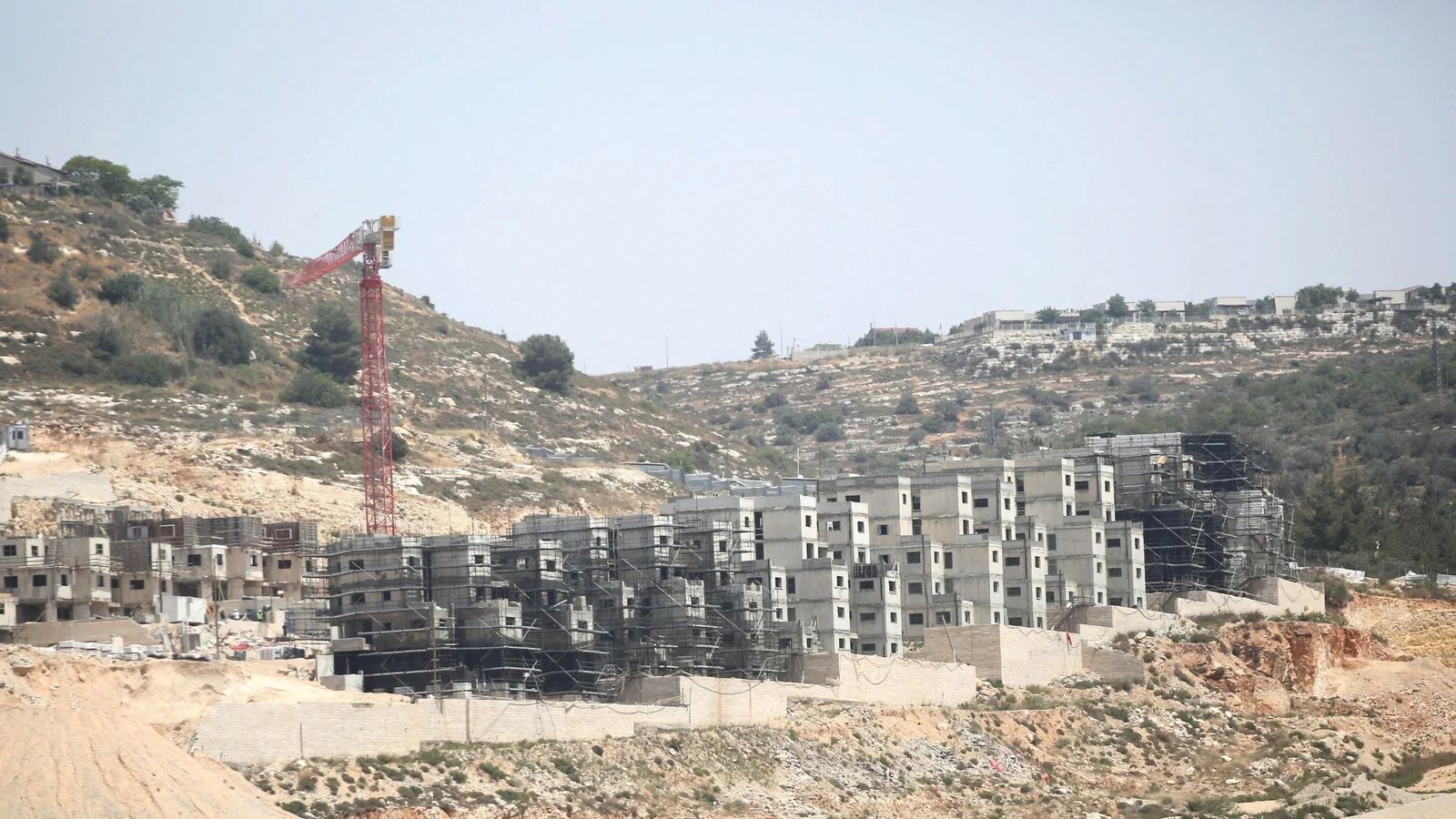
On a gray morning not long ago, Israel’s finance minister, Bezalel Smotrich, went public with a simple bureaucratic number: final approval for 764 housing units in three settlements across the occupied West Bank. He also tallied a larger figure — 51,370 housing units approved by the government’s Higher Planning Council since he took office in late 2022. For some Israelis, those are votes, security calculations and the fulfillment of long-held ideological claims. For many Palestinians, they are another line drawn across a map of land they seek for a future state.
What the numbers mean where people live
Numbers can sound abstract — until you stand under a tent in Gaza and count the days since the last full meal. Or until you walk past a grove of olive trees whose trunks are older than the state lines that now bisect the field. The 764 new units are slated for Hashmonaim, straddling the Green Line, and for Givat Zeev and Beitar Illit on the Jerusalem periphery — names that mean different things to different people: security buffer, biblical claim, or a tightening noose around Palestinian continuity.
“For us, all the settlements are illegal,” Wasel Abu Yousef of the Palestine Liberation Organisation’s executive committee told reporters recently. “They are contrary to international legitimacy.” His words echo long-standing United Nations positions: most world powers consider settlement construction on territory captured in 1967 illegal, and multiple UN Security Council resolutions have called for a halt.
Palestinian officials have appealed to Washington to intervene. Nabil Abu Rudeineh, a spokesperson for Palestinian President Mahmoud Abbas, urged the US to press Israel to “reverse their settlement policies, attempts at annexation and expansion, and the theft of Palestinian land, and to compel them to abide by international legitimacy and international law.” It is a plea that mixes legal argument with raw human urgency.
Between Convoys and Crossings: Gaza’s Aid Shortfall
Across border crossings and checkpoints, another calculus is playing out — this one measured in trucks.
As part of a US-brokered truce with Hamas, Israel agreed to allow up to 600 trucks of supplies into Gaza each day. Yet an Associated Press analysis of Israeli military figures shows that between 12 October and 7 December, the average was about 459 lorries per day. COGAT, the Israeli military body coordinating aid entry, estimates roughly 25,700 deliveries during that period — well short of the 33,600 that should have crossed under the terms of the ceasefire.
Discrepancies in tallies add to the confusion. The UN, tracking cargo offloaded at Gaza crossings, records about 6,545 trucks during the same timeframe — about 113 per day — a figure that excludes shipments delivered outside the UN’s network. A Hamas document provided to AP put the number at 7,333. Which count you accept says as much about politics as it does about logistics.
- Ceasefire target: 600 trucks per day
- COGAT average (12 Oct–7 Dec): ~459 trucks/day
- COGAT total deliveries reported: ~25,700 (vs 33,600 expected)
- UN offloaded figure: ~6,545 trucks (~113/day)
- Hamas tally: 7,333 trucks
These are not just numbers. “We see a continual stream of families arriving at our makeshift kitchens, asking not for aid as charity but as a lifeline,” said Miriam Haddad, a Palestinian aid coordinator based in Rafah. “A baby was brought to our tent last week with swollen, empty limbs. You cannot argue with the hunger in someone’s eyes.”
The human toll: winter, famine, and fragile shelters
Gaza — home to roughly two million people, many of them forcibly displaced during waves of conflict — is teetering under shortages that aid agencies call dire. UNICEF and other groups have sounded the alarm about malnourished infants and mothers. Tents, thin plastic tarps and corrugated shelters are all that stand between families and winter rains that turn ground into mud and light into a wet, piercing cold.
“Needs far outpace the humanitarian community’s ability to respond,” the UN Office for the Coordination of Humanitarian Affairs said in a recent report. They point to persistent impediments: insecurity, customs clearance hurdles, delays and denials of cargo and limited internal transport routes inside Gaza.
Humanitarian workers tell harrowing anecdotes: convoys that wait days at crossings, vital medical cargo stalled by paperwork, humanitarian corridors narrowed by security concerns. In one shelter, a volunteer named Yousra described handing out a hot meal while a child clutched a spotted blanket dyed with the muddy water of last night’s rain. “They ask for bread,” she said quietly, “and we measure our shame in how small the portion has to be.”
Violence, Settler Attacks, and the Erosion of Trust
Adding to the tinderbox are rising incidents of settler violence. UN tracking noted at least 264 incidents across the West Bank in October, the highest monthly figure since records began in 2006. These attacks, ranging from arson to physical assaults to vandalism of property, deepen fear and harden narratives on both sides.
“Settlements are often framed as security measures,” said David Lurie, a scholar of Israeli-Palestinian land policy. “But when settlement expansion is accompanied by violence and impunity, it erodes the very security structures proponents say they want to protect. It also makes a two-state solution harder to achieve, because lines on maps become facts on the ground.”
What this says about the world beyond the region
What happens in the West Bank and Gaza does not stay contained. The events there serve as a mirror to global trends: rising nationalism and the politicization of territory; the weaponization of bureaucracy in controlling access to life-saving aid; and the erosion of multilateral norms when superpowers fail to enforce international law. They also bring into sharp relief a more human, universal question: how do societies justify progress for some at the expense of others’ basic rights?
There are no neat endings to this story. There are only choices: the choice of policymakers to press for adherence to ceasefires and aid commitments; the choice of international actors to demand accountability on settlement expansion; and the daily choices of ordinary people — the aid worker who pulls an all-nighter, the mother who cloaks her child against the rain, the planners who sign off on housing that others call occupation.
What would you do if your city were redrawn overnight? How much hope can withstand the slow, steady accretion of checkpoints and new concrete? These are questions that reverberate far beyond the dusty streets and makeshift kitchens of Palestine and Israel.
If there is a single, stubborn truth, it is this: statistics and statements on a press release tell one part of the story. The rest lives in the mouths of people who ask only for a future that is dignified, secure and recognized. Until those voices are central to policy — not peripheral to it — headlines will continue to alternate between approvals and appeals, while ordinary lives wait for the less noisy, enduring work of peace.