When Balloons Become a Borderline Weapon: Lithuania’s Airspace in Turmoil
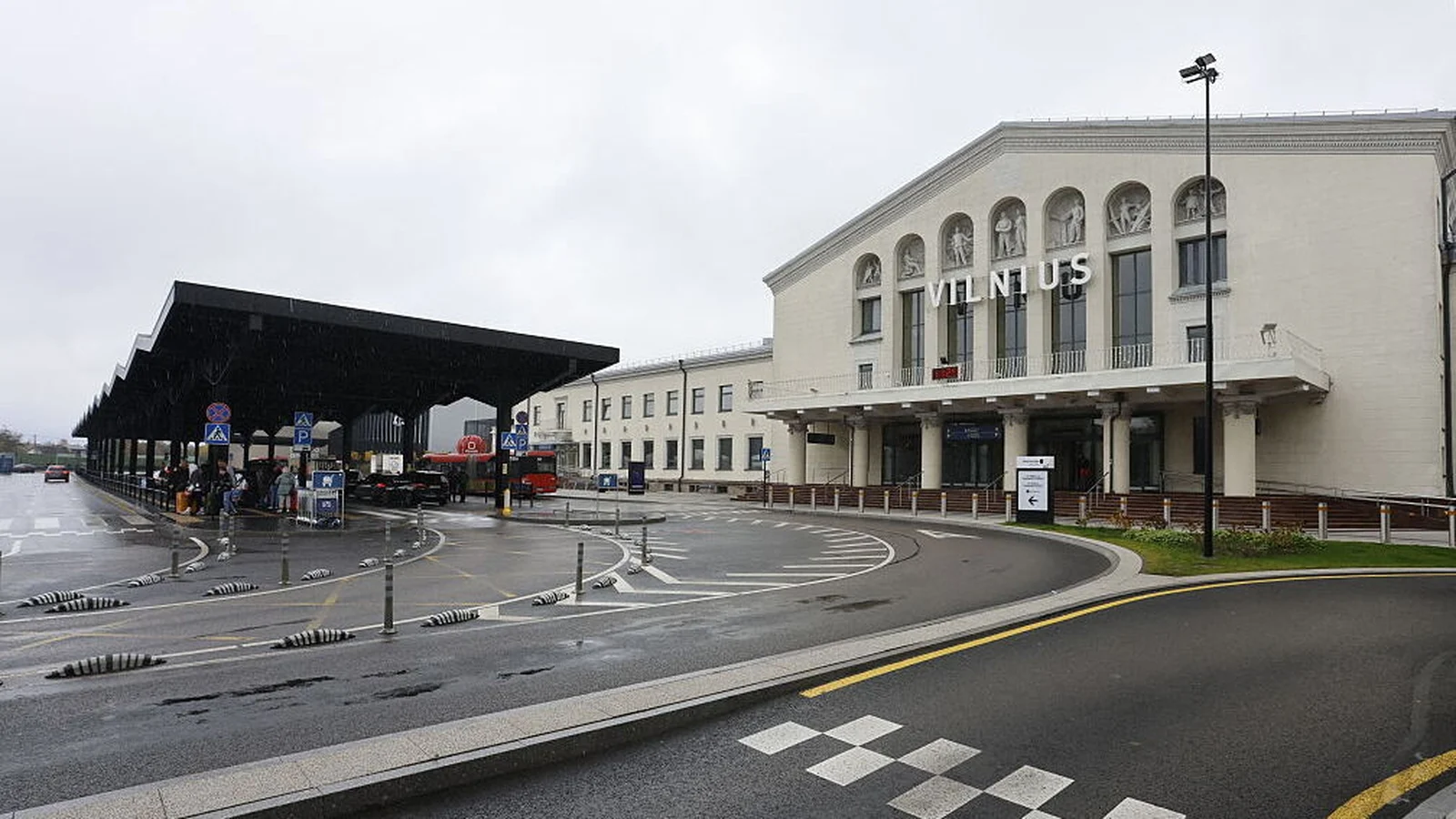
On a cold morning in Vilnius, the city’s Baroque spires and cobbled streets looked unchanged. But above them, something small and innocent—white weather balloons—had become menacing. For weeks now, the fragile domes of plastic and helium have threaded across Lithuania’s eastern sky, carrying bundles of contraband and, in the process, tripping a modern cascade of security alarms.
These aren’t the high-tech drones or ballistic missiles that dominate headlines. They are simple balloons, launched from across the border in Belarus, drifting into Lithuanian airspace with loads of untaxed cigarettes strapped beneath them. Yet their impact has been anything but small: runways shut, flights diverted, families delayed and an anxious nation moving into emergency mode.
Numbers that Interrupt Everyday Life
To understand the scale, consider this: Lithuanian authorities say about 600 of these smuggling balloons and nearly 200 drones—197 by the interior ministry’s count—have crossed into Lithuania so far this year.
Those incursions have not been abstract figures. More than 350 flights were disrupted in 2025 alone, affecting roughly 51,000 passengers, the ministry reports. Vilnius airport was forced to close repeatedly in October and November, and just last Saturday yet another appearance of balloons halted operations.
“I had a flight to London that was delayed five hours,” said Rasa, a graphic designer who missed an important meeting. “The airport staff were calm, but you could see the worry. Everyone kept looking up.”
The Government’s Response: A State of Emergency
On Monday, Vilnius declared a state of emergency — not over a weather front but because airspace had been made unsafe by what the government describes as a hybrid campaign coming from Minsk. The measure is intended to give Lithuania’s armed forces broader authority to work alongside police and border guards to intercept the balloons and the people who send them.
Interior Minister Vladislav Kondratovič, speaking in a government livestream, framed the move as more than about commercial aviation. “This is a matter of national security,” he said, outlining the need for closer institutional coordination. If parliament — the Seimas — approves additional measures, troops would gain powers to detain suspects and to temporarily restrict access to affected areas for up to three months.
Prime Minister Inga Ruginienė, addressing the nation, invoked the vocabulary of defense and resilience: “We must take the strictest measures to protect the regions most affected by these attacks,” her office reported. She stressed that ordinary life would largely continue uninterrupted, but for commuters, travelers and small business owners, the new reality already feels intrusive.
How Does a Balloon Become a Security Threat?
It’s easy to caricature smuggling as old-fashioned bootlegging. But these balloons are a clever workaround of border controls—lightweight, cheap and, critically, hard to track until close to populated zones or airport approaches. Smugglers exploit a wedge between aviation safety protocols and the realities of cross-border criminal networks.
“They’re exploiting legal and technological blind spots,” said Dr. Marta Žukauskaitė, a security analyst at Vilnius University. “When you layer smuggling onto the frictions of geopolitics—strained state relations, porous governance—the result is a form of asymmetric pressure. It’s small-scale, but cumulative and disruptive.”
Local Voices: A City on Edge
Walk through a market in the Užupis district and you’ll hear conversations about flights, not just groceries. Shopkeeper Jonas leans on his counter and counts the cost: “Customers who fly often ask if their trip will be canceled. The airport is part of our livelihood—tourists come, but they see these headlines and hesitate.”
At the airport, a baggage handler who asked to be called Dainius described a surreal mix of routine and adrenaline. “You train for emergencies, but this is different. We’re watching the sky for balloons like watchmen of the old city. You never think a balloon can cancel your day.”
International Reactions and the Politics of Blame
Vilnius has been explicit in naming the source: Belarus. Lithuania accuses Minsk of not acting to prevent the balloons, arguing this inaction amounts to a deliberate hybrid attack. The European Commission’s president, Ursula von der Leyen, echoed that framing — calling the smuggling campaign “completely unacceptable” and signaling the EU’s readiness to consider additional sanctions against Belarus.
Belarusian President Alexander Lukashenko, for his part, dismissed allegations that the balloons posed a genuine hazard as “unrealistic,” according to state media. That exchange underscores a broader geopolitical tug-of-war: neighborly friction stretched into the skies above local airports.
Why Cigarettes?
At first blush, cigarettes seem a strange payload for a geopolitical incident. But the economics are straightforward. Heavy taxation and price gaps in the region make smuggled tobacco highly profitable. Organized networks use creative and low-cost methods to shuttle goods across borders — and when those methods intersect with sensitive infrastructure like airports, what began as contraband becomes a strategic nuisance.
“Profit incentives are the engine here,” said Ieva Petraitė, an economist specializing in illicit trade. “But weaponization happens when states perceive—or present—these smuggling operations as part of a larger campaign to sow disruption.”
What This Means for the Future
There are no easy technical fixes. Tracking balloons requires radar adjustments and new response protocols; policing clauses force domestic debates about civil liberties. The proposed emergency powers are due for a parliamentary vote, and if adopted they could remain in force for up to three months.
There are, however, broader lessons stretching beyond Lithuania’s airspace. We live in an era where low-cost, low-tech tools can be used to escalate tensions without ever firing a conventional weapon. Hybrid tactics—whether cyber intrusions, disinformation flows, or airborne contraband—blur the lines between crime and conflict.
Ask yourself: in a hyperconnected world, how do democracies keep everyday life moving while also protecting critical infrastructure from clever, ambiguous threats? Can a city maintain openness and warmth when a balloon in the sky becomes a symbol of geopolitical strain?
Closing: Skybound Stories and the Human Angle
For now, Vilnius carries on. Cafés in the Old Town still fill at dusk, and the bell tower tolls on schedule. But the sight of a white orb against a pale blue morning has a different tenor these days. It’s not just contraband; it’s a parable about vulnerability in a globalized age.
“We don’t want militarized skies,” said an airport counselor who asked to remain anonymous. “We want safe skies that don’t make you choose between travel and fear.”
That sentiment feels like the heart of the matter: policy and posture matter, but so does the daily human business of living—catching a flight, seeing a neighbor, selling bread. As Lithuania votes and Brussels watches, the question trickles downward: how will communities reclaim the ordinary under an extraordinary sky?