Tuesday, December 30, 2025
Home Blog Page 134

Linehan trial: witness testifies reaching for phone was an involuntary reflex

Grabbing phone a 'reflex' response, Linehan trial hears
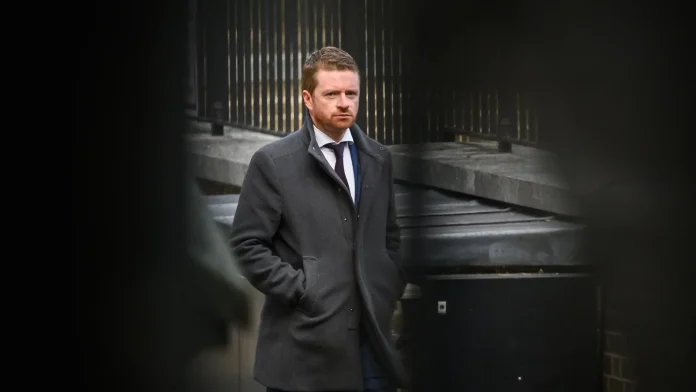
Graham Linehan outside Westminster Magistrates' Court in London this morning

The Phone, the Conference, and a Trial: A Moment Unspooled in London

It began, as so many modern confrontations do, with a small rectangle of glass and plastic — a phone held inches from a face, recording, relentless. And in the days that followed, the clip of that moment threaded its way through social media, court filings and heated debates about free speech, identity and accountability.

Graham Linehan — the writer and co-creator of the beloved sitcom Father Ted — is standing trial at Westminster Magistrates’ Court accused of harassing Sophia Brooks, a transgender young person, over a period in October last year, and of seizing and damaging her mobile phone at a London conference. The alleged incidents happened when Ms Brooks was 17; she is now 18. Mr Linehan has pleaded not guilty.

Outside the Battle of Ideas

Picture a chill October morning near the conference venue in central London: earnest conversations over takeaway coffees, clipboards, placards and the omnipresent hum of livestreams. The Battle of Ideas festival is, by design, a place for argument — a marketplace of competing opinions. But what happened on 19 October spilled over from that marketplace into the legal arena.

According to a statement read in court from Mr Linehan’s police interview, he says he was “first approached by Tarquin” when he arrived and felt he was being harassed — filmed at close quarters, provoked about his private life. “The taunting from Tarquin was completely unnecessary. In response I grabbed the phone and threw it to one side,” Linehan told police, adding that it was a “reflex response” and that he “did not intend to cause any damage.”

For the prosecution, the story is more damning: prosecutors say the defendant used social media to relentlessly single out and abuse the complainant, posting derogatory references and conducting a campaign that the court heard was “oppressive” and “vindictive.” A video shown to the court appears to capture the moment a phone is taken from the complainant’s hand.

How the court is handling identity and language

In a detail that underscores how law, language and identity can collide, District Judge Briony Clarke said the prosecution would address the complainant by their affirmed gender name, while noting the defendant’s position that the complainant is male. The tension between court formality and the fraught debates playing out publicly was palpable in the room.

“The judge’s approach is procedural — to ensure the complainant’s dignity and legal protections,” said a criminal law specialist I spoke to outside the court, who asked not to be named. “But you can see how these procedural choices become politicised in the public square.”

Voices at the margins and the centre

Outside the courthouse, people stopped to talk. A young activist who had followed the case posted on their phone, hands trembling. “I came because these confrontations don’t happen in a vacuum,” she said. “They’re part of a pattern: online abuse, followed by seeking out people in public spaces. That shouldn’t be normalised.”

Down the road, a regular at a nearby cafe — a 60-something who recalled watching Father Ted with her family — sounded conflicted. “I don’t agree with everything he says,” she told me. “But the idea of anyone having their life examined on social media and then turned into a public fight — that’s unsettling.”

These competing sympathies were echoed by campaigners and commentators. “We have to protect young people from targeted harassment,” said an equality campaigner. “At the same time, public figures have platforms that can inflame situations. The question is how the law sets boundaries without chilling legitimate debate.”

Context: When online spat meets offline law

The case sits at the knotty intersection of several modern trends: the amplification power of social media, a cultural moment of intense debate over transgender rights and identity, and a judicial system that is increasingly asked to adjudicate behaviours born online but played out face-to-face.

Experts point out that harassment prosecutions have become more common as courts and prosecutors respond to the realities of online abuse spilling into real life. One legal educator explained, “Harassment, in law, isn’t merely rude speech — it’s behaviour that causes alarm or distress and that a reasonable person would consider oppressive.”

  • Allegation: Repeated harassing social media posts aimed at the complainant between 11 and 27 October.
  • Allegation: Seizing and causing damage to a mobile phone on 19 October.
  • Defence: Acts were a reflex to perceived provocation and harassment; no intent to cause damage; posts were journalistic in the public interest.

How do you draw the line? When does persistent exposure become harassment? When does the right to call out public behaviours turn into a campaign of abuse? These are not purely academic questions: they define the lived reality of teenagers who find themselves the target of adult controversy, and they define the responsibilities of public figures who wield large followings.

Young people, public performance and the politicisation of youth

The age of the complainant — 17 at the time — adds another layer to the debate. In recent years, teenagers have emerged as ardent political actors, often using smartphones as tools of accountability and activism. But those same tools expose them to adults with larger platforms and more established audiences.

“People forget that a teenager’s decision to film someone is rarely benign; it can be a tactic of protest, yes, but also a way to document what they perceive as wrongdoing,” said an academic who studies youth activism. “And when things go viral, the stakes escalate quickly.”

Which prompts a question: should the courts be the main forum for settling these disputes, or should universities, event organisers, and social platforms take more responsibility for preventing escalation? There’s no neat answer — only a messy, ongoing negotiation between speech, safety and power.

Where this goes next

The trial is ongoing. Mr Linehan denies the harassment charge and the allegation of criminal damage. Prosecutors say they will show a pattern of conduct on social media that amounts to harassment; the defence says the posts were justified scrutiny of activist tactics and that the phone was grabbed in a moment of reflexive self-defence.

In the coming days, the court will weigh evidence, witness testimony and the context in which a brief but explosive encounter unfolded. The outcome will matter for the individuals involved — and it will resonate in a broader culture still learning how to be civil online and accountable in public.

So, reader: what do you make of it? When a camera becomes a weapon, and a tweet becomes a verdict, how should a society protect privacy without silencing dissent? The answers are as complicated as the human lives at the centre of this case — and they demand that we look beyond the headlines to the people and places that make up the story.

Macron Announces 26 Nations Pledge Security Support for Ukraine

Macron: 26 countries commit to Ukrainian security support
Ukrainian President Volodymyr Zelensky and French President Emmanuel Macron speak following the Coalition of the Willing Summit

After the Summit: A Pact of Promise — and a Dark Reminder

On a damp late-afternoon in Paris, beneath the ornate frescoes of the Élysée Palace, leaders left the room carrying a mix of resolve and unease.

French President Emmanuel Macron stood beside Ukraine’s Volodymyr Zelensky and announced a startling, almost cinematic commitment: 26 countries had agreed to be ready to deploy forces to Ukrainian soil — on land, at sea or in the air — as part of security guarantees should a peace deal with Russia ever be reached.

It was a statement intended to reassure; a public promise to bind flesh and steel to paper. But for many who heard it — diplomats, soldiers, aid workers, ordinary Ukrainians — the pledge was also a reminder of how fragile peace remains, and how high the stakes are.

A New Kind of Guarantee

“This is not a parade of flags,” a senior French defence official told me after the announcement. “It is a line in the sand: a promise to rebuild, to rearm, to be present if diplomacy finally delivers.”

The meeting in Paris brought together 35 leaders from what Macron called a “coalition of the willing,” a loose umbrella of mainly European countries that have been negotiating the contours of post-conflict security for months. Of those, 26 have now signalled readiness to place forces in Ukraine in support roles, deterrence roles, or as part of a formal peacekeeping architecture.

The coalition’s plan centers on two strands: first, material commitments to rebuild and bolster Ukraine’s armed forces; second, the prospect of multinational troop deployments as a reassurance mechanism if and when a ceasefire crystallises. Macron and Zelensky said the group had spoken with US President Donald Trump during the summit and that Washington’s contribution would be finalised in the coming days — a crucial component, given that European ministers want American guarantees as a “backstop.”

“We don’t want theatrical gestures,” a British diplomat said. “We want credible capacity — logistics, air surveillance, demining, medical units. And we want clear US firepower in the wings if deterrence fails.”

What “presence” could mean

Expectations were deliberately vague by design. “Presence” may translate into training brigades, maritime patrols in the Black Sea, airlift capabilities, or small battlegroups embedded with Ukrainian units. It might also mean engineers to clear mines and specialists to shore up ports and power grids.

Such missions would be costly and politically complex. Germany and other countries said they would participate in rebuilding Ukrainian capabilities, but Berlin insisted it needed clarity — especially about the extent of US involvement — before committing troops.

The Brutal Counterpoint: Aid Workers Killed

The diplomatic choreography in Paris was overshadowed by a brutal reality check on the ground in Ukraine: a Russian rocket strike north of Kyiv killed two members of the Danish Refugee Council who were clearing mines near Chernihiv, around 125km from the capital.

Kaja Kallas, the EU’s High Representative for Foreign Affairs and Security Policy, reacted sharply. “This attack underscores the brutality of this war,” she said. “Attacks on humanitarian missions are a grave violation of international law. The EU remains steadfast in supporting Ukraine and will hold those responsible accountable.”

An aid worker who asked to remain anonymous told me over a trembling phone line: “We came to make things safer, to remove the things that maim children and farmers. To die while doing that — it is a nightmare.”

Deaths like these puncture any abstract conversation about “security guarantees.” They turn diplomatic language into blood. They remind us that while generals and presidents speak in terms of battlegroups and sanctions, families bury neighbors, and villages rebuild under a sky still dangerous with drones and missiles.

Who’s In, Who’s Holding Back

Macron declined to list the 26 nations publicly. But among the countries that have publicly signalled willingness are France and Britain. Ireland — a country with a proud peacekeeping tradition — said it would consider contributing troops if a credible peace deal were reached. Ireland’s Tánaiste and Minister for Defence, Simon Harris, candidly said: “If there is a peace agreement, Ireland — as part of this coalition — will want to assist.”

Not everyone is ready to leap. Germany has taken a cautious line, saying any decision on a military role depends on the precise nature of the guarantees and how the US would back them. The coalition’s leaders have long insisted that European deployments require a US backstop — legal, logistical, and political — to be viable.

Russia pushes back

From Moscow the reaction was swift and uncompromising. Maria Zakharova, a ministry spokeswoman, dismissed any idea of foreign troops on Ukrainian soil as “absolutely unacceptable,” arguing such deployments would “undermine any security” and risk escalating tensions across Europe.

President Vladimir Putin has publicly ruled out NATO troop deployments in Ukraine as part of any settlement, while also suggesting the door to negotiations remains open “if common sense prevails.”

“Why are we interested in what Russia thinks about troops in Ukraine? It’s a sovereign country,” Dutch Prime Minister Mark Rutte said bluntly. “Russia has nothing to do with this. I think we really have to stop making Putin too powerful.”

Sanctions, Energy, and the China Question

Alongside the military talk, the coalition has been sharpening economic levers. In their call with President Trump, European leaders urged Washington to coordinate new sanctions targeting Russia’s oil and gas sector — a key revenue stream for Moscow — and to press China to curtail financial flows that could indirectly support Russia’s operations.

A White House official said Trump emphasised that Europe must stop purchasing Russian oil and should place economic pressure on China. Whether such measures will materialise, and whether they will be enough to bend Russian policy, remains an open question.

Consider the scale: energy sales have been central to Russia’s budget. Cutting off oil and gas revenues is not an abstract punitive measure; it’s an attempt to change the material calculus of war. But it risks protracted pain for European consumers and could push global energy markets into turbulence.

What Would a Peacekeeping Mission Look Like?

There is no single template. Peacekeepers could be observers, interposition forces, humanitarian escorts, or rapid-response units. They could be multinational under an EU, UN, or ad hoc coalition banner. Each configuration brings its own legal implications, rules of engagement, and political risks.

“A peacekeeping mission needs legitimacy and a clear mandate,” said Dr. Elena Morozova, a conflict specialist. “Without clear legal backing and a political settlement, troops on the ground will be targets, not peacemakers.”

  • Primary conditions for deployment would likely include a signed ceasefire, verified withdrawal of forces from certain areas, demilitarised zones, and guarantees of humanitarian access.
  • Support services — demining teams, medical units, engineers — would be essential from day one.
  • And international judicial mechanisms would be necessary to investigate attacks on civilians and aid workers.

Why This Matters to You

This is not a European story alone. It is a test of whether middle powers can stitch together credible security in a world where great-power competition is intensifying and where traditional alliances are being questioned.

Ask yourself: who guarantees the guarantee? If a coalition promises to defend a sovereign nation, what mechanisms ensure it can actually do so without spiralling into a wider conflagration?

The answers will shape not just the fate of Ukraine, but how democracies respond to aggression in coming decades. Will Europe build autonomous capacity to deter threats? Will the US remain a reliable backstop? Will economies accept short-term pain for long-term security?

On the Ground: Voices from Ukraine

In Kyiv, a teacher named Olena said, “We want peace, not parades. We want the mines cleared, the electricity fixed, our children safe.”

A farmer near Chernihiv, boots still dusted with black earth, told me: “There is fear, yes. But also a stubborn hope. If Europe is coming to help rebuild, that hope will have weight.”

Those human voices cut through diplomatic rhetoric. They ask of leaders something simple and profound: not only strategies and maps, but protection for everyday life.

Conclusion: Between Promise and Peril

The Paris summit planted a seed — a coalition prepared to put bodies and resources into a shaky peace. But seeds require careful tending. Without clarity, legitimacy, and robust international backing, even the most well-intentioned deployments can become liabilities.

For now, the commitment is a promise on paper, and a pledge on camera. Whether it becomes a reality will depend on the messy, painful work of negotiation, on the willingness of powers to accept costs, and on the simple, human imperative to shield aid workers and civilians from harm.

As you read this, consider: in a fractured world, how do we choose to guarantee peace? With words? With money? With soldiers? With patience — or with courage? The answer will determine not only the fate of Ukraine, but the shape of international order for years to come.

US could unravel EU trade pact if it loses tariff dispute

US may 'unwind' EU trade deal if it loses tariff case
Donald Trump and Ursula von der Leyen seen in July when the deal with the EU was struck

When Tariffs Meet Treaties: A White House Ultimatum and a World on Edge

It was a hot, fluorescent-lit Tuesday at the White House press briefing room, the kind of day when words from the podium ricochet and don’t easily fade. President Donald Trump stepped up to the microphone and, in his blunt, theatrical cadence, suggested the United States might have to “unwind” recent trade deals with the European Union, Japan and South Korea if the Supreme Court rules against his administration on a tariffs case.

“We made a deal with the European Union where they’re paying us almost a trillion dollars,” he said. “I guess we’d have to unwind them.” The line landed like a pebble thrown into a global pond—small at first, then widening into waves of worry, curiosity and, for some, a grim kind of political theater.

The Scene Beyond the Headlines

Stop for a moment and picture the ripple effects. In a Cleveland storefront, a small manufacturer of stamped metal parts looks up from the bench where workers grease cogs and talk sports. “If the rules change overnight,” says Maria Lopez, who runs the shop with her brother, “we’ll be deciding whether to keep three of our guys or let them go. These aren’t abstract things to us.” Her hands, callused from years on the shop floor, gesture toward a stack of imported coils on the pallet—materials that may carry a levy, a savings, a cost, or a political message depending on next week’s legal headline.

Across the Atlantic, at a café near Brussels’ European quarter, diplomats speak in lower tones. A senior EU trade official, who asked not to be named, sighed. “We worked months—years—on frameworks that were supposed to stabilize commerce. To have them potentially swept aside by a court case tied to a separate tariffs regime? It undermines trust in predictable governance.”

What Is at Stake?

At its heart, the dispute revolves around a set of tariffs the Trump administration slapped on imported goods in recent years—some framed as “reciprocal” or retaliatory measures, others part of broader campaigns against what policymakers called unfair trade practices. An appeals court recently found many of those tariffs unlawful; the White House has signaled it will ask the Supreme Court to reverse that decision.

Legal scholars caution that the situation is legally complex and politically loaded. If the Supreme Court upholds the appeals court’s ruling, the government could be forced to remove certain duties. The president’s comments suggest that, should that happen, some of the separate trade arrangements negotiated with allies could be renegotiated or even dismantled.

Ryan Majerus, a former senior U.S. trade official, told me, “From day one, these EU and bilateral pacts were frameworks—flexible, politically negotiated structures—so saying they can be unwound is less a legal claim than a negotiating posture. It’s leverage wrapped in a warning.” His voice was calm, seasoned, the voice of someone who has sat across from foreign ministers at a negotiation table and knows how much bluff can be involved.

Numbers that Ground the Argument

Consider the scale. Transatlantic trade in goods and services routinely exceeds a trillion dollars a year; the EU and the U.S. are each other’s largest trading partners for services, and among the largest for goods. U.S. tariffs imposed during the trade confrontations of the late 2010s covered hundreds of billions of dollars worth of imports. Economists warn that duties like these rarely remain an abstract burden on a foreign supplier: they twist through global value chains and often raise costs for American businesses and consumers.

“Tariffs are taxes on economic activity,” says Dr. Elaine Chen, a trade economist at an Ivy League university. “They can protect certain domestic industries, yes—but they also raise input costs for manufacturers, and studies show some tariff hikes translated into higher prices for U.S. consumers.” She cites peer-reviewed research that connects specific tariff episodes with measurable upticks in consumer prices and disruptions to supply chains.

Voices from the Ground

In Busan, a mid-sized electronics parts exporter paused between loading crates to explain how fragile globalized production really is. “We have machines here that assemble tiny chips for cars. If rules change, buyers might cancel orders. It takes years to reconfigure a factory,” she said, checking her phone to confirm shipment details. “It’s not just policy. It’s livelihoods.”

In Washington, optimism and alarm collide. Senator Ron Wyden, the top Democrat on the Senate Finance Committee, accused the administration of sowing confusion. “They can’t get their story straight about whether their trade deals will hold any water if the tariffs are struck down,” he said in a terse statement. It’s a reminder that politics is never far from commerce in these debates.

What Would “Unwinding” Look Like?

Unwinding a trade agreement is not a flip of a switch. It would mean reopening negotiations, renegotiating terms on tariffs, quotas, regulatory cooperation, and standards that affect everything from car parts to digital services. For business leaders, the mere threat of that process can freeze investment and make long-term planning difficult.

  • Short-term effects could include market volatility and temporary supply chain delays.
  • Medium-term effects might be new tariffs or restrictions on goods, leading companies to source differently.
  • Long-term outcomes could reshape the architecture of global trade, prompting some industries to reshore while pushing others to diversify supply chains.

How the Courts and the Market Might Respond

Legal analysts note the Supreme Court’s composition—often described as leaning conservative—may slightly increase the odds that at least some tariffs survive. But predicting a nine-justice bench’s response to a novel legal question is always dicey. This case could set precedent about executive power, trade law, and how much latitude presidents have in imposing duties for national security or retaliatory purposes.

Markets respond to certainty. “When legal uncertainty remains, firms delay investment,” says a consultant who works with multinational manufacturers. “That hesitation can translate into lost jobs, slower wage growth, and postponed upgrades to plants.”

Questions for the Reader

What if this is not just a domestic political gambit but a test of global economic order? If trade agreements can be renegotiated or revoked based on a domestic court’s interpretation of tariff law, what does that do to the fragile trust upon which global commerce rests? How should democracies balance national leverage against the need for stable rules that businesses and workers rely upon?

These are not theoretical concerns. They live in Maria Lopez’s shop, in the export lines at Busan’s docks, in Brussels conference rooms and the blinking terminals on Wall Street. They live in the quiet calculations of corporate CFOs and the government lawyers poring over statutes and past precedent.

Final Thought

This is a story about power, law, and the human cost of economic chess. It’s about presidents and justices, yes—but also about the line workers, shop owners and exporters whose days are shaped by decisions in courtrooms and Oval Office meetings. As the Supreme Court considers whether to step in, the world watches. The question is not just who wins in legal terms, but whether we can keep the scaffolding of global trade steady enough for ordinary people to build their lives upon.

Putin warns Western forces in Ukraine would be targeted

Any Western troops in Ukraine would be target, says Putin
Ukrainian firefighters at a building in Donetsk, which was damaged in a Russian attack yesterday

The Thin Line Between Deterrence and Escalation

On the windswept edge of Russia’s Pacific coast, Vladimir Putin spoke with a calm that carried a threat. At an economic forum in Vladivostok he said bluntly that any Western troops on Ukrainian soil would be “legitimate targets.” The sentence landed like a flat stone on a still pond: small, simple, and rippling outward in ways that will be felt for months to come.

Across Europe, in a stately Paris hall where flags and handshakes usually signify diplomacy rather than defiance, leaders pledged a new form of protection for Ukraine. Twenty-six nations—by their own count—have committed to a “reassurance” force that would deploy in the wake of a peace deal or ceasefire, intended to deter a repeat Russian attack. It was, as President Volodymyr Zelensky put it, “a first concrete step.”

Two visions of peace collide

Read them together and you see the clash at hand: one side warns that Western presence equals provocation; the other believes that absence invites aggression. Neither view is naïve. Both are freighted with history.

“We are not talking about boots on the frontline,” Emmanuel Macron said in Paris, standing next to Zelensky. “We are talking about presence—on land, at sea, in the air—meant to prevent a new major aggression.” In his view, the reassurance force is a kind of post-war insurance policy, a way of making clear that Europe will not be found wanting the morning after any accord.

For Moscow, that is intolerable. “Foreign, especially European and American, troops cannot provide guarantees to Kyiv,” Kremlin spokesman Dmitry Peskov said, echoing a position that Moscow has returned to again and again. Put simply: for Russia, certain foreign military footprints are a red line. For Kyiv and its allies, those same footprints may be the only credible deterrent.

On the ground: mines, grief, and ordinary courage

While summit rooms buzz with statements and strategy, people continue to live with the aftermath of nearly three years of war. In northern districts recently vacated by Russian forces, demining teams—often from humanitarian groups—still comb fields, ditches, and children’s playgrounds for death in waiting. A rocket attack killed two members of a Danish mine-clearance unit this week; the grief on local Facebook pages was raw and immediate.

“You don’t see the danger until you step on it,” said Olena, a teacher who returned to her village outside Kharkiv to rebuild what she can. “We come back with buckets of hope, but also with pockets full of fear.”

These are the human stakes behind sterile security debates: the children who cannot play in the park until someone certifies the soil; the farmers who cannot sow a field until the mines are cleared; the families who can’t make a long-term plan because the horizon keeps shifting.

What exactly would a reassurance force do?

  • Presence: deterrent patrols at sea and in the air, perhaps bases for observers, and a visible multilateral footfall in towns far from current front lines.
  • Monitoring: verification of any ceasefire conditions, as well as mine-clearance support and humanitarian logistics.
  • Training and regeneration: rebuilding the Ukrainian armed forces so they can defend their territory credibly.

These tasks sound practical. But they are also political. They require unanimous buy-in on definitions, rules of engagement, and what happens the moment one side claims the other violated the agreement.

The politics inside the coalition

Not all the 26 countries are marching in lockstep. Differences are large, and they matter. Germany is cautious, unwilling to commit troops without a clarified framework. Italy says no to soldiers but might help monitor an agreement. The United States, represented at the Paris summit by special envoy Steve Witkoff, offered qualified support—but the scale and mode of U.S. participation remains uncertain.

“We must avoid creating the impression that Europe will go to war by proxy,” said a senior European diplomat who asked not to be named. “At the same time, walking away from deterrence after we’ve watched repeated attempts at annexation would be a historical mistake.”

There are also geopolitical ripples. Putin’s recent visits to Beijing and meetings with other world leaders have left Western capitals asking whether Moscow seeks to reshuffle the map of alliances—or merely to blunt Western unity. In Beijing, images of Putin and Xi standing together at a military parade were broadcast like a quiet reminder that powerful friends will watch one another’s backs.

Questions that will not go away

Here are the thorny queries that will shape decisions in the coming months. Would a reassurance force actually deter a future incursion, or simply become a target? If Western troops are hit, how far will countries go to respond? Is Europe prepared to field a sustained, multinational presence without the United States taking a leading role? And perhaps most humanly: what does “security” mean to a family trying to rebuild a home mined with old shrapnel and new memories?

“Deterrence is only as strong as the will behind it,” said Marta Novak, a Warsaw-based security analyst. “If states signal they will stand and act, you raise the price for any would-be aggressor. But if the signal is ambiguous, you may only deepen the vacuum.”

Where this fits in the bigger picture

The debate over troops and guarantees is not just about borders or bases; it’s about the rules that govern the international system after conflict. It is about whether Europe can finally shoulder more of its own security or whether fissures between capitals will leave room for revisionist ambitions. And it is about the trade-offs democracies make: when to risk escalation, and when to accept an uneasy calm.

A human choice as much as a strategic one

Walking through a makeshift market in one Ukrainian town, I listened to a man named Petro describe how he teaches his daughter to plant potatoes in a field that may or may not be safe. He shrugged and smiled—a small, stubborn thing. “We dream of peace the way we dream of rain in summer,” he said. “You cannot live on dreams, but without them you do not plant.”

So what do readers think? Would you accept the presence of foreign troops on your soil to guarantee peace that might otherwise never come? Or would you fear that such a presence is a promise of more violence rather than a shield against it?

The answers are not easy, and the consequences are heavy. As leaders parse legal frameworks and military planners sketch scenarios on maps, the people of Ukraine will continue to clear their fields, rebuild their shops, and tell stories—some bitter, some hopeful—around kitchen tables. The world’s task is to translate those tableside hopes into policies that protect lives without plunging the continent into fresh, avoidable conflict.

For now, the thin line between deterrence and escalation persists. It runs across summit rooms and minefields alike, and who steps forward first—into danger or into a careful, multilateral commitment to peace—may determine the shape of Europe for a generation.

Madaxweyne Xasan on safar ugu ambabaxaya dalka Itoobiya oo xiisad kala dhexeyso

Sep 05(Jowhar)-Madaxweyne Xasan Sheekh Maxamuud iyo wafdi uu hoggaaminayo ayaa bilowga todobaadka soo socda u safraya magaalada Addis-ababa ee caasimadda dalka Itoobiya.

Graham Linehan’s anti-trans posts described as ‘oppressive’, UK court hears

Linehan's trans posts were 'oppressive', UK court hears
Graham Linehan outside Westminster Magistrates' Court in London today

Morning at Westminster: a small court, a large cultural fault line

The rain had not yet cleared the streets around Westminster Magistrates’ Court, but the mood outside was already bristling. Camera lenses blinked under umbrellas. A handful of supporters held placards — some insisting on due process, others denouncing words they said had crossed a line. Opposite them, a group of critics chanted quietly, their breath visible in the cool air. Between the two, curious commuters slowed, craning for a glance at a familiar face who has become, for many, a symbol of a wider debate.

Graham Linehan — the co-creator of Father Ted, now 57 — walked into the court building with the practiced ease of someone very used to public attention. He did not speak to the waiting press, but stopped to pose for photographs. Inside, the case that brought him here would soon read like a small, modern fable about speech, identity and the ways online life spills into the tangible world.

What the court heard

Linehan is accused of harassing a young transgender activist, Sophia Brooks, between 11 and 27 October of last year. Brooks, now 18, was 17 at the time of the alleged messages. Prosecutors told the court that the posts directed at her were relentless, moving beyond simple annoyance and into behaviour the Crown characterised as oppressive and unacceptable.

“These posts were not merely irritating or annoying, but rather oppressive and unacceptable, thereby crossing the threshold into harassment,” the prosecutor said. The indictment also includes a claim that Linehan damaged Brooks’ phone — allegedly snatching it from her hand during a Battle of Ideas event in London and throwing it across the road, causing about £369 worth of damage.

Video footage, the court was told, shows at least some part of that encounter. Brooks told the court she felt alarmed and distressed by the comments she received. The defence argued the reverse, suggesting she had deliberately attended the conference to provoke and irritate some attendees. The line between activism and provocation, the lawyer implied, was blurred.

Language and identity in the courtroom

The case also contained an awkward procedural moment that illuminated the tensions at play. The judge explained that the prosecution would refer to the complainant by her affirmed gender name; the defendant, Linehan, has publicly insisted the complainant is male. “No party seeks to police the other’s use of language,” District Judge Briony Clarke said, hoping to avoid a dispute over phrasing derailing the proceedings. It was a small aside in a magistrate’s court, but emblematic of the cultural skirmishes playing out far beyond the walls of Westminster.

Scenes and voices outside the glass

“I’m here because I think the conversation around gender has to be allowed, even if it’s uncomfortable,” said one older man who had come to show support for Linehan. He held a well-worn copy of a comedy script in one hand and a thermos in the other. “But harassment is another matter.”

Opposite him, a young woman with a short-cropped haircut and a warm scarf said, “This isn’t about silencing anyone. This is about young people feeling chased and unsafe online. Words have consequences.”

A seasoned court watcher sighed, balancing a takeaway coffee: “These trials become less about the individuals and more about what they symbolize. People are looking for simple heroes and villains when life isn’t that neat.”

Expert perspective: law, social media and harm

Online harassment has become a growth industry for prosecutors in recent years, and legal minds say the rise of social platforms complicates long-established rules.

“The law around harassment is designed to prevent patterns of behaviour that cause alarm or distress,” said an academic who researches online harms. “What we’re struggling with is how to translate a 1990s statute into an era where a single thread can be amplified by thousands in hours.”

Recent government and policing reports have shown increases in reports of online abuse, though measuring the scale precisely is difficult. Many incidents go unreported; many are filtered through platform reporting systems rather than the criminal justice process. Still, courts are increasingly being asked to adjudicate conduct that begins online and ends up with real-world consequences — smashed phones, upset teenagers, fractured reputations.

On proportionality and context

“There needs to be proportionality,” a defence lawyer told the court in an earlier hearing, “and context matters — who said what, in what tone, and to what reach.” The prosecution has to show that the conduct formed a course of action likely to cause alarm or distress, and that it was not trivial. In this case, prosecutors say it reached that threshold.

More than one headline: the courtroom as mirror

What this trial reveals is not only an alleged interpersonal dispute, but an argument over norms. Is persistent online commentary — however harsh — protected speech or punishable harassment? When does robust public debate become oppressive? Who gets to decide how identity is addressed in an adversarial setting? These questions do not end in Westminster; they radiate through homes, classrooms and social feeds across the globe.

For some, Linehan represents a kind of old-school sceptic — a voice that has grown louder on Twitter, often clashing with activists and campaigners. For others, he personifies the danger of sustained public targeting. For a teenager like Brooks — whether she be a symbol or an individual — the experience shines a light on how vulnerable young people can be to large personalities online.

What happens next

The trial was adjourned and will continue the following day. Linehan has not yet given evidence in the matter. Separately, this morning’s appearance was unrelated to another recent police action: earlier this week he was arrested at Heathrow on suspicion of inciting violence and subsequently bailed while the investigation continues.

Beyond the immediate legal outcome, the case may offer precedents about how the British courts handle allegations that begin in the digital square and end in the civic one. It may nudge platforms and policymakers to rethink thresholds. Or it may harden lines, giving each side new ammunition for their arguments.

Questions for readers

Ask yourself: when you scroll and reply, do you consider the person on the receiving end? Should satire and scepticism enjoy more robust protections than the targets of persistent attention? Or do we need firmer rules to prevent online piling-on?

These are messy questions. They are also urgent. As social media expands the reach of our voices, courts, platforms and societies are learning — sometimes painfully — how to keep people safe without extinguishing dissent. The small courtroom in Westminster is one place where that uneasy balance is still being written.

Giorgio Armani oo nashqadeeyay dharka talyaaniga ayaa geeriyooday isagoo 91 jir ah

Sept 04 (Jowhar)-Naqshadeeye Giorgio Armani, oo gacan ka geystay in Talyaanigu safka hore kaga jiro moodada caalamka iyo xiddigaha Hollywood-ka, ayaa ku dhintay da’da 91 jir, shirkadda uu aasaasay oo uu hoggaaminayay muddo 50 sano ah Khamiistii.

Iconic Italian Designer Giorgio Armani Passes Away at 91

Giorgio Armani: The Quiet Architect of Modern Elegance

On an ordinary morning in Milan — the air already heavy with espresso steam and the click of designer heels — the world lost one of its most elegant statesmen. Giorgio Armani, the man who taught the world to equate understatement with power, has died at 91. The Armani Group announced the news with a short, reverent message: “With infinite sorrow, the Armani Group announces the passing of its creator, founder, and tireless driving force: Giorgio Armani.”

“Il Signor Armani, as he was always respectfully and admiringly called by employees and collaborators, passed away peacefully, surrounded by his loved ones,” the statement added, a soft, private note in the midst of public grief. The family has opted for a private funeral, while Milan will offer a brief public moment: a funeral chamber open to well-wishers the coming Saturday and Sunday.

A Life Cut in Cloth and Light

Some careers blaze; Armani’s smoldered, steady and transformative. He opened his eponymous fashion house in Milan in 1975 and, within a decade, rewired the global idea of dressing. Where fashion once shouted, he taught it to whisper — to do a lot with a little. Long, clean lines. Fabrics that breathed and moved. Jackets without heavy shoulder pads that liberated men’s movement and introduced a softer masculinity to the public imagination.

“He wasn’t about flash. He was about dignity,” says Dr. Lucia Bianchi, a fashion historian in Milan who has lectured on Italian design for two decades. “Armani changed how individuals wanted to appear in both business and pleasure — calm, composed, but unmistakable.”

Armani’s fingerprints are everywhere you look in late-20th-century culture. He dressed actors and actresses on screen and on the red carpet, helped redefine the power suit for women in the 1980s, and left an indelible mark on cinema — his suits for Richard Gere in American Gigolo, for instance, are a cultural shorthand for a new kind of masculine allure.

From Runways to Hotels, a Global Footprint

He was not a one-note genius. Armani built a multi-tiered empire: haute couture in Armani Privé, more accessible lines like Emporio Armani, signature fragrances such as Acqua di Giò that became global blockbusters, and a hospitality arm — Armani Hotels & Resorts — that merged his aesthetic with luxury travel, the first flagship opening in Dubai’s Burj Khalifa in 2010.

By the time his company announced his death, the label had become shorthand for modern Italian elegance: a brand spanning continents, dressing presidents and pop stars, and operating in the cultural sweet spot between commerce and art.

Milan at a Standstill

On Via Montenapoleone and around the Armani/Silos museum, Milanese paused in small clusters. Some lit cigarettes; others stood with hands in pockets, staring at the shop windows where neutral fabrics and timeless tailoring seemed suddenly, poignantly fragile.

“He made us proud,” said Maria, a boutique sales assistant who has worked near Piazza San Babila for twelve years. “People come from everywhere to see this city, to buy a piece of that elegance. He put Milan on the map in a way that matters. It’s like losing a quiet ambassador.”

Across town, at a tiny bar where the owners keep a ledger of famous clients and dates, the regulars spoke of Armani like an old friend. “You’d see him in the cafés sometimes — unassuming, perhaps with one of his jackets folded over a chair,” recalled Paolo, 68. “He preferred to disappear into the fabric of the city, but his clothes never did.”

Official Farewells and Cultural Weight

Italy’s Culture Minister Alessandro Giuli led an outpouring of official respect, calling Armani “a leading figure in Italian culture, who was able to transform elegance into a universal language.” He said Armani’s understated innovation “redefined the relationship between fashion, cinema and society” and named him an “ambassador of Italian identity” across the globe.

Those words capture something essential: Armani didn’t merely sell clothing. He translated a kind of Italian composure — an economy of gesture — into a language that exported well. In a globalized world that often equates excess with success, his restraint was revolutionary.

The Final Acts

Health had already begun to slow him. This year he cancelled his menswear show during Milan Fashion Week and sat out the Paris Armani Privé presentation on doctors’ orders. “In 20 years of Armani Privé, it’s the first time I’m not in Paris,” he said in July. “My doctors advised more rest, even though I felt ready.” Even from a distance, he continued to sign off on creative decisions: “I followed and oversaw every aspect of the show remotely,” he added. “I approved and signed off on everything you will see.”

That sentence — a man so precise that he approved dresses and cuts from afar — feels emblematic. It suggests a final chapter lived in careful stewardship, an artist attentive to the grammar of his craft until the end.

Beyond the Jacket: Legacy and Reflection

What does an icon leave behind? There are tangible things — museums like Armani/Silos that archive decades of work, fragrance counters stocked with bottles that have sold in the millions, hotels that refract his aesthetic into rooms and lobbies — and there is the less tangible inheritance: a changed vocabulary of elegance, a global appetite for a subdued kind of luxury.

“He taught consumers to appreciate an unbranded elegance, where the fit is louder than the logo,” says Marco Leone, a Milan-based stylist. “That’s harder to manufacture than a flashy campaign. It requires respect for materials, tailoring, and a certain ethical patience.”

Globally, his death arrives amid broader conversations about fashion’s direction — sustainability, fast fashion’s social toll, and the search for authenticity in branding. Armani’s approach was in some ways the antidote to disposable trends: garments meant to be worn, remembered, and passed down.

Questions to Carry Forward

As we fold his life into the larger pattern of fashion and culture, we might ask: what does quiet taste mean in an era of shouting? Can the industry he helped shape adapt the principles of craftsmanship and restraint to demands for sustainability and equity? And how will Milan, the city that nurtured him and was in turn nurtured by him, move forward?

Giorgio Armani’s passing is not just news for fashion editors. It is a moment for anyone who believes in craft, in the slow accumulation of taste, in the power of simplicity. Whether you wore his designs or just admired them in passing, you have been touched by his sensibility.

“He gave us confidence without costume,” a longtime collaborator told me, voice nearly breaking. “That is perhaps his greatest gift.”

We close with that thought and an invitation: next time you reach for a piece of clothing, ask what it says. Is it armor, or is it an invitation to be yourself? Giorgio Armani spent a lifetime teaching the world to choose the latter.

Pope Leo addresses Gaza’s ‘tragic situation’ in meeting with Herzog

Pope Leo raises 'tragic situation in Gaza' with Herzog
Israeli president Isaac Herzog arrives at the Vatican to meet Pope Leo XIV

When Marble Meets Rubble: A Pope’s Plea and Gaza’s Quiet Cataclysm

On an ornate morning in the Vatican, amid frescoes and marble that have witnessed centuries of prayers and politics, Pope Leo sat across from Israel’s President Isaac Herzog and spoke of Gaza.

It was a meeting of worlds — the soft hush of papal halls and the brittle silence of neighborhoods reduced to dust. In a statement that lingered longer than the Vatican’s usual diplomatic blurbs, the pontiff lamented the “tragic situation in Gaza,” urged a permanent ceasefire and called for the release of the remaining hostages. The Vatican reiterated support for a two-state solution — the patient, battered blueprint that has slipped in and out of the world’s grasp for decades.

“Religious leaders and all who choose the path of peace must stand together in calling for the immediate release of the hostages as a first and essential step toward a better future for the entire region,” President Herzog wrote on X after the meeting, thanking the pope for a “warm welcome.”

Two Cities, Two Moods

Walk the halls of the apostolic palace and you will see leaders posing without smiles for the cameras. Cross into Gaza City — where Israeli forces have pushed and shelled in recent weeks — and you’ll find people who no longer smile because they cannot afford the motion. In the east of the city, neighborhoods with names like Zeitoun, Tuffah, Sabra and Shejaia have become coordinates on a map of loss.

“This time, I am not leaving my house. I want to die here,” said Um Nader, a mother of five, her voice a dry wind. “It doesn’t matter if we move out or stay. Tens of thousands of those who left their homes were killed by Israel too, so why bother?” Her words pierced through images of tents and ruined facades that have become Gaza’s unwanted landmarks.

There is no cinematic neatness here. There are tent camps hit near Shifa Hospital, queues of children waiting for water, medics naming the dead in numbers that flatten stories into statistics. Health authorities in Gaza report recent Israeli fire killed at least 53 people — mostly in Gaza City — as Israeli tanks and aircraft advanced. The larger toll, according to local officials, stands at more than 63,000 Palestinians killed since the conflict flared last October, most of them civilians.

Numbers That Haunt

Numbers are blunt instruments but they matter. The war began on 7 October 2023, when gunmen led by Hamas carried out an assault in southern Israel that killed some 1,200 people and saw 251 taken hostage. Israel’s response has been relentless.

Inside Gaza, the human cost has been compounded by hunger and displacement. Gaza health officials say 370 people — including 131 children — have died of malnutrition and starvation in recent weeks. The UN and Palestinian agencies warn that displacement driven by the latest offensive is “the most dangerous” since the war began.

How do you weigh a child’s breath against a map of strategic objectives? How do you value a home, a hospital ward, a small shop where a grandmother sold olives, against the calculus of military victory? These are not rhetorical flourishes. They are the questions that echo from tent encampments where families huddle and from diplomatic corridors where leaders weigh statements against realities they cannot fully see.

The Human Geography of Loss

Gaza City, before the war, was home to about a million people. Much of it was already laid waste in the early months of the conflict; hundreds of thousands later returned to live among the ruins, stubborn or desperate. Israel says it has ordered civilians to evacuate the city for their safety and that roughly 70,000 have left; Palestinian officials place that figure at less than half, reflecting distrust, fear and the logistical impossibility of escape for many.

“Even if the Israeli occupation issues warnings, there are no places that can accommodate the civilians; there are no alternate places for the people to go to,” said Mahmoud Bassal, spokesperson for Gaza’s civil emergency service, after strikes damaged multiple homes and a civilian gathering in the Tuffah neighborhood.

From the Nuseirat refugee camp to the makeshift shelters near Shifa, the daily rituals of survival — collecting water, queuing for food, burying the dead — have been reduced to a precarious choreography. Volunteers and aid workers talk about children with swollen bellies and hollow eyes, of mothers who barter what little remains for a loaf of bread.

What Aid Looks Like Now

  • Medical supplies: scarce; hospitals overwhelmed.
  • Food: distributions continue but gaps remain — acute shortages recorded.
  • Shelter: tent encampments are under fire and inadequate for families fleeing bombardment.
  • Protection: no clearly safe zones; UN and Palestinian officials warn of limited options for civilians.

Diplomacy and Dissonance

Pope Leo’s plea for a ceasefire sits within a larger, bruised conversation. He has, in recent weeks, escalated calls for a halt to the fighting, while his predecessor, Pope Francis, had been a more vocal critic of Israel’s campaign and even suggested investigating whether actions amounted to genocide — a comment that sparked furious responses from Israeli officials.

Now, Pope Leo, elected in May, appears to be threading a diplomatic needle: urging restraint, calling for hostage releases and pushing for negotiations, all while the machinery of war grinds on below the Vatican’s skyline. The Vatican’s statement was longer and more explicit than their usual diplomatic notes, noting hopes for a “prompt resumption of negotiations” and for aid to reach “the most affected areas” with respect for humanitarian law.

Yet the prospects for an immediate ceasefire look bleak. Reports say there are 48 hostages still held, with an estimated 20 believed to be alive. Meanwhile, protests inside Israel demanding an end to the war and a deal for the hostages have intensified, exposing fissures in Israeli society and pressure on leaders to secure a solution.

Voices from the Ground

“We can’t run anymore,” whispered an aid worker who had been distributing food in Nuseirat. “People have left and been killed on the road. What does leaving mean when there is nowhere safer?”

Amjadal-Shawa, head of the Palestinian NGOs Network, warned bluntly: “This is going to be the most dangerous displacement since the war started. People’s refusal to leave despite the bombardment and the killing is a sign that they have lost faith.”

And from the Vatican, one official framed the meeting as part moral appeal, part pragmatic diplomacy. “The pope seeks to inject the language of humanity into a conversation dominated by strategy,” the official said. “He wants a path where hostages are freed, aid is allowed unimpeded and a cessation of violence opens room for negotiations.”

What Would You Do?

As a reader far from these streets, what do you feel? Outrage, helplessness, a desire to act? The images beg questions that do not come with easy answers: Is a permanent ceasefire possible without a parallel, credible plan for hostages and security? Can humanitarian corridors be guaranteed while military operations press on? Who will hold parties accountable to international law?

This is not only a regional crisis; it is a test of international will. It asks whether global institutions, religious leaders and governments can translate moral appeals into practical relief. It asks whether the political imagination can stretch to include both safety for civilians and a just, durable peace.

Keeping Watch

The Vatican meeting between Pope Leo and President Herzog offered a moment — brief and fragile — when marble and rubble met in the language of ceasefire and compassion. It did not and could not stop the bombs. Yet words can be seeds. They can precipitate pressure, shape public opinion, and prod negotiators. They can give hostages a sliver of hope and families a reason to believe they might one day rebuild.

For now, families scramble for shelter in neighborhoods half-remembered; hospitals bandage what they can; aid convoys inch forward. The death toll climbs; the numbers harden into a ledger of loss. Still, amid the ruins people tell stories, light candles, and pass down recipes and lullabies. Life, stubborn as ever, persists.

What will the international community do with the pope’s plea? Will it be another line in diplomatic communiqués, or the spark that helps blaze a path to negotiations, aid and — crucially — safety? The answer may decide the fate of thousands and the soul of a region. And if you care, how will you watch, speak, and act?

Liverpool parade crash suspect pleads not guilty in court

Liverpool parade crash suspect facing new charges
The incident happened as Liverpool supporters were celebrating in the city centre

When Celebration Turns to Shock: A Liverpool Street Where Joy and Fear Collided

On a late May afternoon in Liverpool, the city that sings its heart out in reds and anthems, thousands poured into the streets. They wanted one thing: to celebrate a piece of sporting history. They wanted to sing, to hug strangers, to let the music of “You’ll Never Walk Alone” ripple down familiar terraces. Instead, for a moment, jubilation fractured into something darker.

That day, 26 May, remains sharp in the memory of the city — not only as the date when Liverpool’s supporters celebrated a record-equalling 20th English top-flight title, but also as the day a vehicle drove into crowds clustered and singing on the pavements. Merseyside Police later said 134 people were treated for injuries after the incident. Among those allegedly affected were 29 named victims, ranging in age from a six-month-old baby to a 77-year-old fan. Thirty-one offences have been brought, and a 53-year-old former British marine, Paul Doyle of Croxteth, has pleaded not guilty to all counts while appearing by videolink from prison at Liverpool Crown Court.

Faces in the Crowd

Walk any street in Liverpool in the wake of that afternoon and you’ll find stories — small, luminous, and, at times, broken. “I remember the scarves, the faces,” says Marie, a barmaid near St George’s Hall. “We were dancing on the kerb like it was a parade. Then there was a kind of sickening thud and people just went down. The cheers stopped and everyone looked at one another like we’d all been punched.”

For some, the wounds were visible and quick to heal; for others, the scar is internal. “My nephew was there,” says Darren, a second-generation Scouser outside a shipping-themed café. “He has a cut on his leg and he keeps replaying it in his head. You’d never expect that during a title party. You feel angry. You feel helpless.”

These are not just isolated anecdotes. The police reports and formal charges lay out a pattern of harm: 134 injured, victims as young as an infant, counts spanning dangerous driving, attempts to cause grievous bodily harm with intent, and affray. The man charged is a father of three. He faces a provisional trial date fixed for 24 November — a trial expected to last three to four weeks.

What Happened on the Street? A City Tries to Make Sense

There are questions Liverpool — and cities the world over — grapple with after such events. How do you hold celebration and safety in the same hand? How do you heal a community that gathers in joy and suddenly becomes a scene of emergency?

“It’s an invisible line between freedom and risk,” says Dr. Emily Hart, a criminologist who studies crowd dynamics. “Large gatherings are expressions of community identity. They can also be vulnerable zones when an unexpected element — whether negligence, misjudgment, or criminal intent — intrudes.”

Hart points out that modern cities host thousands of mass public events every year, from football parades to festivals and political rallies. “The challenge is not just policing,” she says. “It’s urban design, emergency readiness, and public education about how to respond when things go wrong.”

Local Color, Local Pain

Liverpool knows how to celebrate. The city’s culture is a single, sprawling tapestry: the echo of the Mersey, the ribald humour of the pubs, the Beatles shrines, the sense of kinship that greets you from every corner shop. Fans had poured from Anfield and the pubs, red shirts sunlit, voices rough with songs decades old.

“You could smell the chips and ale and hear brass bands,” recalls Ahmed, who works at a souvenir stall near the docks. “Kids with red faces were running about. Musa, a little boy of six, waved a cardboard flag like it was a sword. He was so proud. That image is with me still.”

That same afternoon, emergency responders moved through the crowd; paramedics worked on pavements and in doorways. For every tale of confusion there were also stories of compassion: strangers holding space, hands finding wrists, the city’s stoic humour lightening a heavy moment.

“One woman handed out bottles of water to a paramedic,” Ahmed says. “She said, ‘You look tired. Keep going.’ That’s Liverpool. That instinct to help is the thing that makes you proud to be from here.”

Questions, Trials, and a City’s Search for Answers

Legally, the matter is now in the courts. Mr. Doyle has entered not guilty pleas to charges that carry serious consequences if proven — dangerous driving, affray, and allegations of causing or attempting to cause grievous bodily harm with intent. For the accused, the presumption of innocence remains a cornerstone of the process. For the injured and their families, the waiting is another test of endurance.

“The judicial system will have its day,” says a legal analyst who asked not to be named. “What we will see over the coming months is a painstaking reconstruction of events, witness testimonies, forensic evidence, and an attempt to place motive within the framework of law.”

Meanwhile, the community’s recovery will look different depending on whom you ask. Some want stricter crowd-control measures — barriers, designated viewing areas, more police presence. Others worry about the militarization of public celebrations, the loss of spontaneity that makes a city’s street life vibrant.

Beyond Liverpool: Global Conversations

Across the globe, cities wrestle with how to balance openness and safety. From festival planners to urban designers, from policymakers to frontline responders, the debate touches on larger themes: mental health supports for veterans, the ethics of surveillance, the design of public space, and the resilience of communities in the face of unexpected violence.

“This is not just a Liverpool problem,” says Dr. Hart. “It’s a challenge for every city that values public life. How do we protect the right to assemble and celebrate without turning our streets into fortresses? How do we ensure rapid medical access, clear egress routes, and community-based responses when the unforeseen happens?”

What Now? Waiting, Remembering, Rebuilding

There are practical steps already in motion. Support services have been offered to the injured; local councils and charities are coordinating assistance. The legal timeline is set, but healing is not bound to a calendar.

For many, the answer is simple and deeply Liverpool: keep gathering. “We won’t be scared off the streets,” says Marie, the barmaid, with a firmness that feels like a vow. “We’ll be careful. But we’ll still sing. That’s what this city does — it carries on, together.”

As you read this from wherever you are in the world, consider your own streets. When the crowd swells, when a communal heartbeat quickens — what safeguards exist to protect those moments? What would you do if joy on the pavement turned to alarm?

On 24 November, a courtroom will begin to unravel one chapter of that day’s story. Until then, Liverpool walks on, its songs both a comfort and a question: how do we celebrate in a world where celebration sometimes becomes a test of our capacity to care for one another?

Scammers face up to 24 strokes of the cane in Singapore

Singapore to punish scammers with up to 24 cane strokes

0
An island on edge: Singapore turns to caning to fight a new kind of crime On a humid morning at a neighbourhood hawker centre, a...
Trump warns Hamas, Iran after Netanyahu talks

Trump delivers stern warning to Hamas, Iran after Netanyahu meeting

0
On a Florida stage, a warning to the region: brinkmanship, honor, and the fragile arithmetic of peace The sun hung low over Palm Beach, gilding...
Bondi attack hero wanted to protect 'innocent people'

Bondi attack hero sought to shield innocent bystanders

0
When a Beach Became a Battlefield: Courage, Loss and a Country Asking Why There are mornings at Bondi Beach that belong to light—the kind of...
Trump warns Iran on nuclear revival as he hosts Netanyahu

Trump cautions Iran against nuclear resurgence while hosting Netanyahu at White House

0
A Mar-a-Lago Meeting and the Tension That Trails It It was a warm Florida afternoon — the kind where the Atlantic throws glints of light...
Myanmar pro-military party claims huge lead in poll

Myanmar’s pro-military party declares massive lead in latest poll

0
Ballots Under Watch: Myanmar’s Election and the Quiet Hum of a Country at War They opened the schools and community halls as polling stations, the...