

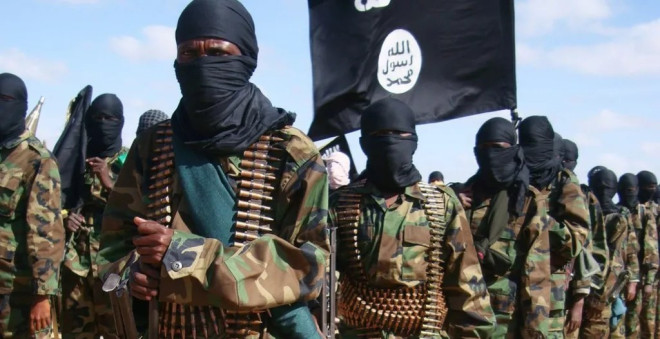
Mar 14(Jowhar)-Ciidanka Hay’adda Sirdoonka iyo Nabadsugidda Qaranka (NISA), oo kaashanaya saaxiibada caalamka, ayaa howlgallo qorsheysan oo lagu beegsaday maleeshiyaad iyo horjoogeyaal ka tirsan Khawaarijta ka fuliyay gobollada Hiiraan iyo Mudug, kuwaas oo lagu dilay in ka badan 22 dhagarqabe oo ku howlanaa abaabulka isku dayo lid ku ah amniga shacabka Soomaaliyeed.
Air travel in upheaval as passengers seek alternative transport options
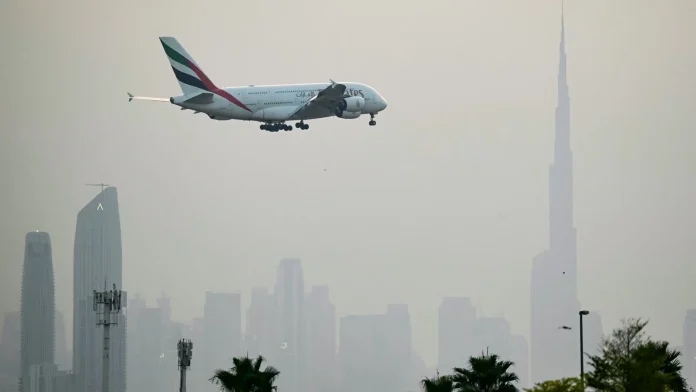
An Interrupted Journey: When the Skyways of the Gulf Go Quiet
On a bright Saturday morning in Melbourne, a small Irish family sat with suitcases packed, passports at the ready and a quiet, sinking realization: their long-awaited trip home was not happening.
“We would’ve been on the plane right now,” Brian Sullivan told me over the phone, his voice a mix of disbelief and weary resignation. He is a Dublin native who has lived in Australia for 21 years. He and his wife had been looking forward to showing their three children—ages six, nine and eleven—what St. Patrick’s Day looks like when seen through the green-lit windows of Parnell Street and the buzz of a hometown parade.
Instead they took a refund. Etihad offered to cancel and reimburse, and they accepted. What was supposed to be a roughly €6,000 family reunion now looks like a logistical and emotional scramble: rebookings that ballooned to an estimated €16,000, routes rerouted through unfamiliar hubs, and the difficult calculus of safety versus longing.
The Hub That Was: Why the Gulf Matters
For decades, the Middle East has quietly stitched together the globe. Dubai, Abu Dhabi and Doha became more than glittering skylines; they are the connective tissue of modern long-haul travel. Combined, Emirates, Qatar Airways and Etihad normally carry more than half of passengers traveling between Europe and Australia, New Zealand and the Pacific Islands.
That network has frayed. Tracking services like Flightradar24 show Etihad operating at around 15% of its pre-conflict capacity. Qatar maintains a limited schedule—no Dublin-Doha connections are in place—and even Dubai, the busiest air hub on the planet, has scaled back. Emirates is running at roughly 60% of its usual activity.
For passengers like Brian, the presence of rockets overhead is not an abstract headline; it is a tangible risk that changes how families weigh travel decisions. “There’s no way we’re going to get on the plane when there’s rockets flying around in the air in that area. Not a chance,” he told me. “Statistically we’ll probably get through, and nothing might happen, but what’s the point in taking the chance?”
From Two Stops to an Uncertain Journey
Before the Gulf’s ascent as a hub, long-haul travel from Australia to Europe typically funneled through Southeast Asia—Singapore and Bangkok—or via one of Europe’s big capitals. Paul Hackett, CEO of Click&Go and Vice-President of the Irish Travel Agents Association, reminded me of the shift: “Before the UAE opened up as a hub, Australia mainly funnelled through Singapore and Bangkok. People went Dublin-London, Dublin-Frankfurt or Dublin-Paris to Singapore and Bangkok and then on.”
That older map still exists, but it is less convenient. For many families the idea of adding extra stops—a night in a transit hotel, the stress of another airport—is now mixed with anxiety about airspace and the cost implications of longer routings.
Alternatives, Costs, and Practical Choices
Travelers are improvising. Some are booking through Southeast Asia—Singapore, Bangkok—while others explore North American connections where geography allows. Thai Airways and similar carriers have seen sudden upticks in passengers seeking these circuitous routes.
But alternatives are not free of trade-offs. For Brian, a re-route through Singapore and Frankfurt slows the trip and requires different visas, hotel nights and childcare juggling. For others, the choice is financial. When Gulf capacity reduces sharply, market laws kick in: fewer seats, higher demand.
- Emirates’ one-way fares from Dublin to Sydney via Dubai were, at one point, available for about €600—tempting, but not for everyone.
- Rebooking mid-crisis can multiply costs—Brian cited a potential jump from €6,000 to €16,000.
- Some families are opting to postpone reunions altogether to avoid risk or expense.
Fuel, Hedging and the Economics of Uncertainty
There is another unglamorous engine behind all this: jet fuel. Prices have surged rapidly—jet fuel prices reportedly doubled to roughly $160 a barrel since early March in the wake of geopolitical shocks. Airlines respond in different ways. Some raise fares, some trim capacity, some try to absorb costs. KLM announced it would raise long-haul fares citing fuel costs; Qantas, Air New Zealand, SAS and Thai Airways followed suit.
Hedging—the financial strategy of locking in fuel prices ahead of time—has become a shield for some. Air France has about 62% of its fuel hedged; Lufthansa around 77%. IAG (owner of Aer Lingus) is hedged at 62% for 2026. Ryanair, according to Davy Group analyst Stephen Furlong, has “the best hedging position” with roughly 80% covered through March 2027.
“Some airlines are more exposed than others but ultimately they’re going to try and pass the cost through to the consumer,” Furlong told me. Travel analyst Anita Mendiratta added a market reality: “Removing a significant portion of that capacity from the system quickly reduces consumer choice and can push prices higher. Carriers from the Gulf have historically offered fares 20–30% lower than many competitors—take that away, and prices rise.”
Tourism, Jobs and a Ripple That Travels Far
The fallout is not merely a weekend disrupted. Middle East tourism is a multi-hundred-billion-dollar industry—roughly $367 billion annually before the crisis—and analysts warn of substantial losses. Consultancy Tourism Economics estimates between 23 and 38 million fewer visitors to the Gulf this year, costing the region up to $56 billion.
Local industries feel the sting. Cruise lines, travel agencies and hospitality workers are now revising forecasts. Click&Go cancelled Dubai cruises for the month and scrambled to rebook customers. Mr. Hackett described the avalanche of worried calls: “We’re doing lots of reassuring. Clients want to know if their trips to Oslo next month are safe, or whether a cruise for 2028 is still on. There’s an emotional labor here that you can’t price.”
Wider Ripples: Supply Chains, Migration, and Geopolitics
When the skies change, so do supply chains. Freight routes shift, costs rise, and industries—from perishable food to high-tech manufacturing—feel delays. There is an undercurrent of longer-term consequence: might airlines and passengers permanently de-emphasize the Gulf as a hub? Could new routings and investments reshape global aviation maps? It’s an open question with enormous stakes for labor markets and national economies.
What Does This Mean for the Traveler?
For families like Brian’s, decisions now are deeply personal as well as practical. He is hoping to bring his children back to Ireland for Halloween instead; a later, somewhat safer plan. “Maybe a stop-over in Singapore and Frankfurt then,” he said, turning pragmatism into a small reassurance.
For the occasional traveler, this moment offers choices—and some uncomfortable truths. Do you chase the shortest itinerary at any cost? Or do you value predictability and safety, even if it means longer flights, new routings, and higher fares? Who pays when geopolitics intersects with our private calendars?
Perhaps the more uncomfortable question is this: are we prepared for an era in which transit hubs can be disrupted not by storms but by geopolitics? And what does resilience look like—in policy, in airlines’ balance sheets, in how families plan reunions?
Looking Ahead
There are no neat endings yet. Airlines will continue to adapt—balancing hedges, adjusting schedules, and juggling demand. Travelers will keep deciding between risk and reunion, cost and comfort. And cities like Dubai and Doha will watch closely: their status as global crossroads hangs on the fragile architecture of stability and open skies.
As you read this, consider your next trip. Would you reroute to avoid unstable airspace? Would you pay more to fly via a different hub? The answers will shape travel patterns and economies for months, perhaps years, to come.
For Brian and thousands like him, the story is painfully simple: plans changed, flights canceled, and a longing for home postponed. But beneath that personal displacement lies a larger narrative—about connectivity, vulnerability, and the surprising ways a distant conflict can touch our doorsteps, or, in this case, our departures boards.
Suuqa Saamiyada Mareykanka oo Lumiyay in ka badan $2 Tirilyan Sababo la Xiriira Xiisadda Iran
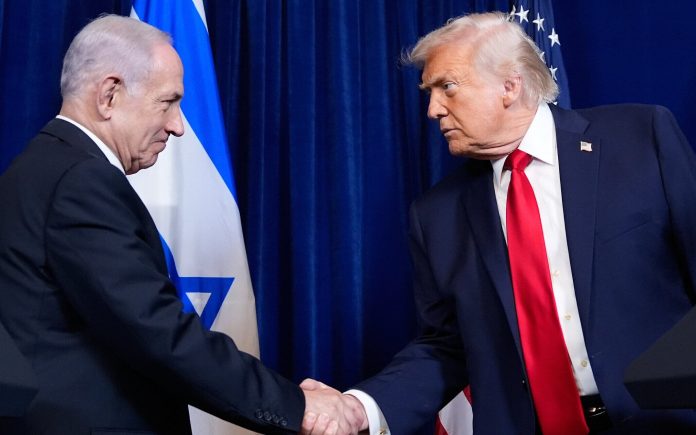
Mar 14(Jowhar)-Hoos u dhac ka badan $2 tirilyan oo doollar ayaa ku yimid suuqa saamiyada Mareykanka, tan iyo markii uu cirka isku shareeray dagaalka u dhexeeya Mareykanka, Israa’iil iyo Iran. Tani waxaa muujinaya xogta ay soo bandhigtay mareegta S&P 500, oo cabbirta waxqabadka shirkadaha ugu waaweyn ee dhaqaalaha Mareykanka.
Trump threatens strikes on Iran’s oil hub as Strait of Hormuz tensions escalate
Smoke, Silence and the Price of Passage: A Trip to the Heart of a New Oil War
There is a gritty, metallic smell that clings to Kharg Island even on a good day: oil, salt, and the tang of hot metal. On a narrow strip of land where pipelines huddle together like lifelines, you can feel the world’s appetite for energy in the hum of pumps and the creak of loading arms. This is where Iran sends most of its oil to sea — an export hub that, if touched, could do more than rattle markets; it could change the map of global supply.
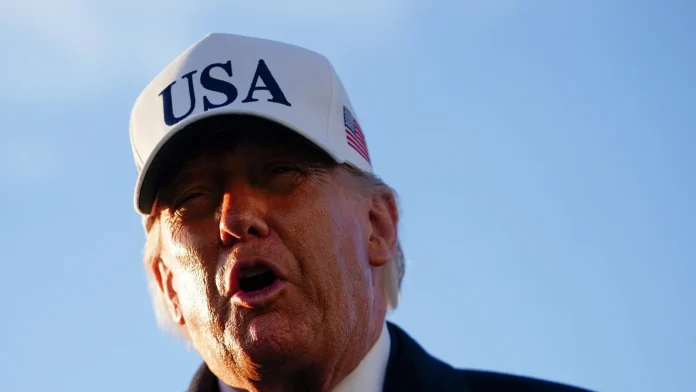
Last week, amid a crescendo of airstrikes and missile volleys that have spread across the Middle East, U.S. warnings turned into something closer to a threat: strikes would be ordered against petroleum infrastructure on Kharg if Iran continued to disrupt shipping in the Strait of Hormuz. The president’s near-invective on social media — declaring military targets on the island “totally obliterated” — was part threat, part theatre. It landed like a stone in an already roiling pond, sending echoes through ports, trading floors and living rooms from Dubai to Detroit.
The island at the eye of the storm
Kharg sits roughly 483 kilometres northwest of the narrow mouth of the Strait of Hormuz, a chokepoint through which nearly one-fifth of the world’s fossil fuels pass. The island handles roughly 90% of Iran’s exports; satellite images and independent trackers show very large crude carriers loading there even as warplanes circled the skies. According to tanker-monitoring group TankerTrackers.com, Iran exported between 1.1 and 1.5 million barrels per day from 28 February through this week — numbers that global markets watch like a pulse.
“We went to work the same as always,” said Ali, a 42-year-old pipeline operator who asked that his family name not be used. “But when the bangs started, everybody looked at each other differently. We are professional. We are proud. But we are also scared — because when oil stops, the work stops, and when the work stops, families go quiet.”
Iranian media cited more than 15 explosions on Kharg after the U.S. strikes, saying the targets were air-defence systems, a naval base and airport facilities. Officials insisted the island’s oil export infrastructure — the pipelines, terminals and tanks that make the place economically consequential — remained intact. Yet in a theater where perception can be as potent as reality, even the sound of blasts matters.
What happens when a bottleneck blinks?
Think about the Strait of Hormuz: a narrow artery that feeds about 20% of the planet’s traded oil. Disrupt that, and the consequences travel like ripples — shipping insurance spikes, tankers take longer, costs climb, and supermarkets and factories feel the pressure weeks or months later. Financial markets hate uncertainty, and they have gotten a steady diet of it: attacks on shipping, coordinated strikes by regional militias, and strategic warnings from world capitals.
“A single attack that damages export facilities can push markets into a higher volatility regime,” said Dr. Sara Mendes, an energy analyst who’s spent two decades watching oil markets. “Now imagine a sequence of attacks or the credible threat of strikes on terminals. Traders will price in a premium for disruption — not just for this week, but for the risk of spillover that could last months.”
- Strait of Hormuz: conduit for roughly 20% of traded oil
- Kharg Island: responsible for approximately 90% of Iran’s oil exports
- Iranian exports (late Feb–this week): 1.1–1.5 million barrels per day
- Reported casualties in the wider conflict: around 2,000 dead and millions displaced
From Tehran to Beirut: a war that refuses to stay in one place
What began as targeted bombardments has sprouted a dozen fronts. Tehran’s Revolutionary Guard says it has coordinated strikes alongside Hezbollah in Lebanon; Israel reports hitting more than 200 targets across western and central Iran in recent days. Beirut, once a city of narrow lanes and clattering cafés, has seen its suburbs hammered by air raids. Lebanon’s interior minister has been blunt: the capital’s shelter infrastructure is overwhelmed as hundreds of thousands seek refuge.
“You can’t imagine the worry,” said Layla, who runs a small grocery in the southern suburbs of Beirut. “We put food in sacks and hand it to people who arrive at night with nothing. People are not thinking about politics; they are thinking about boiling water, and where to sleep.”
Beyond human tragedy, the war has seeped into global logistics. The U.S. has signalled that its navy will begin escorting tankers through the strait. France has been in talks with partners to assemble a multinational escort plan for commercial vessels. When governments start sending warships to protect commerce, you know business-as-usual is over.
Escalation and the calculus of deterrence
On one hand, the United States has framed its actions as protecting freedom of navigation. On the other, Tehran warns that any strike on energy infrastructure will elicit strikes on facilities owned by oil companies that cooperate with the U.S. That is deterrence that does not stop at military targets; it reaches into the contractual networks of global commerce.
“This is not symmetric warfare,” said retired admiral Mark Hollis, now a maritime security consultant. “The calculus is about leverage: the ability to raise costs, to shift trade flows, to make certain routes untenable. You don’t need sustained occupation to win; you simply need the means to make the world pay a price for keeping the waterway open.”
And here lies the rub: making the world pay a price eventually hits ordinary people. Fuel surcharges, longer transit times, higher insurance premiums — these are the invisible taxes of a supply chain under siege.
Faces behind the numbers
There are faces in these figures. A refuelling crew in western Iraq lost six members after a plane crash that the U.S. military confirmed. Families in Lebanon sleep in hallways. In Tehran and cities beyond, ordinary merchants watch their customers thin out as weeks of conflict erode cash and confidence. Even in Kharg’s industrial sprawl, children learn to step lightly around pipelines while their parents pray for a ceasefire that feels increasingly remote.
“We are tired of counting shells,” an older man near a makeshift shelter in Beirut said, lighting a cigarette. “We count people now. We count who is left.”
What should we be watching next?
Will new international escort convoys keep tankers moving? Can diplomacy carve out a space for de-escalation before more oil infrastructure is damaged? How will markets respond if an export terminal — any terminal — is put out of commission for weeks rather than hours? These are not hypothetical questions for accountants and analysts alone; they are the kind that determine whether a shopkeeper can stock rice next month or whether a family can afford heating next winter.
In the end, the story of Kharg is not about a place so much as it is about the fragile lattices that bind the global economy — and how quickly those lattices fray when statecraft turns to strikes. When you next fill your car or switch on a light, consider that somewhere there is a technician checking a valve, a mother keeping her children calm in a shelter, and a trader on the phone recalculating risk. Their lives are the quiet accounting behind the headlines, and their futures now hinge on decisions being made in rooms far away from the salt-stung cranes of Kharg Island.
So what do we owe each other as distant consumers and neighbors in a precarious world? Attention, perhaps. And a willingness to ask tough questions: how do we protect commerce without feeding conflict? And how do we make sure the people who live at the crossroads of global energy are not the ones who pay the highest price?
Live: Strikes Rock Tehran as War Continues to Escalate
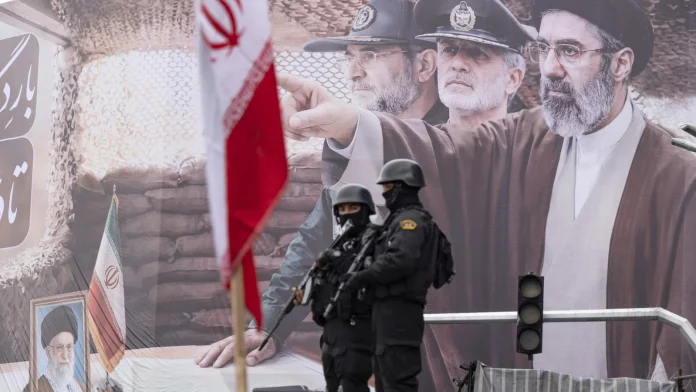
Nightfall in Tehran: A City Interrupted
When the early evening air in Tehran was split by the sound of explosions, the city’s familiar chorus — the call of vendors in the bazaar, the rattle of buses along Valiasr Avenue, the distant hum of prayers from neighborhood mosques — stopped as if someone had hit pause.
It wasn’t the first time this year that the capital had felt the tremor of regional conflict, but for many residents the strikes that landed in the city were a jolt that brought war much closer to home. Streetlights flickered. People poured into alleys and stairwells. Windows shuddered. For a place that has lived with periodic tension for decades, the sensation was chillingly intimate: the front lines had shifted from a foreign border to the city’s skyline.
Voices from the Streets
“I thought the sky was falling,” said Roya, a thirty-year-old mother of two who lives near Laleh Park. “My youngest clung to me for an hour. You teach children to be brave in the face of thunder — but this was not thunder.”
A grocer in the Tajrish bazaar, who declined to give his full name, described the scene as “confusing and surreal.” He wiped his hands on his apron and added, “People ran out of shops with jars of pickles and boxes of dates. There was no time for logic — only instincts.”
State media and international outlets ran competing accounts through the night: official spokespeople warned of “acts against national security,” while amateur video and witnesses posted on social platforms captured streaks of light and columns of smoke. It is often in those first chaotic hours that rumor churns fastest — an element of warfare as potent as any missile.
First responders and hospitals
<p”Ambulances came in convoys,” said a nurse at a central Tehran hospital. “We were ready for numbers. We treated people with burns, concussions, and panic attacks. Many of those who came in were not physically hurt; their fear was their wound.”
Medical teams worked through the night, triaging injuries and trying to offer something that is in short supply during a city under strain: clear information and calm. “When everything else feels out of control, a steady voice matters,” the nurse added.
What We Know—and What We Don’t
In the hours after the strikes, conflicting narratives emerged. Government television described a deliberate attack on urban infrastructure, while hard-to-verify videos spread across social media appeared to show small explosions in several districts. No single comprehensive, independently verified account had emerged in the immediate aftermath.
That uncertainty is part of a pattern that has come to define contemporary conflict: the battlefield is as much informational as it is physical. The fog of war now extends into feeds, where disinformation and partial truths can inflame public sentiment faster than the events they depict.
Context: A region on edge
These strikes did not happen in a vacuum. Since the outbreak of intense hostilities across the region in October 2023, tensions between state and non-state actors have rippled outward, drawing in allies and proxies. Tehran sits at the heart of a complex geopolitical web, with deep ties to groups across the Levant and a fraught relationship with several regional powers.
Tehran is also not a small, isolated city. Its metropolitan area is home to roughly 15 million people, a dense human tapestry that makes any strike unlike a military campaign in the desert — civilians are woven into every street and alley. The disruption of daily routines, the psychological toll on children, the interruption of commerce and education: these are the hidden costs that headlines rarely enumerate.
Local Color in a Time of Crisis
Tehran is resilient in ways that outsiders often miss. In the hours after the strikes, neighbors opened doors to strangers. Tea stations popped up on sidewalks; an elderly man in the northern district of Niavaran unfolded a tiny folding table and offered hot tea and chewing gum to people huddled on the pavement.
“We have a proverb,” said an elderly woman who identified herself as Fatemeh. “In hard times, draw your circle smaller and hold those inside tighter.” Her hands trembled slightly as she spoke, not just from age but from the strain of uncertainty that has become part of ordinary life.
Analysis: The Larger Stakes
Beyond the immediate human toll, there are broader questions: What does the expansion of strikes into capital cities mean for the rules of engagement in the 21st century? How do states protect civilians in densely populated urban centers without escalating to all-out war?
“Urban centers are no longer safe havens,” said a Tehran-based analyst who asked to remain unnamed for safety reasons. “Modern precision weapons and proxy networks have blurred the lines between combatant and civilian space. That raises the risk of miscalculation, just as it increases the moral and legal complexities of response.”
Economically, capitals under stress can ripple outward: financial markets respond to instability, supply chains are disrupted, and investor confidence wavers. For ordinary people, the impact is more immediate — shops shuttered, schools closed, and a pervasive sense of unease that changes how people move, work, and socialize.
Questions for the Reader
How much of modern warfare do we want to accept as inevitable? When a city becomes a theater of conflict, who draws the lines between military necessity and civilian protection? And perhaps most urgently: what can communities do to preserve human dignity in the smallest ways — sharing a cup of tea, opening a door, offering clear, compassionate information?
What Comes Next
Recovery will not be merely about rebuilding storefronts or repairing windows. It will be about restoring a sense of normalcy, trust, and psychological safety. That work often falls to civic organizations, volunteer networks, and informal community leaders who show up when institutions are overwhelmed.
For the international community, the strikes are another stark reminder that regional conflicts have global repercussions. They raise questions about mediation, deterrence, and the role of external powers in either cooling or inflaming tensions. They also test the capacity of international humanitarian systems to respond when crises come to densely populated capitals.
Closing Image
In the early morning light, Tehran’s skyline felt both fragile and defiantly ordinary: satellite dishes on rooftops, silhouette of the Alborz mountains, a child riding a bicycle with his helmet askew. The city had been interrupted, but it was not undone.
“We will open our shops tomorrow,” said the grocer, arranging jars in the window with steady, deliberate hands. “We always do. Life is stubborn in this city.” He smiled, and the small gesture — the daily resilience of people — was, perhaps, the most telling answer to the chaos: that even amid geopolitics and power plays, ordinary lives continue, and their survival matters.
Trump Says US Carried Out Strikes on Iran’s Kharg Island
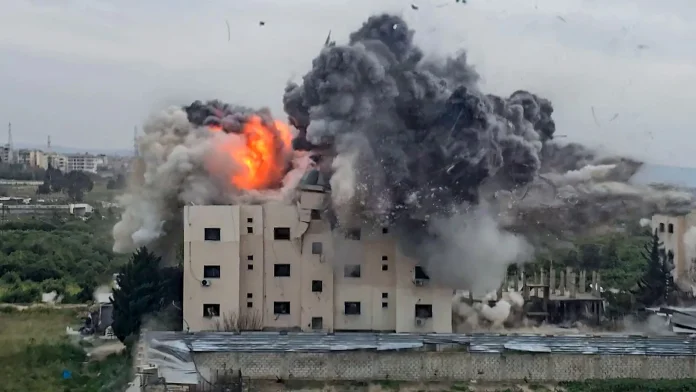
When an Island Becomes a Line on a Map: Kharg, Oil, and the Thin Thread That Holds a Global Market Together
At dawn, the air above Kharg Island smelled of salt and diesel. Fishing boats chugged past rust-streaked oil terminals. For decades this low, pine-fringed slab of land in the Persian Gulf has been more than a local landmark — it is the throat through which the lifeblood of Iran’s economy has flowed.
Until one morning this week, when military strikes carved new scars on the island. The result, according to a terse message from a U.S. leader posted on social media, was total destruction of “every military target” on Kharg — but, he insisted, the oil infrastructure was left standing. The warning that followed was blunt: any interference with free passage through the Strait of Hormuz would bring further action.
“We watched flashes on the horizon and then a dust plume over the oil jetties,” said Hassan, a dock supervisor on Kharg who asked that his full name not be used. “I don’t know how much of our work can be saved. We’re exhausted and scared.”
Why Kharg Matters — Not Just to Iran
To appreciate the stakes, picture a global pipeline with a fragile mid-point. Kharg Island handles roughly 90% of Iran’s seaborne oil exports and, even in recent weeks of conflict, has been one of the few Gulf terminals still loading tankers.
Satellite images reviewed by maritime monitors showed multiple very large crude carriers moored and loading at Kharg after the strikes. Independent analysts estimate Iran exported between 1.1 million and 1.5 million barrels per day (bpd) since the conflict began on 28 February — volumes small compared with global flows but critical to buyers who have few alternatives.
And then there is the Strait of Hormuz: a narrow choke point through which about one-fifth of the world’s seaborne oil passes. Disruptions here ripple outward — into fuel stations, into heating bills, into the decisions of central bankers and traders.
The Anatomy of Risk
Kharg is not a single warehouse but a web of pipelines, terminals and storage tanks — an industrial artery. Even precision strikes aimed at military installations can, industry watchers warn, produce collateral damage to valves, manifolds or loading arms that are delicate and hard to repair.
“Think of it like a watchmaker breaking a gear while trying to remove the hands,” said Marie Delacroix, a maritime security analyst based in Marseille. “You can leave the dial intact, but the mechanism is ruined.”
Markets on a Tightrope
Oil prices have been on a rollercoaster tied to each new claim, counterclaim and threat. The International Energy Agency has labeled the current disruption one of the largest in history; traders are tracking every syllable from leaders and every image from satellites.
Energy strategists are clear about the implications: even small damage at Kharg could further tighten global supply and inject fresh volatility into already jittery markets. “Markets respond to both the physical and the perceived,” said an independent energy consultant in London. “When a supply hub is threatened, buyers scramble for cover, and prices spike.”
Complicating matters, Washington has issued a short-term licence allowing certain shipments of sanctioned Russian crude already at sea to be purchased — a move that drew relief in Moscow but anger across parts of Europe and Ukraine. That decision, leaders across the Atlantic warned, risks sending money to a war chest at a time when global supplies are already stressed.
Escalation and the Human Toll
This is not a contained scene on one island. The war has spilled across borders. In the last two weeks alone, roughly 2,000 people have been killed, most in Iran, with mounting casualties in Lebanon and the Gulf. Millions have been displaced. Beirut’s suburbs bear fresh wounds of airstrikes, and Lebanese officials say capitals are straining under a surge of refugees.
“We fled with a single bag. We left our lives because the sky was falling,” said Layla, a mother who arrived in Beirut with her two children. “You can patch walls, but you can’t patch a life.”
Iran’s new leadership, in its first public posture, vowed to keep the Strait of Hormuz closed if pressured — a statement that sent shivers through commercial hubs from Dubai to Rotterdam. In response, the United States announced plans to escort tankers through the strait, and allied navies began consultations about combined maritime protections.
Military Movements and Maritime Fear
The region has seen a dramatic increase in naval assets and troops. An amphibious assault ship, capable of carrying fighter jets, is being moved into the theater; around 2,500 additional marines and additional sailors are being deployed. At the same time, air strikes and drone attacks have crossed multiple borders — from Iranian missiles aimed at Israel to strikes over Tehran, and to reports of drones flying through Kuwait, Iraq, the UAE, Bahrain and Oman.
A U.S. military spokesman, speaking on condition of anonymity, said the priority was to protect commercial navigation while minimizing harm to civilian infrastructure. “We aim to keep the lanes open,” he said. “But every move is weighed carefully because the consequences are global.”
Voices from the Sea and Shore
For captains and crews, the sea now feels like a ledger to reconcile with risk. “We’ve sailed through storms, but this is different — the storm is made by people,” said Captain Omar Rahman, who ferries crude out of the Gulf. “Even with escorts, passing through these waters is like walking a bridge made of ice.”
Economists warn that the longer the disruption lasts, the deeper its dent on households worldwide. Gasoline and diesel prices at the pump are already edging up in many countries, and any damage to export hubs could accelerate that trend.
The Big Questions
What happens if the hardware that moves oil is left intact but the supply chain — insurance, crew willingness, shipping lanes — freezes? What if nations begin to reroute, to hoard, to decouple energy from strategic rivals? These are not abstract problems; they will determine whether factories slow, whether governments increase subsidies, and whether ordinary people tighten belts.
Are we prepared for a future where geopolitical flashpoints can instantaneously translate into grocery-line anxieties? If globalization has taught us anything, it’s that distant events can arrive at our doorstep overnight.
Looking Ahead
For now, Kharg is both a symbol and a fulcrum: a narrow island that can tilt markets and lives. Repairing physical damage will take engineers and parts; repairing trust will take diplomacy, restraint and time.
“We can rebuild tanks and pipes,” whispered Hassan at the dock, gaze on the smoldering horizon. “But who will rebuild our nights without fear?”
The world watches. The question is not only whether oil flows, but whether the fragile architecture of international order — economic, political and human — will hold when the seas tremble.
Trump Says U.S. Could Escort Commercial Ships Through Strait of Hormuz
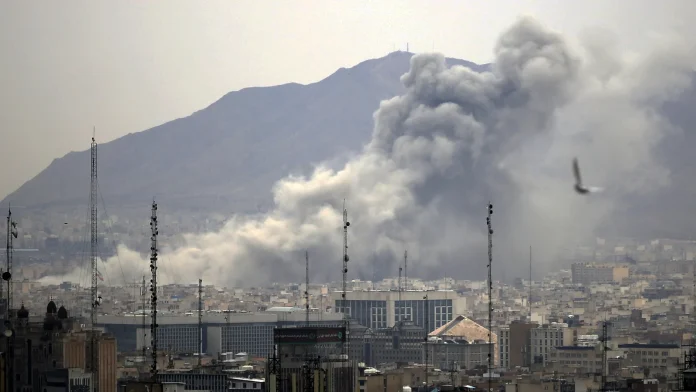
When the World’s Lifeline Feels Like a Battleground: Oil, War and the Strait of Hormuz
There is a narrow strip of water between the Arabian Peninsula and Iran that has always felt larger than its map size. The Strait of Hormuz is the throat through which nearly one-fifth of the world’s oil moves; it is a place where tankers drift like metal whales and where a single misfire can ripple through economies from Mumbai to Minneapolis.
These last two weeks the strait has tasted the acid of war. American leaders say they are prepared to escort ships through those waters if necessary — a promise meant to steady markets and reassure jittery capitals — while at the same time Washington quietly eased a short-term restriction on Russian oil to blunt the blow at the pumps. The result has been a dizzying mix of military rhetoric, diplomatic unease, and swinging oil prices: Brent crude jumped more than 2.6% this week to top about $103 a barrel, and traders are bracing for more shocks.
A show of protection — and recalibration
“We would do it if we needed to,” a senior White House official told reporters off the record, describing contingency plans to escort commercial shipping through the strait. “But our hope is that cooler heads prevail before that’s required.”
At the same time, the administration issued a 30-day waiver permitting some purchases of sanctioned Russian oil already en route — a temporary lifeline for supply, and a political headache for allies. “We are trying to balance near-term economic pain with long-term strategic choices. It’s not pretty,” said an energy adviser in Washington.
European partners were candid in their frustration. Germany’s chancellor, for one, voiced the blunt calculus of their position: “Six G7 members warned against this move. The signals are mixed and the risk is high,” he said at a press briefing, underscoring the diplomatic strain.
Front lines in a region that thought itself used to them
What began as a regional escalation has bled into a more dispersed conflict. Israeli air raids have struck deep into Iran, with Israeli forces reporting strikes on hundreds of targets they say include missile launchers and weapons sites. Iran has launched missiles and swarms of drones toward Israel, and drones have been sighted over Gulf states — Kuwait, Iraq, the UAE, Bahrain and Oman — unsettling capitals unaccustomed to direct overflight by weapons.
The human toll is mounting. In just under two weeks of fighting, estimates put the death toll at roughly 2,000 people, most in Iran but with rising casualties in Lebanon and the Gulf. More than a million people, by some accounts, have fled their homes or been displaced. “We can’t keep track of every child who lost a parent,” a relief worker in southern Lebanon said, voice flat with exhaustion. “The town’s mosque is full of families who have nowhere else to go.”
In Beirut, residents reported relentless strikes on the suburbs. Lebanon’s interior ministry admitted it was overwhelmed; municipal shelters were full, and hundreds of thousands who sought refuge in the capital could not be properly accommodated. “There are women and children sleeping in cars in the rain,” a volunteer with a local NGO told me. “We are doing what we can, but we are out of space and out of supplies.”
Struck, yet defiant: public rallies and contested reports
Meanwhile, the streets of Tehran filled with people holding Quds Day rallies — demonstrations of solidarity with Palestinians that have taken on fresh life amid the wider conflict. State media showed ministers and senior officials joining the crowds, a public gesture meant to send a message of resolve. “People are not afraid,” the judiciary chief declared at one rally. “We will not back down.”
There are also competing narratives about the health and status of Iran’s top figures. American military officials suggested that Iran’s new leadership had been injured in recent strikes; Iranian state sources acknowledged a minor injury but insisted the leadership remained at work. These conflicting accounts have added a surreal layer to a war already defined by ambiguity and broadcasted bravado.
On the waves and at the pumps: the global economic shock
Beyond the headlines, the war is nudging practical lives. The International Energy Agency warned this week that the current disruptions represent the single largest oil supply shock in modern history — a puncture to a system long held together by complex logistics and political guarantees.
For ordinary consumers the impact is immediate. Gasoline and diesel price spikes have been seen from New Jersey to New Delhi. India, which has longstanding energy ties with Iran, is now facing a critical shortage of cooking gas; two Indian-flagged liquefied petroleum gas carriers were reportedly allowed safe passage through the strait, a small reprieve in a sea of complications.
- Brent crude: up ~2.68% to about $103 a barrel (recent trading session).
- Estimated fatalities in the conflict: ~2,000.
- Displacement: several hundred thousand to over a million displaced in the region.
“A $5 bump in the pump price can mean the difference between grocery money and no grocery money for many families,” said an energy economist in London. “We are seeing the geopolitical risk premium re-enter markets with a vengeance.”
Allies, enemies, and the politics of shortages
The Washington waiver on Russian oil has been hailed in Moscow as pragmatic and criticized in Kyiv as dangerous. Ukraine’s president warned that the move could provide billions to Russia at a time when the Kremlin’s war coffers already draw on multiple revenue streams. The debate is a reminder that economic lifelines and military strategy are entangled in ways that make easy choices rare.
In Europe, discussions are underway about assembling multinational escorts for tankers — a naval manifestation of economic interests. France has been actively consulting with European, Asian and Gulf partners about a potential plan, though any operational detail remains sensitive and politically fraught.
Questions that linger — and what comes next
So where does all this leave us? With oil prices fluttering and the specter of naval escorts looming, the global economy is doing what it always does in a crisis: pricing the unknown. In the heart of the region the human cost keeps climbing. And politically, the fracture lines between allies — between the need to secure supply and the desire to deny revenue to belligerents — are widening.
Ask yourself: how far will nations go to keep commerce flowing when the corridors of trade become targets? And what will it mean for ordinary lives when energy, migration, and security snap together into a single knot?
“We used to think of geopolitics as something far away that our leaders handled,” a taxi driver in Dubai told me, looking across the glittering skyline toward the sea. “Now it’s in the price of our bread and the safety of our ports. That’s when it gets personal.”
For now, the Strait of Hormuz remains a fragile artery. The world watches, trades nervously, and waits for a cooling of the rhetoric that, in these narrow waters, becomes a matter of life, livelihood—and the shape of the months to come.
Pentagon intensifies investigation of recent Iran school strike
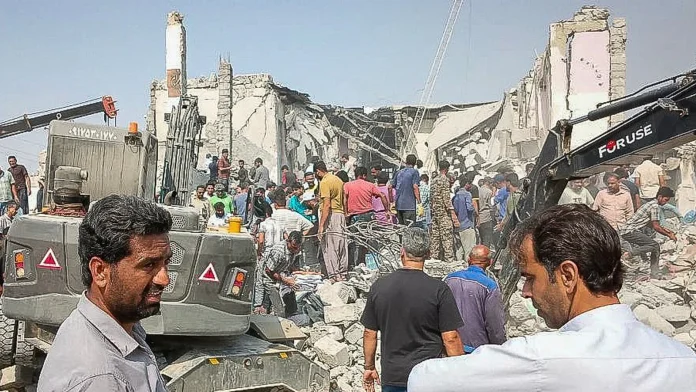
When a Schoolyard Went Silent: The Minab Strike That Has the World Asking How
On a sunstruck morning in late February, the painted murals on the courtyard walls of Shajareh Tayyebeh School — little birds, smiling children, Persian poetry in bright swirls — should have been a backdrop for recess games and the shrieks of girls racing one another across dusty ground.
Instead, the murals watched over ruin. By the time smoke and sirens cleared, Iran said 168 children were dead. Images filtered out: small shoes tossed like forgotten toys, backpacks torn open, a once-lively playground turned into a scene of stunned silence that rippled across the globe.
Within days, reporting from international outlets signaled something worse than the fog of war — initial investigative material suggested that US forces, not Iranian fighters, may have carried out the strike. The Pentagon has now elevated the inquiry into an administrative probe known in military parlance as a “15-6” investigation, a more formal process that can lead to disciplinary action if it concludes negligence or wrongdoing.
How the Investigation Shifted Gears
At the Pentagon, senior leaders have been careful with language. A defence official told reporters that the decision to appoint a senior, outside general officer to oversee the inquiry was “meant to put distance between the investigators and the command that planned the operation.” The official, speaking on condition of anonymity, added, “We need a process that can be trusted to get at the facts.”
The elevation to a 15-6 is not a mere bureaucratic flourish. It means sworn statements, a formal review of targeting protocols, weapons logs and intelligence sources, and the possibility that individual service members could face consequences. The head of the US Central Command ordered the step after an initial review; the Pentagon says the command investigation will take as long as necessary.
For families in Minab, process is a poor salve. “They tell us there will be a study, a paper,” said a mother whose daughter attended the school. “Words do not bring back our children. They are asking for time while our children are in the ground.”
What the Early Findings Suggest
Investigators reportedly are grappling with a troubling possibility: that outdated or faulty targeting data may have led US forces to confuse the school with a neighbouring Iranian military facility in Minab, a coastal town in southern Iran where date palms sway and weekly bazaars bring villagers from the hinterlands.
Video evidence and munition fragments examined by analysts suggest the strike was delivered by a Tomahawk cruise missile — a long-range, precision-guided weapon that, for decades, has been associated with US arsenals. While the Tomahawk’s precision is often touted, precision is only as good as the intelligence that points it.
“A weapon is only as accurate as the information feeding it,” said Dr. Leila Haddad, an independent weapons expert who has studied targeting errors in complex environments. “If the geolocation is old, or if a building has been repurposed but not reflected in the maps and databases, tragedy can happen. This is a human and technical problem intertwined.”
What a 15-6 Can Mean
The 15-6 process typically collects sworn interviews and documentary evidence and can recommend disciplinary steps ranging from administrative reprimand to courts-martial, depending on the findings. One former military investigator explained, “It’s the instrument you use when you need a paper trail that can survive legal scrutiny.”
For human-rights advocates, the move signals at least a willingness to probe the mechanics of the incident. “It shows recognition that something went wrong and a determination to understand what went wrong and why,” said Annie Shiel, US advocacy director with the Center for Civilians in Conflict.
Voices from Minab and Beyond
Local residents describe Minab as a place of open markets and fishing boats, a provincial town where life unfolds slowly under the heat and the scent of cardamom tea. The school was one of 59 institutions that belonged to a cultural-educational network that, archived pages show, had ties to the Revolutionary Guards. Its online presence — years of photos of classes, holiday performances, groups of girls in bright headscarves — made the building easily identifiable to those who knew where to look.
“We used to walk to school past the orange trees,” said a former teacher at the school. “There was a mural of a river on the wall. The children learned to recite verses of Hafez and to take pride in small things. Now every line on that mural seems like it tells a story we cannot read.”
A US defence analyst, who also asked not to be named, told me the gravity of the casualty figures — if confirmed — would place this incident among the deadliest single strikes causing civilian deaths in decades of US operations in the region. “There have been tragic incidents before,” the analyst said. “But the scale here, and the fact that children were targeted, magnify the consequences — strategic as well as moral.”
Politics, Public Messaging and the Struggle for Accountability
The arc of public statements has been messy. Early comments from senior figures sowed doubt and, according to some defence officials, raised concerns about whether the government would be willing to accept responsibility. Yet, after reports suggested US culpability, the tone shifted. Officials have emphasized that the final report will be accepted and acted upon — but many in Minab and far beyond will be watching how transparent that action will be.
“They can publish an apology,” said Zahra, a volunteer who helped collect names at a makeshift registry in Minab. “But for us, accountability means more than words. We want to know who failed, who will be punished, and whether anything will change to prevent another schoolyard from going silent.”
Why This Matters to the World
This is not just a local tragedy. It sits at the intersection of three global anxieties: the increasing reliance on long-range precision weapons, the fragility of intelligence in a world of shifting frontlines, and the erosion of trust between civilians and the militaries that claim to protect them.
Precision munitions were sold to the world as a way to reduce collateral damage. Yet, as analysts caution, precision does not equal infallibility. A chain of human decisions — how maps are updated, how intelligence is corroborated, who signs off on strikes — determines the outcome. And when that chain breaks, children die.
How might democracies, coalitions and armies reconcile the operational imperative to act quickly with the moral obligation to avoid civilian harm? How should international law evolve to address mistakes made by autonomous systems or by the data that feeds them?
Small Rituals, Large Losses
In the days after the strike, Minab’s small grief rituals took shape: tea boiled in simmering pots, women folding white sheets into simple shrouds, neighbours bringing dates and bread to families pacing the courtyards. A teacher I spoke with described an improvised memorial of shoes lined up like silent witnesses to lives interrupted.
“There is no way to stitch this back together,” she said. “We can say the dead will be remembered. But remembrance alone is not deterrence.”
Looking Forward
The 15-6 investigation will proceed. Evidence will be gathered, timelines reconstructed, statements taken. Courts, policymakers and the public will weigh the findings. But process alone cannot fill the empty seats in classrooms or erase the images that now crowd our screens.
What we can demand — as citizens, as journalists, as neighbours of a world defined by increasingly distant wars — is that the response be rooted in truth, not convenience; in accountability, not obfuscation. And when grief is measured in children’s lives, the measure for action must be uncompromising.
So ask yourself: when a single error can end dozens of young lives, who bears the burden of fixing the system that allowed it? And how do we ensure that the next mural on a school wall survives the politics and the missiles alike?
Stars shine on green carpet at Oscar Wilde Awards in LA

An Emerald Evening in Hollywood: The Oscar Wilde Awards Mark Two Decades of Irish Storytelling
Los Angeles glittered with a different kind of green the night the Oscar Wilde Awards returned to the Ebell. Not the gaudy neon of Hollywood Boulevard, but a softer, more resonant green—the color of home, of peatlands and shamrocks, of stories that travel farther than passports. For the 20th anniversary of this pre-Oscars ceremony, actors, directors, musicians and a diaspora of admirers gathered to celebrate a fact that feels small but is quietly enormous: Ireland’s cultural heartbeat has become a steady drumbeat on the global stage.
A room full of stories
Under the Ebell’s carved ceilings and chandeliers—this Los Angeles landmark that still smells faintly of old wood and possibility—guests traded laughter and long-form conversation. The night felt intimate despite the star power. Domhnall Gleeson, known for his chameleonic turns, stood near the bar and joked with an earnestness that made people lean in. Maura Tierney, whose career has threaded television and film with emotional precision, was all warmth; she hugged old friends and posed for photos with a gentle seriousness.
Director Lee Cronin, whose work has been a magnet for both critics and cult fans, accepted his honor with a half-smile and a clear-eyed gratitude. He spoke about making films in a small country with a far-reaching imagination. “Our landscapes are small, but our characters are enormous,” he said. “We bring an economy of story to a world that has forgotten how to listen.”
Who was there, and why it mattered
The evening was organized by the US‑Ireland Alliance, the Washington and Dublin-linked body that has quietly become a cultural diplomat, amplifying the connective tissue between the two countries. The awards—backed by organizations including Fís Éireann/Screen Ireland and Northern Ireland Screen—have grown into a cornerstone event in the run-up to the Academy Awards.
Matt Walsh hosted with a steady, mischievous tenor that kept the evening brisk. Music threaded through the program: Dermot Kennedy—whose voice carries a kind of wind-blown intimacy—took the stage, accompanied by the expressive, soulful guitar work of Dave Lofts. The music was not a backdrop; it was a reminder that Irish art has always been as much aural as visual: the timbre of a song can travel faster than a headline.
- Honorees included Domhnall Gleeson, Maura Tierney and director Lee Cronin.
- Host: Matt Walsh; musical performances by Dermot Kennedy and Dave Lofts.
- Venue: The Ebell of Los Angeles, a historic venue with roots in the city’s early 20th-century cultural life.
- Organiser: US‑Ireland Alliance; supporters: Fís Éireann/Screen Ireland and Northern Ireland Screen.
Voices from the night
“This event feels like a family reunion for people who make things for the world,” said Aoife Brennan, a producer who lives between Dublin and LA. “You feel the weight of history here—of people who left and of people who stayed—then you realize we’re all bringing something to the table.”
Local Angelenos with Irish roots came too. Eileen O’Sullivan, an Irish expat who’s worked in film wardrobe for 15 years, stood just off the dance floor. “You can’t underestimate what a night like this does for morale,” she told me, tapping her emerald brooch. “You go home thinking, we are seen.”
Academics and festival programmers attended as well. Dr. Liam McDermott, a film studies professor from Trinity College visiting for the awards, put it in perspective: “Ireland’s contemporary renaissance in cinema is not an accident. The investment in writers, in local craft, and in infrastructure has paid off. Irish stories have a particular clarity: they move between humor and melancholy without apologizing.”
Context: The Irish wave in global storytelling
It’s easy to point to faces—actors and directors—and call this a success, but the story is deeper. Over the past two decades, Ireland has become a small but potent hub for film and television production, co-productions and talent development. The island’s filmmaking apparatus efficiently marries tax incentives with creative labs and film festivals, and that ecosystem has become fertile ground for ambitious work that can carry international financing and audience attention.
Consider the diaspora effect: with roughly 5 million people in Ireland and millions more worldwide who claim Irish ancestry, there’s a natural appetite for narratives that tap into belonging, memory and reinvention. Hollywood takes notice not only because Irish talent arrives with polish, but because Irish stories ask universal questions in compact, surprising ways.
Behind the glamour: craft, money and cultural diplomacy
Investment has mattered. Screen Ireland and Northern Ireland Screen have, over years, funnelled resources into scripts, mentorship programs and production funding—small grants that often become the seed money for larger co‑productions. The US‑Ireland Alliance has used cultural programming like the Oscar Wilde Awards as a soft-power tool, promoting artists who might otherwise be boxed into national conversations.
“The awards are not merely celebratory,” said Patricia O’Connell, a cultural attaché who advises the Alliance. “They’re strategic. They remind decision-makers in Hollywood and Washington that the Irish creative sector is a reliable partner—one that offers talent, locations, and, crucially, stories that Americans and global audiences want to see.”
Local color and the small details that make a night
It wasn’t all speeches. Before the ceremony, I watched a line of people spill out onto the Ebell’s courtyard, swapping press notes and pastry crumbs. A bartender poured Guinness and a sharp, citrusy whiskey neat. A florist from West Hollywood had woven shamrock sprigs into the table arrangements. Someone had left a small, hand-painted sign that said: “Tell your story like you mean it.”
It’s these tactile things that keep cultural work grounded. A song sung in a bar, a grant given to a first-time director, an encouragement from an established actor—these are the scaffolds that raise a career.
Looking outward: what the awards signal for the future
So where does this leave us as the Oscars approach and the awards season churns on? The Oscar Wilde Awards are both mirror and megaphone. They reflect the sustained presence of Irish voices in global storytelling, and they amplify the kind of work that moves beyond national borders to reach wider audiences.
Ask yourself: what stories are we championing right now? Are we lifting voices that interrogate and expand our sense of belonging, or are we recycling safe narratives? The Oscar Wilde Awards, in their twentieth year, feel like a nudge toward the former.
As the night wound down and the city’s famous palm trees swayed in a warm breeze, the feeling was not triumphant in a headline way. It was quieter: a community pleased with itself for still being curious, for still showing up. We can measure success in prizes and box office, yes. But there is also this—people in a room, laughing and listening, making arrangements for the next film over a plate of late-night fries. That, perhaps more than any trophy, is what keeps cinema alive.
Unknown massive steel cylinder snarls traffic on Japanese highway
The Day a Steel Column Rose from Osaka’s Streets
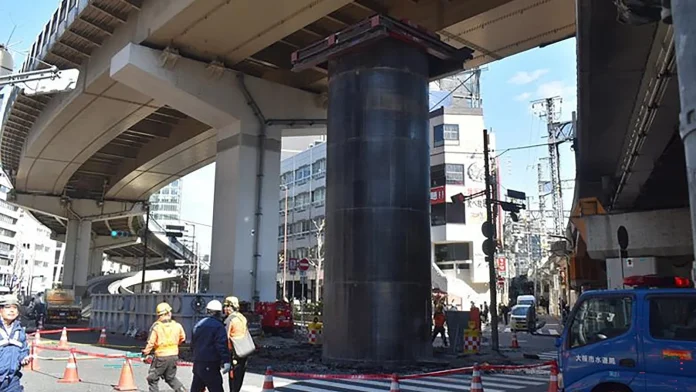
On a damp Wednesday morning in Osaka, the ordinary rhythm of the city — street vendors sweeping curbs, office lights flicking on, the trill of trains — was interrupted by something that looked like a scene from a surrealist painting.
Where a trench for routine sewer work had been open the day before, a hollow steel cylinder the size of a small room had pushed itself out of the earth and stood upright like a metallic obelisk, towering higher than a four-storey building.
People stopped. Phones lifted. Drivers honked in the slow-moving traffic that had already begun to snake toward the center of Japan’s third-largest city.
What Happened
City crews and engineers converged on the site within hours. The structure — a retention casing used to keep earth and water back during deep excavation — was about 3.5 metres in diameter and, at one point, had risen roughly 13 metres above ground. By the next morning, after frantic work to stabilize and weigh it down, it had been coaxed back to a still startling 1.6 metres above the surface.
“We received the first report in the early hours,” a municipal official told reporters, sounding as stunned as the commuters who witnessed the spectacle. “This column was not here the day before.”
Two arterial roads that lead into Osaka’s business districts were immediately closed. The ripple effect was felt across morning commutes: buses rerouted, taxis delayed, delivery trucks idling on parallel streets. One of the two lanes reopened later that afternoon; the other remains fenced off while officials consider cutting away the exposed portion of the cylinder.
Voices from the Scene
“I thought it was a movie set at first,” said Keisuke Tanaka, 54, who runs a coffee stand near the highway overpass. “Then my regulars came by and we all watched the cranes like it was some strange art piece. But we’re nervous — this kind of thing should not happen in downtown Osaka.”
Local shop owner Aya Nakamura, who has lived in the neighborhood for 28 years, put it more bluntly: “Our streets have lived longer than the people who built them. We hear about repairs, but seeing this makes you wonder what’s under our feet.”
Mayor Hideyuki Yokoyama addressed the media, thanking the workers who had waded into muddy, cramped conditions to pour water into the cylinder in an effort to submerge it. “We are relieved the situation has been stabilized for now,” he said, adding that the incident is being investigated thoroughly.
What Experts Say
Geotechnical engineers watching the footage and field reports point to several possible culprits. “A phenomenon like this is usually the result of an imbalance between buoyant forces underground and the weight or anchoring of temporary casings,” explained Dr. Keiko Sato, a professor of civil engineering with expertise in urban tunneling. “If groundwater pressure rises suddenly, or if a void forms beneath a casing, the column can literally heave upward.”
Dr. Sato warned that while rare, such upward migration is not unheard of in cities with dense underground utilities. “Where pipes, sewers, old foundations and newer excavations overlap, the subsurface becomes a complex puzzle. One small miscalculation or an unnoticed pocket of water can produce dramatic results.”
Possible causes being examined
- Hydrostatic pressure changes from groundwater or recent heavy rainfall
- Unexpected voids created by soil erosion or prior tunneling work
- Engineering or installation errors during the casing placement
- Degraded or shifting material in aging underground infrastructure
Beyond the Spectacle: A Sign of a Larger Challenge
Osaka’s metallic monolith is more than a brief curiosity. It is an unsettling reminder of a broader issue that Japan — like other advanced economies with extensive post-war infrastructure — faces every day: how to maintain and renew a vast, aging underground network while keeping a modern city running on top of it.
Last year, a massive sinkhole near Tokyo that swallowed a truck and its driver captured global attention, underscoring the stakes. Here, too, the nightly news showed footage of a chasm where pavement had been whole only hours earlier. Those images, now paired with Osaka’s rising cylinder, make the invisible world below feel dangerously visible.
According to Japan’s Ministry of Land, Infrastructure, Transport and Tourism, a substantial portion of the nation’s bridges, roads and water mains were built in the decades following World War II and are now reaching or exceeding their intended lifespans. Municipal budgets are often stretched thin, and maintenance can be expensive and disruptive — a challenge that is both fiscal and logistical.
Money, Gold, and Maintenance
Osaka’s own struggles with infrastructure funding have been in the public eye. In a twist of headline-making generosity last year, the city received an unusual donation: 21 kilograms of gold worth roughly €3.15 million, reportedly given to help pay for water system upkeep. The donor had previously contributed a much smaller cash amount, and Mayor Yokoyama publicly thanked them while acknowledging that the city’s waterworks program is strained by costs that exceeded initial budgets.
“We appreciate every contribution,” the mayor said, “but ultimately systematic, long-term investment is what sustains a city. One-time gifts, however generous, can’t replace a comprehensive plan.”
Prime Minister Sanae Takaichi has emphasized infrastructure investment as part of a “responsible and proactive” fiscal agenda, signaling central government support for municipalities grappling with repair backlogs. Still, the logistical challenge remains: excavations disrupt traffic, construction can run over budget, and residents are impatient for safer streets and reliable utilities.
What Comes Next
Investigators continue to probe the exact mechanics of the casing’s ascent. Crews are weighing options — whether to cut off the exposed steel and reinstate the road quickly, or to dismantle more carefully and reopen the artery only after rigorous checks. Meanwhile, the city has pledged to accelerate inspections in other work sites.
For the people of Osaka, the event has been a jolt — a dramatic, visible reminder of the subterranean theatre that makes city life possible. “You always assume the ground under your feet is solid,” said Tanaka, the coffee vendor. “Today we learned that solidity is just a lot of careful engineering and maintenance away.”
Questions for the Reader
How much trust do we place in the hidden systems that make urban life possible? When maintenance is deferred for budgetary reasons, who pays the price — and how should cities balance immediate convenience with long-term safety?
As you ride a subway, drive to work, or sip coffee at a curbside stall, consider this: beneath every street is a history of construction, repair and sometimes, neglect. Osaka’s steel column may have been an oddity, but it is also a lesson. What are our priorities in keeping the infrastructure of modern life safe, sustainable, and humane?
For now, cranes and crews will do the delicate business of returning a strange monument to the earth. But the conversation it has provoked — about risk, investment and the hidden life of cities — will likely persist long after the road reopens and the headlines move on.
Has the Iran conflict increased terrorism threats in the United States?
The Long Shadow of a Black Mercedes
Imagine a narrow road outside Beirut on a cold February day in 1992. The engine of a black...
Iran Claims U.S. Aircraft Destroyed During Pilot Rescue Operation
I’m ready to craft that vivid, human-led feature — but I don’t see the original news content you mentioned. Could you paste the article...
Why there’s no viable roadmap to regime change in Iran
A plane, a portrait, and a city that would not be the same
When Mohammad Reza Pahlavi climbed aboard his jet at Tehran’s Mehrabad Airport...
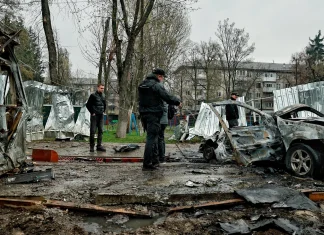
Russian strike in Ukraine kills five, injures 19
Nikopol at Dawn: A Market Silenced by a Drone
The sun was just finding its way across the Dnipro, turning the river into a strip...
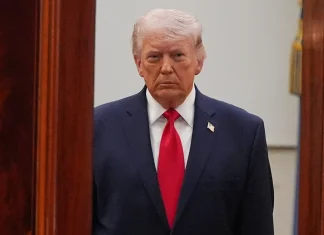
Trump confirms second US crew member safe after rescue
A Rescue in the Mountains, Smoke Over the Gulf: How a Single Day Unraveled the Calm
There are days when history feels less like a...