


Feb 23(Jowhar)-War Saxaafadeed ka soo baxay golaha la magac baxay Golaha Mustaqbalka Soomaaliyeed ayaa ku tilmaamay shirkii u dhexeeyay dowlada federalka iyo golaha uu ku soo dhamaaday natiijo la’aan.
Madaxweynaha Jubbaland Axmed Madoobe oo dib ugu laabtay Kismaayo

Feb 23(Jowhar)-Madaxweynaha DowladGoboleedka Jubaland Axmed Maxamed Islaam (Axmed Madoobe), ayaa dib ugu laabtaymagaalada Kismaayo ee xarunta kumeelgaarka ah ee maamulka Jubbaland, kadib markii uu natiijo la’aan ku soo dhamaaday wadahadalladii u dhaxeeyay Mucaaradka iyo Dowladda Federaalka.
Search crews recover final victim after deadly California avalanche
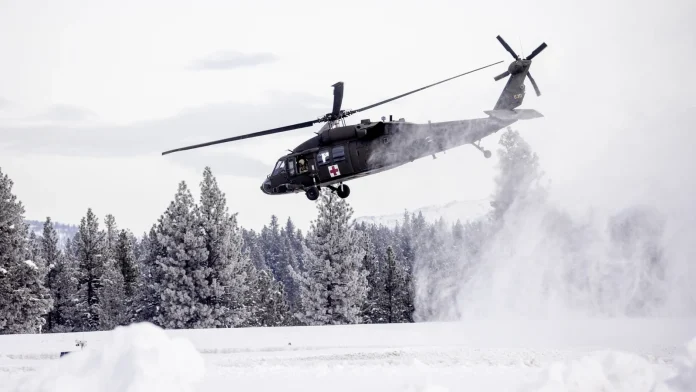
A Quiet Mountain, A Roar of Snow — The End of a Search That Shook Tahoe
The Sierra wake slowly after a storm, as if the pines are rubbing their needles to clear their eyes. But in the valleys below Lake Tahoe, the echo of a single day — February 17 — refuses to settle. Rescuers have recovered the ninth and final person missing in the avalanche on Castle Peak, Nevada County officials confirmed, closing a grim chapter that has left a community reeling and a nation asking how a mountain could take so much so quickly.
Fifteen people were caught in the slide that thundered down the flank of the peak: four guides and 11 clients on a backcountry skiing outing. Six survived — five clients and one guide — clutching each other and the thin thread of their phones to call for help. Nine did not. For the families and friends who gathered in the days that followed, the mountain’s silence felt less like peace than a painful absence.
What Happened on Castle Peak
The avalanche struck during a day of volatile weather. White-out conditions, heavy snowfall, and the looming threat of additional slides made immediate rescue impossible. Crews, from volunteer search-and-rescue teams to county sheriffs and mountain guides, fought both time and the elements as they methodically combed the slope. By late Saturday, the Nevada County Sheriff’s Office announced the recovery of the final missing person and offered what words they could to a shattered public.
The sheriff’s office said the loss is “significant,” underscoring how deeply the event affected local families and rescuers. “There are no words that truly capture the significance of this loss,” Sheriff Shannan Moon said in a statement, a sentiment that read like a collective intake of breath across communities connected to the mountain.
Survivors, Families, and a Community Left With Questions
Those who survived were reportedly able to call for help, but hours passed before rescue teams could safely reach them. The survivors’ small band — shivering, injured, bewildered — were later evacuated to hospitals for treatment. Meanwhile, a statement issued by the families of six of the victims painted a picture of shared lives and shared passions: “They were mothers, wives and friends, all of whom connected through the love of the outdoors. They were passionate, skilled skiers who cherished time together in the mountains,” the statement said, adding a despairing, human punctuation: “we have many unanswered questions.”
“It’s wrenching,” said Lena Ortiz, a Truckee resident and former mountain guide who volunteered to comb through equipment and coordinate messages for relatives. “You know the mountain is beautiful and dangerous. You respect it. But when it takes friends, you question everything — the route, the forecast, the decision to go. You keep asking ‘what if’ and there’s no answer that feels right.”
Why This Avalanche Resonates
Avalanches are not rare in the Sierra Nevada, but events that hit guided groups with multiple fatalities are. This slide is already counted among the deadliest in recent U.S. history, a stark reminder that backcountry recreation — increasingly popular as lift lines and crowded resorts push enthusiasts to roam beyond boundaries — carries real risks. The rise in guided backcountry trips over the past decade has married commercial ambition with a growing thirst for solitude and powder. When something goes wrong, the consequences can be devastating.
To put the scale in perspective, Avalanche.org reports that the United States averages roughly 27 avalanche fatalities each year. Many of those happen in isolated, ungroomed terrain where forecasts can be complicated by rapidly changing weather and layered snowpacks. In recent winters, warmer storms and abrupt warm spells have produced unstable layers that can go undetected until they fail.
Voices from the Ridge and the Rescue Line
“We teach people to read the mountain, but the mountain has moods,” said Dr. Emily Hart, an avalanche researcher and professor who studies snowpack dynamics. “A single storm can create a persistent weak layer beneath fresh snow, and that’s a time bomb waiting for a skier to trigger it. Even with experienced guides, you can’t eliminate all risk.”
Members of the volunteer search-and-rescue teams talk about the grit required to keep looking in conditions that make every step feel like a negotiation with fate. “You strap on your beacon and you hope,” said Aaron Kim, a volunteer with years on the ridge. “You dig and you dig, and sometimes you find life. Sometimes you don’t. It changes you.”
Local Color: Tahoe’s Winter Heartbeat
Lake Tahoe is a place stitched together by contrasts: jewel-blue water beneath granite shoulders, luxury resorts a stone’s throw from humble trailheads, yachts in summer, skin-track lines in winter. Backcountry culture here is both a sport and an identity. Ski towns like Truckee and Tahoe City hum with lore about first descents, favorite runs, and the camaraderie of hut nights where people trade route tips over mugs of hot chocolate and bowls of stew.
On snow-laden mornings, the town’s bakeries fill with the smell of wood smoke and cardamom. Guides re-tune gear, waxing skis and swapping environmental gossip — is the west-facing slope holding, or did last night’s wind load it with slabs? Such details can be life-and-death. “We respect the mountain like a family member,” said Mateo Ruiz, who runs a local guiding service. “You don’t go into the backcountry to conquer it — you go to learn from it. That’s what makes this so sorrowful.”
Questions for the Future
As the rescue teams pack up and the funerals begin, the avalanche leaves larger questions: How should guiding services balance commercial demand with safety? Should there be stricter regulation or certification for guiding in high-risk avalanche terrain? How does climate volatility alter the calculus of backcountry travel?
These are not academic questions for the families and friends sorting through photos and lost gear. They are practical matters for those who manage public lands, for the state agencies that issue advisories, and for weekend warriors who crave wide-open mountains. “We need better community education, more accessible forecasting, and clear communication between guides and clients,” Dr. Hart added. “But even then, there will always be a kernel of unpredictability.”
What You Can Do — If You Go Beyond the Rope
- Carry and know how to use avalanche safety gear: beacon, probe, shovel.
- Check local avalanche forecasts; lands like the Sierra often post daily updates when storms roll through.
- Consider experience and group composition — is everyone able to self-rescue? Are there backups?
- If hiring a guide, ask about their rescue protocols, decision-making frameworks, and recent experience in similar conditions.
Closing Thoughts
For now, the mountain will keep its own counsel. Tracks will be erased by wind. The rhythm of seasons will go on: snow, melt, rebirth. But for the people whose worlds were narrowed to grief on that night, the loss will not thaw with the spring. They will carry names, voices, and memories downhill, where they can be held and mourned.
As you sit with this story, ask yourself: what does it mean to seek wild places? How do we balance our hunger for nature with humility before its power? The answer lies somewhere between reverence and preparation — in the hard, patient work of learning the mountain’s language before you press your ear to it.
Man fatally shot attempting to enter Trump’s Mar-a-Lago estate
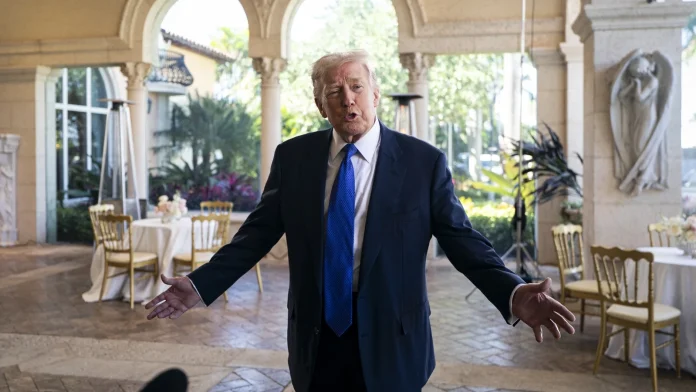
Midnight at the Gate: A Quiet Night Disrupted at Mar-a-Lago
It was the kind of night that usually hums with the lullaby of the Atlantic—salt on the air, palm fronds whispering, and the faint glow of lamp posts tracing the driveways of Palm Beach’s gated estates. But in the early hours of a humid Florida morning, that ordinary hush was pierced by the metallic click of a shotgun and the low, urgent voices of law enforcement. A man who had approached the north gate of Mar-a-Lago was shot and killed after refusing orders to drop a gun and a gas can, officials said. President Donald Trump was not on the property at the time; he was in Washington.
What unfolded
According to law-enforcement briefings, agents from the U.S. Secret Service and a deputy from the Palm Beach County Sheriff’s Office confronted a single individual around 1:30 a.m. local time. The man, later identified by some U.S. media as 21-year-old Austin Tucker Martin, had been reported missing from his home in North Carolina the day before.
Palm Beach County Sheriff Ric Bradshaw, speaking to reporters, recounted the exchange in stark, economical language: “The only words that we said to him was ‘drop the items,'” he said. “At which time he put down the gas can, raised the shotgun to a shooting position.” The man was declared dead at the scene; no officers were injured. The FBI has taken over the investigation, gathering evidence and piecing together motive and travel.
Scenes from the gate: Residents and responders
Mar-a-Lago sits like a gilded postcard on South Ocean Boulevard—Mediterranean arches, manicured hedges, and ornate gates that separate the private compound from the public road. Yet the gate that night became a crucible where training and split-second judgment collided with human risk.
“You could feel the adrenaline in the air,” said a neighbor who lives two houses down and asked not to be named. “We saw the flash of headlights, then sirens. It’s unnerving—this place is supposed to be safe, and yet anything can happen.” The witness described a line of uniformed officers moving with tight professionalism, closing off the area as dawn began to lighten the sky.
A Secret Service official, declining to be named while the FBI leads the inquiry, told a reporter, “Protective work is often unsung until something like this forces it into daylight. We train for breaches, and we act to protect those we guard and the public.” Karoline Leavitt, a White House spokesperson, praised the response, saying the Secret Service “acted quickly and decisively to neutralize a crazy person, armed with a gun and a gas canister, who intruded President Trump’s home.” The FBI’s director posted that the agency is dedicating “all necessary resources” to the probe.
Questions that linger
Why did a young man from North Carolina traverse roughly 700 miles to Palm Beach? What drove him to approach one of the nation’s most scrutinized properties with both a firearm and fuel at hand? Those are the simple, jagged questions that investigators now face.
Scott Bessent, the U.S. Treasury Secretary, said he had spoken with the president after the incident and thanked the Secret Service for their swift action. “We don’t know whether this person was a mastermind, unhinged or what,” he said on television, echoing the uncertainty that follows so many such episodes.
Context: Security, politics, and a fraught moment
In an age of amplified threats—ranging from small-scale intrusions to politically motivated violence—protective teams operate against a backdrop of rising anxiety. Assassination attempts on U.S. leaders are rare but historically significant: four U.S. presidents have been successfully assassinated, and countless plots have been thwarted by law enforcement over the decades. The Secret Service, which traces its origins to 1865 as a counterfeiting-fighting agency and assumed protective duties after the assassination of President William McKinley in 1901, now runs one of the most complex security operations in the world.
Still, humans make judgment calls in real time. “You train your whole career for that one second,” said a retired federal agent who has worked protective details for former officials. “Sometimes it’s a fence-jumper with no malicious intent. Other times, the intent is clear and the gap between life and death is measured in heartbeats.”
How communities react
For Palm Beach, a town where tourists come for sun and the wealthy retreat behind private security, the incident stirred familiar tensions about safety, visibility, and the price of celebrity. Local shopkeepers expressed a mixture of concern and weary acceptance.
“This kind of news brings people in for a few days to gawk, then it goes back to normal,” said Maria, who runs a bakery near the island bridge. “But it’s a reminder—we are small and lovely, but we are also in the crosshairs of national drama sometimes.” A valet at a nearby club nodded, adding, “We see high-profile folks all the time, but none of us thought we’d see this at the gate.”
Timeline: The crucial hours
- ~24 hours before: Missing-person report filed in North Carolina concerning a 21-year-old man.
- 1:30 a.m. local time: Man is observed at Mar-a-Lago’s north gate carrying a shotgun and a fuel can.
- Minutes later: Secret Service agents and a Palm Beach County Sheriff’s deputy confront him and order him to drop the items.
- Confrontation escalates; the man is shot and later declared dead at the scene. No officers injured.
- FBI assumes investigative lead; recovery of evidence and witness statements begins.
Wider implications: Beyond one breach
What should we, as observers, take from this event? On one level, it is a discrete encounter—a law-enforcement response to an imminent threat. On another, it is a window into modern anxiety: the mix of political polarization, the ubiquity of weapons, and the ease of travel that lets a person cross states in hours. There is also the human cost: a life ended, a family left with questions, and a community shaken awake.
Security analysts note a trend: while large-scale plots draw headlines, smaller, improvised breaches—driven by mental-health crises, obsession, or opportunism—are increasingly common. “Protection is not just about fences and gates,” said Dr. Anjali Rao, a security studies scholar. “It’s about intelligence, community reporting, mental-health outreach, and understanding pathways that lead individuals to act violently. Reactive force solves an immediate problem; prevention is the long game.”
An invitation to reflect
As you read this, ask yourself: what is safety worth in an open society? How do we balance the need for public access and private protection, for compassion and vigilance? The line between security and spectacle is thin, and every incident like this pulls it taut.
This is not the end of the story. The FBI’s investigation will piece together movement, motive, and method. Families will grieve. Security protocols will be reviewed. The Atlantic will keep washing the same shore. And nights in Palm Beach will continue to sound like the sea—though now perhaps, for a while, with an added edge of watchfulness beneath the stars.
Mareykanka oo fariin u diray dowladda iyo Golaha Mustaqbalka Soomaaliyeed

Feb 23(Jowhar)-Safaaradda Maraykanka ee Muqdisho ayaa war kooban oo ay soo saartay kula hadashay dowladda iyo Golaha Mustaqbalka, iyadoo ku adkeysay in wadahadalka iyo isu tanaasulku ay lama huraan u yihiin horumarka siyaasadeed ee Soomaaliya.
Wasiir Faarax iyo Sanbaloolshe oo ergo ahaan loogu diray mucaaradka
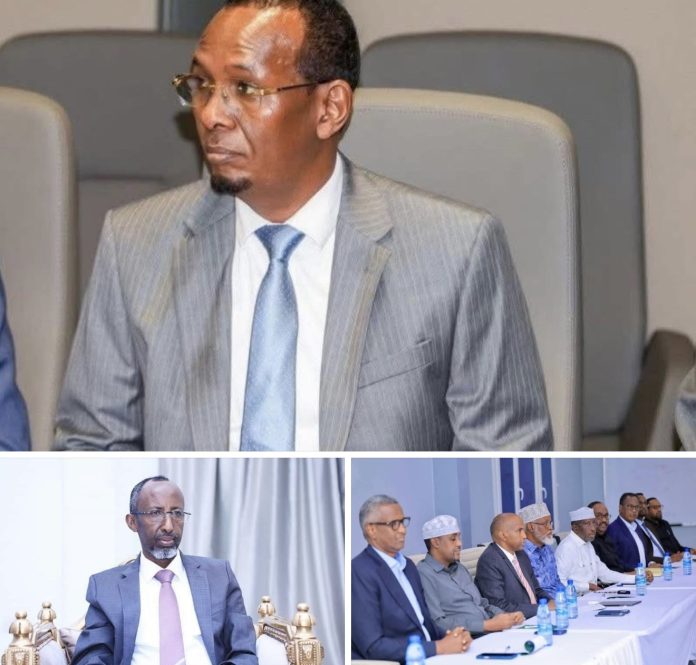
Feb 23(Jowhar)-Madaxweyne Xassan Sheikh ayaa labo kamid ah saaxiibadiisa siyaasadeed ergo siyaasadeed ahaan ugu diray Golaha Mustaqbalka Soomaaliya, si uga baajiyaan in ay golaha soo saaran warmurtiyeed kama dambeys ah oo ay kusheegayaan in madaxweynuhu xalkii doorashada iyo Dastuurka diiday, horu socodna laga gaari waayay wada hadalkii socday.
Mexico’s military kills drug cartel leader in U.S.-backed operation
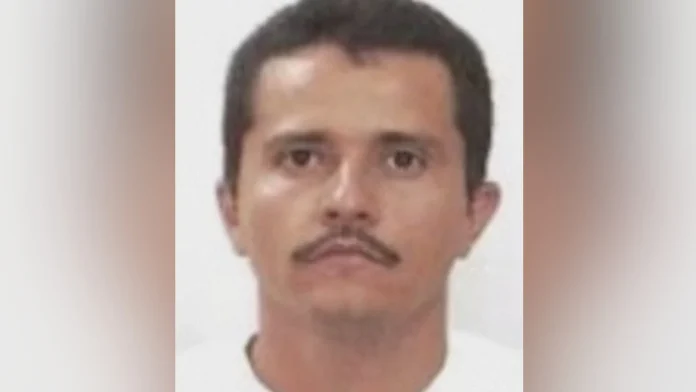
When the Smoke Rose: A Mexico Night That Felt Like an Earthquake
They arrived as if to mark the end of an era—and the beginning of something else entirely. A heavily guarded convoy of National Guard trucks rolled into Mexico City with the lifeless body of Nemesio Oseguera, better known by the name that once made governors, businessmen and tourists flinch: El Mencho.
The defence ministry said the 60-year-old leader of the Jalisco New Generation Cartel, CJNG, had been wounded during a special forces operation in Tampalpa, Jalisco, and later died in custody. Within hours the country’s arteries—highways, airports, seaside boulevards—felt the shock.
“It looked like a war zone,” wrote one tourist from Puerto Vallarta on a social feed as black smoke curled over the bay and videos showed flames licking at charred cars and a burning bus. “We just wanted to see the sunset. We got something else.”
Scenes from the Front Lines: Roadblocks, Flames, and Frayed Nerves
Across multiple states, men believed to be cartel fighters set fire to vehicles, torched storefronts and blockaded highways. Schools in some areas shut down for the day. Airports grounded flights; airlines including United, American, Southwest and several Canadian carriers suspended routes into Puerto Vallarta, Guadalajara and Manzanillo. Some flights turned back mid-journey.
“We woke to the sound of shouting and then the sirens,” said María López, who runs a small taquería in a suburb of Guadalajara. “Customers didn’t come. People are scared. We don’t know if this will pass tonight or if the calm is just another pause.”
For a nation where cartels have long woven themselves into the social fabric—through violence, through extortion, through the jobs they both create and crush—the sudden eruption of violence after the raid felt like a seismic shift. Yet the battlegrounds were familiar: Jalisco and neighboring states that have seen the cartel footprint expand, retract, and expand again in recent years.
Who Was El Mencho—and What Did His Death Mean?
El Mencho, a former municipal police officer who rose through the underworld to found CJNG, transformed a regional gang into one of the hemisphere’s most formidable criminal enterprises. Under his direction, the cartel diversified from narcotics trafficking into fuel theft, extortion, human smuggling and financial fraud. CJNG also pioneered brutal tactics—public executions, the use of improvised explosives, and the tactical deployment of weaponized drones in remote regions.
“He wasn’t just a trafficker,” said security analyst Carlos Olivo, a former assistant special agent in charge with the US Drug Enforcement Administration. “He built an organization that mirrored a corporation—aggressive expansion, vertical integration, and ruthless suppression of competition. Taking him out matters, but it won’t erase the structures he built overnight.”
In the eyes of U.S. officials, the seizure—backed by intelligence assistance—was a significant blow against a cartel that is accused of pouring fentanyl and other synthetic opioids into North America. “We commend and thank the Mexican military for their cooperation,” White House press secretary Karoline Leavitt wrote on social media, acknowledging American support for the operation.
Where This Fits in a Broader Story
This is not a standalone chapter. In the past decade, Mexico has watched rival drug lords fall into hands—Joaquín “El Chapo” Guzmán and Ismael “El Mayo” Zambada were ultimately captured and extradited to the United States. But removing a leader does not automatically dissolve a machine. Experts warn of fracturing, of splinter groups, of revenge.
“There will definitely be skirmishes between various factions, and these spasms of violence could last for years,” Olivo said. “When a titan falls, vultures circle. Sometimes those vultures fight over the corpse.”
The Human Toll—or the Narrow Escape of One
Remarkably, despite the spread of arson and chaos across at least half a dozen states, officials reported no civilian deaths directly tied to the immediate flare-ups. Still, the economic and emotional toll is heavy: shuttered shops, tourists cancelling their stays, commuters rerouted, and a renewed churn of fear that communities have learned to live with.
“We are tired of living like this,” said Jorge Martinez, a fisherman from a small pier outside Puerto Vallarta. “You go out to work and you wonder if today will be the day something happens. You can’t plan. No one can sleep easy.”
Fentanyl, Borders, and the Pressure from Washington
Behind the raids and the smoke is a sobering statistic: synthetic opioids, particularly fentanyl, have driven a steep rise in overdose deaths across North America. According to U.S. public health agencies, tens of thousands of deaths each year involve synthetic opioids—an epidemic that has pushed policymakers to intensify cross-border security cooperation and pressure on Mexico to disrupt supply chains.
President Claudia Sheinbaum said her government would deepen cooperation with the United States, while also asserting Mexico’s sovereignty and warning against unilateral foreign military action on Mexican soil. The delicate dance between security partnership and national autonomy was thrust into the spotlight—as it always is when the frontier between two countries blurs in the name of countering transnational crime.
Travel Warnings, Flight Cancellations, and the Ripple Effect
In the immediate aftermath, the U.S. State Department advised American citizens in parts of Mexico to shelter in place. Canada issued similar guidance, asking its citizens to keep a low profile and heed local authorities. Airlines scrambled, passengers were stranded, and hotel lobbies filled with worried faces and luggage tags from across the continent.
- Some carriers canceled flights to Puerto Vallarta, Guadalajara and Manzanillo.
- Roadblocks disrupted supply lines and regional airline operations.
- The Mexican military and national guard increased patrols in key urban centers.
What Comes Next?
So what should we expect in the days, months and years after El Mencho’s death? One possibility is fragmentation—CJNG could splinter into rival factions, each fighting for territory. Another is consolidation—an internal lieutenant could step up and keep the enterprise intact. Or the vacuum could invite other cartels to expand, intensifying conflict.
“Leaders are visible; systems are resilient,” reflected Ana Rivera, a sociologist studying organized crime in western Mexico. “You can remove a captain, but the currents that sustain the trade—demand, corruption, economic inequality—remain.”
For the resident who locks their doors at night, for the small-business owner who depends on tourism, and for the parents anxiously checking their children’s schools, the question is practical and immediate: will today be safer than yesterday? For policymakers, it is existential: can a balance be found between enforcement, respect for sovereignty, and long-term social policies that address the root drivers of organized crime?
Looking Beyond the Headlines
In the smoky light of that night, Mexico’s crisis revealed itself in microcosm: a convoy in the capital, a burned bus in a coastal town, a worried shopkeeper, and the distant pressure of a neighboring country demanding results. The narrative is at once local and transnational, brutal and bureaucratic, immediate and structural.
What do you think—does the fall of a cartel kingpin represent a turning point, or a pause in a much longer struggle? How should nations balance urgent security needs with the patient work of social transformation? The answers won’t come in a single sweep of special forces. They’ll be written, slowly and often painfully, in courtrooms, classrooms and kitchen tables across the region.
For now, the ash settles but the questions remain. The convoy has left Mexico City; the smoke will fade from the skyline. But in the neighborhoods and the boarding houses, in the seaside resorts and the mountain towns, people will watch, wait and remember how tenuous peace can be.
Golaha Mustaqbalka oo Kulan Xasaasi ah Ku Leh Airport Hotel

Feb 23(Jowhar)-Golaha Mustaqbalka ayaa maanta gelinka hore kulan xasaasi ah ku leh Airport Hotel oo ku dhex yaalla aagga Xalane, sida ay sheegayaan warar laga helayo ilo ku dhow kulanka.
EU Expects US to Uphold Trade Deal Despite Tariff Hikes

When a Promise Meets a Gavel: Trade, Turmoil, and the Thin Line Between Law and Deal-Making
Brussels woke to a familiar ache this week — coffee cups clinking, bicycles weaving past the glass-and-steel façade of the European Commission, and officials huddled around screens trying to recalibrate a fragile optimism. Just a day earlier, the U.S. Supreme Court had undercut a major pillar of Washington’s recent tariff strategy by narrowing the president’s authority under the International Emergency Economic Powers Act (IEEPA). And then, in an act that felt like both defiance and damage control, the White House announced a temporary global tariff increase to 15% on many imports into the United States.
The result: a deal struck only last year — one that placed an explicit 15% ceiling on most American duties for European goods — suddenly felt less like a binding truce and more like a tentative handshake over quicksand. “A deal is a deal,” said a spokeswoman for the European Commission in a statement that rippled through trade desks and dining tables from Lisbon to Ljubljana. “We expect the United States to honour the commitments in the Joint Statement, just as the EU stands by its commitments.”
At the heart of the corridor
Walk down Rue de la Loi and you can hear the story of Europe’s relationship with America in small, human details. A Belgian pastry chef frets about the cost of Canadian flour that comes through U.S. ports. An Estonian tech start-up worries that a 15% levy could steamroll margins it had carefully built. “If uncertainty is the new normal, you can’t plan,” said Clarisse Dupont, who runs a sustainable clothing brand in Brussels. “We price, we forecast, we invest. Tariffs like this are a fog that swallows those plans.”
For many governments and businesses, the question is less about who is right and more about what happens next. The EU’s trade commissioner, who has been in continuous contact with his U.S. counterparts, asked Washington for “full clarity” on intended steps now that the Supreme Court decision has altered the legal landscape. “Tariffs applied unpredictably are inherently disruptive,” the Commission added. “They undermine confidence, destabilize global markets, and rattle international supply chains.”
What’s actually at stake?
To anyone who thinks trade is only about numbers on a spreadsheet, take a closer look: container yards, factory floors, and store shelves all tell the human story. The United States and the European Union are each other’s largest trading partners; their economic relationship touches millions of jobs, companies, and households. The joint market is a backbone of global supply chains — auto parts, pharmaceuticals, machinery, luxury goods, agricultural products — and that backbone has grown increasingly intertwined over decades of investment.
Tariffs, even modest ones, are seldom neutral. Economists routinely point out that duties are often paid by someone — and more often than not, that “someone” is the final consumer. “Tariffs are taxes with different packaging,” explained Dr. Laila Hassan, an international trade economist. “They can push up prices, distort incentives, and prompt firms to reroute supply chains. All of this happens faster when decisions appear unpredictable.”
On the ground, the ripple effects are already visible. A small car parts supplier in southern Germany said orders from the United States were being re-evaluated overnight. A farm cooperative in Andalusia is nervously watching commodity brokers. “What’s terrifying isn’t today’s hike; it’s the message that rules might change on a whim,” said Javier Martín, who runs a family-owned olive-pressing operation. “We export olive oil on narrow margins. You add a tariff and margins disappear.”
The political tug-of-war
Politics is never far from policy in transatlantic affairs. The European Parliament’s trade committee had been scheduled to approve the EU-US deal this week. That decision now faces a pause; the committee’s leader has signalled he will ask colleagues to hold off until legal implications are assessed and clear commitments are made. “We cannot move forward into a framework built on shifting legal sands,” he said, calling the recent American moves “pure tariff chaos.”
Across the Atlantic, lawmakers and industry groups have their own concerns — from preserving strategic national security tools to protecting domestic industry. But even among voices sympathetic to a stronger U.S. stance, there is unease about the method. “You can pursue policy objectives and still be predictable,” a former U.S. trade official told me. “Markets crave predictability, and trade thrives on rules.”
Why the Supreme Court decision matters
The court’s ruling on the IEEPA did more than curtail a legal instrument; it struck at the heart of presidential discretion in economic statecraft. By finding limits to the executive’s ability to unilaterally impose sweeping international tariffs under emergency powers, the justices raised immediate questions about the legal basis for many of the tariffs introduced in recent years.
That legal uncertainty now bleeds into diplomatic commitments. If a tariff proves legally vulnerable, what binding force does a cross-Atlantic deal retain? The EU insists that the agreement to cap tariffs at 15% was not a hopeful suggestion but a practical ceiling meant to shield businesses from surging duties. “EU products must continue to benefit from the most competitive treatment,” said a Commission official. “No increases beyond the clear and all-inclusive ceiling previously agreed.”
Practical consequences — and simple human fears
Beyond the legalese, there is a simple human calculus: will my job, my pension, my small business survive renewed uncertainty? Small and medium-sized enterprises are particularly vulnerable. They lack the legal teams and hedging instruments multinational corporations use to navigate tariff storms. Banks might pull back from lending for cross-border projects. Investment plans could be put on ice.
“We are seeing letters from clients who are delaying orders,” said Marianne Lind, a freight forwarder in Rotterdam. “A single 15% tariff on a manufactured good can alter the decision to ship across continents.”
Looking beyond the headlines
So what should we watch for next? First, clarity — from Washington about whether the temporary 15% hike is intended as a broad policy shift or a stopgap response to a legal ruling. Second, legislative moves — will the U.S. Congress, or American courts, step in to redefine the authority to set tariffs? Third, diplomatic follow-through — will a transatlantic dialogue translate into renewed certainty, or will it devolve into a tit-for-tat cycle that global markets can ill afford?
And to you, the reader: how do you feel when faraway trade policy translates into price tags at your grocery store or delays on a package you expected? Can we accept volatility as part of a new global order, or do we demand that leaders repair the scaffolding of international commerce so families and businesses can plan once more?
Big legal rulings and abstract trade deals might seem far removed from daily life, but the truth is they touch our lives in small, cumulative ways. When agreements are respected, when law and diplomacy are aligned, people can build futures with confidence. When they are not, the cost — economic, social, and human — is paid in slower growth, frayed relationships, and uncertain nights for entrepreneurs and workers alike.
For now, Brussels is waiting for a call. Washington has made a move. And across warehouses and ateliers, in cafés and on factory floors, people are watching to see whether promises will become policy — or whether history will record another lesson about the fragility of trade in an unpredictable world.
Hogaamiyihii kooxaha Daroogada Mexico El Mancho oo la dilay
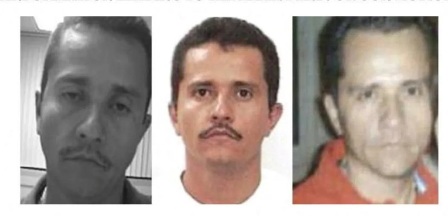
Feb 23(Jowhar)-Hogaamiyihii kooxda laga cabsado ee Jalisco New Generation (CJNG) ee ka ganacsata daroogada Nemesio Oseguera Cervantes ee dalka Mexico ayaa la dilay intii uu socday howlgal ay ciidamada amaanka ku doonayeen in lagu soo qabto.
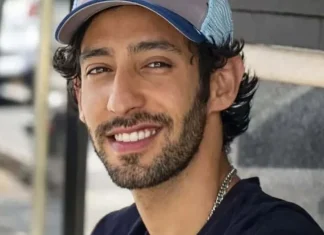
Family Warns Detained Man in Iran Could Face Execution
They Called Him a Criminal on TV. His Family Calls Him a Son, a Friend, a Believer.
On a chilly Dublin morning, Sama Sabet sits...
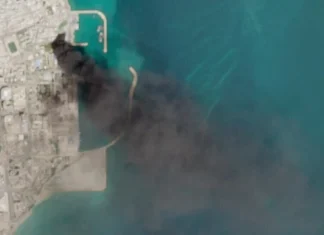
United States Vows Broader Targeting of Iran’s Key Infrastructure
Smoke Over the Strait: How a Narrow Waterway Became the World's Pressure Point
There are places on the map that, for most people, exist as...
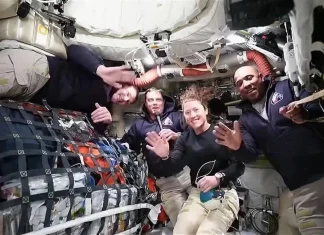
Artemis Crew Breaks Free of Earth Orbit, Sets Course for Moon
They lit the sky: Artemis II’s bold shove toward the Moon
When the Orion capsule’s engine roared to life, it felt less like a technical...
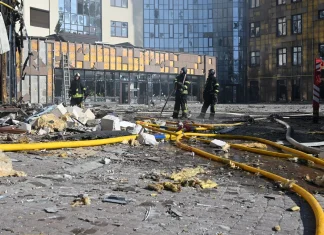
Officials Report Russia Launches Widespread Aerial Attacks Across Ukraine
Night of a Thousand Shadows: When the Sky Became a Frontline
There are nights when a city hears only the ordinary sounds—distant traffic, a dog...
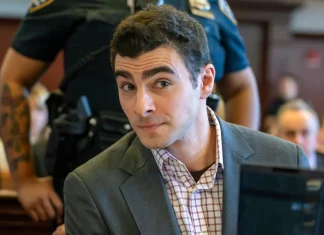
Mangione’s federal trial in CEO murder case postponed until January
The Long Wait for Justice: How One Killing Reverberated From a New York Sidewalk to a Nation
It was a raw December night in 2024...