Home Blog Page 59

NATO Seeks Clarity Over US Decision to Reduce Troops in Germany

US to withdraw about 5,000 troops from Germany
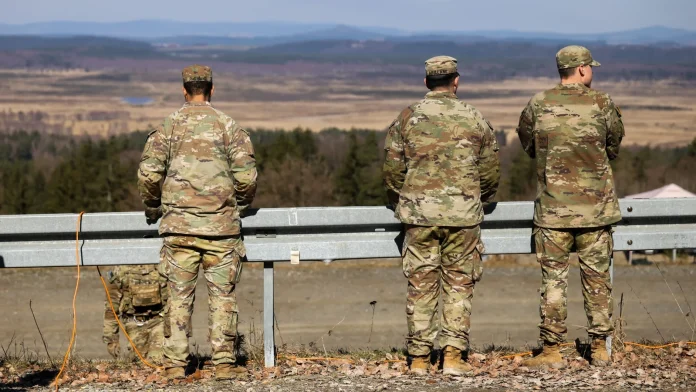
US troops during an exercise at the Grafenwoehr Training Area in Grafenwoehr, Germany

A quiet town on edge: what 5,000 soldiers mean to a place and a partnership

On a damp morning in a German town that has long lived in the shadow of an American flag, the scent of fresh bread mixed with diesel from an early delivery truck. A playground swings empty. Behind a row of neat houses, the shuttered windows of a barracks tell a story most mornings do not: the slow recalibration of a continent’s security.

The United States has ordered a reduction of roughly 5,000 troops from Germany over the coming six to twelve months. On paper it reads like a logistics puzzle — units, timelines, transport manifests. Up close, it reads like quieter cafés, fewer international school buses and an economic tremor for communities that have relied on US presence for decades.

“You notice it everywhere,” said Lena Bauer, who runs a bakery near a small base town. “There used to be soldiers coming here for coffee every morning. Their children played in the square after school. If they go, that’s more than uniforms leaving — it’s families, jobs, routines.”

What Washington says — and what it implies

The Pentagon’s review, officials say, is framed as a response to “theater requirements and conditions on the ground.” A senior US official, speaking on background, described the pullback as part of a broader force posture reassessment in Europe — a trimming of some deployments while holding others deemed critical.

Those critical points remain visible: major air hubs like Ramstein, which German officials insist are not “up for discussion,” and logistical networks that move materiel across continents. Yet this announcement follows a bitter public spat between Washington and Berlin, and it has arrived amid wider tensions over the Middle East and transatlantic burden-sharing.

“We are working closely with our US counterparts to understand the precise scope and timing,” said a NATO diplomat. “But make no mistake: this moment underscores the need for Europe to shoulder more of its own defense — something leaders have pledged to do.”

Numbers that matter

  • Planned withdrawal: about 5,000 troops over 6–12 months
  • US troops deployed as of 31 December 2025: Germany — 36,436; Italy — 12,662; Spain — 3,814
  • Estimated immediate cost of 60 days of recent conflict (US figure cited in congressional testimony): under $25 billion

Politics, personality and the pressure valve of foreign policy

This is not merely a military decision — it is also a political one. In Washington, domestic frustrations about a costly and unpopular Middle Eastern conflict have pushed leaders to reconsider long-standing overseas commitments. President Donald Trump and his advisers have publicly linked troop posture to political demands: allies’ stances on Iran, contributions to collective defense, and cooperation in contested waterways such as the Strait of Hormuz.

“We’re asking our partners to do more,” a White House adviser told reporters. “If countries don’t pull their weight, we have to prioritize what we can sustain.”

Across the Atlantic, Berlin has not been a neutral actor in this argument. German Chancellor Friedrich Merz’s recent comments about negotiations with Iran drew a furious reaction in Washington and unleashed a chain of public barbs. The friction is emblematic of a larger trend: alliances strained by personality, domestic politics and competing priorities.

In the towns and at the front lines: local reactions

For some Germans, a reduction of troops is merely the next chapter in a long story about national responsibility. “We cannot expect America to be the world’s policeman forever,” said Mayor Anja Köhler of a small Rhine town that hosts several US families. “If the troops leave, we will adapt — but Europe must be ready to invest more in its security.”

Others worry about the immediate consequences. Marcus Vogel, who served with the Bundeswehr and now works in logistics for contractors serving US facilities, worries about livelihoods. “Even if this is a strategic rebalancing, supply chains are built around those bases. Canteens, schools, builders — many will feel this,” he said.

Within the military community, there is also a pragmatic calculus. A US soldier who requested anonymity described the mood as “unsettled but professional,” noting that units have moved before and will move again. “We train for mobility. Families, though — that is the harder part,” he added. “Kids change schools; spouses look for new jobs. That doesn’t show up on the deployment sheet.”

Allies, NATO and the long arc of burden-sharing

NATO has reacted with measured language. “We’re clarifying the details with the US,” a NATO spokesperson said. “This development reinforces why our Allies agreed to increase defense investment.” That reference points to a recent pledge — cited by officials — for significantly higher defense spending among European members.

But promises and realities sometimes drift apart. For years, Washington has pressed European partners to meet spending targets and to modernize capabilities. The debate is not only about money; it’s about industrial capacity, rapid reinforcement, cross-border logistics and political willingness to act in crisis.

“If Europe wants to be a full security actor, it will need more than words,” said Dr. Isabel Moreno, a defense analyst. “Investment in equipment is one thing. Developing command structures, airlift capacity and a political appetite to act independently are another.”

Questions for the reader — and a wider reflection

What does a reduced American footprint mean for the average European citizen? For an American taxpayer? For the families who split their lives between bases and hometowns? These are not rhetorical flourishes. They are the human dimensions of geopolitics.

As alliances evolve, so do expectations. Is a Europe that provides more for its own security necessarily a stronger, more sovereign Europe — or might it fragment into competing national strategies? Can NATO survive the strain of political crosswinds while staying cohesive against shared threats?

Those questions do not have tidy answers. They will be debated in capital city conference rooms, in brigade kitchens, and in small bakeries whose morning customers no longer gather as they once did.

Beyond the immediate: the shape of a new era

What is clear is that this withdrawal is a marker. It signals a recalibration of American priorities at a time of global friction — from Iran’s actions in the Gulf to enduring worries about Russia’s posture in Europe. It also puts pressure on European governments to convert pledges into capabilities and to knit political will into concrete steps.

“History teaches us that alliances must adapt,” Dr. Moreno said. “This moment could be a painful spur to innovation, or a crack that widens into something more serious. It depends on choices, investments, and leadership — on both sides of the Atlantic.”

So as buses roll past the gray gates of bases and as diplomats in Brussels and Washington trade terse lines and careful courtesies, ordinary people rearrange their lives. They will, as they always do, find ways to adapt. But the question lingers: who will stand with whom when the next crisis knocks? And at what cost?
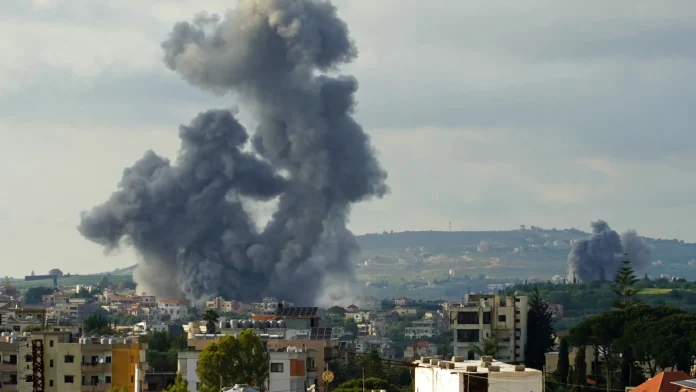
Israeli strikes leave 12 dead in Lebanon, health ministry reports

Israeli strikes kill 12 in Lebanon - health ministry
Smoke rises from the site of Israeli strikes that targeted the southern Lebanese village of Habbouch

Smoke over Habboush: A Ceasefire That Never Felt Like One

When the bombs fell in Habboush, the smoke didn’t simply rise — it climbed like a mute accusation against a fragile promise. I watched the images and, for a moment, could smell the burnt fabric and dust through the screen: whitecloaked volunteers running, a child’s shoe on a road, shutters trembling from the shock of another strike.

Lebanon’s health ministry later said 12 people were killed across the south in the latest Israeli strikes. Eight were killed in Habboush — among them a child and two women — and 21 people were wounded. In neighbouring Zrariyeh, four people died and four were injured. These are numbers, yes, but behind each figure is a family rearranged, a kitchen emptied of its familiar life.

The warning that came too late

Residents of Habboush say they were told by the Israeli army to leave to “open areas” at least one kilometre from the town. The problem was not only the order itself, but the timing. Less than an hour after the warning, state photographers captured clouds of smoke rising from the same streets the notice had told people to flee.

“They told us to go to the fields,” said one Habboush resident I spoke to over the phone, his voice brittle with sleep and fear. “But where do you go when there is nowhere safe? The open ground is only grass and the sky is still full of planes.”

Ceasefire in name, not in life

On 17 April a ceasefire was announced after more than six weeks of intense fighting between Israel and Hezbollah. The text of that agreement carved out an exception: Israel retained the right to act against “planned, imminent or ongoing attacks”. Yet the raids and artillery fire did not stop. Israel has continued to operate inside what is being called a “Yellow Line” — a 10-kilometre strip into Lebanese territory where soldiers have been conducting detonations and large demolitions.

In the town of Yaroun, local reports say soldiers detonated buildings and destroyed a monastery and a school run by a religious order. Shamaa, too, was the scene of detonations. The coastal city of Tyre — known to the world for its ancient ruins and its fishermen — heard the pounding of shells and warplanes in a place that, until recently, smelled of salt and frying fish at dawn.

Why those details matter

Monasteries and schools are not just bricks. They are places where histories and hopes live. To flatten a school is to flatten a generation’s classroom, its routine, its safe place to be a child. To demolish a religious site is to take at least a sliver of a community’s identity. These are symbolic and practical blows to the fabric of everyday life in a country already fraying at the edges.

Frontlines close to home: First responders under fire

Perhaps the most wrenching detail is the toll on those who run toward danger rather than away from it. Lebanon’s health ministry records show that since 2 March more than 2,600 people have been killed in Israeli strikes — a grim total that includes 103 emergency workers and paramedics. Two Lebanese Red Cross paramedics were among those killed in recent strikes.

“When our volunteers go out, they fear for their lives,” said a humanitarian coordinator who asked to remain unnamed for safety reasons. “They are not soldiers. They carry stretchers, water, blankets. Their job is to bring someone back to their family alive. The idea that someone who saves lives could be targeted is unbearable.”

Xavier Castellanos, the under-secretary general for national society development and coordination at the International Federation of Red Cross and Red Crescent Societies, offered a similar lament near Beirut: that the volunteers who step into rubble and smoke do so with a real fear that their mission makes them a target.

Voices from the ground

“My friend was a paramedic,” a neighbour in Ain Baal told me. “He would always make tea for us when he came by, even during checkpoints. Now his uniform is folded on a chair in his house. People ask how we sleep. I say, we don’t. We just rest with one eye open.”

These are ordinary people with breaks in their days for bread and coffee, for catching up at the souk, for Sunday prayers. The war has made heroism banal; saving a life is a daily chore that has become life-threatening.

Local colours: Tyre, olives and the weight of history

To understand the ache of the south, picture Tyre at dawn: fishermen hauling nets from the Mediterranean, the tiled roofs glittering, a hush broken by the call to prayer and the smell of za’atar warming in tiny bakeries. Now imagine those streets punctured by the sound of distant artillery. It is not just the loss of life — it is the theft of routine, the erasure of a community’s daily rituals.

Olive groves in the hills, family gardens divided by generations, monasteries that held manuscripts and memory — these are collateral in a war whose reverberations stretch far beyond borders. People point to the cedar trees inland and ask, “Who will claim our history when our homes are gone?”

Numbers that stubbornly refuse to capture reality

  • Latest local tallies: 12 killed in recent southern strikes — 8 in Habboush, 4 in Zrariyeh;
  • Wounded in those attacks: at least 25 people (21 in Habboush, 4 in Zrariyeh);
  • Total fatalities since 2 March (Lebanon’s health ministry): more than 2,600, including 103 emergency workers;
  • Ceasefire date: 17 April, with carve-outs for “planned, imminent or ongoing attacks”;
  • “Yellow Line”: Israeli operations extending roughly 10 km inside Lebanon.

What this means beyond the tallies

Ask yourself: what does a ceasefire mean when the instruments of war still hold sway? To many Lebanese, it feels like a contract written in pencil — easy to erase. The continuation of strikes under a ceasefire umbrella raises questions about the shape of modern agreements and the calculus nations use when they say “we paused” but their planes remain in the air.

Globally, the images from Habboush and Tyre pose a larger challenge. We debate rules of engagement and the sanctity of humanitarian workers while entire neighbourhoods are reduced to addressless ruins. We speak of precision strikes while the casualties are mothers, children, paramedics, teachers.

Looking ahead

For people living in the south, days blur into a monotonous negotiation with danger: where to sleep, when to send the children to fetch water, whether to tend the goat that feeds the family. For humanitarian organisations, the dilemmas are thornier: how to deliver aid when roads are uncertain, how to protect volunteers, how to maintain neutrality in a landscape where the map of danger shifts daily.

“We need corridors for aid that are respected,” a Beirut-based aid worker told me. “This isn’t charity. It’s survival. And survival needs rules — rules that everyone has to follow.”

Questions to hold with you

As you close this piece, consider these questions: Can a ceasefire be meaningful while exceptions swallow the rule? How do we protect those who risk everything to rescue a neighbour? And what responsibility do distant bystanders — the global community, policymakers, readers of this post — have to turn numbers into urgent action?

The south of Lebanon is not just a theatre of war; it is a collection of towns with kitchens, olive trees, priests, teachers, and volunteers. The smoke that rose over Habboush was not just from an explosion. It was the smoke of homes, histories, and fragile agreements burning in real time. If we are to keep witnessing, let it be with the intent to understand and to act.

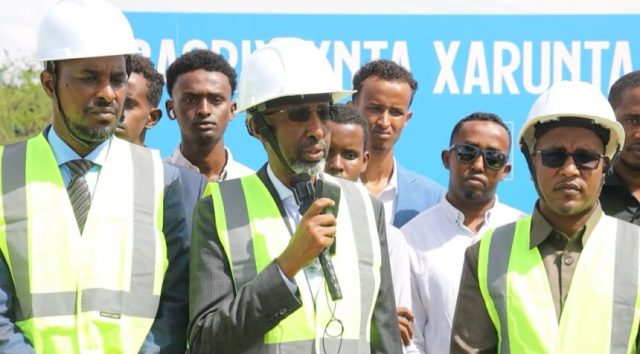
Dowlada Federalka oo amartay in laga guuro xaruntii Jaamacadda Ummadda

May 02(Jowhar) Wasiirka Wasaaradda Waxbarashada, Hiddaha iyo Tacliinta Sare ee Xukuumadda Federaalka Soomaaliya, Faarax Sheekh Cabdulqaadir, ayaa amar ku bixiyay in dadka deggen dhulka Jaamacadda Ummadda Soomaaliyeed ay si degdeg ah uga guuraan.

Can Italy and Spain derail Hogan’s bid for Ireland’s UN seat?

Hogan's run: Could Italy, Spain complicate Irish UN bid?
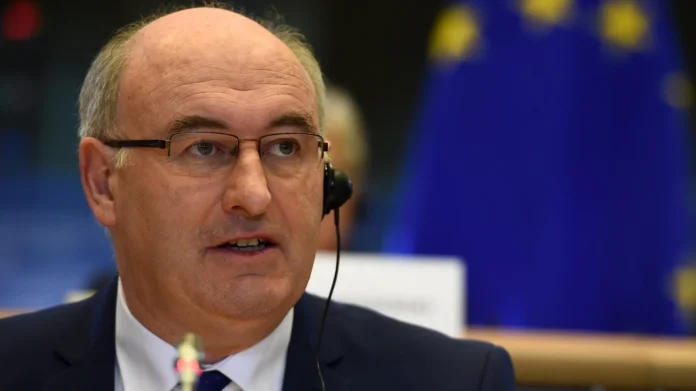
Phil Hogan is seen as the ideal candidate to become the first European director-general of the Rome-based organisation in 50 years

A Battle for Rome: Why Europe’s Quiet Contest for the FAO Could Shape Tomorrow’s Dinner Table

Walk the broad avenues that lead to the FAO headquarters in Rome and you can feel history rubbing shoulders with the present. Olive trees rustle under the shadow of imperial walls, pigeons wheel over a marble façade, and inside, a less romantic but far more consequential struggle is unfolding — a diplomatic order-of-battle over who will steer the UN’s food agency at a time when the world’s cupboards look unexpectedly bare.

On paper it’s a simple job: lead an organisation born in 1945 to defeat hunger, malnutrition and food insecurity. In practice, the role of FAO director-general is a geopolitical fulcrum. There are 193 UN voting members who will choose the next leader in July 2027. But before Rome’s assembly hall can seal a choice, Europe is trying — in private and sometimes not-so-private corridors — to unite behind a single nominee. That unity is fraying.

The man in the middle: Phil Hogan

Phil Hogan, once Ireland’s agriculture and later EU trade commissioner, has quietly emerged as the candidate Brussels’ centre-right circles like to whisper about. At 66, Hogan carries the kind of résumé that appeals to both technocrats and donors: years in high-level European office, a command of agricultural policy, and the political instincts honed in Dublin leather-clad debates and Brussels committee rooms.

“He knows how to move in these institutions,” says a Dublin official who has watched Hogan’s outreach across capitals. “People remember experience. They remember who can get things done.”

Hogan’s post-Brussels life has been more mercantile than monastic. After his 2020 resignation he founded a lobbying firm — Hogan Associates — with a client list that reads like a modern economic directory: finance, tech, pharmaceuticals. The firm reported over €1 million turnover in 2024 in the EU transparency register. To some, that background makes him a pragmatic fixer; to others it raises questions about the line between public service and private influence.

Rivals, reasons and the politics of nomination

But Hogan is not running unopposed. Italy has put forward Maurizio Martina, a former agriculture minister who currently sits within FAO’s deputy leadership, while Spain’s pick is veteran minister Luis Planas, a well-known figure around EU ministerial tables. Both candidates have their own maps of alliances.

“This isn’t just about personalities,” an Italian foreign ministry source confides. “It’s about preserving influence. If Rome fields a candidate, it’s to keep a seat at the table — or at least the deputy chair.”

Madrid’s calculation is no less strategic. Spain is a major voluntary donor to FAO and has deep ties with Latin American capitals. “Planas has been cultivating relationships for years,” says a Madrid diplomat. “That matters in elections where personal contacts sway votes.”

And the EU process itself is messy by design. There is an informal convention: member states seek to present a single, united candidate. But that arrangement is not legally binding. Cyprus, which currently holds the EU presidency and is shepherding the selection, has until late May to decide whether to hold a secret indicative vote. A final moment of reckoning is expected at an EU agriculture meeting in Luxembourg in June — though officials increasingly warn that the deadline is perilously slim.

Why this job matters — the stakes beyond personality

This fight is not vanity. It’s about who controls agendas, who sets priorities, and who can defend — or weaponise — international humanitarian responses when politics and food collide.

Consider the numbers. The UN’s state of global food security and nutrition report has painted a grim landscape: hundreds of millions contend with chronic food insecurity; tens of millions of children suffer acute malnutrition. The FAO’s work touches emergency rations and long-term agricultural transformation alike. Whoever sits in the director-general’s chair will be a steward of billions in aid, scientific networks, and norms that shape what farmers plant and how nutrition policies are set in capitals from Kinshasa to Kansas.

Then add geopolitics. Tensions in the Strait of Hormuz have underscored how fragile supply lines are; roughly one-fifth of the world’s urea and ammonia — ingredients for fertilisers that feed modern agriculture — transits those waters. A prolonged closure or disruption could ripple into harvests, markets and prices.

“You don’t realise until your local supermarket has empty shelves how interconnected these systems are,” says Maria, a vegetable vendor in a Dublin market who worries about rising input costs. “It starts with a shipment somewhere else and ends with what you can buy for your family.”

There are also accusations — voiced most forcefully by some EU politicians — that the FAO under the outgoing director-general appeared at times to hew towards a narrow set of geopolitical interests. Critics worry that a UN agency intended to be neutral could be instrumentalised to frustrate sanctions or privilege certain blocs.

What Europe is arguing for — and against

For Brussels, a united European candidate would mean influence: a chance to champion transparency in food markets, to push sustainable agricultural transition, and to resist politicisation. The Cyprus presidency has appealed for coherence, saying the EU’s leading role in global food security requires a single approach.

“It remains of strategic importance for the European Union to move towards a unified approach,” a Cyprus presidency spokesperson told campaigners. “We are trying to be an honest broker.”

Not everyone is convinced that unity is either possible or desirable. Some capitals, especially in Rome and Madrid, view an internal EU agreement as a potential sacrifice of national leverage. They see value in running their own ticket — either out of genuine belief or as bargaining chips to protect national interests elsewhere in the UN system.

Local color and wider currents

Behind the diplomatic communiqués are human rhythms. In Rome, FAO staff talk about the palazzo corridors as if they were rival cafés where alliances brew. In Brussels, Hogan has been courted at conferences on agroecology — an odd stop for someone who once represented corporate clients — and in Dublin the conversation in pubs about the campaign mixes national pride with a sense that Ireland, historically outsized in this corner of multilateralism, might finally reclaim a prized post.

“We’ve had people do very well in Rome from Ireland,” notes an Irish academic who spent years liaising with FAO scientists. “It would be a big moment.”

But the contest also sits at the intersection of larger trends: the creeping fragmentation of multilateralism, the politicisation of humanitarian institutions, and a world where food security is increasingly at the mercy of climate extremes, trade chokepoints and geopolitical rivalry.

So as the EU squabbles quietly in meeting rooms, a simple question hangs in the Mediterranean air: who will be trusted to keep the world fed when politics turns the tap of cooperation down?

That question matters to farmers outside Rome, to aid workers in drought-stricken regions, to consumers at grocery counters, and to diplomats counting votes in dimly lit conference halls. It is, in short, one of those decisions that looks like a bureaucratic shuffle but feels — deeply — like the shaping of futures.

Will Europe find the discipline to act as one, or will national ambition fracture its influence? And beyond Europe, will the next FAO director be able to bridge North–South divides and protect the agency’s mission from becoming a pawn in great-power games?

Those are the negotiations happening now, in backrooms and over lunches, in Brussels, Rome, Madrid and Dublin. The outcome will not just name a person; it will send a signal about who shapes the rules of the table where the world’s food security is decided.

Which countries are considering bans on major social media platforms?

What social media bans are being considered by countries?
Pedro Sánchez said measures in Spain would protect children from the 'digital Wild West'

A world trying to parent the internet: who gets to decide what children see online?

On a gray morning in Brussels, an email from the European Commission landed like a splash of cold water across the tech world: regulators said Meta had fallen short of its duties under the EU’s Digital Services Act, failing to stop children under 13 from using Instagram and Facebook. It was a terse, formal rebuke — but the reverberations extend from playgrounds in Sydney to classrooms in Madrid and living rooms in Dublin.

“We don’t want companies treating childhood as collateral damage,” one commission official told reporters. “The law is clear: platforms must take reasonable steps to protect minors.”

That little phrase — “reasonable steps” — is the hinge on which a global debate now turns. How do we protect young minds from addictive algorithms and harmful content without consigning children to a digital blind alley? And who, ultimately, gets the keys to the internet?

From Canberra to Cape Town: a patchwork of rules

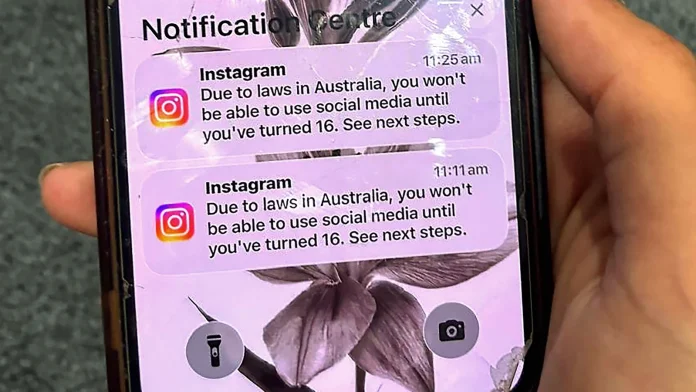
Australia lit the first fuse. Late last year, Canberra rolled out perhaps the boldest experiment in online age control: platforms must block users under 16, or face fines that can reach Aus$49.5 million (roughly €28 million). The aim was simple enough — keep children off social apps — but compliance has proved anything but.

The country’s eSafety Commission reported that platforms had blocked about five million accounts under the new rules. Yet the regulator also found “major gaps”; children were still getting through, often by lying about their birthdate or exploiting loopholes in verification flows.

“Kids are ingeniously persistent,” says Anika Wells, Australia’s Communications Minister. “We’re trying to outsmart a generation, but it’s the platforms that must play fair with the rules.”

Across Europe, governments are taking pages from Australia’s book — but writing in different inks. France debated a ban for under‑15s and then locked horns over how to implement it. Spain’s prime minister, Pedro Sánchez, framed his country’s proposal as a shield against what he called the “digital Wild West,” promising to hold executives accountable for harmful content. Norway has proposed pushing the age limit to 16, arguing that childhood needs to be protected from screen‑driven pressures. Austria, Germany, Greece, Slovenia and Poland are all at various stages of drafting or discussing limits.

Meanwhile, the United Kingdom’s parliament voted — three times — against a blanket ban for under‑16s, preferring regulation over prohibition. And the European Commission is trying to stitch an EU‑wide approach by rolling out a technical age‑verification app, which President Ursula von der Leyen says is “technically ready.” Ireland has been named a frontrunner in integrating the feature into a national digital wallet.

Local worries, global friction

On the ground, the effects are messy and human. In Sydney, a mother named Leila discovered her 12‑year‑old son had created a new Instagram profile after his account was blocked. “He says his mates are all there,” she told me. “It’s not just about content — it’s social life.”

In Madrid, Julio, a high school teacher, sees the pressure every day: “Students sneak phones into class, swap accounts, use older siblings’ profiles. The bans can feel like a game.”

And in Dublin, privacy groups worry about the cure being worse than the disease. The Irish Council for Civil Liberties warns that using national identifiers like the Personal Public Service (PPS) number for age checks risks creating a surveillance system where sensitive data is trafficked just to prove you’re old enough to scroll.

Courts, culpability and the architecture of attention

Beyond age limits, something else has shifted: the legal focus from content to design. In high‑profile US trials earlier this year, juries examined whether social apps were intentionally addictive. One Californian jury found that platforms such as Meta and Google were negligent in how they engineered their products — a verdict that opened floodgates to thousands of lawsuits alleging harm to children and teens. One court ordered Meta to pay $375 million; appeals are underway.

“We used to ask whether platforms were doing enough to moderate content,” says Dr. Lena Müller, a child psychologist in Berlin. “Now we ask whether the very architecture of the feed — autoplay, infinite scroll, variable rewards — is itself harmful.”

The European Commission has leaned into the same argument. In February it said TikTok’s design could foster “addictive behavior,” especially among minors. TikTok has denied the claim and signaled it will contest the finding.

Can age verification work — and at what cost?

Technically, verifying age is straightforward if you want to be invasive: passports, national IDs, biometric scans. But the political and ethical costs reverberate. A digital wallet that checks your PPS number could help enforce an age floor, but privacy campaigners see a slippery slope: what if verification systems are hacked, sold, or repurposed?

“We mustn’t trade a child’s safety for a lifetime of digital fingerprints,” warns Siobhan Kelly of the Irish civil liberties group. “There are safer, less intrusive ways to protect children.”

Others argue the tools are necessary. “If platforms know who is a minor, they can tailor experiences and block high‑risk features,” says Alex Cooney, CEO of CyberSafeKids. “But if every country makes its own rule — 14 here, 15 there, 16 somewhere else — the result is chaos.”

Beyond bans: what really makes social media safer?

Campaigners and many young people themselves often say: don’t ban us, reform the product. Teen activists I spoke with implored regulators to tackle specific features — targeted advertising, endless recommendation loops, and opaque engagement metrics that reward extremes.

Here are some policy levers that experts say could be more effective than blanket age limits:

  • Ban or restrict design features that maximize time‑on‑site (autoplay, infinite scroll, algorithmic recommendations).
  • Require default privacy settings for under‑18s and limit targeted ads to adults.
  • Mandate transparency about how engagement signals are used and allow third‑party audits of algorithms.
  • Fund digital literacy programs in schools so children learn to navigate risk, not just avoid it.

Where do we go from here?

It’s tempting to imagine a single, tidy solution: a universal age, a perfect verification app, a global treaty. Reality is messier. Nations will continue to experiment. Courts will parse corporate responsibility. Companies will adapt — sometimes helpfully, sometimes only enough to pass the regulators’ smell test.

But amid the policy wonkery and legal wrangling, the question I keep returning to is simple: what kind of childhood do we want? Do we accept that childhood will be curated, commodified and monetized by attention markets — or do we design systems that permit kids to grow, unhurried, with space to play, learn and fail offline as well as on?

“Technology evolves faster than our institutions,” Dr. Müller told me. “But our children don’t have the luxury of waiting for the law to catch up.”

So the work begins: not just policing who logs on, but reshaping the very place where they meet. Will societies choose to reengineer platforms, fortify privacy, and teach digital resilience — or will they outsource childhood to a handful of architecture firms in Silicon Valley? The answer will not be written in Brussels or Canberra alone. It will be written in playgrounds, bedrooms, courtrooms and parliaments around the world — and in the everyday choices parents, teachers and teenagers make about time, attention and trust.

Mid kamid ah dowladaha reer Galbeedka oo hajabaad u dirtay dhinacyada Soomaalida

May 02(Jowhar) Mid kamid ah dowladaha reer galbeedka ee dhaqaalaha xooggan ku bixiyay amniga Soomaaliya ayaa la sheegay inuu fariin adag gaarsiiyay hoggaamiyeyaasha Soomaalida labadii toddobaad ee la soo dhaafay.

Taoiseach denounces seizure of Gaza humanitarian aid flotilla

Israel: Detained flotilla activists to be taken to Greece
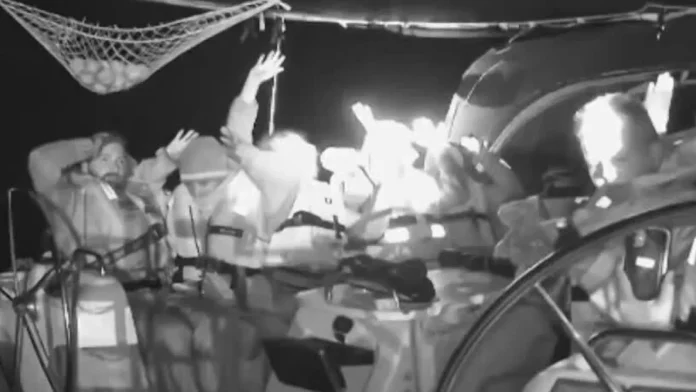
A screengrab from a camera on board one of the ships that was intercepted in international waters by Israeli forces

Night on the Aegean: The Magic Boat, Anxious Families, and a Flotilla Pulled from the Sea

It was the kind of image that lodges in your chest—small vessels forging across dark water, headlamps blinking like distant fireflies, volunteers bundled against salt and wind, resolute faces lit by the glow of phones and hope. And then, suddenly, silence: the GPS tracker freezes, messages stop, and loved ones on the shore begin the slow, terrible work of imagining what might have come next.

That is the scene Irish families and activists lived through this week when an international aid flotilla en route to Gaza was intercepted off the coast of Greece. The operation, carried out by Israeli forces, resulted in the detention of 175 people aboard multiple vessels. Among them were Irish citizens—seven of whom, Irish officials say, were released this morning.

From Barcelona to the Blue: Why They Sailed

The convoy, organized under the banner of the Global Sumud Flotilla, left ports across the Mediterranean with a simple, urgent mission: deliver humanitarian aid to Gaza and draw attention to the acute needs there. Volunteers came from across Europe and beyond—retirees, teachers, medical volunteers, people who said they had never been political before but could not stand idly by as reports of civilian suffering mounted.

“He had never been political before this,” said Natalie Murphy, whose father left Barcelona with the flotilla a month ago. “But seeing the children and the devastation—it lit something in him. He wanted to help. He wanted to be where the need was. That’s what we thought, anyway.”

Murphy and her family tracked the progress of her father’s vessel, the one listed as the Magic Boat, on the flotilla’s online tracker. For days, the feed showed movement and routine updates. Then, late Wednesday, the boat went silent. “He’d been WhatsApping us every day. We had messages at 10pm and then nothing,” Natalie said. “Four hours. Then everyone assumed the worst: that they’d been intercepted.”

Numbers and Voices

The facts are stark: 175 people detained across the flotilla; at least seven Irish citizens among them; a small number released by morning, according to Irish officials. The Department of Foreign Affairs says it is providing consular assistance and actively engaging with relevant authorities. President Catherine Connolly’s sister, Margaret Connolly, was on one of the ships but, we are told, that particular vessel was not boarded and is still sailing toward Greece.

Taoiseach Micheál Martin, speaking from Athlone, was unambiguous in his condemnation. “The seizure of the flotilla in what appears to be international waters is not acceptable,” he said. “Israel must abide by international law and the rule of law.” Meanwhile, Foreign Affairs Minister Helen McEntee posted on social media calling for the immediate release of Irish citizens and for their safety and welfare to be guaranteed.

The Human Side: Fear, Pride, and the Small Daily Rituals of Waiting

There is a particular cruelty to waiting that only those who have done it can name. Families refresh news sites, call friends, and scroll social feeds searching for a single message: an “I’m okay.” The hours stretch and ache. Natalie described that ache simply: “You feel proud—he’s doing something brave—but you’re also terrified. You try not to be the parent who says ‘don’t go’ too loudly, because you know some things people have to do. But when a phone goes silent, you feel every possible fear.”

In household kitchens across Ireland, people prepared statements, made calls to consulates, and argued softly about whether they should go to the airport. Local volunteers who had helped organize logistical support said the community response was immediate—stews and sandwiches for anxious families, prayer vigils and online watch parties. “We made a rota to keep watch on the tracker and to answer calls,” said one volunteer in Dublin. “When the feed stopped, everyone pooled information—who had last spoken to whom, where boats were last seen.”

What International Law Says—and What It Doesn’t

The legal arguments around maritime interception are knotty and have been debated since festivals of ships carrying aid began challenging blockades. International law recognizes freedom of navigation on the high seas, but it also allows for enforcement measures in certain circumstances, such as an internationally recognized blockade or an order from the UN Security Council—conditions that are seldom tidy in practice.

“There are layers here—legal, moral, political,” explained a maritime law scholar contacted for this piece. “If a state claims a lawful blockade, it can assert rights to intercept vessels, but it must do so proportionately and in accordance with international humanitarian law. Even then, intercepting in international waters raises serious questions about jurisdiction and treatment of those detained.”

History adds weight to these questions. The 2010 Mavi Marmara incident, where Israeli forces boarded a flotilla bound for Gaza and nine activists were killed, left deep international scars and legal disputes that ripple forward to today. That past is part of why many aboard this flotilla described their mission as both humanitarian and profoundly symbolic.

Beyond the Incident: Why This Matters to a Global Public

We live in an era where civilian activism increasingly seeks to pierce the formal barriers that can block aid—both physical blockades and the bureaucratic mazes that slow deliveries to suffering populations. When ordinary people take to the sea, they ask uncomfortable questions: Who decides where aid goes? Who enforces the rules, and who is accountable when those rules are bent, broken, or ignored?

This episode is not just about one night off Greece; it’s about the larger friction between states’ security concerns and the global impulse to respond to human suffering. It is about volunteers—retirees, nurses, fathers—trying to translate moral outrage into action. And it is about how democracies respond when their citizens are detained far from home.

How should governments balance quiet diplomacy with public pressure? When is protest a necessary spotlight, and when does it risk inflaming tensions? These are not merely academic questions: they shape lives, and they determine whether aid reaches a hospital in time or a child gets needed medicine.

A Pause, Then Action

For now, there is relief for some families as the released Irish citizens arrive home. But the broader questions remain unresolved, and the moral and legal debate will continue. The Department of Foreign Affairs says it will continue to monitor the situation and provide support. The international community—European partners, human rights organizations, and legal experts—will, no doubt, be asked to weigh in.

As we watch the tracker feeds and read the statements, we should remember the faces behind the numbers: volunteers with sunburned forearms, fathers who left to do what they believed was right, sisters waiting for a phone call. The sea, it turns out, is not just water; it is a stage where law, conscience, and power meet.

So I ask you, reader: when ordinary people turn outrage into action, do we applaud their courage or warn them of the risks? Can rules of the sea be enforced without breaking the rules of humanity? And perhaps most urgently—how do we ensure that, when the noise fades and the immediate crisis passes, the needs that sent those boats to sea are not forgotten?

  • 175 people detained during the flotilla interception
  • Seven Irish citizens reported released this morning
  • Global Sumud Flotilla departed from multiple ports, including Barcelona, roughly a month ago

We will keep watching these currents, and we will keep asking the hard questions. And for the families waiting by their phones tonight: may the answers come soon, and may they be humane.

Florida Executes Man After Nearly Half-Century on Death Row

Florida executes man after nearly 50 years on death row
James Hitchcock was convicted of the 1976 murder of 13-year-old Cynthia Driggers (File image)

Half a century waiting: two executions, two claims of innocence, and a country wrestling with death

The sun had already dipped behind the pines by the time state officials in Florida confirmed what neighbors and activists had feared: James Hitchcock, 70, was put to death by lethal injection at the state prison in Raiford. He had spent nearly 50 years on death row for the 1976 murder of his 13-year-old step-niece, Cynthia Driggers—a sentence imposed in 1977 that outlived friends, lawyers and a generation of witnesses.

Across the country, in Texas, another needle was readied and another life ended. James Broadnax, 37, who had been convicted in the 2008 killings of two music producers, was executed that same evening. Both men issued last statements insisting they were innocent. Both left behind questions that ripple beyond prison walls: Who decides finality? How long is too long to wait for death? And what does justice look like in an age of forensic advances, shifting public opinion, and growing unease about the methods used to carry out sentences?

Raiford at dusk: the peculiar geography of punishment

Drive north from Jacksonville and the highway forks into a landscape of scrub pines, cattle pastures and small towns where Confederate flags hang from porches. The Florida State Prison in Raiford sits tucked into this quietly American terrain, a place that looks placid from a distance and merciless up close.

“You can smell the humidity, see the barbed wire against the orange light, and it feels like time gets pulled into a slow squeeze,” said a former corrections chaplain who worked at Raiford two decades ago. “For some men, the years hollowed them out; for others, the years made them a museum of appeals and legal filings.”

Hitchcock’s case became a prism for that slow squeeze. He was arrested in the mid-1970s, convicted and sentenced during a period when the death penalty was, in many parts of the United States, a reflexive answer to violent crime. But the decades that followed were not kind to simple narratives: advances in forensic science, shifting prosecutorial priorities, and an increasingly fractious public debate about capital punishment slowly complicated the picture.

Two executions, two final words

At 6:12pm local time in Florida (11:12pm Irish time), state records show Hitchcock was pronounced dead. At 6:47pm in Texas (12:47am Irish time), Broadnax followed. Their last statements—letters and brief spoken words conveyed by corrections officials—were stark and unanimous in one respect: both men continued to claim innocence.

“No matter what you think about me, Texas got it wrong,” Broadnax said in his final remarks, according to statements released by the Texas Department of Criminal Justice. “I’m innocent.”

Hitchcock maintained his innocence for decades, raising questions that some lawyers and advocates say were never fully explored. “The longer someone sits on death row, the more likely it is that the case becomes about procedure rather than truth,” said Dr. Ana Mendes, a criminal law scholar who has studied lengthy appeals processes. “When you have 30, 40, 50 years between crime and execution, memories dim, witnesses die, and what’s left is paper.”

Numbers that don’t sit still

Look at the statistics and you see a country in motion. This year, ten executions have been carried out in the United States—six in Florida, three in Texas and one in Oklahoma. Those figures sit against a backdrop in which 2024 saw 47 executions nationwide, the highest number since 2009, when 52 people were put to death.

Florida led the pack last year with 19 executions, a striking tally in a nation where the death penalty now sits uneasily with the public. Thirty-nine of last year’s executions were by lethal injection, three by firing squad, and five by nitrogen hypoxia—a newer method that involves pumping nitrogen gas into a mask and allowing the person to suffocate.

That use of nitrogen has been condemned by United Nations experts as cruel and inhuman. “To introduce a method whose physiological effects are not fully understood and whose deployment is shrouded in secrecy is to gamble with human dignity,” said a U.N. special rapporteur in a statement earlier this year.

Methods, morality and the international gaze

Execution methods are not merely technical details; they are symbols of how a society imagines the boundary between punishment and barbarity. The debate reached the federal level in April, when the Department of Justice announced it was seeking to broaden the arsenal of execution methods in federal cases, adding firing squad, electrocution and gas.

“When we talk about diversifying methods of execution, we are really talking about the limits of the state’s power to take life,” said Raymond Kline, a death-penalty defense attorney. “Plus, these aren’t just choices among technologies—they’re statements about what we will tolerate.”

Globally, the trend tilts away from capital punishment: 23 U.S. states have abolished the death penalty, and three others—California, Oregon and Pennsylvania—have moratoriums on executions. Internationally, dozens of countries have eliminated it from law or practice, casting the U.S. into an increasingly small club of active executioners.

Voices from the margins

On the same day as the executions, vigils flickered to life in disparate places: a small park in Tallahassee where candlelight reflected off damp grass, an Austin square where musicians mourned two producers killed 17 years ago, and a downtown tableau where activists chanted against a system they compared to a slow-acting death.

“I stand with victims’ families,” said Sandra Mullins, whose cousin was murdered in 1993 and who supports capital punishment. “But I also wonder if this final act brings peace—or just more violence.” Nearby, a young law student named Jordan, who volunteers with an innocence project, held a cardboard sign that read: “We should not speed the state’s worst mistake.” He added, “If there’s a chance we killed the wrong person, no one should celebrate.”

What should the reader ask?

As you read this, consider the scale and the strain: a man waiting nearly half a century for a sentence that finally arrives just hours before midnight; another, decades younger, making the same claim of innocence at his end. Are these anomalies or artifacts of a system grappling with its own contradictions?

Ask yourself: does lengthy delay before execution make punishment more or less just? Does the persistence of execution in a minority of states reflect democratic will—or political calculation? And in a world where forensic science keeps rewriting past certainties, should a justice system that relies on human fallibility be permitted to carry out irreversible sentences?

Beyond the headlines

These two deaths are not isolated incidents; they are chapters in a longer American story about retribution, doubt and policy. They intersect with broader themes—racial and economic disparities in sentencing, the modernization of legal tools, and the international debate over human rights and state-sanctioned killing.

For families on both sides, for lawyers and for the public, the work of grappling with these questions is far from over. “We should be brave enough to admit what we don’t know,” Mendes said. “And humble enough to question what we assume we do.”

As the lights go down at Raiford and the Texas prison, and as candlelight vigils burn out across two states, the nation continues to argue about the meaning of justice. It is a conversation that presses on time itself—how long we can wait, and whether that waiting ever makes an irreversible outcome any fairer.

  • Executions this year: 10 (6 Florida, 3 Texas, 1 Oklahoma)
  • Executions last year: 47 (most since 2009)
  • States without the death penalty: 23
  • States with moratoriums: 3 (California, Oregon, Pennsylvania)

US set to withdraw roughly 5,000 troops from Germany

US to withdraw about 5,000 troops from Germany
US troops during an exercise at the Grafenwoehr Training Area in Grafenwoehr, Germany

When the Flags Shift: America’s Pullback from Germany and the Ripples Across NATO

On a chilly morning outside the pastry shop in Kaiserslautern, an American GI in a worn leather jacket shrugged as he stirred sugar into his coffee. Around him, German mothers walked toddlers past shop windows whose displays mixed lederhosen with U.S. Army surplus jackets. “We hear things,” he said. “But the truth is, you don’t pack up a life because of talk.”

That casual scene — two cultures braided together by decades of alliance, commerce and neighborhood barbecues — is now a quiet stage for a much louder drama. The Pentagon has ordered roughly 5,000 U.S. troops out of Germany within the next six to twelve months, a decision the department says flows from a reassessment of military needs across Europe. The announcement landed like a gust of wind, rattling domestic politics in Berlin, military logistics in Ramstein and diplomatic ties across NATO.

The facts, plain and fast

  • Planned withdrawal: about 5,000 U.S. service members from Germany over the next 6–12 months.
  • U.S. troop presence as of 31 December 2025: roughly 36,436 in Germany, 12,662 in Italy, 3,814 in Spain.
  • Estimated U.S. cost of 60 days of recent conflict in the Middle East: under $25 billion, according to congressional testimony.

“We expect the withdrawal to be completed over the next six to twelve months,” Pentagon spokesperson Sean Parnell said in a measured statement, framing the move as a response to “theatre requirements and conditions on the ground.” But anyone who’s watched U.S.-European relations for the past decade knows this decision didn’t spring from a sterile review alone. It is entangled with politics — personal, partisan, and geopolitical.

From the Oval Office to local streets

President Donald Trump has, in recent days, sharpened his criticism of Germany’s leadership, following a tense public spat with Chancellor Friedrich Merz. Mr. Trump accused Mr. Merz of being soft on Tehran, suggesting — in blunt terms — that the German chancellor was permissive about Iran’s nuclear ambitions. “He doesn’t know what he’s talking about,” the president told reporters, adding that he was “studying and reviewing the possible reduction” of forces in Germany and might extend such steps to Italy and Spain because their governments had not backed U.S. policy in the Middle East.

“Why shouldn’t I?” he asked sharply, gesturing to the tariffs, security burdens and allied hesitations that, in his view, justify a tougher stance. It is a posture familiar to anyone who followed his earlier presidencies: a steady drumbeat urging Europe to carry more of its defense weight, often accompanied by deadlines and threats.

Back in Germany, reaction has been mixed. “We are prepared for a reduction,” said Foreign Minister Johann Wadephul during a visit to Rabat, noting that Berlin would coordinate closely with NATO. He was quick to underscore that major American bases — Ramstein among them — remain indispensable. “Ramstein has an irreplaceable function for the United States and for us alike,” he said, a sentiment echoed by German officers who emphasize the base’s crucial logistical and command roles.

People on the ground: fears, pragmatism and everyday life

In neighborhoods that have lived with American boots for generations, the debate is not only strategic; it’s personal. A café owner near the U.S. base confided, “When the soldiers leave, business goes. We’ve had birthdays, Thanksgiving dinners — an entire rhythm of life that includes Americans.”

A German nurse working evenings at a clinic frequented by military families told me, “We’ve seen deployments before, but this feels different because it’s tied up with diplomatic rows. People worry about jobs, schools, the kids.”

And there are soldiers themselves — heavy, practical people who speak candidly. “I joined to serve, not to be a political pawn,” said a mid-ranking sergeant waiting for a flight briefing. “If they tell us to move, we will. But there’s a human cost — relationships, mortgages, children in school.”

What this means for NATO and the wider world

The pullback touches on larger themes: burden-sharing within NATO, the rising strain of populist politics in Europe, and the real-time pressures of a volatile Middle East. European capitals have been on higher alert since Russia’s 2022 invasion of Ukraine and subsequent drone incursions that rattled airspace across the continent. The idea of a U.S. recalibration, even a partial one, forces NATO partners to confront uncomfortable questions about their own readiness and spending.

For Germany, those questions have already provoked a policy shift. Chancellor Merz has made national security a centerpiece, unveiling increased defense spending and promising to modernize a military long criticized as underfunded. Yet his popularity has dropped, and in the churn of domestic politics the far-right Alternative for Germany (AfD) has surged in opinion polls.

Outside Europe, the dynamics are no less consequential. The U.S. emphasis on punishing allies perceived as insufficiently supportive of a campaign against Iran — from restrictions in the Strait of Hormuz to calls for peacekeeping forces — has a domino effect. Spain and Italy, which host 3,814 and 12,662 active U.S. troops respectively, are now explicitly in the president’s sights. “If we see a change, it will be because countries haven’t stepped up,” Mr. Trump said, a stance that underscores both leverage and risk.

Costs, calculations, and the human ledger

Officials in Washington told congressional lawmakers that the recent flare-up in the Middle East cost under $25 billion for the first 60 days of conflict — a jaw-dropping figure to many families feeling sticker shock at the gas pump and grocery store. That price tag complicates the political calculus: supporters of a muscular policy abroad argue the expense buys security and deterrence; critics say it sows instability and domestic hardship.

“You cannot look only at dollars,” a NATO analyst in Brussels told me. “You have to look at credibility and cohesion. If allies perceive the U.S. as transactional, the alliance’s glue weakens.”

Where do we go from here?

On main streets and around base gates, people are already making choices: subletting apartments, rethinking real estate, planning schooling changes for kids. At the diplomatic level, NATO summits and back-channel talks will try to steady the vessel. But the larger question remains: can long-standing security architectures endure when politics and personalities make alliance calculations public and immediate?

Imagine waking up one day and finding that a neighbor who had long lent you sugar, tools and a watchful eye had decided to leave. Would you hurriedly reinforce your door, or would you befriend a new neighbor? The answer matters not just for towns in Germany but for capitals across Europe, the United States, and beyond.

So I ask you, reader: do you see this as the beginning of a necessary rebalancing of global commitments — a step toward more European responsibility — or as a fracture that could invite new dangers? The next chapters will be written not only in Washington and Berlin but in kitchens, classrooms and town halls where the ripple effects of policy become the fabric of daily life.

Academy rules AI-created actors and writers ineligible for Oscars

AI actors and writers not eligible for Oscars - Academy
New rules include a requirement that only real, live human performers - not their AI avatars - are eligible for the film world's biggest prizes, and screenplays must have been penned by a person, rather than a chatbot

A Human Line in the Sand: The Oscars’ New Rules for an Age of Synthetic Stars

There is something almost ritual about the Oscars: the hum of the Dolby Theatre, the cold weight of a gold statuette in a winner’s palm, the hush of a crowd waiting for a human voice to say “thank you.” This week, the Academy of Motion Picture Arts and Sciences tried to preserve that ritual from a technology that threatens to rewrite it.

The Academy announced sweeping changes that draw a clear distinction between flesh-and-blood performers and digital facsimiles. The bottom line is unambiguous: if the lips moving on screen were not moved by a living actor who consented to that portrayal, the performance will not be judged for an acting Oscar. And scripts must be written by people—no chatbot-written screenplays need apply.

“We are not trying to stop innovation,” said an Academy representative in a briefing that mixed legal language with moral urgency. “We are trying to protect the human artistry that the Oscars exist to honor.”

What the rules say — in plain terms

  • Only roles demonstrably performed by real, consenting humans and listed in the film’s legal billing will be eligible in the acting categories.
  • Screenplays submitted in the writing categories must be authored by humans; material generated by generative AI will not qualify.
  • Non-English-language films can now qualify for Best International Feature if they win specified awards at major festivals (Cannes, Berlin, Busan, Venice, Toronto), and the credited director will appear on the Oscar plaque along with the film.

These are not small editorial tweaks. They are an attempt to set boundaries around what counts as creative labor in a rapidly changing landscape.

Why now? A resurrection, a strike, and a sense of urgency

The decision did not arise in a vacuum. This spring, cinema owners were shown a trailer for an archaeological action picture whose most talked-about moment was a digital recreation of a well-known actor in his younger decades. The project had been assembled with access to archival footage and the cooperation of the actor’s family. The image on the screen was startlingly lifelike—less a clip than an echo—but it raised immediate questions about consent, legacy, and who gets to profit from a person’s likeness after their active career ends.

Those questions had already reached a boiling point during the labor upheavals that roiled Hollywood in 2023. Writers and actors struck for months over issues that included the threat of AI replacing jobs and the lack of clear protections for creative work.

To put it in perspective: the Writers Guild of America strike lasted roughly 148 days, and the actors’ strike that followed stretched for months as well. When two of the industry’s most essential unions are willing to halt production over the same technological fear, institutions sit up and listen.

“We were fighting for more than salaries,” a veteran screenwriter who took part in the 2023 strike told me. “We were fighting for the right to remain the originators of stories. If a studio can feed a prompt to a machine and call it a ‘script,’ where does that leave us?”

Local color, global implications

The Academy’s move also has a geopolitical ripple. For years, the Best International Feature category has been bound by anachronistic rules: only a country’s officially chosen submission could stand in for that nation. That posed fundamental problems for filmmakers working outside the orbit of friendly governments—especially in places where censorship or state control stifles dissenting work.

Consider Iranian cinema, which has a long, bruised history of creative resistance. Films made under strict censorship or by directors living under surveillance often cannot be submitted as official national entries. The Academy’s updated pathway—allowing festival winners to qualify directly—gives a lifeline to work that might otherwise be squeezed out of view.

“This change acknowledges that art doesn’t always flow through state channels,” said Shirin Majidi, a Tehran-based film programmer who curates underground screenings. “For filmmakers who risk everything to tell a story, it’s a recognition that awards systems should adapt to reality.”

On the streets of Cannes and Venice, the change was read as aligning institutional practice with festival reality: festivals have long been the place new international voices are discovered, nurtured, and propelled into global conversation. Now, a festival win can carry the additional weight of Oscar eligibility.

Consent, estates, and the market for likeness

The heart of the debate is not merely technical; it is moral. Who owns a face? Who can authorize the eyes, the cadence, the signature gestures that make an actor recognizable? Families of deceased or incapacitated performers have sometimes granted studios access to archives and likeness rights. But advocates warn that without firm rules, those decisions can become transactional—exchanges of cash for a kind of digital immortality that the original person never sought.

“There is a temptation to say yes because the money looks good and because ‘look how real it is,’” said Lucille Hartman, a labor lawyer who advises performers’ unions. “But consent taken once should not be a carte blanche. We must guard the dignity of the performer, living or otherwise.”

Legal and regulatory backdrop

Governments, too, are beginning to step into this field. The European Union’s AI Act, for example, lays out some of the world’s first legal rules aimed at high-risk AI systems, though implementation timelines and enforcement mechanisms are still evolving. As legal frameworks take shape, cultural institutions like the Academy are effectively writing their own ethical codebooks for an industry that intersects technology, law, and art.

Where does this leave creators and audiences?

For filmmakers, the Academy’s stance offers both protection and constraint. It protects actors and writers by preserving categories that reward human creativity. It constrains those who would experiment with synthetic actors, at least within the contest of awards and the prestige economy that follows.

For audiences, there is a more subtle bargain. We get to decide whether we want the thrill of seeing a beloved performer “reappear” on screen, or whether the knowledge that a face is a crafted assemblage of pixels drains the experience of its humanity. Which would you prefer: the comfort of a recreated hero, or the messy, unpredictable presence of an actual person?

“Viewers want authenticity,” said Diego Ramos, a longtime moviegoer on Hollywood Boulevard. “Not everything has to be bleeding-edge technological proof. Sometimes a trembling voice and a real breath are worth more than photorealism.”

A larger conversation

The Academy’s rules are a starting point, not an endpoint. They force a public conversation about creativity in the age of synthetic media—a conversation that touches on labor rights, intellectual property, cultural memory, and the very way we define performance. Will other institutions follow? Will studios carve out workarounds? Will legislation step in where guilds and award bodies leave off?

Perhaps most important: will we, as a society, accept a world where the dead can be hired to perform for the living? Or will we draw lines that privilege the messy, irreplaceable artistry that human beings bring to storytelling?

Next time you see a performance that takes your breath away, ask yourself whether the breath you’re watching is someone else’s. It could be the simplest litmus test of what we’re willing to lose—and what we insist on keeping—about storytelling in our time.

Luigi Mangione withdraws mental health defence for trial

Luigi Mangione Drops Mental Health Defense Ahead of Upcoming Trial

0
In a key shift ahead of a closely watched New York murder trial, Luigi Mangione is—for now—pulling back from a defense that he was...
Counting of votes under way in crucial UK by-election

Vote counting begins in pivotal UK by-election as results awaited

0
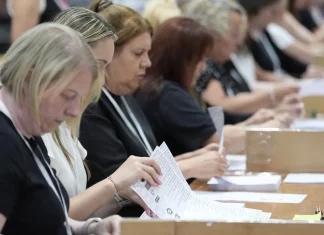
Ballot papers are being tallied in Makerfield in northwest England after voters cast their verdict in a by-election that many see as a potential...
EU should fast-track membership for Ukraine - Zelensky

Zelensky urges EU to fast-track Ukraine’s path to membership

0
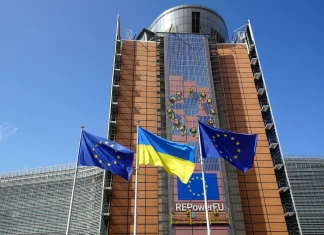
As EU leaders gathered to discuss the bloc’s future, Ukrainian President Volodymyr Zelensky delivered a blunt message: Europe’s direction is being forged on the...
Trump's Iran deal sparks anger among Republicans

Trump’s Iran deal draws fierce backlash from fellow Republicans

0
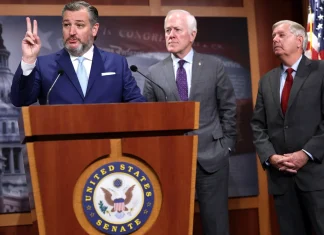
A new understanding brokered by US President Donald Trump with Iran is exposing an unusual rift inside his own party, with Republican hawks warning...
Man held as boy 'ends up in crocodile enclosure' in UK

UK authorities detain man after boy lands inside crocodile enclosure

0
A routine afternoon at a family-run zoo in Cambridgeshire turned into a major emergency after a three-year-old boy ended up inside a crocodile enclosure,...