When a Region Holds Its Breath: The Middle East on the Precipice
There are nights when the air feels different — thicker, charged with a static worry. I felt that charge this week as I talked to people whose lives have been caught in an expanding conflict that began, as many wars do, with a move nobody wanted to see. What began as strikes in late February has, in the space of a month, spilled across borders, pulled in fleets and thousands of troops, and reached new fault lines: from the narrow lanes of Beirut to the tanker lanes of the Strait of Hormuz, and even to towns near Jerusalem.
“We hear the drones at night. We count the blasts like beats of a drum,” said Amal, a café owner in southern Beirut, pouring me a small cup of cardamom coffee as sirens grew in the distance. “People here have little left to lose but their fear.”
The American build‑up: Marines, the 82nd, and an uncertain plan
In Washington, officials are talking about options so broad they seem to rearrange the chessboard. In recent days, thousands of US Marines arrived aboard amphibious assault ships, another rotation among dozens of vessels now shadowing the eastern Mediterranean and Gulf waters. Reports say elements of the 82nd Airborne Division are expected to follow.
“We’re positioning forces to give policymakers flexibility,” said a senior uniformed official on background. “That’s what forward presence is about.” The line reads like a reassurance. But on the ground, in a region where every move is read for meaning, “flexibility” can be a tinderbox.
The Washington Post and other outlets have written that the Pentagon has been drawing up plans that could include raids inside Iran — operations that would blend Special Operations and conventional infantry. Whether those plans would receive presidential approval remains a question, and one that carries consequences far beyond military corridors.
New battlefronts: from Yemen to Lebanon to Israel
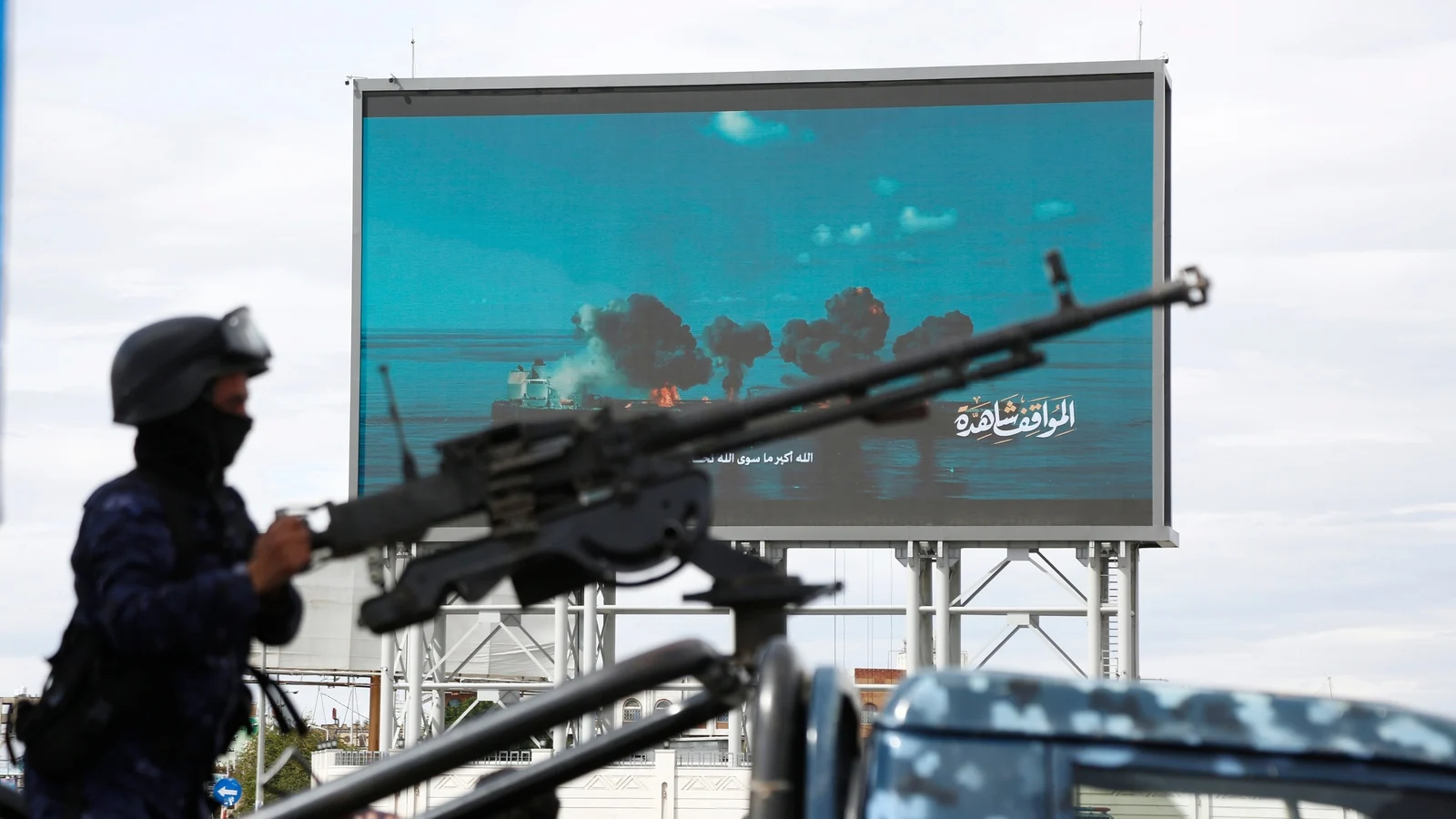
Yesterday, Yemen’s Houthi rebels — aligned with Iran — carried out their first strikes against Israel since the latest conflict erupted, launching missiles that crossed a sealed border of airspace and rhetoric. No casualties were reported, but the symbolism cut deep. These were not isolated flashpoints but threads in a widening tapestry.
In Lebanon, the conflict’s toll has been painfully human. A strike on a media vehicle killed three Lebanese journalists; a follow-up hit rescuers who had rushed to the scene. “They were calm, professional — they were our eyes,” said Nadim, a regional photographer who worked with one of the slain reporters. “We do not target journalists in war zones. We try to survive them.”
Israel has returned the fire, targeting what it called Iranian infrastructure in Tehran and resuming strikes against Hezbollah positions in Lebanon. Iran issued stern warnings: its president warned of strong retaliation if the country’s infrastructure or economic centers were hit. On the civilian front, hospitals treated dozens for blast injuries, including seven hospitalized after a strike near Jerusalem.
What this means for shipping and global energy
The strategic and commercial arteries of the world have felt the tremors. The Strait of Hormuz — long a chokepoint that historically carried roughly one-fifth of the world’s seaborne oil and large quantities of liquefied natural gas — has become a zone of avoidance. Insurance rates for tankers have jumped, rerouting is expensive, and analysts say the result is an immediate squeeze on supply chains already strained by post-pandemic adjustments.
“When tankers stop using the Hormuz, the cost is felt in cities and factories worldwide within weeks,” said a maritime risk analyst in Dubai. “We’re watching rerouting through longer passages and the nervousness that drives up prices at the pump.”
- Roughly 20% of global seaborne oil has historically transited Hormuz
- Insurers and shippers are increasingly diverting vessels around Africa rather than through the Red Sea/Hormuz corridors
- Market volatility has pushed crude prices upward, adding pressure to national budgets and consumers
Escalation and the nuclear shadow
At the heart of the region’s fear is the specter of higher-stakes targets. Israel’s strikes reportedly hit Iran’s nuclear infrastructure, and Russia’s state nuclear corporation said it had evacuated staff from Iran’s Bushehr power plant, citing safety concerns. The idea of strikes hitting nuclear facilities — even if unintended — sends shivers through capitals and emergency rooms alike.
“Nuclear safety isn’t just a technical concern; it’s about people’s ability to live and work near their homes,” said an independent nuclear safety expert. “Strikes near these sites create risks that can long outlast any military engagement.”
Politics at home and the global ripple
Back in the United States, the war’s unpopularity has started to produce a domestic countercurrent. Demonstrations erupted in cities across the country with organizers calling for an end to what they describe as an unnecessary escalation. With midterm elections looming, political leaders in Washington face mounting pressure from both critics demanding restraint and hawks urging decisive action.
“We need clear objectives and a clear exit strategy,” said Marco Rubio, echoing a sentiment from several voices within the administration who say that deploying ground troops is not inevitable but that options should remain open. “The president should have maximum flexibility.”
Flexibility, again, but to what end? What cost in lives, money, and the long arc of regional stability?
Faces in the crowd: daily life under threat
Walking through market streets in cities like Erbil or the narrow quarters of southern Beirut, you see ordinary rhythms contending with extraordinary danger. Shopkeepers tape windows against blasts; bakers who have carried on for decades talk of the fragility of bread lines and supply chains. “My son used to fly kites here. Now he asks if it’s safe to leave the house,” said Layla, a schoolteacher in a northern suburb. “How do you teach children about a life that might be broken tomorrow?”
Such anecdotes are the human ledger of geopolitical choices. They remind us that decisions made in capitals ripple out to touch the most basic acts of life: going to school, getting to work, tending to a sick parent.
Where do we go from here?
There are no easy answers. Diplomacy is being quietly tested — Pakistan, Turkey, and Saudi Arabia have signalled engagement on regional talks — even as missiles and drones redraw lines on the map. The path forward will be carved by a tangle of military calculations, domestic politics, the calculus of allies, and the stubborn human impulse to protect one’s family and homeland.
So I ask you, reader: when decisions about war are debated in faraway halls, whose faces do you see? Whose stories do you count when weighing the costs? In a world where local conflicts cascade into global disruption, perhaps the more meaningful question is how we build channels that prevent sparks from becoming infernos.
For now, in cities and villages, people sleep with radios by their bedside. They text their loved ones. They make coffee. They keep the lights on as long as they can. That is how life continues — resilient, fragile, and overwhelmingly human.