When the Night Skies of Sumy Glowed: A Day of Missiles, Politics and Unsteady Hope
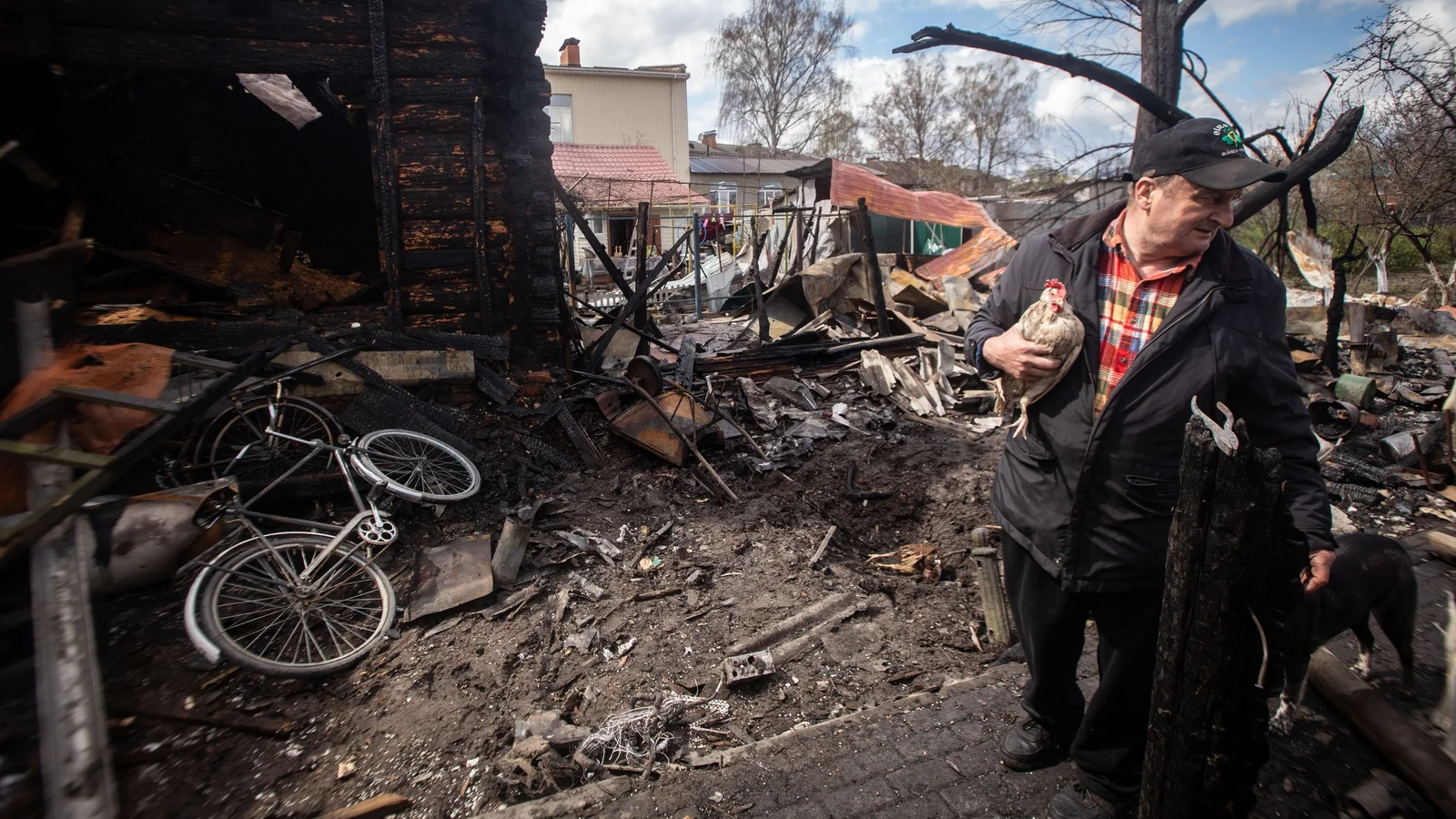
The sirens began in the small hours, a jagged chorus cutting through a night thick with rain and the metallic tang of fear. In Sumy, a city that has learned to sleep lightly for four long years, drone lights traced the sky before the explosions—an eerie, slow-motion constellation that left apartment facades scarred and people counting their blessings and their losses at dawn.
“We ran into the courtyard in our pajamas,” said Olena Petrenko, a nurse who lives above a damaged clinic. “There were flames on the cars, children crying. We kept thinking: will they come back? You never know when the drones will return.”
What happened overnight
Ukrainian officials reported a heavy aerial barrage: two cruise missiles and 143 drones launched by Russian forces. Air defences managed to intercept one of the missiles and 116 of the unmanned aircraft, but the attacks still wounded people across multiple regions.
- Sumy: 15 people wounded; damage to apartment buildings and a medical facility.
- Kharkiv region: 3 wounded in aerial strikes.
- Sloviansk: 3 wounded.
- Dnipropetrovsk region: 4 wounded.
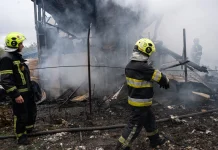
Rescue teams worked in the rain, sometimes forced to pause operations and pull back to safety as waves of strikes threatened again. Emergency services shared images of workers hosing down burning cars and shepherding residents out of smoky stairwells—ordinary heroism in a very abnormal place.
Money, Morale and Diplomacy: The €90bn Hinge
As Ukraine grapples with rebuilding neighborhoods and patching up the emotional rips in communities like Sumy, another drama unfolded in conference rooms far from the front lines. On the eve of a gathering of EU foreign ministers in Luxembourg, European leaders were poised to decide on a landmark financial lifeline: a proposed €90 billion loan package for Ukraine.
Estonian Prime Minister Kaja Kallas—speaking with the clarity of someone who has watched her region brace for the worst—said she expected “positive decisions” on the loan. “Ukraine really needs this loan and it’s also a sign that Russia cannot outlast Ukraine,” she told reporters.
What does this cash mean on the ground? For many Ukrainians it’s not just numbers. It’s salary payments for public servants, it’s electricity grids and hospital generators, it’s a promise that the international community will not let normal life wither under isolation and bombardment.
“If the money comes, we can repair the clinic roof and buy medicine,” Olena said. “If not, I don’t know how long we can keep dressing wounds in the dark.”
Trade, politics and a complicated EU agenda
The Luxembourg meeting wasn’t only about loans. Delegates were set to confront thorny questions about trade ties with other global players—among them, calls to suspend trade relations with Israel, a move that highlights how geopolitics now weaves into every diplomatic thread. For ministers juggling immediate military, economic and humanitarian needs, the choices are dizzying and consequential.
Ground Realities and Conflicting Maps
On the battlefront, narratives diverge. Moscow’s military leadership has claimed steady gains this year. Valery Gerasimov, Russia’s Chief of the General Staff, said in footage released by the defence ministry that “since the beginning of this year, a total of 80 settlements and more than 1,700 square kilometres of territory have come under our control.”
Ukrainian commanders paint a different picture. General Oleksandr Syrskyi said Kyiv had regained nearly 50 square kilometres in March alone. Independent and pro-Ukrainian mapping efforts suggest a far smaller Russian advance this year—around 592 square kilometres—than Moscow claims. Reuters and other agencies have not been able to verify Russian on-the-ground assertions.
Numbers matter: 1,700 sq km is a headline-friendly figure, but whether that matches the reality on the ground affects everything from humanitarian planning to the morale of soldiers and civilians alike.
Why the discrepancy?
Fog of war. Propaganda. Different definitions of control. In conflicts, territory can be claimed on paper long before the logistical and administrative structures that mark true governance are in place. “Territory taken” can mean anything from a temporary tactical foothold to full occupation with supply lines and governance—two very different realities.
Money and Misinformation: The Russian Economy Under Scrutiny
While bombs and drones shape the physical map, numbers and narratives shape the economic battlefield.
Sweden’s Military Intelligence and Security Service (MUST) warned that Russia appears to be manipulating its economic data to project resilience. MUST suggests Moscow may be underreporting inflation and masking a larger budget deficit—despite higher oil prices that have given the Kremlin a temporary cash cushion.
“Despite the recent period of high oil prices, which has provided Russia with increased revenues, it would take a price of over $100 per barrel for an entire year to remedy the Russian budget deficit,” Thomas Nilsson, head of MUST, said. “The weak economy does not affect the strategic objectives.”
In short: even if the economy strains under sanctions and war costs, that doesn’t necessarily translate into a pivot away from political or military goals. That is the most unsettling kind of perseverance.
Human Faces, Global Questions
Walk through Sumy today and you’ll see laundry hanging on battered balconies, young people queuing for coffee with the determined nonchalance of those who will not be defeated by fear, and old men who’ve lived through more than one chapter of Russian aggression but still flinch at the sound of aircraft.
“We are not just a line on a map,” said Pavlo Mykhalchuk, a teacher. “We go to work. We teach children. We mourn. We are tired, yes. But we’re here.”
So what should the rest of the world do? Is money enough? Are sanctions meaningful? Can the so-called “resilience” of a nation be measured in euros, in territory, or in the stubbornness of its citizens?
These questions are not academic. They are the calculus that ministers in Luxembourg must weigh; they are the whispered worries of parents in Kharkiv; and they are the lens through which global audiences try to make sense of a conflict that has reshaped European security norms and tested the limits of international solidarity.
Wider lessons
This war—now the deadliest in Europe since World War II—has exposed the interplay between kinetic warfare, economic pressure, information operations and the political will of allied states. It has shown how drones can make the night an active battlefield, and how finance can be both lifeline and leverage.
As you read this, ask yourself: What is the measure of support? Military hardware? Economic stability? Or the quieter stuff—the moral clarity and persistence that keep aid convoys rolling, sanctions enforced and diplomatic bridges open?
When Olena returns to work tomorrow and stitches another wound in a clinic that still bears the echo of concussion, she will carry small proofs of global decisions: a generator that hums because a loan arrived, bandages that came from a donor fund, a staff member paid because salaries were covered. These are the discreet, tangible outcomes of choices made in faraway meeting rooms.
We often discuss geopolitics in abstractions. Here, in a rain-slick courtyard with cigarette smoke curling into the cold, politics looks and feels like a cracked window, like a burnt-out car, like the yawning gap where a neighbor’s life once was. Policy is human. So is endurance. So is hope.