Across the Aisle and Across an Ocean: King Charles’s Quiet Plea for an Imperfect Alliance
There is an almost theatrical hush that falls over the United States Capitol when foreign dignitaries cross the marble floor to speak to Congress. It is a room built for grand gestures — and on this evening, under the high domed ceiling and the watchful eyes of history, King Charles III will step into that long tradition.
But make no mistake: this is not pageantry alone. This visit, framed as a four-day state trip and timed to mark roughly 250 years since the United States declared independence, arrives at a knotty moment. The so-called “special relationship” between Britain and America — a phrase polished and deployed for decades — looks a little scuffed at the edges. There are arguments over strategy and stance on the Middle East, barbed exchanges about defence commitments, and a White House-Britain relationship that has been tested by public criticism and blunt private memos.
A speech that sidesteps sparks but summons shared duty
According to aides close to the palace, Charles intends to keep his remarks to about 20 minutes — compact, carefully measured, full of tone rather than trench warfare. “He doesn’t want to fan the flames between political leaders,” said a senior palace aide. “His aim is to remind people what ties us together: values, history, and a duty to protect democracy.”
That duty, the aide added, will be framed in broad strokes: the promotion of peace, compassion, religious freedom and environmental stewardship. It is a language the king has cultivated over decades — a royal grammar that stitches together public service, environmental advocacy and a lifelong affection for the sea after his time in the Royal Navy.
Charles will be the second British sovereign to address the US Congress; his mother, Queen Elizabeth II, famously spoke to both houses in 1991. There is symbolic heft in that fact alone: continuity, an acknowledgment that nations are conversations that last longer than any single administration.
Why now? The political and emotional backdrop
Why deliver such a speech at a time of strain? Because the visit is both public ritual and diplomatic repair shop. Tensions have bubbled over differences in policy toward Iran, and in recent weeks there has been unusually public friction between Washington and London. An internal Pentagon email hinting that the US could reassess its stance toward UK claims over the Falkland Islands added a sour note to state-level relations. In another corner of the political landscape, leaders have sparred rhetorically over who should shoulder the burden of supporting Ukraine and the broader defence of NATO’s eastern flank.
“All alliances are messy,” said Dr. Aisha Rahman, a security analyst at a London university. “But when two nations with shared institutions and intertwined economies argue publicly, it doesn’t just affect policy — it affects public trust. The king’s plea for unity is as much about public sentiment as it is about strategic coherence.”
Scenes from the State Visit: Tea, Tents and Small-Talk
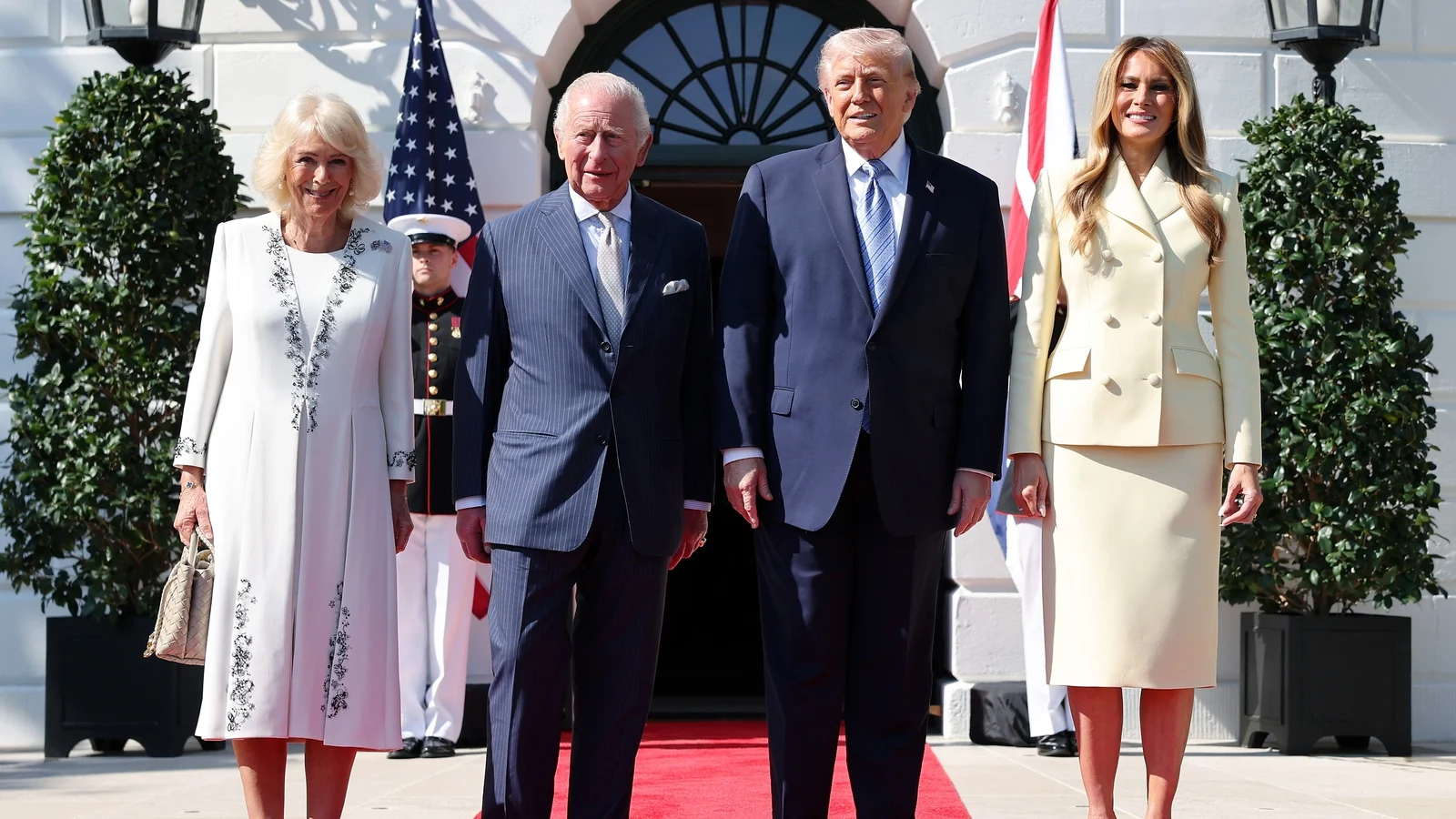
The visit began with the archetypal royal tableau: an afternoon tea at the White House with President Donald Trump and First Lady Melania Trump, followed by a garden party at the British ambassador’s residence. Invitations included Washington media heads, social figures and officials — a blend of the city’s power circuits and its chatter.
“He smiled, he asked about the navy, he talked about the trees,” offered a camerawoman who worked the event. “It was unmistakably King Charles — conversational, but with an eye to larger stories.”
Tonight’s state dinner will follow the congressional address, and after Washington the royals will travel to New York to commemorate those who died on September 11, 2001. The visit closes in Virginia, where Charles will meet conservationists — a reminder that this trip is as much about the monarch’s environmental legacy as about geopolitics. Bermuda is reportedly next on the itinerary, a quiet punctuation to a high-profile visit.
Small rituals, big meanings
For many Americans, the sight of a British monarch in the nation’s capital is a glance back through the years — a curious mirror of shared institutions and shared cultural threads. For Londoners, the trip is a reminder that the monarchy is a diplomatic instrument as much as a symbol of continuity.
“We sell postcards with the Tower on them and now demand is up,” laughed Sofia Martinez, a shopkeeper near Buckingham Palace who sells souvenirs of the royal family and — she noted warmly — “a good slice of Anglo-American kitsch.”
Tensions, Trade and the Global Stakes
Beyond ceremonies, there are concrete stakes. The United Kingdom and the United States are economic heavyweights for one another: two-way trade is measured in the hundreds of billions of dollars each year, and both countries are among each other’s largest foreign investors. Defence ties are comparably deep: shared intelligence, joint training, and historic military cooperation have long formed the spine of the relationship.
But alliances are also asking questions about burden-sharing. NATO’s long-standing guideline asks members to spend at least 2% of GDP on defence — a target that has driven debate in capitals from Berlin to London. Meanwhile, the war in Ukraine continues to test the capacity and political will of European states to sustain a costly, prolonged response.
“No one expects a monarch to lecture elected leaders on policy,” said a former diplomat who watched the speech plans take shape. “But an appeal from a figure who sits outside party politics can reset the tone. It can say: remember why you do this in the first place.”
Security unease and public anxiety
The visit has not been free of security drama. Events like the White House Correspondents’ dinner were marred by a shooting earlier in the week — an incident the king is expected to reference with empathy. In a moment when civil discourse feels frayed and security concerns are visible in public life, the optics of a well-protected, globe-trotting monarch are double-edged: comforting to some, dissonant to others.
“People want the basics: dialogue that doesn’t humiliate allies, and policies that keep civilians safe,” a veteran US lawmaker told me. “If Charles can nudge that conversation, that’s useful.”
Why the Visit Matters Beyond Headlines
State visits are rituals of reassurance. They do not, on their own, resolve policy disputes or close rifts, but they create space for conversation. They also tell a story about identity and belonging. For Britain, the monarchy is a living shorthand for national continuity; for Americans, hosting a monarch — a descendant of the same island that once was a colonial ruler — invites reflection on how relationships can evolve from conquest to partnership.
At a time when democracies around the world are grappling with polarization, migration pressures, climate risk and economic reconfiguration, the US–UK relationship is a small laboratory of larger trends: how do old alliances adapt to new challenges? How do ceremonial bonds translate into practical cooperation?
As King Charles walks into the Capitol tonight and faces members of both parties, he will be speaking to a room full of history — and to a world watching how democracies treat one another amid strain. Will his words be a stitch or a patch? Will they soothe or merely postpone the next argument?
We watch, because these rituals matter. We listen, because unity requires more than grand speeches: it requires decisions made the morning after the applause. What do you think: is the “special relationship” durable by habit and ceremony, or does it require a new kind of politics to survive? The answer may decide more than just diplomatic dinners.