A Quiet London Street, a Sudden Surge of Fear: The Golders Green Stabbings
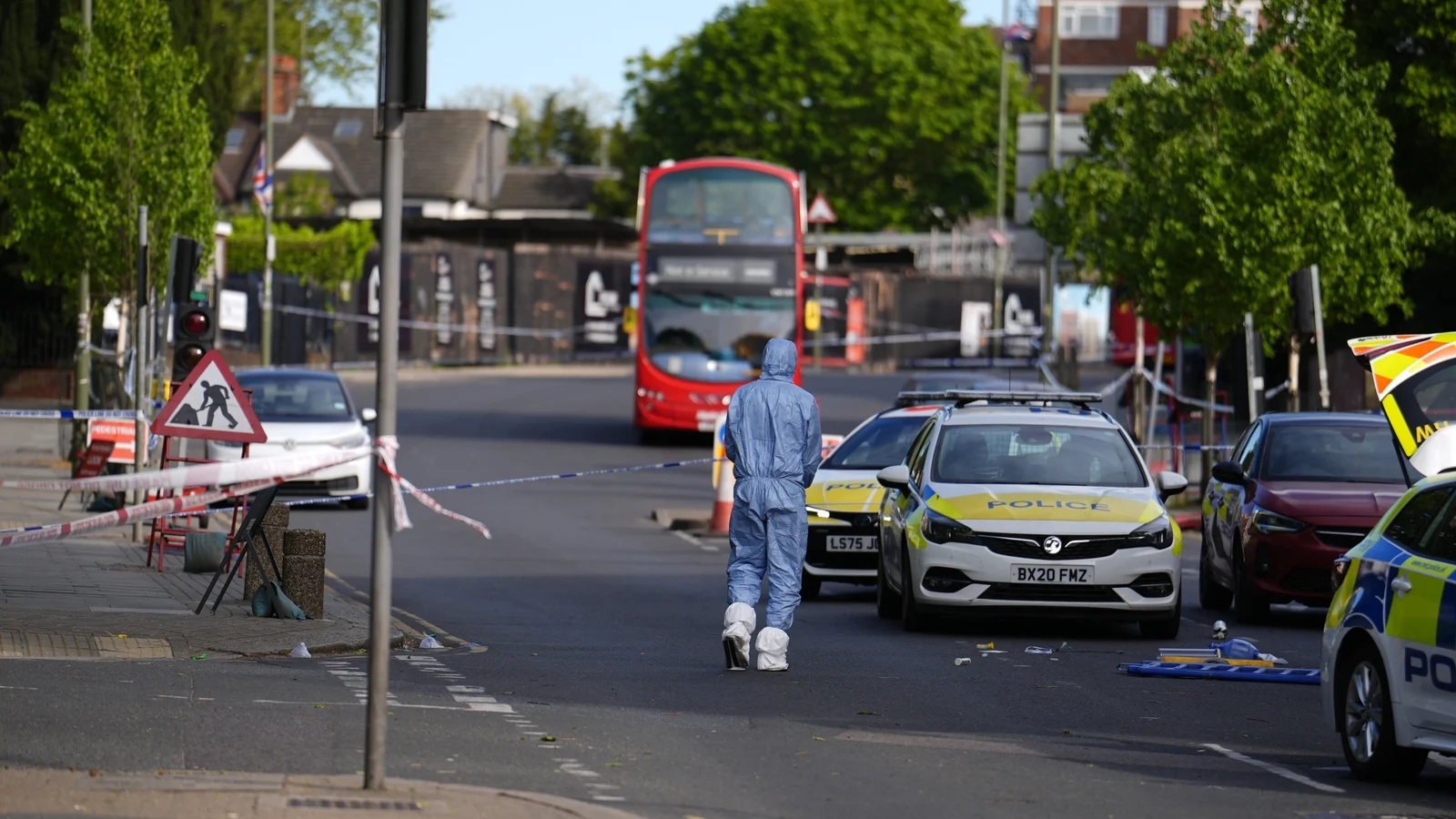
There is a particular hush that settles over Golders Green on weekday afternoons — the rustle of newspapers at the kosher bakery, the low murmur of conversation spilling from synagogues, the regular beat of community life. On a Wednesday this calm was ruptured: two men, one in his mid-thirties and one a grandfather in his seventies, were stabbed in Highfield Avenue. By the end of the day a 45‑year‑old man sat in the dock at Westminster Magistrates’ Court, handcuffed, emotionless, as charges of attempted murder were read out.
The accused, Essa Suleiman, who came to Britain from Somalia as a child in the 1990s and lives in Camberwell, south London, was remanded in custody. He faces three counts of attempted murder — including alleged attacks earlier on the same day in Southwark — and a charge of carrying a knife in public. A black‑handled knife is said to have been used in the Golders Green incident. The case will continue at the Old Bailey, with the next hearing set for 15 May.
Scenes of Shock and Solidarity
Golders Green is one of London’s most recognisable Jewish neighbourhoods: kosher delis with display windows of smoked salmon and chopped liver, Orthodox men reading at cafes, synagogues with their modest façades tucked between family homes. To residents here, the attacks felt personal.
“I’ve lived on this road for thirty years,” said a local shopkeeper, speaking quietly outside his shuttered shop. “You feel safe enough to leave the door open most days. To see the police tape and to know people were stabbed — two of them Jewish men — it’s a shock. We’re angry, we’re frightened, but we watch out for one another.”
Outside one synagogue, a small group gathered for an impromptu meeting. A community leader said, “People are calling, asking what they can do. We’ve already increased door security around the shul and asked volunteers to be visible. It’s about preventing panic and protecting our elders.”
The Arrest and the Court Appearance
At Westminster Magistrates’ Court, Suleiman did not enter pleas to the charges. He stood with hands on his hips as the magistrate remanded him in custody, reportedly expressionless throughout the hearing. Police said he has also been charged in relation to a separate stabbing earlier that day at a property on Great Dover Street in Southwark.
Commander Helen Flanagan, the head of Counter Terrorism Policing London, who is leading the investigation, urged calm. “Our thoughts remain with the victims involved and specialist officers continue to provide them with support as their recovery continues,” she said. “We are determined to get justice for the victims and now that a person has been charged, I would urge everyone to avoid any further speculation in relation to this case so that justice can run its course.”
Questions About Prevention, Policing and Community Safety
There was one further detail that has entered the public record: the defendant was reportedly referred to Prevent, the UK government’s counter‑extremism programme, in 2020; the case was closed that same year. For many people these words — Prevent, closed — raise as many questions as they answer.
“Prevent is a contentious tool,” said a counter‑extremism specialist. “It’s meant to identify people at risk of radicalisation and provide interventions. But its effectiveness and its impact on trust between communities and the state has been debated for years. A referral doesn’t mean someone is guilty of anything; it means they were flagged. What matters now is the criminal investigation and the evidence presented in court.”
The Prevent programme, launched in the early 2000s, has handled thousands of referrals over the years and remains a flashpoint in debates about civil liberties, social cohesion, and how democratic societies balance security and inclusion.
Knife Crime in London: A Larger Context
Violent incidents involving knives have become a persistent concern in many British cities. London in particular has seen public debate flare up each time there’s a high‑profile attack. These incidents coalesce around familiar questions: Are policing resources adequate? Are social services and mental health support failing people who might otherwise be diverted away from violence? What role do community groups play in preventing harm?
An elderly neighbour, who asked not to be named, summed up the mixture of fear and resilience: “You can’t live your life in a bubble. We lock our doors at night out of habit now, but we still go to synagogue. We still celebrate. We are angry and hurt, but we won’t be intimidated into disappearing.”
Not Just a Local Story
This case sits at an intersection of global issues: migration and integration, the challenge of violent crime in urban spaces, the role of counter‑extremism policies, and the experience of minority communities that sometimes feel under siege. Golders Green is, in microcosm, a place where local life and global currents meet: refugees who arrived decades ago have raised families here, neighbourhoods are both sanctuaries and stages for political anxieties.
How do we hold these competing pressures together? How does a city keep faith with the rule of law while ensuring the safety of its most vulnerable residents? Those questions are never purely local. They echo from other European capitals, from North American cities, from urban centres wrestling with similar dilemmas.
What Comes Next
For the victims — a 34‑year‑old and a 76‑year‑old among them — the immediate priority is recovery. The police say specialist officers are supporting them. For the accused, the legal process now unfolds at the Old Bailey, where prosecutors will need to prove their case beyond reasonable doubt.
For the community, the days ahead are a careful negotiation between vigilance and normalcy. Synagogues will continue to review security; parents will check home routes to school; local businesses will keep their eyes open. Yet beneath the practical measures is a darker question, one that a community worker put to me in a low voice: “How do we heal after something like this? How do we be both safe and free?”
Reflection and Responsibility
As a reader, what do you take away from this? Perhaps you feel distant — this could have happened anywhere — or perhaps you see in Golders Green the pattern of anxieties that confront many urban communities. Consider the balance between vigilance and compassion, between protective policing and trust‑building social work. What investments — in mental health, in youth centres, in community policing — might prevent the next attack?
There are no quick answers. But there is a duty to listen: to victims and neighbours, to experts and frontline workers, to those who want to hold communities together without making them into fortresses. In the end, justice will run its course in the courts. The harder work — of repairing the social fabric, of asking honest questions about policy and practice, of refusing to let fear erode everyday life — begins now.