Aung San Suu Kyi’s Return to House Arrest: A Quiet Photograph, a Loud Promise
They released a photograph and, like a stone tossed into a still pond, it rippled across living rooms, newsrooms and street corners from Yangon to Washington. In the grainy image, an elderly woman with a steady, measured face sits between two men—one in a khaki shirt, one in a police uniform. Behind her, a threadbare curtain and the flat sterility of an institutional room. The caption was short: she will be moved to house arrest in Naypyidaw.
For many in Myanmar, the picture reopened wounds stitched over with brittle calm. For others around the world it was a reminder that a story that has resembled a slow-burning tragedy for five years refuses to go out.
Who’s in the frame
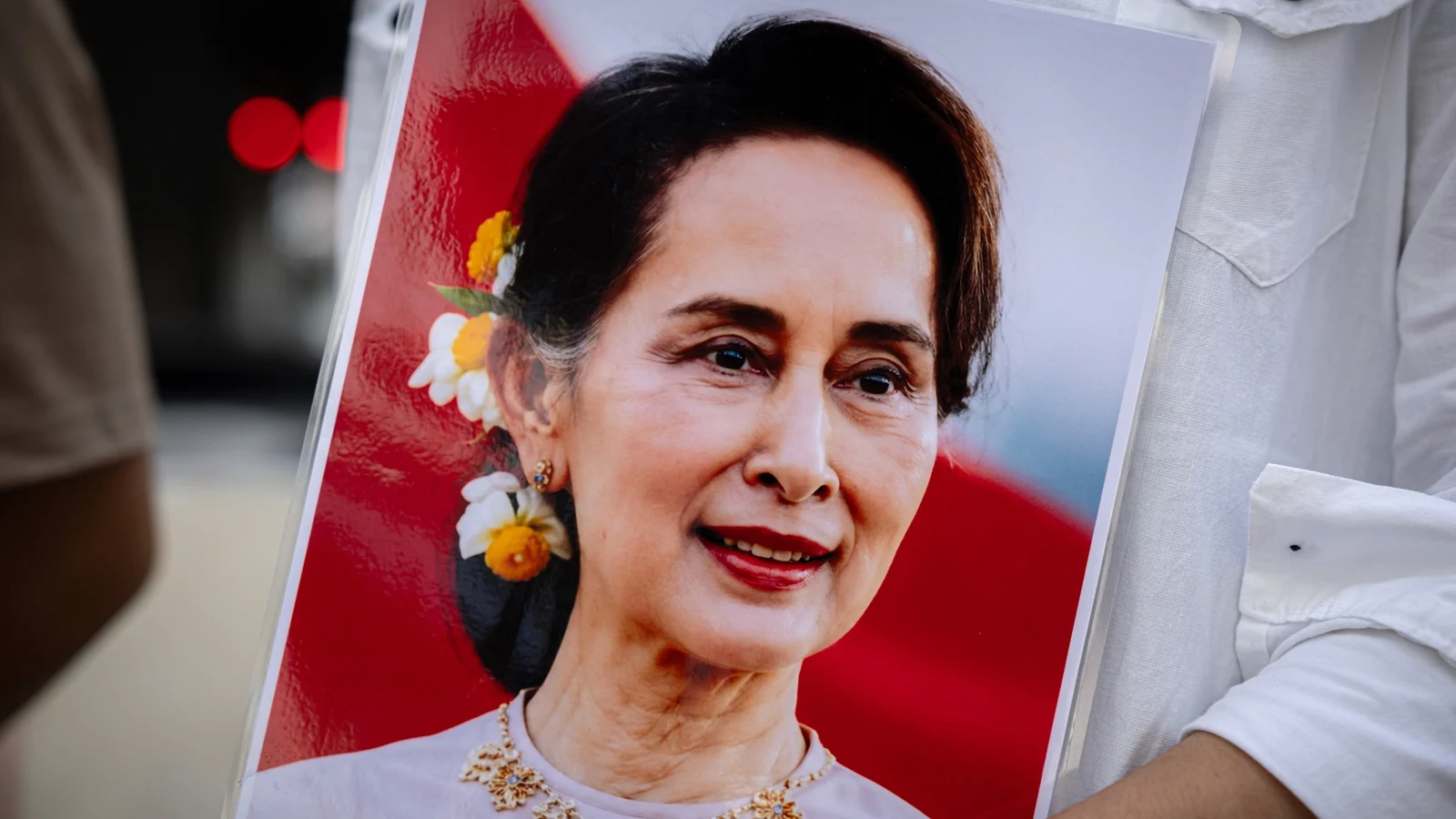
Aung San Suu Kyi, the Nobel laureate who once commanded near-mythic support in Myanmar, has been in detention since the military coup of February 2021. The junta that toppled her elected government has stacked criminal charges against her—charges international observers call trumped up and politically motivated.
The office of junta leader Min Aung Hlaing released the photo and said she would be moved to an address in Naypyidaw, the sprawling, purpose-built capital conspicuous for its empty boulevards and manicured lawns. A senior source from Suu Kyi’s dissolved National League for Democracy (NLD) confirmed to reporters that she was likely to be kept under effective house arrest.
Immediate reactions
The United States was immediate and blunt. “We reiterate our call for her immediate and unconditional release,” a State Department spokesperson said. “We are gravely concerned about reports of her deteriorating health and insist she be granted proper medical access.”
Across the region, diplomats issued familiar statements—measured, condemnatory, sometimes hollow. Rights groups renewed calls for accountability. Inside Myanmar, the mood was a complicated mix of anger, sorrow and, for many, exhausted acceptance.
The long arc from hope to resistance
It is easy to forget how quickly fortunes can turn. In 2015 and 2020, Suu Kyi’s party, the NLD, won popular elections that were later dismissed by the military as fraud—an accusation used as the pretext for the 2021 coup. The ensuing years have seen a violent fracture in a nation of roughly 50 million people.
Humanitarian and rights organizations estimate that the conflict has killed thousands and uprooted more than a million people, though precise figures are elusive amid restricted access. Remote communities in Kachin, Chin, Sagaing and Rakhine states have borne the brunt of fighting, with reports of scorched villages and civilians targeted for supporting local resistance groups.
“We’ve seen patterns of mass displacement that would have been unthinkable a decade ago,” says Dr. Hnin Aye, a Yangon-based researcher who tracks internal displacement. “What started as a political contest has devolved into fragments of civil war. The human cost is not just numbers; it’s the uncounted stories—children pulled from school, farmers who cannot harvest, families forced into camps.”
Voices from the street: grief, defiance, weariness
In Yangon’s tea shops, where people have long debated politics over teacups and bowls of mohinga, conversation turns hushed. “She gave us hope once,” says Ko Tun, a 46-year-old mechanic picking at his tea. “We still love her, but we are scared and tired. Every time there is news, my heart races.”
In Mandalay, a college student named Aye Chan says the photograph feels like a re-run of old pain. “My friends talk about staging protests again, but it’s dangerous. The memory of arrests, of bullets close to home, keeps us quiet. Still, we watch, we remember.”
Along the dusty roads of Sagaing, where clandestine resistance militias and junta forces clash intermittently, the locals speak of survival. “We tell ourselves stories to sleep,” says Saw Hla Myint, a 58-year-old rice farmer who fled his village last year. “We know that sometimes the world looks away. So we hold on to each other.”
What this means geopolitically
The Suu Kyi saga is not just Myanmar’s story. It sits at the intersection of regional geopolitics, human rights, and the global debate over democratic backsliding. ASEAN’s response to the coup has been criticized as ineffectual; Western sanctions have been applied to junta leaders, yet the levers of change remain limited.
“Authoritarian resilience is often less about ironclad ideology and more about the ability to absorb shocks—economic, diplomatic, moral—and keep the machinery of control running,” explains Dr. Mark Hollis, a Southeast Asia analyst. “Suu Kyi’s detention is symbolic, but it’s also tactical. It’s about denying a rallying point while neutralizing international pressure by creating facts on the ground.”
The humanitarian picture is stark. According to UN agencies and displacement monitors, millions need assistance, with food insecurity rising and health systems fraying under pressure. COVID-19 added another layer of strain, but the crisis long predates the pandemic and shows no easy route to resolution.
Human rights, dignity, and the question of medical care
Reports that Suu Kyi’s health has deteriorated have intensified demands for medical access from her family, her supporters, and international advocates. “Even prisoners have rights,” said an appointed family representative who asked not to be named for safety reasons. “Daw Aung San Suu Kyi is 80. She deserves humane treatment.”
For the junta, allowing limited medical care could soften international pressure. For activists, any concession without freedom is insufficient. “People are not bargaining chips,” insists Lin Swe, a former NLD organizer now in exile. “Her personhood is not a tool for legitimacy.”
What now—and what do we do with this story?
Ask yourself: when a single photograph can reignite a global conversation, what duty do distant observers owe to the people living the crisis? Is issuing statements enough? Is sanctioning generals sufficient if civilians continue to suffer?
The stakes go beyond one figure. They concern a nation’s right to self-determination, the limits of international influence, and how we hold power to account in an era where authoritarianism can be both brutal and patient.
Perhaps the hardest truth is this: for many in Myanmar, life goes on in the small, stubborn ways that defy headlines. Shops open, monks chant at dawn, children learn the alphabet in cramped classrooms, and families plan their next move with caution. The photograph of a woman in custody doesn’t end the story; it deepens it.
Final thoughts
As the world watches, consider this: revolutions are not tidy arcs, and neither are the pauses in between. Aung San Suu Kyi’s move to house arrest is a turn in a long, unfinished narrative—one of resilience and brutality, hope and heartbreak.
Will international pressure translate into medical access and eventual release? Will Myanmar’s fragmented resistance coalesce into a political solution, or will the conflict grind on until new generations are raised without the old freedoms? The answers are not simple. They will be written in the voices of ordinary people—farmers, tea sellers, students—who wake each day and choose, in small ways, how to live under shadow.
So tell me: when you think of Myanmar now, what do you see? A photograph, a cause, a country? Or a people whose story is still being told, day by day, against the odds?