Forty-Five Days of Fragile Quiet: A Ceasefire, the Sparks That Remain, and the People Between
On a cool Washington morning, diplomats shook hands and announced what many in the region have been praying for: the temporary silence that began on 16 April will be stretched for another 45 days. The U.S. State Department framed the move as a pragmatic pause—an interval for talks, for promises to be turned into plans, for negotiators to meet again on 2 and 3 June. But the headlines and the reality on the ground rarely march in lockstep.
Diplomacy in the capital, fear on the coastline
“We extended the cessation to enable further progress,” a U.S. official said, echoing the terse language of diplomacy. In the hushed corridors of power, that progress looks like maps, contingency plans, and lists of demands. On the streets of southern Lebanon and in the shattered neighborhoods of Gaza, the word progress means something else entirely: shelter rebuilt, children returned to school, markets open again.
For many, the ceasefire has been less a definitive end to violence than a brittle vase put back together with tape. Southern towns that ought to be quiet have not been at peace. From Tyre’s battered beachfront to the olive groves above Kfar Tibnit, explosions were still seen and heard. Smoke rising from fields and apartment blocks has become as familiar a sight as minaret silhouettes at sunset.
Lives shattered in a single strike
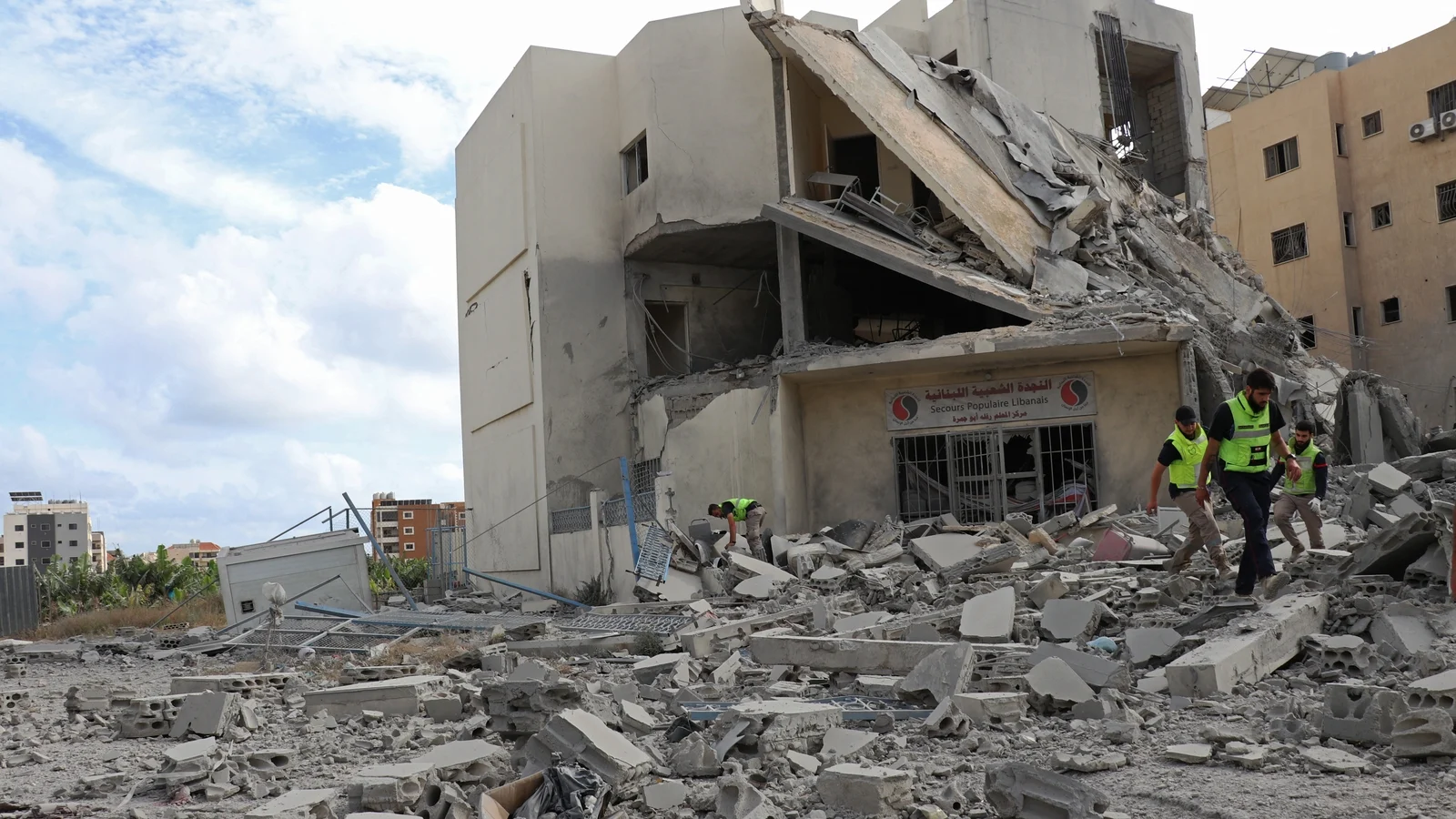
On the outskirts of Haruf, a small humanitarian clinic run by the Islamic Health Committee became a scene of mourning. Three paramedics were killed when an airstrike hit the building; a fourth remains critically injured. “They were not combatants. They were just there to help,” said Amal, a nurse who worked with the team and whose voice wavered when she described the cramped, exhausted shifts. “We keep saving people and then losing our own.”
Nearby, residents described the building as a last refuge. “There are only women, children, and the elderly here,” Hafez Ramadan told me. “They came from towns that were destroyed. Now they have nowhere to go.” Across the southern district, at least 37 people were reported wounded in strikes near Tyre—hospital staff among them, women and children counted with the rest.
The human arithmetic: numbers that do not convey the full cost
Numbers help us orient ourselves, but they rarely tell the whole story.
- Lebanese health authorities report some 2,882 people killed in Lebanese territory since 2 March.
- About 1.2 million people have been displaced inside Lebanon, many uprooted from the south.
- Israeli military losses in southern Lebanon stand at 19 soldiers killed in clashes with Hezbollah since early March; a civilian contractor has also died.
- In Gaza, medics said at least seven Palestinians were killed in recent strikes, including a child; since the October ceasefire, around 850 Palestinians have been killed.
- Gaza authorities put the death toll since October 2023 at over 70,000—a figure the UN has judged reliable.
- Hamas’ 7 October 2023 attack killed over 1,200 people in Israel, according to Israeli tallies.
Staring at these figures is like scanning a ledger of loss. Each number is a family, a teacher, a lost market stall. Each statistic is a house without laughter. When a whole town is razed, the memory of it lasts far longer than the news cycle.
Displacement and the scent of the sea
Walk through Tyre and you find a city split between the ordinary and the extraordinary. Fishermen still untangle nets at dawn, the smell of salt and diesel braided together. Yet there are long lines for bread and crowds of people who have left homes with only what they could carry. Hotels have turned into temporary shelters. Apartment blocks once bustling with life stand hollowed and blackened.
“We came here with a suitcase and one bag of clothes,” said Laila, a mother of three who fled from a southern village. She sat outside a hotel now serving as a makeshift shelter, wrapping her youngest in a blanket. “The children ask when they can go home. I don’t have an answer for them.”
Gaza: flames rekindled amid a precarious truce
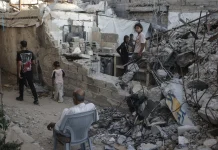
While diplomats brokered rhythm in Washington, Gaza’s battered neighborhoods pulsed with fresh violence. Two strikes—one on an apartment block in Rimal, another on a nearby street—killed at least seven people, according to medics. Video from the scene captured a scene any seasoned journalist has come to dread: flames devouring a mostly ruined building, neighbours hauling out bodies wrapped in white sheets.
“The missile hit without warning,” Mahmoud Basal, a civil defence spokesperson, said in a voice that tried to be steady. “There were hundreds of people inside. Families. Children.”
Israel says it has stepped up operations in Gaza since redirecting resources away from its involvement in Iran. One stated goal is to target militant leaders; the identity and fate of a senior commander said to be targeted in recent strikes remain unclear. Meanwhile, Israel retains forces within large swaths of Gaza, where many neighborhoods are already ground to rubble and roughly two million people live in an area the size of a small county.
What a ceasefire buys—and what it doesn’t
Ceasefires are complicated instruments. They buy time for negotiators, space for aid convoys, and a sliver of hope for civilians to rebuild roofs and nerves. But they do not magically resolve the underlying dynamics: displaced populations needing durable housing, the dismantling of armed groups, questions of sovereignty, and the political bargains that underpin any lasting accord.
“A ceasefire is a short-term medicine,” a regional analyst told me. “But if you don’t treat the disease—diplomacy, reconstruction, accountability—you’ll be back in the hospital.”
Looking outward: why this matters to the rest of the world
Conflicts in a small geography ripple far beyond their borders. They unsettle regional alliances, push asylum seekers toward uncertain horizons, and test the international community’s capacity to mediate when violence is so normalized that the rules become negotiable. Humanitarian organizations report funding gaps, and donors are increasingly fatigued by overlapping crises from the Sahel to South Asia. Yet the human need here is immediate and enormous.
When you read these reports from your phone or tablet, you might be tempted to ask: What can I do? First, stay informed from reliable sources. Second, consider supporting reputable humanitarian organizations that have boots on the ground. And third, insist on accountability—on political leaders and on international institutions—to translate temporary silences into durable security.
What comes next?
The 45-day extension sets a deadline: negotiators return in early June. That gives room for shuttle diplomacy, for technical committees to pore over deconfliction maps, and for aid to flow—potentially. But for families out of doors, for medics who have buried their colleagues, for the fishermen of Tyre and the children of Rimal, time is both a balm and a threat.
“We want more than a pause,” Laila said, looking at her children asleep in the back of a hotel room that smells faintly of sea and disinfectant. “We want a home.”
As international actors count the days, those who wake to the sound of generators and the smell of burnt rubber will measure the ceasefire differently: in broken windows replaced, in schools reopened, in streets where market sellers can call out prices again without glancing at the skies.
Forty-five days is a gift, fragile as glass. Will it be enough to build something lasting, or merely another chapter in a long book of returns and losses? The answers will be written in the months ahead—in the negotiating rooms, but most crucially, in the dust of the neighborhoods that have been waiting to be named safe once more.