On the Red Earth of Ituri: An Ebola Outbreak Unfolds
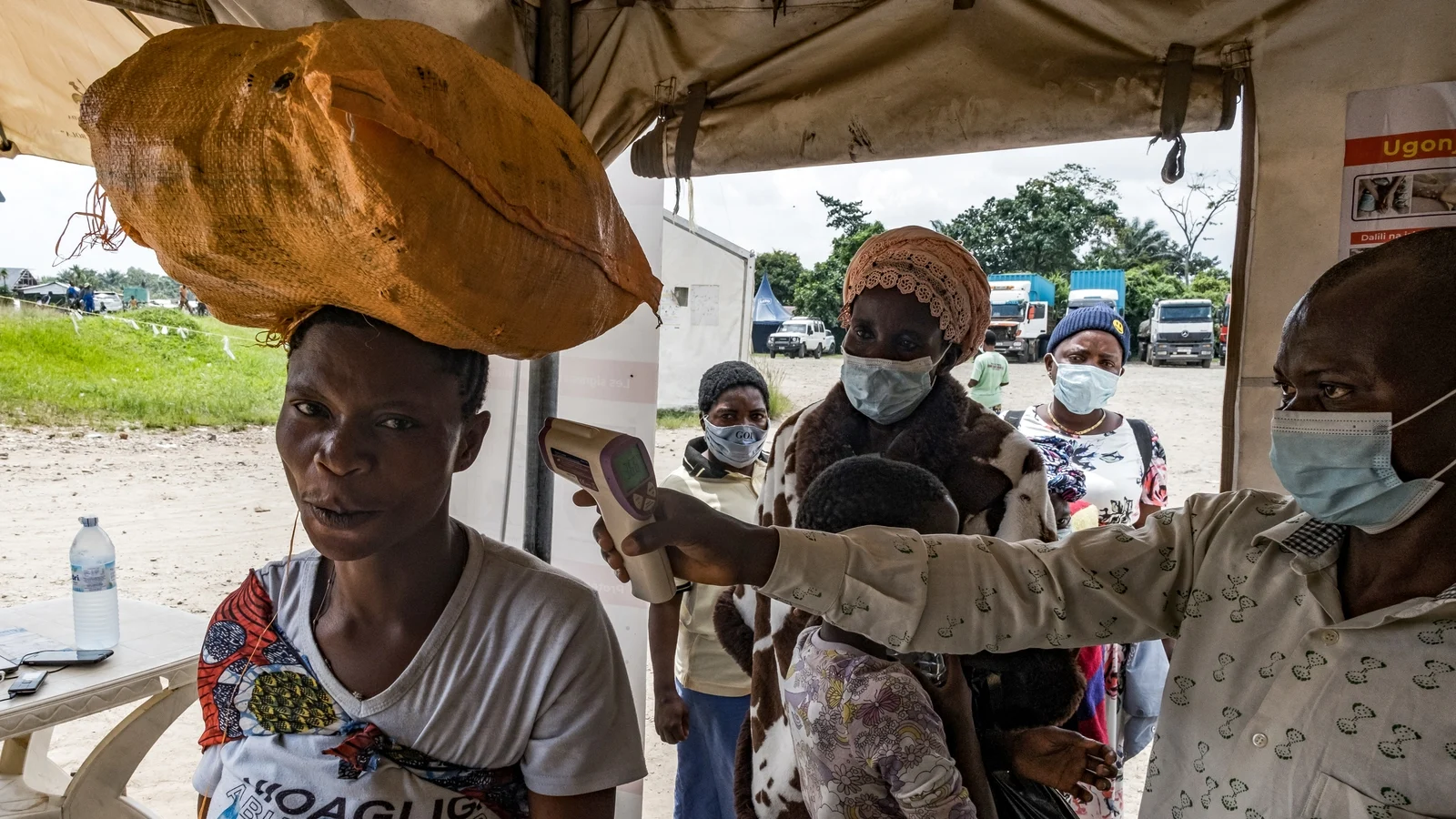
The market in Bunia hums with the ordinary chaos of a town that has learned to live with uncertainty: women balance baskets of cassava on their heads, motorbikes skitter through a cloud of dust, and the distant clank of miners returning from the pits punctuates the afternoon. Then a hum of another sort — whispered warnings, a line of people at a makeshift hand-washing station, a truck of white tents rolling in — breaks the rhythm.
This is where a fresh outbreak of Ebola is being wrestled into view, and its arrival has rattled a region still scarred by conflict. International health authorities have raised the alarm, and capitals from Kampala to Kinshasa are scrambling. For people here, the emergency is not an abstract headline but a disruption to funerals, markets and the fragile routines that stitch life together.
What we know so far
Health officials report hundreds of suspected cases clustered in eastern Democratic Republic of Congo’s Ituri province: authorities have logged roughly 246 suspected infections and about eight laboratory-confirmed cases, with preliminary figures suggesting the outbreak may have claimed some 80 lives in recent weeks.
Alarm spread beyond Congo’s borders when two cases were reported in Kampala, Uganda’s capital, prompting the World Health Organization to declare the situation a public health emergency of international concern. A separate case was reported in Goma, a city under the control of the M23 rebel movement, according to the group — a development that complicates coordinated response efforts.
The strain identified this time is Bundibugyo ebolavirus, a relative of the more notorious Zaire strain. Unlike Zaire Ebolavirus, which has an approved vaccine and some targeted therapeutics, Bundibugyo currently has no specific licensed vaccine or antiviral proven for wide use — a sobering reality for clinicians and communities alike.
Numbers, risks and human costs
To put this into context: the DRC has faced Ebola 17 times since the virus was first identified there in 1976. Ebola outbreaks have varied wildly in lethality; the World Health Organization places the average case fatality rate around 50%, with past outbreaks ranging between 25% and 90%.
The 2018–2020 epidemic in North Kivu and Ituri — fueled by the Zaire strain — was the second deadliest on record, killing nearly 2,300 people and exposing how violence, displacement and mistrust can turn a health emergency into a drawn-out catastrophe.
Frontlines and shortages
On the ground, the response has a hurried, improvisational feel. A convoy led by Congo’s health minister arrived in Bunia with tents and supplies to expand treatment capacity. Narrow hospital wards are already strained; medical staff who have been through previous outbreaks moved quickly yet cautiously, donning gloves and masks as they triage the sick.
“We are running to catch up,” said one nurse outside a field treatment center, rubbing sanitizer into hands that have not had a real break in days. “The fear is not only of the disease. It is of being too late.”
The World Health Organization has emptied its stocks of personal protective equipment in Kinshasa and is mobilizing a cargo plane from a depot in Kenya. The European Centre for Disease Prevention and Control has dispatched an expert to Addis Ababa to coordinate with African Union partners, and the US Centers for Disease Control and Prevention has said it will boost staff in both DRC and Uganda and assist in withdrawing a small number of affected American citizens.
Logistics tangled by politics and conflict
Movement across borders has tightened. The United States embassy in Uganda temporarily paused visa services, and checkpoints along the Congo–Rwanda frontier reported turned-back travelers in Bukavu. These measures, meant to curb spread, also trap livelihoods and complicate aid delivery: traders, miners and pilgrims now find their routes blocked or deeply uncertain.
“We used to go to Goma for supplies; now some roads are closed and people are afraid,” said a motorcycle taxi driver in Bukavu. “When people lose work, they lose the choice to stay home.”
How this began — and why detection lagged
Local accounts trace the outbreak’s ignition to a funeral in April. A large open-casket procession arrived in a mining town called Mongbwalu from Bunia, and within days clusters of illness began to appear. Jean Pierre Badombo, who once served as Mongbwalu’s mayor, described a devastating chain reaction: whole families sickened in rapid succession, health workers among the earliest victims.
Health ministry sources told investigators that the first alert came on 5 May, when teams were notified of an unknown illness with high mortality in Mongbwalu. But diagnostic missteps — samples initially tested negative for the Zaire strain and were not promptly escalated for further testing — delayed the identification of Bundibugyo until 14 May, a setback that likely allowed transmission to gain a foothold.
“Surveillance is only as strong as the funding and the trust behind it,” said Lievin Bangali, senior health coordinator for the International Rescue Committee in DRC. “When donor support wanes and networks fray, there are blind spots. Viruses exploit those blind spots.”
On the human side: customs, rituals and resilience
Burial rites lie at the heart of this outbreak story. Across many communities in eastern Congo and neighboring regions, funerals are both a social necessity and a cultural ritual — open-casket viewings, communal prayers, and long processions. When a virus that transmits through contact with bodily fluids meets those customs, the consequences can be swift.
“We do not want to stop mourning our dead,” said a woman who heads a community church in Bunia. “But we also do not want to bury more of our children. That is why we are learning new ways to say goodbye.”
Such shifts are not easy. Pilgrimages to Uganda for Martyrs’ Day — a national observance that typically draws thousands from across the border — were postponed this year, a sign of how public health concerns ripple through religious and cultural calendars.
Why this matters to the world
We live in an era when a local outbreak can become a global emergency within days. Air travel connects the busiest markets of Kinshasa, Kampala and beyond; displacement and conflict make containment harder; and scientific tools are unevenly distributed. Bundibugyo’s lack of a licensed vaccine underscores the inequity in pandemic preparedness: where research has focused on the deadliest strains, others remain under-resourced.
So what should the international community learn from this moment? First, that surveillance and rapid laboratory networks are investments, not optional expenditures. Second, that public health measures must be culturally intelligent — working with, not around, local customs. And third, that conflict zones demand adaptable, sustained humanitarian financing so that surveillance doesn’t fray when it matters most.
Questions for readers — and a call for solidarity
As you read this, ask yourself: how closely do global political choices — budgets, aid priorities, security policies — shape whether a viral flare-up becomes a catastrophe? What responsibilities do wealthier nations have to ensure vaccines, treatments and protective gear are available to regions that are already carrying heavy burdens?
The people of Ituri do not need pity; they need support that is rapid, sustained and respectful. A nurse with a cracked smile in a Bunia clinic summed it up plainly: “We are not waiting for miracles. We are waiting for help.”
Will the world answer in time? The tents are up, planes are on their way, and teams are moving into the red dirt at the edges of town. But the story of this outbreak will be written in the next few weeks — by health workers racing to isolate cases, by communities deciding whether to adapt old rituals, and by the global response that either contains the virus or lets it travel farther.