When a Vote in Reykjavik Ripples Across Europe
On a wind-swept morning in Reykjavík, the flags over Alþingi flap like punctuation marks against a gunmetal sky. Coffee steams in cups on café terraces; a fisherman hauls his nets, and a poster with simple blue-and-gold stars appears overnight in a busy square. The question on the horizon is not only legal or technical. It’s intimate: who are we, as a people? And where do we want to stand in a continent that keeps reinventing itself?
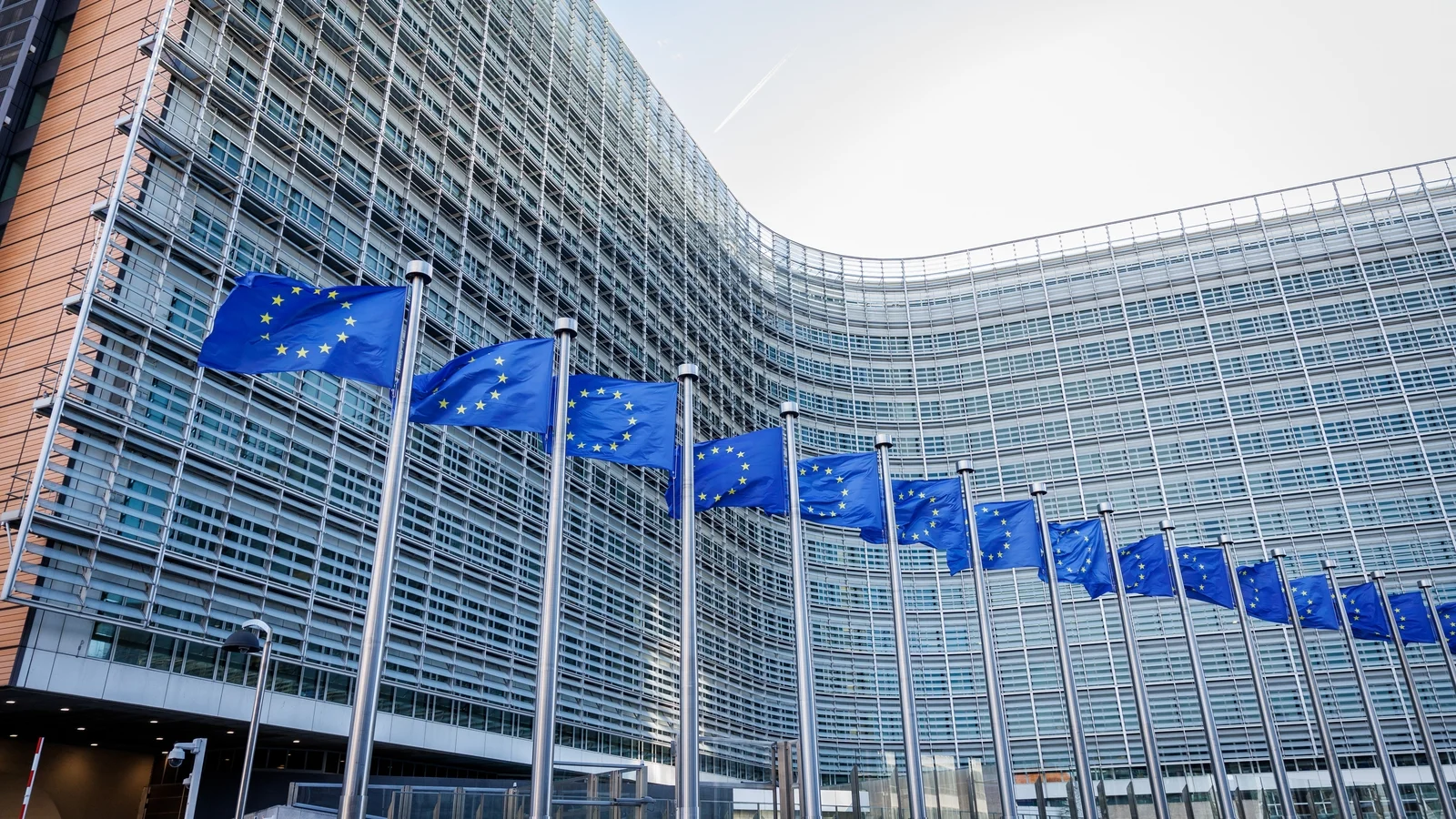
On 29 August, Icelanders will be asked whether to reopen talks for membership in the European Union. It is a decision that, for a country of roughly 393,000 people, carries outsized symbolism and real-world consequences — for fisheries and trade, for defence and diplomacy, for language and identity.
Why this matters to Ireland — and to the rest of Europe
In Dublin, Thomas Byrne, Ireland’s Minister of State for European Affairs, speaks with the kind of careful enthusiasm diplomats cultivate. “If Iceland decides to pick up the conversation again, it would be a milestone — not just for them, but for our union,” he told me. “Iceland suspended the accession process years ago. To restart would be like another country saying, ‘Yes, we are ready to belong in a different way.’ That resonates.”
There is practical logic to his interest. Ireland, a long-standing EU member with a proud history of neutrality, sees echoes of its own journey in Iceland’s debate. During the period in which Iceland paused accession talks, an Irish EU presidency coincided with the suspension — an irony not lost on officials who track institutional timelines and the subtleties of European goodwill.
Backing up the drama with facts
Iceland applied to join the EU in 2009 after the financial crisis that shook its economy. Negotiations were paused in 2015 following a political shift at home. Today, Reykjavík is part of the European Economic Area, contributing to the single market in goods and services since the EEA Agreement came into force in 1994. It’s also a member of the Schengen zone, which allows passport-free travel between 29 European countries, and has been part of NATO since its founding in 1949. Any accession would therefore be a recalibration rather than a wholesale reinvention.
There are two votes to consider: first, the referendum on whether to resume negotiations; second, if talks are successful, a future referendum on actual membership. That two-step democratic path is one reason the Icelandic debate feels both cautious and hopeful.
Voices from the island: worry and wonder
On Laugavegur, Reykjavík’s main street, opinions bubble up like geothermally heated water. “My father fished these waters his whole life,” says Sigríður, a woman in her fifties who manages a seafood stall. “We are proud of our quota system. Joining the EU — how will that change what we can catch? That’s the worry.”
Opposite Sigríður’s stall, a young teacher named Jón offers a different tone. “Language is living. Being in Europe could mean more resources, more cultural exchange. I look at Irish. Despite everything, Gaeilge has found a platform in Brussels. That’s something we discuss at school.”
Those conversations are baked into kitchens and pub booths across the country. A retired coast-guard, Gunnar, leans back in a chair and admits: “For us the seas are everything. We want to protect them, but we also want our sons and daughters to have options. If being in the EU opens doors for them, maybe it’s worth the fear.”
Experts weigh in
Dr. Edda Markúsdóttir, a political scientist at the University of Iceland, frames the decision in broader terms. “This is about sovereignty, economy, identity, and security. Iceland has been navigating these waters externally for decades — in the EEA, Schengen, NATO. EU membership would formalise certain things and complicate others. But democratically, it’s healthy that the people choose.”
EU policy analyst Caroline Hughes adds context from Dublin: “Small states often face trade-offs between open markets and political autonomy. Iceland’s economy is highly specialised — fisheries, tourism, renewable energy — and any accession negotiation would be intensely technical.”
Fisheries, language, and the logic of security
Perhaps the thorniest topics are fisheries and defence. Icelandic waters are among the richest in the North Atlantic; control of those resources defines livelihoods and national myth. Brussels’ common fisheries policy has historically been a red line for many applicants. Yet, as negotiators know, transitional arrangements and opt-outs can be crafted — preserves, bridges, and safety valves that respect local specifics.
On security, Ireland offers a lesson in nuance. A neutral country and EU member since 1973, Ireland maintains an opt-out on certain defence commitments. “I explained to my Icelandic colleagues that being in the EU does not automatically pull you into military structures,” Minister Byrne said. “The Union is diverse in how countries approach defence.”
Language too has its defenders. Thórgerður Katrín Gunnarsdóttir, Iceland’s foreign minister, has publicly voiced concerns about preserving the Icelandic tongue. Many locals see this as a crucial piece of the puzzle. “Culture is not a static museum piece,” says Halldór, a librarian. “It lives in schools and online chats, in the slang of teenagers. European membership can bring funds for education and media in minority languages.”
What’s at stake for Europe?
Ask yourself: what does a tiny island in the North Atlantic mean to the future of a continent that’s wrangling with migration, climate change, and a shifting geopolitical map? Iceland’s strategic position in the Arctic, its renewable energy potential (massive geothermal and hydro resources), and its role in fisheries governance make it more than a dot on the map. EU membership would nudge Brussels’ Arctic policy, alter environmental stewardship of sensitive waters, and put another small democracy at the European table.
Already, the EU has levers that affect Iceland: trade agreements, regulatory frameworks, environmental directives. Full membership would consolidate those links — and demand compromises. That is uncomfortable, but it is also the essence of democratic integration: the art of give-and-take.
Looking ahead — a moment to reflect
As campaign posters multiply and political debates intensify, there is a quieter, human story at play. People worry about fish quotas and passports; they hope for cultural support and economic stability. They imagine their children’s futures. They argue in cafés and message threads, and they listen to voices from abroad — including a small nation that once reimagined itself after a crisis and saw Europe as part of the answer.
What would you choose, if you were Icelandic for a day? Would you prioritize sovereignty over shared governance? Security over cultural caution? These are not abstract academic exercises. They are questions that ripple into daily life: the price of bread, school funding for language classes, a son’s ability to work across borders.
Final turn
On 29 August, an island nation will take another look at its future. Whatever the result, the moment is a reminder that European identity is not fixed; it is forged continually in public squares, parliaments, and living rooms. This is democracy doing its messy, luminous work.
And if Iceland votes to resume negotiations, as some expect, it will be more than a diplomatic footnote. It will be a reminder that even the smallest countries can reshape larger conversations about belonging, stewardship, and the global role of regional unions. Europe will be watching — and listening — as a people decide how they want to be known.