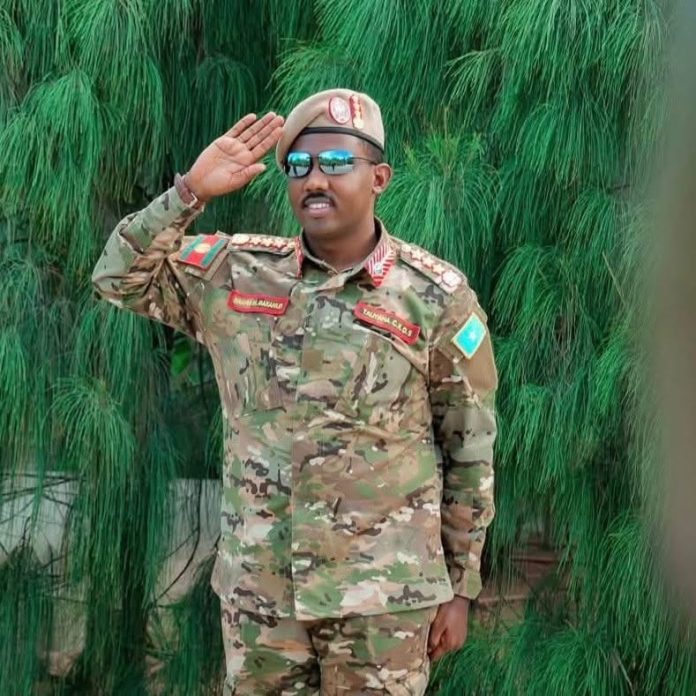
Dec 17(Jowhar)-Wasiirka Gaashaandhigga mudane Axmed Macallin Fiqi ayaa maanta xafiiskiisa ku qaabilay Wasiirka Gaashaandhigga Jamhuuriyadda Jabuuti mudane Xasan Cumar Maxamed oo Muqdisho u yimid ka qeybgalka Kalfadhiga 35-aad ee Wasiirrada Gaashaandhigga ee dalalka ku bahoobay Ciidamada Heeganka Afrikada Bari (EASF).
How misinformation and rumors spread online following the Bondi Beach attack
How a Beachside Act of Courage Became a Collision of Fact and Falsehood
On a summer afternoon that should have smelled only of salt and sunscreen, Bondi Beach—the blue-edged postcard of Sydney life—was ripped open by gunfire. Two men opened fire at a Hanukkah gathering on the sand on Sunday, 14 December. By the time the sirens subsided, the death toll had reached 15 and dozens were wounded; police later declared the incident a terror attack. What followed was not only grief and questions, but an accelerating chorus of stories—some true, many not—that raced across social media like wildfire.
For a few seconds, the world saw a clear beam of what courage looks like. A video, later verified by authorities and major outlets, captured Syrian-born fruit shop owner Ahmed al Ahmed wrestling a rifle away from one of the shooters. The clip turned into a symbol: a quiet, muscular defiance against a sudden burst of evil. “He did what anyone would hope their neighbour could do,” one woman whispered near a temporary memorial of flowers and candlelight that evening. “It’s the sort of thing you don’t expect to see until it’s happening to you.”
The Speed of a Lie
And yet, alongside the gratitude and grief, the internet began working through its other reflex: to fill silences with stories, even when truth was still being collected. Within hours, a false narrative had taken root—one that assigned a different name to the man on the video, claiming he was “Edward Crabtree.” The story appeared first on a website styled to look like a national news outlet, authored by a supposed crime reporter called “Rebecca Chen.” The piece read like an exclusive hospital interview, complete with invented details about a 43-year-old IT professional taking his routine walk along the beachfront.
“I just acted,” the fabricated article quoted its phantom interviewee saying. The quote spread. Screenshots proliferated. Social feeds bristled. Even X’s built‑in AI assistant Grok repeated the name when users asked who had disarmed a gunman, amplifying the mistake.
Maria Flannery of the European Broadcasting Union’s Spotlight Network, who later analyzed the post-attack information ecosystem, called the Crabtree story “a textbook case of how quickly falsehoods can dress themselves in credibility.” “The site had the visual cues of journalism—bylines, a photo, an authoritative tone—yet the domain was created the same day as the attack,” she told me. “That’s the giveaway. Perpetrators know how to mimic trust; audiences often have no time to check it.”
Tools That Mislead
Investigators and journalists dug into why the story caught on. RTBF’s Fakey team discovered the site’s byline photo changed on refresh; a Whois lookup showed the domain had been registered that day and was shielded behind a privacy service in Reykjavik. Automated image detectors flagged the author photo as likely generated. Even when a human being could see the inconsistencies, algorithms had already done the work of distribution.
And the errors were not only the result of bad actors. Automated assistants failed too. When users asked Grok whether the viral video was real, the chatbot initially told them the clip appeared to be an old, unrelated viral video about a man climbing a palm tree and that authenticity was uncertain. Major newsrooms and police had verified the Bondi clip as contemporaneous and directly related to the attack; Grok’s response was wrong.
“Large language models are powerful pattern‑matching engines, not substitute detectives,” said a Sydney-based technology specialist who helps emergency services with digital verification. “They summarize what’s online—but they can’t independently verify timestamps, chain of custody, or eyewitness testimony. In breaking news, that gap is deadly.”
When Search Trends Become “Evidence”
Conspiracy theorists were quick to weave Google Trends into their narratives. Posts claimed certain suspect names spiked in searches before the shooting—innuendo presented as evidence of a staged attack. A closer look at the data told a different story: in Australia the relevant name began trending around 9am GMT, while the first reports of an active shooter on the beach were timestamped at 7:45am GMT—meaning the spike came after the first reports. In Israel, the term trended an hour later, reflecting the time it took for international outlets to carry the news.
Why the confusion? Partly because Google Trends displays time using the viewer’s local clock, not the timezone of the event. For incidents unfolding in far-off places—Australia’s east coast, for instance—this mismatch can make a normal pattern of reaction look like foreknowledge.
“People see a graph and want a pattern. But graphs don’t lie; people misread them,” said Dr. Asha Raman, a media literacy researcher. “Misinformation exploits that desire for tidy causality in a chaotic moment.”
Deepfakes, Doppelgängers and the Human Cost
As well as fake articles and misread trends, synthetic images and mistaken identity multiplied the harm. Spanish outlet VerificaRTVE found an AI-generated photo purporting to show a man having fake blood applied by a makeup artist—the image had the telltale AI artifact of distorted text across a T‑shirt. Meanwhile, a Sydney resident who shares a name with one of the alleged shooters had his personal photos circulated online; he came forward in a viral video to say he had nothing to do with the attack. Deutsche Welle’s fact-check showed the images did not match the suspect and the man could not possibly have been the attacker because one suspect died on scene while the person in the video was alive and speaking from his home.
“Being misidentified online is terrifying,” the wrongly linked man said in his video. “People were sending death threats to my inbox within hours.”
What This Moment Asks of Us
So how do we live in a world where acts of real bravery and tragedies are instantly packaged into a battleground of truth and lies? The local answers are practical: rely on verified outlets, seek statements from police and hospital spokespeople, and treat emergent posts—especially those coming from newly minted domains—with suspicion. EBU’s Spotlight Network, along with fact-checking teams at ORF, ZDFheute, RTBF, and others, showed how a coordinated response can push back against falsehood.
- Check domain registration dates and author bios.
- Prefer official statements (police, hospitals) and reputable media outlets over anonymous social posts.
- Understand how tools like Google Trends display time so you don’t mistake correlation for conspiracy.
But beyond the checklist is the larger moral work: to hold a space for grief and reverence amid the noise. “When tragedy happens, every feed becomes a memorial and a rumor mill in the same breath,” said a Rabbi from a Sydney congregation who asked not to be named. “We owe it to the victims—not to turn their suffering into fodder for clicks.”
That’s a hard ask. The architecture of our platforms rewards speed and certainty. Falsehoods are lean, sharp, and always ready to run. Truth is slower, messy, and often harder to anchor.
Where We Go From Here
If there is a takeaway from Bondi’s sorrow, it is this: technology can reveal our best and worst instincts. It can make a fruit seller into a global hero in minutes, and it can make an anonymous lie look like gospel in the same span. The remedy is not technophobia but civic literacy—a muscle we must exercise. Ask: who benefits from this story? Who stands to lose? What corroborating evidence exists?
When you scroll past the next dramatic headline, remember that a real community is fractured and healing behind it: ambulances in the night, hospital corridors where family members wait, a supermarket owner who now walks home with a heavy, complicated fame. Misinformation doesn’t just distort facts—it prolongs pain. The next time a clip goes viral and a stranger’s name trends, pause. Verify. Mourn thoughtfully. Resist the easy certainty of instant narratives. The truth, when it matters most, deserves that patience.
First funeral held for victims of Bondi Beach attack
When Bondi Went Quiet: A Community Mourns
On a grey morning that should have felt like any other summer day by the sea, Bondi Beach sat unnaturally still — umbrellas folded, sand undisturbed, the roar of the Pacific softened by a hush you could almost touch.
The hush was not from weather. It was from grief. Today, the first funeral for one of the 15 people killed in the attack that shattered this coastal suburb drew a crowd that filled the Chabad of Bondi Synagogue and spilled into the street outside, a reminder that public tragedy always becomes private sorrow.
The man being remembered — a husband, a father of five, a chaplain to prisoners and hospital patients — was known locally as the Bondi Rabbi. In the small print of public life he had performed rites, sat with the dying, and been a quiet, steady presence. In the words of a fellow congregant who wiped away tears at the synagogue gate: “Anyone who met him walked away lighter. He carried light like it was his job.”
The Night the Beach Was Attacked
The attack unfolded on a Sunday night when crowds had gathered at Bondi to celebrate Hanukkah — a holiday of light, of small flames kindled to outlast darkness. Two gunmen, a father and his adult son, opened fire on people on the sand and in the nearby park. In the ten minutes that followed, 15 lives were lost and dozens more were wounded; authorities say 42 people were taken to hospital.
Children, the elderly, people on dates, tourists with beach bags — the mix of the crowd owed nothing to politics or creed. Among the dead were a 10-year-old girl and two Holocaust survivors, bringing an additional cruelty to a massacre already hard to fathom.
On the shore, a makeshift memorial has grown: bouquets at the Bondi Pavilion, candles melting into the sand, messages tied to the fences. A menorah glowed in projection on the sails of the Sydney Opera House, the city’s skyline answering Bondi’s grief with its own quiet light.
A Community Seeks Answers
Authorities have said the pair were inspired by Islamic State ideology and that the attack was intended to sow fear among Jewish Australians. Prime Minister Anthony Albanese described the assault as driven by “an ideology of hate” and acknowledged investigators were probing whether the two men had radical contacts during a recent trip to the Philippines.
Police recovered a vehicle registered to the younger man near the sand. Inside were improvised explosive devices and homemade flags associated with the extremist group, police officials told the press. One of the assailants, the father, was shot dead by officers at the scene; the son remains in hospital in a coma under police guard.
“We are left with the awful task of picking up tiny pieces of a terrible puzzle,” said a retired investigator who has followed extremism cases for two decades. “Radicalisation is rarely tidy. It is often a messy braid of grievance, identity, online exposure and social isolation.”
Questions Over Prevention and Policy
As the city memorialised victims, another, less visible ritual began: an audit of systems and choices. The younger man had been on the radar of intelligence services in 2019, officials confirmed, but was not then judged to be an imminent threat. The father had been licensed to own several firearms, obtained last year under rules that critics now say need re-examination.
Australians remembered, uneasily, the Port Arthur massacre of 1996 — the calamitous event that led to sweeping gun reforms, including a national buyback program and tighter licensing that are often credited with preventing further mass shootings. Mass shootings have remained rare here since then, but questions are being asked about illicit markets, online sales, and private transfers of weapons.
“The 1996 laws saved lives,” said Dr. Lila Mendes, a criminologist at the University of New South Wales. “But the world has changed. The pipeline for weapons has diversified. And extremism has migrated online in ways we are still trying to fully map. Policy must evolve.”
- Victims killed: 15
- Hospitalised: 42
- Blood donations recorded in the days after the attack: more than 7,000 — a national record for a single day
The Face of Courage
Among the many small stories rippling out of the tragedy, one has become a focal point: a man who sprang into action when the shooting began. Ahmed al-Ahmed — a 43-year-old who fled Syria nearly two decades ago — was filmed tackling an assailant and has been credited with saving lives.
From a ward in Sydney Hospital, wounded but alive, Ahmed is the subject of a global chorus of gratitude: messages from neighbours, donated funds now numbering in the millions of Australian dollars, and a private swathe of flowers at the hospital entrance. “He did not think. He acted,” said a cousin by phone from a damaged hometown in Syria. “Ahmed is a hero, and our family is proud.”
In Bondi, strangers have sought him out and pressed envelopes into the hands of his family; elsewhere, online campaigns have raised money for his recovery. The scale of that response — and the quickness of it — is one of the few consolations in a story otherwise dominated by loss.
Who Mourns and Who Fears?
The attack has reopened painful questions already circulating in Australia: Are Jewish Australians safe? Has antisemitism been rising quietly, then loudly? Diplomats and community leaders say the level of fear among Jews — who have reported increasing incidents in recent years — is at a new height. Israel’s ambassador visited the memorial, urging decisive steps to protect worshippers and community centres.
“Only Australians of Jewish faith are forced to worship their gods behind closed doors, CCTV, guards,” the ambassador said at the site. “My heart is torn apart.”
Meanwhile, many Bondi residents have watched their neighborhood change from cosmopolitan seaside to a symbol in a global debate about hate, guns and the porous boundaries of online radicalisation. “I moved here for the surf and the hummus,” one café owner joked, voice breaking. “Now I keep a watch out the window in a way I never used to.”
Beyond Bondi: A Global Pattern
What happened on that Hanukkah evening is an Australian tragedy with international echoes. Cities from Paris to Christchurch have been forced to confront waves of radicalised violence and to ask how communities, intelligence agencies and democracies can keep people safe while safeguarding civil liberties.
We are left with urgent questions. How do societies detect the slow creep of violent ideologies in lonely online corners? How should gun policy respond to a market that no longer fits the molds of the 1990s? And how do communities stitch together their broken edges so that light — human, stubborn light — returns?
As you read this, consider: what would you do if a public place you loved suddenly felt like a risk? How much security is too much? How do we balance vigilance with the ordinary freedoms that make public life possible?
Small Acts, Large Grief
At the memorial this week, a woman in a sunhat laid a baby’s sandal atop a bouquet. A lifeguard kept watch, unmoving. A group of teenagers formed a circle and sang softly in Hebrew. These are small, human acts that push back against despair. They are also a reminder that communities are not only victims; they are actors — people who will decide how to rebuild, who to protect, and what lessons to carry forward.
For Bondi, the road ahead will be long and layered: funerals, investigations, policy debates, healing. For Australia, the attack is a sobering call to update the playbook for prevention and protection. And for the world watching, it is a reminder that the fight against hatred and the work of preserving open, plural public spaces remain unfinished.
In the end, mourners said at the synagogue steps, the smallest things — a smile, a soup, a warm hand on a shoulder — will matter. “Light always returns,” one elderly congregant said, placing a candle in the sand. “It always does.”
Madaxweynaha Puntland iyo Madaxda Madasha Samatabixinta oo saaka ku wajahan Kismaayo
Dec 17(Jowhar)-Madaxweynaha Puntland iyo madaxda Madasha Samatabixinta, oo ay ku jiraan raysal wasaarayaashii hore iyo siyaasiin kale oo caan ah, ayaa saaka ku wajahan magaalada Kismaayo, halkaas oo uu ka furmi doono shir soconaya Saddex Cisho.
Australian PM says alleged Bondi shooter will face charges imminently
Morning Light, Sudden Darkness: Bondi After the Shots
There is a particular hush that falls over Bondi at dawn — a soft, briny quiet that belongs to fishermen, early surfers and takeaway coffee cups steaming against the air. This week, that hush was broken in a way the city remembers in its bones: by gunfire on a summer evening that turned a Hanukkah celebration into a scene of carnage and grief.
Walk the Bondi promenade now and you see the small, human things people do when the world has been cleaved: bouquets tucked under stone benches, candles protected by clear plastic cups, notes with shaky handwriting apologising for not being able to attend a service, words of comfort written in glitter. Swimmers who normally thread the shore on weekends stood shoulder‑to‑shoulder and observed a minute’s silence in the surf, the ocean like a witness.
The Attack and the Aftermath
On Sunday night, two men allegedly turned a Jewish Hanukkah celebration into Australia’s deadliest mass shooting in three decades. One of the suspects, named locally as Sajid Akram, 50, was killed by police at the scene. His 24‑year‑old son — referred to in local reporting as Naveed — was shot and fell into a coma; he has since regained consciousness and, according to Prime Minister Anthony Albanese, is expected to be formally charged in the coming hours.
“We will work with the Jewish community; we want to stamp out and eradicate antisemitism from our society,” Mr Albanese said this week, wrestling publicly with grief and with a raft of questions about how and why this horror occurred.
New South Wales Police Commissioner Mal Lanyon has said investigators expect to question the younger suspect once medication wears off and legal counsel is present. The man remains under heavy guard in a Sydney hospital while authorities gather evidence, interview witnesses and try to stitch together motive from travel records and communications.
Alleged Links, Travel and Motivation
Australian police say the pair travelled to the southern Philippines — a region that has long battled Islamist militancy — weeks before the shooting. Investigators have signalled that the bloody raid appeared to have been inspired by Islamic State. The younger suspect was briefly investigated by domestic intelligence in 2019 over alleged links to extremism, but at the time agencies found no evidence he posed an active threat.
That incomplete thread has exposed a raw nerve in public debate: was there a missed opportunity to stop this? Or was the risk genuinely low enough to evade further action? “We’re asking the hard questions,” Commissioner Lanyon told reporters. “We will examine every contact, every travel movement, every transaction.”
Funerals, Faces, and the Weight of Loss
On the official calendar of mourning, funerals for the Jewish victims began almost immediately. Among them was Rabbi Eli Schlanger, an assistant rabbi at Chabad Bondi and a father of five. He was known in the community as a resolute presence: visiting inmates, befriending residents in public housing, making time for people whose lives were quiet and often lonely.
“He would come to the little corners of our lives we thought nobody noticed,” said Alex Ryvchin, a Jewish community leader who has worked alongside Schlanger. “He was not a rabbi for the synagogue alone — he was a rabbi for the city.”
Other victims included a Holocaust survivor, a married couple who had approached the gunmen before the firing began, and a 10‑year‑old girl named Matilda. Health officials said 22 people remained in Sydney hospitals with a range of injuries from gunshot wounds to trauma-related conditions. Among them are people whose lives will be turned upside down by recovery and by the slow, stubborn work of healing.
Heroes in the Chaos
In the small, immediate ledger of bravery, names stand out. Ahmed al‑Ahmed, 43, leapt at one of the shooters and wrestled a rifle away, sustaining serious wounds in the process. He remains in hospital and is due to undergo surgery. “Ahmed is a hero,” his uncle Mohammed told media from Syria. “We are proud of him. Syria is proud of him.”
A young police constable, only four months on the force, was also shot twice. Twenty‑two‑year‑old Jack Hibbert has lost vision in one eye and faces a long recovery. “In the face of violence and tragedy he responded with courage and selflessness,” his family said in a statement, asking for privacy as he heals.
Questions of Prevention, Guns and Community Trust
Australia’s last mass‑shooting pivot came after the 1996 Port Arthur massacre, which resulted in sweeping gun law reforms that are often cited globally as a model. The current attack has reopened difficult debates about how weapons were sourced and why a man with alleged extremist ties could legally acquire high‑powered rifles and shotguns.
The federal government has promised sweeping reforms to gun regulations, and the issue now sits at the center of a national conversation. “We have always regarded public safety as our priority,” Prime Minister Albanese said, “and in the coming weeks you will see concrete proposals.”
Critics say more than regulation is required: intelligence coordination, community outreach and sustained attention to online radicalisation must be part of any durable response. Experts note that violent extremism is increasingly transnational, its signals amplified by social media and its operatives sometimes moving fluidly across borders.
What This Means for the Jewish Community and Beyond
For Sydney’s Jewish population — and for Jews around the globe — this shooting landed not only as a crime but as a cultural blow. It arrived amid two years of fraught coverage and passions surrounding the Israel‑Gaza war, a period that, community leaders say, has seen a rise in reported antisemitic incidents.
“Fear is a real, material thing now,” a Bondi resident and regular at the Chabad synagogue told me, voice trembling. “We used to leave our doors unlocked here in the summer. Now people are asking whether that safety is gone.”
The pressure on government and law enforcement is real: to show they can protect minority communities, to explain what went wrong, and to rebuild trust. That work will involve policy, yes — but also long afternoons in living rooms, coffee with rabbis and imams, school visits and public vigils that stitch social fabric back together, one small act at a time.
Broader Shadows: Extremism, Migration and Identity
Beyond the immediate horror at Bondi lies a convergence of global trends: the spread of violent extremist ideology, the challenge of integrating diasporic communities, heightened polarisation around international conflicts, and the ready availability of lethal weapons. Nations from Europe to North America are grappling with similar patterns. How do democracies keep hope and pluralism alive when the tools of violence are so easily obtained?
These are not questions with quick answers. They require policy and patience, technology and tenderness, law enforcement and human services. They demand community alliances that stretch beyond religious or ethnic lines.
Where Do We Go from Here?
As Bondi heals, the faces of those lost will not be reduced to headlines. They will be remembered in schoolyards, at family tables, in the quiet corners of a synagogue where a rabbi used to sit. The heroism of strangers who rushed into danger will be told and retold. And the conversations about how to prevent the next attack must continue — with clarity, compassion and accountability.
What would you do if faced with the question of safety versus liberty in your own community? How far should a democracy go to monitor potential threats before a line is crossed? These are thorny, urgent questions that reach far beyond Bondi’s sand.
In the weeks ahead, Sydney will watch courtrooms, policy briefings and community meetings. It will also hold shiva and read names and pass around photographs. There will be arguments and memorials; there will be coffee and casseroles left at front doors. The work of recovery will be slow, and it will be shared.
One thing, in the end, seems certain: the shoreline where people come to find breath and relief is now a place where many will come to mourn. Life — noisy, defiant, tender — will return. But the memory of that night, and the lessons demanded by it, will linger long after the candles have melted.
- Police: younger suspect to be charged once able to be questioned.
- 22 people remain in Sydney hospitals with injuries.
- Investigations into travel to southern Philippines and potential Islamic State inspiration ongoing.
- Government has pledged gun law reforms amid criticism over prevention and intelligence gaps.
EU must adopt stronger sanctions during Russia’s occupation of Ukraine — Byrne
When Money Becomes Justice: Europe’s Gamble on Holding Russia Accountable
The Hague soaked in a pale, northern light as delegations drifted through the tall glass doors of the conference center—flags snapping softly in a cold wind that tasted faintly of the North Sea. It felt, for a moment, like an ordinary diplomatic day. Yet beneath the polite handshakes and flash of cameras lay a radical experiment: can Europe turn frozen foreign wealth into a tool for justice and reconstruction?
On one side of the story stands a blunt moral argument: Russia breached international law when it sent its forces into Ukraine in 2022, and therefore it should bear the financial burden of repairing what it wrecked. On the other side are knotty legal questions, fractious politics within the European Union, and a pragmatic worry often heard in smaller capitals from Riga to Lisbon: who ultimately pays the bill if frozen assets can’t be turned into reparations?
Sanctions as a Moral Compass — and a Lever
In Brussels, Ireland’s Minister for European Affairs, Thomas Byrne, framed the debate in stark terms. “Sanctions are a means, not an end,” he said, voice steady. “They tell us where the line is—who chooses aggression over law. As long as foreign territory is occupied, the measures should remain.”
The sentiment is widely shared across the EU: support for Ukraine is not a seasonal position but a structural commitment to a rules-based world. The sticking point is how to translate principle into practice. One of the boldest proposals on the table would convert up to €210 billion of frozen Russian assets into a long-term loan for Ukraine’s military needs, economic stabilization, and the daunting reconstruction ahead.
That figure—€210 billion—has become a kind of Rorschach test. To supporters, it is overdue justice: frozen assets destined to underwrite roads, hospitals, and homes. To skeptics, it is a fiscal liability and a legal labyrinth, one that could expose the EU to accusations of expropriation or open the door to protracted litigation in multiple jurisdictions.
From Registers to Reparations: Building the Machinery of Accountability
In The Hague, President Volodymyr Zelensky joined EU leaders to unveil a new legal instrument: the International Claims Commission for Ukraine. It’s not a flashy courtroom drama; it is painstaking administrative labor—a body designed to sift through the Register of Damage, which has cataloged tens of thousands of individual claims since the full-scale invasion began.
“This Commission is where the paperwork of war meets the paper trail of restitution,” said Maria Kovalenko, a Ukrainian lawyer who has been helping families file claims. “It will be slow, it will be frustrating, but it gives each person a ledger entry: your loss is counted; it matters.”
The Commission is intended as an administrative and fact-finding mechanism: not a tribunal to try generals, but a practical route to channel compensation. A portion of the proposed Reparations Loan would be allocated specifically to meet these validated claims—payouts for destroyed homes, lost livelihoods, and the unnamed losses of entire communities.
Politics in the Corridors: Brussels, Berlin and the Weight of the US
Yet the mood in Europe is not uniform. Behind closed doors, diplomats talk about “sensitive members” and “last-minute wrangling.” A handful of states remain hesitant about the Reparations Loan, worried about legal precedent and the message it sends to voters back home who worry about their own fiscal cushions.
France, for one, has been vocal: “We want robust security guarantees for Ukraine before any conversations on territorial concessions,” an adviser to President Emmanuel Macron told journalists after talks in Berlin. The import of that stance is clear—France is signaling that security guarantees and territorial integrity are two separate, non-negotiable pillars in any future agreement.
At the same time, the US role looms large. Recent proposals from Washington—described by some participants as initially more favorable to Russian demands—have been reworked in the face of pushback from Kyiv and European partners. “There’s been heavy diplomatic traffic,” said an EU official who asked not to be named. “The contours of any deal are changing in real time.”
Legal Hurdles and the Taxpayer Question
Converting frozen assets into reparations presents thorny problems. Legal scholars point out that most of those assets are tied up in complex ownership chains and frozen under national sanctions regimes. Turning them into loans or reparations would require unanimous political will, novel legal frameworks, and heavy internal consensus—all while Russia continues to litigate and to demand its own narrative of legality.
“Any time you propose to repurpose sovereign assets, you set off alarms in chancery courts,” explained Dr. Elena Martín, a specialist in international financial law. “There will be injunctions, appeals, and a marathon of legal contests. But precedent matters. If Europe can do this properly—transparently, with robust safeguards—it could set a new playbook for dealing with state-sponsored aggression.”
Meanwhile, politicians in capitals across Europe are balancing moral urgency with domestic accountability. “We have to be responsible to European taxpayers,” Minister Byrne said. “There’s a lot to be spent in Ukraine. It’s right that Russia should foot the bill, but we must protect our own citizens from undue risk.”
Beyond Money: What This Means for the Global Order
This debate is not only about euros or euros-and-cents. It is a test of whether the international system can evolve to hold states to account for large-scale aggression in a world that is increasingly multipolar and legally messy.
Some see a positive precedent in the works. “Imagine a future where aggressors cannot simply pocket transnational assets with impunity,” offered Anya Petrova, a Kyiv-based human rights activist. “If reparations become a tool, it’s a material deterrent. War becomes not just costly in lives but it becomes costly in your balance sheets.”
Others warn of unintended consequences. Could this path push states to hide assets more creatively? Could it harden Russian public opinion and reduce incentives for negotiation? Could it fracture the unity that the EU needs to hold the line?
Questions to Carry Home
As you read this, consider these strains: Is justice best served by immediate recompense, even if it complicates diplomatic settlement? Are sanctions a stopgap until courts deliver verdicts, or should they be transformed into instruments of reconstruction now?
And perhaps the most personal question: if the rule of law means anything, should a nation that chose the path of aggression be allowed to rebuild on the backs of the very people it attacked?
What Comes Next
This week, EU leaders will press their shoulders to the wheel in Brussels. The Reparations Loan remains controversial, but its proponents are determined. The International Claims Commission in The Hague is now operational in name, if not fully staffed or funded. Work on a Special Tribunal to hold political and military leaders accountable is underway, a separate but complementary track.
Whatever the outcomes, Europe is sketching new lines in international practice: how to convert frozen wealth into reparative tools, how to keep sanctions tethered to territorial realities, and how to balance compassion for victims with prudence for taxpayers. None of it will be neat. None of it will be fast.
But there is a human core to these abstractions: the families whose villages were burned, the small-business owners who returned to rubble, the children whose classrooms no longer exist. In their names, leaders across Europe are, finally, trying to use the instruments of statecraft to answer an old question—who pays when war breaks the world?
- Key figures: up to €210 billion proposed for a Reparations Loan; the Register of Damage has recorded tens of thousands of claims since 2022.
- Mechanisms: International Claims Commission (administrative claims), potential Special Tribunal (criminal accountability).
- Main tensions: legal hurdles, member-state reservations, taxpayer protection, security guarantees versus territorial questions.
Will frozen money become a bridge to repair—or a new battleground? The answer will shape not only the future of Ukraine, but the rules that govern us all. What would you do if the question landed in your legislature: justice now or stability first?