

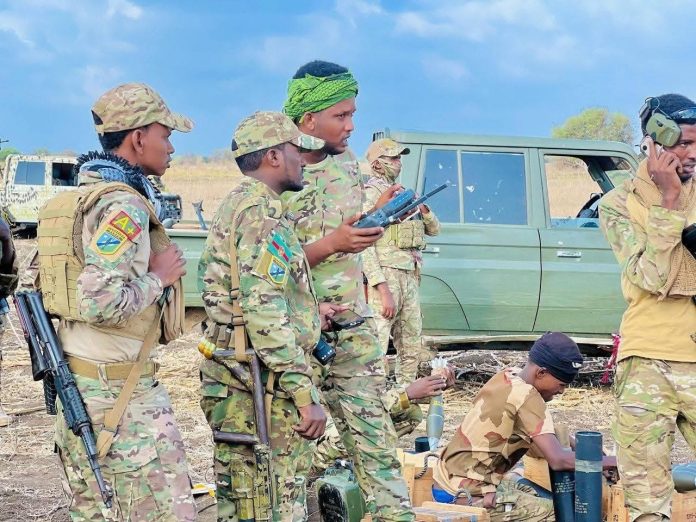
Feb 11(Jowhar)-Sida ay xaqiijinayaan ilo wareedyo amni dagaalkii ka dhacay deegaanka Maanbile (duleedka Jamaame ee dhexmaray ciidanka JL & kooxda Argagixiso) waxay muujinayaan in kooxaha Argagixisada ay adeegsadeen diyaarado drone ah, oo qaar qaraxyo lagu xiray, qaarna sirdoon ahaan loo isticmaalay, balse la soo riday.
Watch: Greenland Olympian Navigates National Pride Amid Political Scrutiny

Two Siblings, One Flag: Greenland’s Biathlon Story on the World Stage
They ski as if the wind itself was keeping time.
On the frozen loops of a Winter Olympic course—where heartbeats sync with the tick of skis and the sudden, breathless calm of the shooting range—Sondre and Ukaleq Slettemark carry something heavier than the rifles on their shoulders: the weight of a place that doesn’t officially exist on the Olympic map.
Greenland, an island of jagged fjords and wind-licked tundra, sends these siblings to the Games under Denmark’s flag. The arrangement is practical and legal—the island is an autonomous territory within the Kingdom of Denmark and has not been recognized by the International Olympic Committee as a separate National Olympic Committee—but it cracks open questions about identity, belonging, and the way small nations are counted in a world that still prizes formal recognition above lived reality.
The pride beneath the Danish colors
“When I step onto the course, I think of home,” one villager told me, wrapping a woollen scarf tighter against the cold. “We are Greenlandic. That flag in the stadium is not the one from our town, but the feeling is still ours.”
Ukaleq has spoken publicly about her pride in representing Greenland even while competing for Denmark. It’s an intimacy of contradiction: the throat-tight thrill of seeing Greenland’s name in conversations, the quiet ache that comes from not being able to march under its own banner.
“I am proud to be from Greenland,” an elder in Nuuk said, sipping coffee in a kitchen that smelled of dried fish and diesel. “We have our songs, our language, our hunting stories. When our children are at the Olympics, we are there too—even if the flag over them is not ours.”
Why Greenland doesn’t have its own Olympic team
Some facts help orient the paradox: Greenland is enormous—about 2.16 million square kilometres, more than twice the size of Texas—but sparsely populated, home to roughly 56,000 people. It has deep, centuries-long Inuit cultural roots and significant self-government: Denmark granted home-rule in 1979 and expanded autonomy in the 2009 Self-Government Act, which transferred many responsibilities to the island’s own authorities.
Yet in international sport, the criteria are strict. The International Olympic Committee recognizes National Olympic Committees from sovereign states, or territories that meet narrow criteria. Greenland has repeatedly sought separate IOC recognition, arguing that athletes should compete under their own flag. The bid has not yet succeeded. For now, Greenlandic athletes who reach the Olympic standard do so under Denmark’s banner.
What competing for Denmark means on the ground
There is gratitude, too. “Without Denmark’s Olympic funding and infrastructure, many of our young athletes would never make it to the world stage,” said a coach who has worked with biathletes in Greenland and Denmark. “It’s complex—support and visibility are crucial, but so is the right to represent one’s homeland.”
That support can mean coaching clinics in Scandinavia, travel grants, and access to competition—the kind of resources that transform a talented island skier into an Olympian. For families in small settlements, seeing one of their own on television is nothing short of electric.
“My nephew cried when he saw Ukaleq on the big screen,” a schoolteacher in Ilulissat said. “He pointed and said, ‘That’s us.’ It was as if our whole town had walked into the stadium.”
When geopolitics crashes the ski track
The story takes another twist when geopolitics enters the frame. In 2019, then-US President Donald Trump publicly suggested purchasing Greenland—a sensational proposal that islanders and Danish officials alike met with bewilderment and, often, amusement or irritation.
“We are not for sale,” Greenland’s premier said at the time. The remark went viral, emblematic of how the island is sometimes reduced to a bargaining chip in global conversation about resources, Arctic strategy, and real estate fantasies.
For athletes like the Slettemarks, those headlines are part of a larger tapestry. “On the one hand, the world mentions Greenland more,” a political analyst said. “On the other, the attention can be shallow—an exotic headline, rather than engagement with the island’s needs and aspirations.”
What the attention brings—and what it doesn’t
International headlines can catalyze interest in Greenlandic culture and climate reality. The Arctic is warming four times faster than the global average, with dramatic impacts on ice, sea levels, and traditional livelihoods. More attention can mean more funding for research, tourism, or cultural exchange.
But sensational proposals like a sale do little to empower the island’s long-term goals of greater international recognition. “We want partnerships,” a member of a Nuuk youth council said, “not auction adverts.”
Biathlon, identity, and the long ski home
Biathlon is a sport of contradictions: sprinting breathlessly through cold air, then finding a stillness so absolute you can hear the rifle’s click. It seems fitting, then, that two siblings from a place of extremes would excel at it.
“Biathlon makes you honest,” the siblings’ coach said. “You can’t hide a bad day. Either your heart is steady at the range, or you pay for it on the track.”
That honesty—of identity, history, and aspiration—plays out in every lap. Fans in Greenland watch via streamed races, gathered in community halls or spilled out onto porches, cheering when a Slettemark laps another competitor. The medal counts and rankings are one thing. The sight of someone from a small island competing on equal terms with athletes from global sporting giants is another.
Why this matters beyond sport
Consider the broader questions: Who gets to be counted on the world stage? Which places are given their own banners, voices, and institutions? As the climate shifts and global attention turns northward for economic and strategic reasons, the need for Greenlandic self-determination and cultural recognition intensifies.
“Sports can open doors,” said a sociologist who studies small nations in global forums. “They provide visibility. But visibility without agency is hollow. Representation—symbolic and institutional—matters.”
What to watch for next
- Greenland’s ongoing diplomatic push for greater international recognition, including in sports forums.
- Potential funding and training pipelines that help young Greenlandic athletes bridge remoteness and elite competition.
- How global interest in the Arctic—driven by climate, resources, and geopolitics—affects local communities’ ability to set their own agendas.
Final glide
When the siblings ski, they leave two kinds of tracks: one in the snow—clear, crisp, the black mark of skis on white—and another in the imagination, where a boy in a fishing village or a girl in a Nuuk school imagines themselves on the world stage.
These marks matter. They remind us that the world is full of places that are more than headlines and that identity can be both stubborn and supple. They invite us to ask: how do we honor the people behind the flags, whatever flag they carry in international arenas? What does it mean to belong, when borders are combinatory and histories are layered?
As Sondre and Ukaleq glide down the final stretch, breath steaming, rifles slung, they aren’t simply competing for medals. They are carrying stories—of ice and home, of autonomy and belonging—that refuse to fit inside a single national label. And in that refusal, there is a kind of endurance that isn’t measured by lap times but by how loudly a small island’s heart can beat on the global stage.
Ciidamadda ICE oo la xaqiijiyay in todobaad gudohiis ay ugaga baxayaan Minnesota
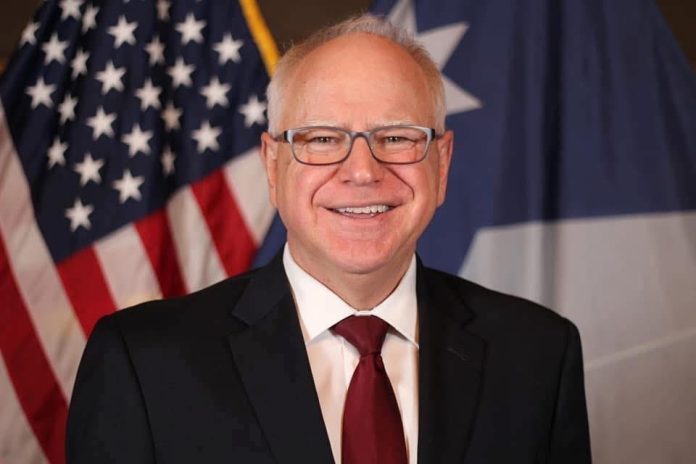
Feb 11(Jowhar)-Tim Walz ayaa shaaciyay in ciidamada ICE ay ka bixi doona gobalka Minnesota sida ugu dhaqsaha badan.
Haweeney toogasho ku dishey 9 ruux dalka Canada

Feb 11(Jowhar)-Ugu yaraan toban qof ayaa ku dhimatay toogasho ka dhacday dugsi sare oo ku yaal galbeedka dalka Canada.
Britney Spears Offloads Rights to Her Music Catalog, U.S. Outlets Say

When a Voice Becomes an Asset: Britney Spears and the New Economics of Pop
There are certain songs that arrive like skylines on the horizon — impossible to miss, instantly recognizable. For millions around the world, Britney Spears’ catalog is one of those skylines: shimmery, kinetic, and stubbornly present in playlists from Tokyo to Timbuktu.
So when reports surfaced that the 44-year-old pop titan has sold the rights to her songwriting catalogue to music publisher Primary Wave, the reaction was immediate and layered: part business headline, part cultural punctuation mark. The Hollywood Reporter first ran the story, and celebrity outlets such as TMZ pegged the deal at roughly $200 million, though public filings don’t lay out every detail. Both Spears and Primary Wave have been approached for comment; for now the sale remains a story told in leaks, lawyers’ filings and industry murmurs.
From Kentwood to Global Airwaves
Think back to the late 1990s: school uniforms, V-neck pop choruses, and a teenager who changed the soundscape of radio with …Baby One More Time. Spears, who grew up in Kentwood, Louisiana, rose from small-town stages to stadiums, leaving behind a trail of songs that defined a generation — Toxic, Oops!… I Did It Again, Gimme More, Womanizer.
“Her music has been the soundtrack of so many moments — first dates, late-night drives, breakups, makeups,” says Janet Rowe, 37, a long-time fan in Los Angeles. “It feels strange, on some level, to hear that those songs can be bought and sold like paintings.”
It’s not just Janet feeling that way. There is an uncanny intimacy in owning the rights to songs that have become part of people’s private histories — lullabies for some, anthems for others.
Why Now?
The sale is the latest in a broader trend: over the last decade, music rights have become hot real estate. Private equity funds, legacy publishers and companies such as Primary Wave have been competing to buy songwriting catalogs — not simply for nostalgia, but because they generate steady, long-tail income through streaming, licensing for film and TV, commercials, and international plays.
“What’s happening is a convergence of capital seeking predictable cash flow and artists seeking liquidity,” explains Miguel Alvarez, a New York-based music executive who has advised both publishers and artists. “The math on streaming changes how you value a catalog. A song that used to make money on radio spins now earns micro-payments across a thousand platforms worldwide — but those micro-payments add up over time.”
Indeed, in the streaming era, a catalog’s value often lies in its global footprint: millions of daily streams translate into revenue that—when discounted properly—can be sold upfront to investors looking for long-term returns. For artists, that lump-sum can be life-changing: financial security, estate planning, tax strategy, or simply an exit from the constant administration of rights.
What “Selling Your Songs” Actually Means
- Publishing vs. Masters: The deal reportedly covers publishing rights — the songwriting side — not necessarily the master recordings (the finished tracks). Publishing controls licensing for covers, placements in TV and film, and mechanical royalties.
- Immediate Cash vs. Ongoing Royalty: An upfront payment trades future income for present liquidity. Artists get a large sum now; buyers take on the risk and reward of future revenues.
- Control and Legacy: Depending on contract terms, some songwriters retain creative control or approval rights; others cede broad authority to the new owner.
“It’s not a one-size-fits-all arrangement,” notes Dr. Asha Patel, a Los Angeles-based music rights lawyer. “Contracts can include reversion clauses, performance stipulations or consent requirements for certain uses. The devil is always in those clauses.”
More Than Money: A Cultural Question
There’s also an emotional currency at play. Spears’ public life — meteoric rise, gruelling scrutiny, years under a conservatorship and an eventual legal and cultural reclaiming — has made her songs feel more than commercial products. They are vessels of memory and resilience.
“When I hear Toxic, I don’t just hear a killer hook; I remember the moment I first danced to it in my bedroom at 14,” says Keisha Martin, a university student in London. “Knowing those songs have a price tag is weird — but also practical. Artists deserve to be compensated.”
Even within Kentwood, conversations about the sale are tinged with pride. “She put us on the map,” says John Broussard, 62, who runs a small diner near Spears’ childhood home. “Whether she sells the rights or not, the girl from our town still sings from everyone’s playlists.”
Where Does This Leave the Industry?
The market for catalogs has shifted the music industry’s landscape. In one corner you have legacy acts and contemporary stars monetizing decades of work; in another, investors are treating royalties like bonds. The result: more capital, more licensing, and sometimes, more exposure for songs that might otherwise sit in archives.
But there are tradeoffs. When songs change hands, decisions about licensing for advertisements or political campaigns can become thorny. Some artists worry about losing moral or artistic control.
“Once you sell the rights, someone else can decide whether your song scores a Netflix drama or backs a commercial for a product you don’t endorse,” says Alvarez. “That’s why some artists negotiate stipulations. Others prioritize the financial win.”
What Should Listeners Think About?
Here’s a question to sit with: do we view songs as eternal parts of culture — immune to balance sheets — or as intellectual property, with market value like any other asset? There isn’t a single right answer. For fans, the music endures regardless of ownership. For artists and their families, financial security can be priceless.
“This is a new chapter for music as both art and asset,” notes Dr. Patel. “The key is transparency and ensuring creators are not coerced into deals when they don’t know their full worth.”
Closing Notes: The Long Tail
Whatever the final reported figure — the number that will likely headline stories for days — the more interesting story is how we continue to live alongside songs that have been traded, licensed and reimagined. Spears’ music has threaded through film, fashion, clubs and bedrooms for nearly three decades. The rights may now rest with a publisher on a balance sheet, but the emotional ownership lives in millions of playlists.
As you put on a playlist tonight, ask yourself: who owns the song playing, and what would that ownership mean if it were suddenly for sale? And for artists standing at similar crossroads, what would you value — the immediate lifeline of cash, or the slow burn of royalties and control?
For now, pop’s perma-earworm lives on. The chorus still lands. The dance still pulses. And somewhere, an executive is calculating the future value of your next sing-along.
Irish national detained by ICE in US says he fears for his life

Taken at Dusk: One Irishman, a Van and a Journey 2,500 Miles From Home
When the sun was low over Boston last September, Seamus Culleton left a Home Depot car park with a few items in the back of his work van and a mind full of ordinary plans: finish the shift, go home to his wife, maybe put the kettle on. He did not know that, within minutes, his life would be hurled into a maze of handcuffs, fluorescent lights and canvas tents more than 2,400 miles (roughly 4,000 km) away.
“One minute I was listening to the radio, the next I’m surrounded,” Seamus told me in a phone call that crackled with static and restraint. “They told me to roll down the window. I did. I said I had a pending Green Card, that I was married to a citizen, that I had a work permit. It didn’t matter.”
From Boston to the Border: The Hard Geography of Detention
He was picked up on a routine errand and, by the end of a chaotic day, marched through processing in Massachusetts and shipped to a detention complex in El Paso, Texas. The transfer — a pattern repeated across the United States as Immigration and Customs Enforcement (ICE) moves detainees long distances — left Seamus’s family reeling and revealed an unsettling tableau: adults who had put down roots, paid taxes, and raised hopes suddenly reduced to numbers on a manifest.
“He called me and said, ‘Tiff, I’ve been taken by ICE,’” said his wife, Tiffany Smyth, who still lives in the couple’s rented home outside Boston. “It was less than a minute on the phone. That’s all. Then silence. For a week I didn’t know if he’d been deported or if he was even alive.”
Life Inside the Tents
Seamus describes a place that bears little resemblance to the homes and workplaces he knew: rows of large, temporary tents, hard floors, metal bunks, the constant hum of fluorescent lights. “We’re crammed in. It’s noisy, there’s no real sunlight, the showers are awful, and you start counting the hours you get outside like you count days in a storm,” he said. “The food is tiny. I haven’t felt fresh air in months.”
El Paso and other border cities have seen an uptick in the use of so-called soft-sided or ‘tent’ facilities to house rising numbers of migrants and detainees. Oversight groups and local advocates have repeatedly flagged concerns about crowded conditions, limited access to legal counsel, and mental health impacts. A recent review by human rights organizations found that prolonged detention in austere settings can exacerbate trauma, especially for people who, like Seamus, are awaiting immigration determinations.
Numbers and Context
ICE’s detention footprint has changed over the years, shrinking and swelling with policy shifts and legal rulings. Still, thousands remain in the system at any given time. Advocates point out that transfers like Seamus’s — moving people far from family, lawyers and communities of record — complicate legal defense and strip detainees of the informal supports that often make the difference in long cases.
Family in Limbo
Back in County Kilkenny, Ireland, Seamus’s mother and siblings have been living on a diet of fear and unanswered questions. “My mother cries every day,” said his sister, Caroline, voice tight with the quiet fury of a sibling watching helplessly. “This was supposed to be the next chapter — a home, a family. Instead, it has been put on hold.”
Tiffany describes the logistical guerrilla warfare of trying to stay connected: tracking online portals to find where he’s been moved, booking flights for court dates only to have hearings shifted at the last minute, losing money on hotels and tickets. “I saved for months for that flight,” she said. “To get there and find the court date moved the day before — that was its own kind of cruelty.”
Voices Calling for Action
The story has rippled back across the Atlantic, where Irish politicians and diaspora groups have begun to press for clarity. “This case should trouble anyone who believes governments have an obligation to care for their citizens abroad,” said a local parliamentarian from Kilkenny. “We need answers and swift action.”
Another lawmaker, speaking on the condition of anonymity to convey the urgency from the constituency office, told me they had contacted the Department of Foreign Affairs and were urging Dublin to make direct representations to Washington on humanitarian grounds.
Legal and Human Rights Perspectives
“Long-distance transfers into hard-sided or tented detention without adequate notice undermine procedural fairness,” said an immigration attorney based in Boston. “Access to counsel is limited, and families struggle to participate in hearings when they’re hundreds or thousands of miles away.”
Human rights advocates stress that detained people — regardless of status — retain basic rights: access to sanitary conditions, meaningful medical care, and a reliable path to legal representation. “When detention conditions are described as filthy or unsafe, those are red flags,” said an independent monitor who has visited multiple facilities along the US-Mexico border. “We’re seeing patterns of prolonged confinement in environments not designed for long-term human habitation.”
What Can Be Done — And What This Means Globally
This is not merely a story about one man from Glenmore. It is a lens into global migration realities — how frontline enforcement policies can upend ordinary lives, how families are scattered by administrative decisions, and how communities are stretched between homeland kin and adopted neighborhoods.
What would you do if someone you loved was taken on the way home from work? How far would you go to be present at a hearing? And how should governments balance immigration enforcement with compassion and due process?
- Contact your representatives: Constituents can urge their elected officials to seek consular access and transparency in detention transfers.
- Support legal aid organizations: Groups assisting detainees often operate with thin budgets but provide crucial defense and advocacy.
- Ask for oversight: Independent inspections of detention facilities and timely reporting help prevent abuses and improve conditions.
Closing: A Human Life in the Balance
Seamus, who had been building a life for nearly two decades in the United States, says he dreams simply of walking back into his kitchen, putting on the kettle and hearing the familiar thump of his wife moving about the house. “I just want back what I had,” he said, voice small but steady. “I want to be a husband and father. I want a normal life again.”
Whether the machinery of diplomacy and law will answer that plea soon remains to be seen. In the meantime, his story forces us to confront an uncomfortable truth: behind every policy debate are human beings — neighbors, co-workers, mothers, sons — whose lives can pivot on a single, bewildering moment.
Inside the Crisis at Somalia’s Human Rights Commission
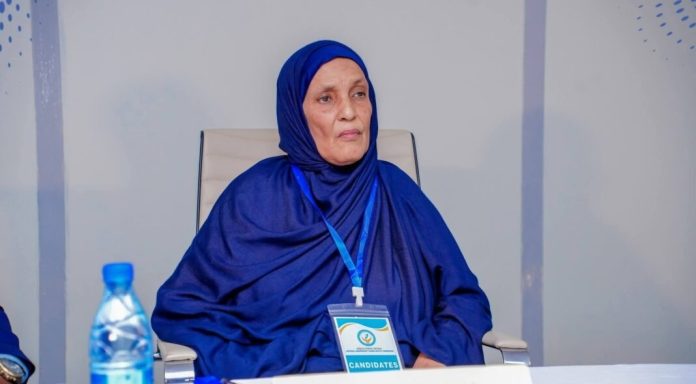
How Internal Division and Controversial Leadership Have Shaken a Constitutional Institution
Investigative Reporter
Rubio heads to Hungary after Trump endorses ally Viktor Orbán
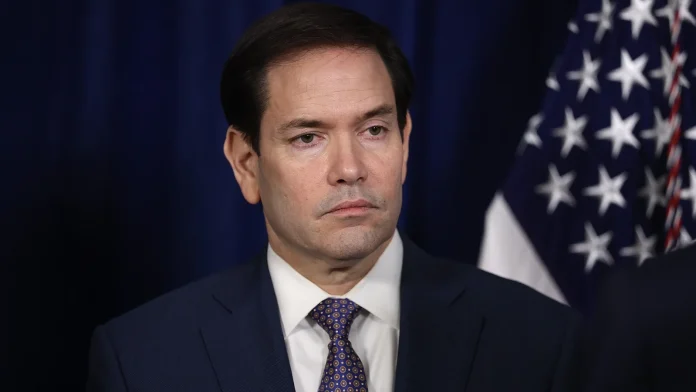
A Washington envoy, a wounded alliance, and the smell of chimney smoke in Budapest
There is a particular winter air in Budapest that carries a hundred histories: chimneys breathing soot over the Danube, tram bells clattering, the metallic echo of politics ricocheting off the facades of a city that has long learned to live in the shadow of great powers.
Next week, that air will feel even more charged. According to the State Department, US Secretary of State Marco Rubio will travel to Hungary and Slovakia after attending the Munich Security Conference. It is a short diplomatic circuit with long echoes — a visit broadcast not just as routine statecraft, but as a signpost in a fraught transatlantic moment. President Donald Trump has openly endorsed Hungary’s prime minister, Viktor Orbán, calling him “a true friend, fighter, and WINNER.” That endorsement landed like a pebble in a still pond, sending concentric waves across capitals and kitchen tables alike.
On the ground in Hungary: intimacy and unease
Walk through the neighborhoods of Budapest and you will meet people whose responses to these developments resist neat categorization. In the VII district, a cafe owner named Gábor Nagy pours espresso with the practiced ease of someone who has heard every political pitch and seen most of them change. He shrugged when asked about Mr. Rubio’s impending visit.
“We drink coffee, we look at the news,” Gábor said. “Some people are happy when a strong friend comes. Others are worried. There is fatigue here — not just political fatigue, but a fatigue about being watched and judged by capitals far away.”
Gábor’s words capture the strange intimacy of Hungary’s moment: a country of roughly 9.6 million people, led for more than a decade by Orbán, who has become an emblem of Europe’s rightward drift. Orbán’s government has courted a politics of cultural defense — closing borders during the Syrian refugee crisis, promoting conservative family policies, and tightening control over media and public institutions. To some Hungarians, those moves feel like protection. To others, they read as the slow accretion of authoritarian habits.
Diplomacy where energy and security meet
The State Department says Rubio’s agenda will include bolstering bilateral and regional interests, a renewed focus on energy partnerships, and support for peace processes. In Slovakia, he will discuss nuclear energy cooperation, military modernization, and NATO commitments. Those are tidy diplomatic bullet points; beneath them lies a web of tangible anxieties.
Energy, more than any other single issue in recent years, has remade Europe’s strategic map. When the White House granted Hungary an exemption from US sanctions on Russian oil and gas imports last year, it underscored how energy dependencies can be leveraged into geopolitical leeway. Hungary imports a substantial share of its natural gas and relies on long-standing pipelines that run eastward. For policymakers in Washington and Brussels, that matters. For families heating their homes in a hard winter, it is existential.
Numbers that matter
- Hungary’s population: ~9.6 million.
- Orbán’s premiership: in power since 2010 and now seeking another term.
- Energy dependency: Central Europe’s reliance on Russian gas has been central to post-2014 security debates across the EU and NATO.
“Energy is not an abstract commodity here,” said Dr. Elena Voros, a Budapest-based analyst who studies Central European geopolitics. “It’s heat in the winter. It’s a factory that keeps running. When diplomats talk about energy diversification, that translates on the ground into pipelines, contracts, and sometimes political favors. That’s why these meetings matter.”
Collision of personalities and political markets
Donald Trump’s endorsement of Orbán — a leader who has nurtured warm ties with Vladimir Putin and resisted some EU initiatives in support of Ukraine — has heightened sensitivities across Europe. Orbán’s proposed fifth consecutive term, with elections set for April 12, faces an unusually robust challenge from Peter Magyar, a former insider turned critic. Polls have suggested the race may be tighter than in past cycles.
“This is not simply about personalities, although personalities color everything,” said Marta Kovács, a math teacher in Debrecen who volunteers on a local election campaign. “It’s about what kind of Hungary people want: closed and protected, or open and messy?”
There is also the wider theatricality of transatlantic politics at play. Last year, Vice President JD Vance delivered a blistering critique of the European Union at Munich; this year, Rubio — often viewed domestically as a more tempered face of Trump-aligned diplomacy — will step into that spotlight. The optics send messages: to Hungary, to Slovakia, to the EU, and to Russia.
Slovakia: echoes and dissonances
In Bratislava, Prime Minister Robert Fico has also found points of sympathy with Trump-era rhetoric. But controversy followed Fico’s reported Florida visit after Politico cited anonymous diplomats saying he had voiced concern about the US president’s mental fitness. Slovakia publicly denied the account, and the episode revealed how quickly a single report can ricochet through diplomatic circles.
Rubio’s meetings in Slovakia are slated to touch on nuclear energy cooperation — a salient issue for Bratislava, which relies on the Mochovce nuclear power plant for a large share of its electricity — as well as military modernization and NATO obligations. For a country that shares a border with Ukraine and has a population of around 5.4 million, those are not academic concerns.
Why this visit matters beyond map lines
Ask yourself: what is the purpose of diplomacy in a time when alliances seem transactional and public trust in institutions is frayed? Is it to calm, to cajole, to prod, or to shore up interests before they calcify into irreconcilable positions?
Rubio’s trip is all of those things. It is a reassurance to allies who worry about the coherence of US policy; it is a bid to keep Hungary and Slovakia anchored to NATO and transatlantic security projects; and it is a reminder that energy and security remain entwined. But it is also a political gesture, audible in the tremor of endorsements and the silence of things unsaid.
“Diplomacy now feels like defusing a chain of small fires,” said Dr. Voros. “Each meeting can prevent a spark from leaping to the next pile of tinder.”
Local voices and the global conversation
Back at the market in Budapest, vendors sell cabbage and kolbász as they always have. An elderly woman, Erzsébet, wrapped in a heavy coat, looked at the newspaper and offered a brittle, wry smile.
“We watch the news like weather,” she said. “We decide whether to carry an umbrella.”
Her metaphor is apt: diplomacy predicts storms and sometimes moves to shelter people. But umbrellas only do so much. The deeper question — the one that ripples out from the cafes of Budapest to the halls of Munich and the corridors of Washington — is whether alliances can reinvent themselves for a world where energy security, populist politics, and shifting loyalties redraw maps faster than institutions can adapt.
When Rubio sits across from ministers in ornate government chambers, he will find polished protocol and raw politics intertwined. Will those meetings push toward practical cooperation — on energy diversification, on NATO modernization, on conflict resolution — or will they simply become another line in a longer narrative of mistrust? The answer will matter not just for diplomats and politicians, but for the families heating their homes, the teachers and shopkeepers, and the cafe owner who just wants consistent customers and less political noise.
So watch the skies. And ask yourself: in the new architecture of 21st-century alliances, who gets to hold the umbrella?
U.S. strike on suspected drug vessel in Pacific leaves two dead

After the Flash: A Morning That Smells of Salt and Questions
The Pacific dawn can be cruel and discreet. One moment the horizon is a smear of pearly light and bobbing fishing boats, the next it is punctured by smoke and silence. That’s what survivors say happened after the latest U.S. strike on a vessel accused of smuggling drugs—an attack that Washington says left two people dead and one clinging to life.
“We heard a boom like a thunderclap at sea and then a smell of burning rubber and diesel,” recalled a fisherman who said he had been three miles away on a small panga when the blast happened. “When we rowed closer, there were pieces of the hull. People were shouting. The ocean was full of oil.”
The U.S. Southern Command, speaking through social channels, described the incident in lean, militarized language: two “narco-terrorists” killed, one survivor rescued—or at least, a survivor whose rescuers were being activated by the Coast Guard. But elsewhere in the Caribbean and along Pacific coasts, the wording matters less than the bodies and the questions that follow: Who was on that boat? What rules justified firing on it in international waters? And how did a strike that began as an anti-narcotics operation become something resembling a low-level, cross-border war?
The Campaign by the Numbers
Since early September, U.S. forces have stepped up a campaign targeting boats they say are moving drugs across the Caribbean and into the Pacific. The strikes have multiplied quickly—38 separate attacks so far, according to U.S. counts, with at least 130 people killed.
Those figures, blunt and unsettling, have become the arithmetic of a new kind of maritime interdiction. They’re also the raw data propelling courtroom arguments: families in the Caribbean have already filed wrongful-death suits against the U.S. government after one October strike that relatives say killed two Trinidadian men.
What Washington Says and What Others See
U.S. officials frame these operations as a part of a broad campaign against criminal networks they label “narco-terrorists.” A senior defense analyst I spoke with—formerly with a U.S. maritime interdiction unit—said bluntly, “From their perspective, these vessels are part of a conveyer belt for drugs that fund violence and instability.”
But evidence presented in public has been thin, and critics accuse the administration of stretching the concept of national defense to justify extraterritorial strikes. “There’s a legal line between self-defense and unlawful use of force,” said a human rights lawyer in Washington who asked to remain off the record. “If you can’t demonstrate an imminent threat, you need a clear legal basis to fire on a vessel mid-ocean.”
Complicating the narrative: U.S. officials have linked this wave of strikes to broader pressure campaigns involving Venezuela, a claim hotly disputed by Caracas and many of its regional allies. Whatever the geopolitical backstory, the result is the same for families and coastal communities—fear, grief, and a demand for answers.
Voices from the Water
In port towns from Trinidad to small Pacific fishing communities, the mood is raw. At a seaside cafe in Port of Spain, a woman wiping a child’s hair said she’d heard the news on the radio and been struck by a single thought. “Do I tell my husband not to go out tomorrow? Are we all targets now because we cross paths with traffickers on the sea?” she asked. “We are small; we make our living from those waters. We don’t want to die for someone else’s war.”
A retired Coast Guard chief who spent decades patrolling the Caribbean told me, “There’s an art to interdiction. You close, board, inspect. You don’t blow up a phantom. If adaptive criminals are using the ocean, authorities must adapt—and lawfulness should not be the casualty.”
On the legal front, the relatives of two men from Trinidad who died in a mid-October strike have filed suit in U.S. courts alleging wrongful death. “We want a day in court,” said one plaintiff’s sister. “We want to know why they thought these men were enemies instead of neighbors.”
Local Color, Global Ripples
To understand the human texture of these strikes, listen to the language of the ports. In many coastal Caribbean communities, the sea is not simply a means of smuggling or commerce—it’s a calendar of festivals, fish, prayers, and migration. Boats bear names like Esperanza and La Vela; fishermen flash steel-blue shirts from the bow, and the markets hum with reggae, parang, and Spanish ballads. A strike in these waters reverberates through rhythms and recipes as much as it does through headlines.
“My cousin was on a boat like any other,” said a cousin of one of the men killed, speaking at a small memorial. “He loved his mother’s callaloo. He was not a headline.”
What This Means Beyond the Waves
There are broader questions here about the intersection of counter-narcotics and counterinsurgency, about the expansion of military tools into realms traditionally regulated by law enforcement. The international community watches nervously. Maritime law scholars note that actions on the high seas implicate longstanding principles of sovereignty and the right to life; states that act unilaterally in far-flung waters risk setting precedents others may follow.
Drug trafficking is a global problem: coca cultivation in parts of South America, demand in North America and Europe, and the complex networks that link producers, brokers, and consumers. The United Nations Office on Drugs and Crime reports that while some interdiction efforts produce seizures, the global market persists and adapts. That adaptability is part of the rationale given by U.S. officials for striking at sea—but adaptability is also what civics and law must temper: how do democracies confront crime without surrendering legal norms?
- At least 38 strikes have been reported in recent months.
- U.S. statements put the death toll at 130.
- Families of victims have begun legal action in U.S. courts.
Questions That Won’t Fade with the Tide
What happens next will tell us a lot about where international norms are headed. Will governments build cooperative, transparent interdiction regimes with clear accountability? Or will oceans become a grey zone where powerful states act on suspicion and communities pay the cost?
For now, the waters are restless and the questions pile up like driftwood on a shore. When a government signs an order to strike, someone is left to sift the debris. When a family wins a court case, a little clarity may come. Until then, those who live by the sea are asking simple, human things: Who will tell the truth? Who will care for the ocean’s dead? And how will we keep the law alive on waters that belong to everyone?
What would you demand if a loved one disappeared on the sea? How should states balance the urgency of stopping illicit trafficking with the obligations of law and human dignity? These are not academic curiosities—they are the questions that families, lawyers, and sailors are bringing ashore every morning.
Mudanayaasha labada aqal ee Baarlamaanka oo maanta ka dooday Cutubka 5aad ee Dastuurka dalka
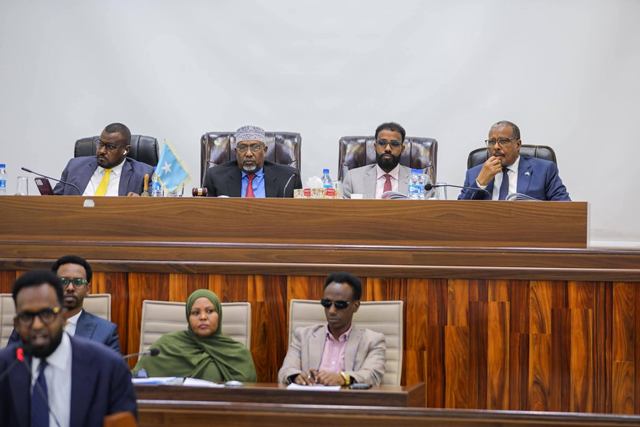
Feb 10(Jowhar)-Mudanayaasha labada aqal ee Baarlamaanka Jamhuuriyadda Federaalka Soomaaliya ayaa maanta kulan wadajir ah ku yeeshay xarunta Golaha Shacabka, waxaana shir guddoominayey Guddoomiyaha Golaha Shacabka ee Baarlamaanka Dalka Mudane Sheekh Aadan Maxamed Nuur (Madoobe).
Hamas Says Gaza Offensive Is a “Blatant” Breach of Ceasefire Deal
Hamas has accused Israeli Prime Minister Benjamin Netanyahu of tearing up the October 2025 ceasefire, after he instructed the military to expand its territorial...

German government dismisses Merz ouster rumors as mere speculation
Berlin is being gripped by fresh political intrigue after rumours swirled that rivals of Chancellor Friedrich Merz were quietly preparing to push him aside...
Bondi declines to respond to Trump-related questions in Epstein investigation
Pressed by lawmakers over the Justice Department’s handling of the Jeffrey Epstein files, former US Attorney General Pam Bondi declined behind closed doors to...

Watch Blue Origin Rocket Erupt in Explosion on the Launch Pad
A towering New Glenn rocket from Jeff Bezos-owned Blue Origin erupted into flames during a test on the launch pad at Cape Canaveral, Florida,...

EU Slaps Temu With €200M Fine for Selling Illegal Products
A sweeping enforcement move under the EU’s landmark online rules has landed Chinese-owned retailer Temu with a €200 million fine after investigators found illegal...