Home Blog Page 26

Hungarian Prime Minister Péter Magyar Visits Poland to Repair Bilateral Relations

Hungary's PM Péter Magyar in Poland to reset ties
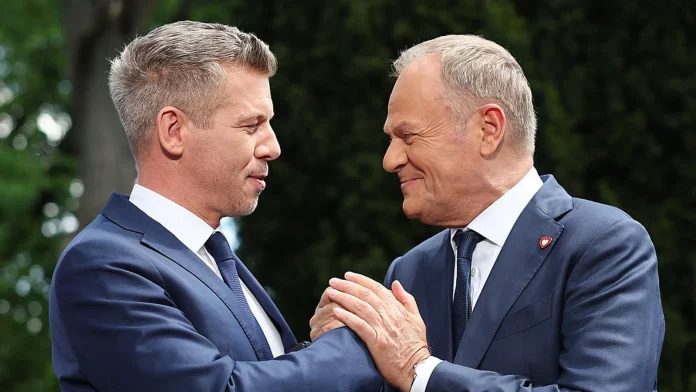
Hungarian Prime Minister Péter Magyar (L) and Polish Prime Minister Donald Tusk held a joint press conference in Warsaw

Across the Vistula: A New Chapter Between Warsaw and Budapest

He arrived in Warsaw not as a triumphant outsider but as a man carrying the fresh ink of an election victory and a folder full of reconciliatory appointments. Péter Magyar, Hungary’s new prime minister, spent his first official foreign trip this month walking the corridors of European possibility with Poland’s Donald Tusk — a meeting that felt less like routine diplomacy and more like the sound of a long-closed door being nudged open.

For nearly two hours the two leaders spoke behind the cameras, and longer still in the quiet of intergovernmental rooms where energy maps, rail corridors and the fate of minority language rights lay spread across conference tables. Then they stepped out into the light and spoke plainly: this is a reset.

Why Warsaw?

To understand the symbolism, you must know what came before. Viktor Orbán’s 16-year run altered the tone, and sometimes the texture, of Budapest’s relations with its neighbors and with Brussels. In the final years of his tenure Hungary’s asylum to a former Polish justice minister and his deputy — wanted in Poland on accusations of misappropriating public funds — deepened a chill with Warsaw.

Magyar’s Tisza party swept April’s election and turned the page. In Warsaw, the chemistry was immediate. “We want to be partners again, not rivals,” Magyar told reporters, his voice a mixture of pragmatism and purpose. “Central Europe is too small and too important to stay divided when the challenges ahead — energy, security, migration — are so large.”

Meetings that Mapped a New Agenda

The two-day agenda read like a checklist for rebuilding ties: economic cooperation, defence coordination, infrastructure projects, and a vow to find common ground on Ukraine’s European future.

“If we align on energy and transport, we unlock more than pipelines and railways — we restore trust,” Donald Tusk said beside Magyar at a morning press briefing. “Poland and Hungary can be a force for convergence inside the EU, not fragmentation.”

Accompanying Magyar were key ministers — defence, economy, energy, transport — and Hungary’s new foreign minister, Anita Orbán (no relation to the former prime minister), each set to negotiate intergovernmental accords with their Polish counterparts. The Hungarian delegation also visited Kraków and planned to close the trip in Gdańsk, meeting figures who trace the arc of Poland’s modern democratic history.

Local color: Kraków and Gdańsk

In Kraków’s narrow lanes, the prime minister’s brief evening with Cardinal Grzegorz Ryś felt like a civilizational nod — a handshake between spiritual guardians and political stewards. A stallholder near the market square, Maria, who has sold pierogi for 22 years, watched the motorcade and joked, “If they fix the trains, I’ll finally go visit my sister in Debrecen. That’s the real diplomacy.”

Gdańsk, a port that still hums with the memory of Solidarity and Lech Wałęsa’s long shadow, will host the final act of this visit — an encounter between Magyar and Wałęsa. “We are returning to conversations about what binds us,” said Piotr Nowak, a retired shipyard worker who remembers strike lines and radio broadcasts. “Not just what divides.”

Energy: The ‘Lowest Hanging Fruit’

Energy cooperation emerged as the most immediate, tangible outcome on offer. Poland is preparing a new LNG import terminal in Gdańsk, set to begin operations in 2028, and Warsaw has reportedly offered Hungary access to those supplies — a runway for Budapest’s pledge to end Russian energy dependency by 2035.

“It’s realistic and practical,” said Wojciech Przybylski, editor-in-chief of Visegrad Insight. “Energy is the lowest hanging fruit: Poland can provide supply and network access; Hungary needs alternatives. This is where you get early wins, build trust, and then tackle harder political issues.”

To put the stakes in context, Hungary imports a significant share of its gas and oil from Russia — a vulnerability Magyar’s government has pledged to eliminate. The timeline is ambitious. But with pipeline interconnectors, LNG access and cross-border grids, Warsaw and Budapest can at least aim for momentum.

Money, Rule of Law, and the EU’s Leverage

Politics in Brussels is rarely far from money; it’s often all about it. Hungary is seeking the release of roughly €18 billion in EU funds that were frozen during the previous government’s disputes with Brussels over rule-of-law concerns. Magyar’s campaign promised to unlock those funds, and his counterpart in Poland has recent experience: Tusk’s government successfully unblocked cohesion money after taking office in December 2023.

“When financing flows, projects start,” said Anna Kowalska, a political scientist at the University of Warsaw. “Roads get paved, hospitals get updated. That creates constituencies for cooperation.”

But the releases are conditional. Brussels has made clear that respect for judicial independence, public procurement standards and anti-corruption frameworks are not optional. For Hungary, navigating those demands while satisfying domestic constituencies will be a delicate balancing act.

Ukraine: Language Rights and Accession Hurdles

Perhaps the thorniest subject was Ukraine’s long-term place in the European family. Under the previous government, Budapest’s opposition to Ukraine’s EU ambitions hinged on cultural protections: in particular, the language rights of the Hungarian minority in western Ukraine.

Magyar and Tusk discussed ways to safeguard those protections. “If Ukraine guarantees linguistic and cultural rights, Budapest is far more open to supporting accession steps,” Magyar said. Yet the Tisza party has pledged a referendum on any final decision — a powerful domestic lever that could complicate swift EU-level alignment.

It’s a reminder: geopolitics is not only about maps and gas pipelines. It’s also about schools where children are taught, street signs in two languages, and the everyday practices that anchor communities. “Nationhood is lived in classrooms,” said Dr. Elena Baranyi, an expert on minority rights. “Ask yourself: what does being Hungarian mean to someone growing up on the other side of the border?”

From Bilateral Talks to a Regional Revival

Magyar invited the leaders of the Visegrad Group — Poland, Hungary, Czechia and Slovakia — to meet in Budapest next month. The alliance’s momentum had stalled as Warsaw and Budapest drifted; a renewed Visegrad coalition could regain influence in EU policymaking if it speaks with one voice on cohesion, infrastructure and security.

“Both capitals sit under the same umbrella,” Przybylski told me. “That makes it easier to coordinate and exert larger influence.”

What Does This Mean for the World?

At surface level, this visit is about trade corridors and gas terminals. But at a deeper level it is about the direction of Europe: will it knit together regionally to meet global challenges, or will individual countries retreat into transactional, short-term calculations? The answer matters not just to Central Europeans but to anyone watching how democracies reconcile domestic politics with shared European responsibilities.

So here’s a question to you, reader: do you think regional alliances like Visegrad can stabilize the European project, or do they risk creating blocs within blocs? Does the promise of quick wins — energy supplies, unlocked funds — outweigh the slow, sometimes painful work of restoring rule of law and trust?

Closing Scene

At the end of the second day, walking the quay in Gdańsk as gulls cried over the Baltic, a veteran dockworker I spoke with shrugged, shrugged and said, “We’re all tired of being told Europe is about Brussels. Sometimes we need neighbours next door to help fix the roof.”

Magyar’s visit didn’t fix everything — it couldn’t. But it set a tempo: practical initiatives, hard conversations about minority rights, and a promise to sit down again. If the next steps match the language of this trip, Central Europe could find itself a little more connected, its maps redrawn not by tension but by cooperation. And if you believe in the small, human acts of diplomacy—meeting, listening, agreeing to try—then this was a visit worth watching.
U.S. Ebola patient evacuated from DR Congo to Germany for treatment

US Ebola patient from DR Congo in Germany for treatment
WHO declared the outbreak in DR Congo an international health emergency

The Long Flight Home: An Ebola Patient, a Berlin Isolation Ward, and the Uneasy Global Chain of Care

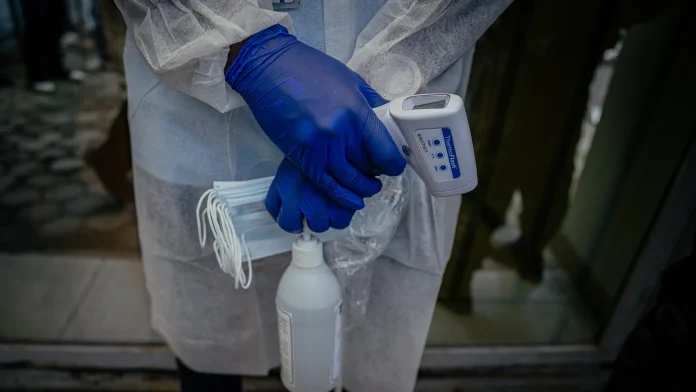
He stepped down from the plane like a figure out of someone’s worst dream — wrapped in white protective gear, a mask obscuring his face, moving with the careful deliberation of a man who has lived with risk for a long time. An ambulance engine hummed nearby. A small convoy of vehicles watched in tight formation as medics in full PPE guided him toward Charité hospital’s special isolation unit in Berlin.

The man was named by his mission organization as Dr. Peter Stafford, an American physician who has been working among Congolese patients in the eastern Democratic Republic of Congo (DRC). He arrived in Germany overnight after U.S. authorities requested Berlin’s help. For many around him, the evacuation was at once a relief and a flashpoint — a vivid illustration of everything that is both compassionate and messy about global health in an unequal world.

Who is Dr. Stafford — and why does his journey matter?

Dr. Stafford and his wife Rebekah, also a physician, have lived in the DRC for years, according to Serge, the Christian missionary organization that operates in the region. They worked at Nyankunde hospital, a modest but vital facility that cares for a wide swath of the local population — men who come in with machete wounds, mothers bringing newborns, elderly patients with chronic illnesses, and increasingly, those with hemorrhagic fevers.

“We are a small patch in a very big tapestry,” said Samuel Mukendi, a nurse at Nyankunde who worked alongside Dr. Stafford. “Peter would joke, make us laugh at the end of a long shift. He also stayed late when the beds were full. When the outbreak started, we were all scared. But we still went to work.”

According to U.S. health officials, Dr. Stafford tested positive for Ebola after exposure related to his medical work. German authorities confirmed his admission to the Charité isolation unit but declined to discuss his condition publicly. Reporters at the airport described the arrival: a physician helped into the ambulance by staff in hazmat suits, a silent convoy that felt like something out of a political thriller rather than a routine medical transfer.

The outbreak and the numbers behind the headlines

The World Health Organization has characterized the Ebola flare-up in the DRC as an international health emergency. At the time of the transfer, the outbreak had claimed almost 140 lives and produced roughly 600 suspected cases. The WHO assesses the risk from the outbreak as high within the country and across the region, but — crucially — low at the global level. An emergency committee chair emphasized that, while grave, the situation did not meet the threshold for a pandemic.

Ebola is unforgiving: it can incubate anywhere between 2 and 21 days, and case fatality rates vary widely depending on the strain, the speed of diagnosis, and access to treatment. In recent years, scientific advances — including monoclonal antibody therapies and the rVSV-ZEBOV vaccine — have changed outcomes for many patients when administered quickly. Yet these medical advances are not evenly distributed.

“We have more tools now than ever before,” said Dr. Miriam Kalu, an infectious disease specialist based in Geneva. “But a tool is only useful if it reaches the person who needs it at the right time. That is where global inequality and political instability become life-or-death factors.”

Why evacuations stir strong feelings

When a foreign national — particularly a Western aid worker — is flown out of an outbreak zone for high-level care in Europe or North America, it draws attention. For some, the move is a humane response to a sick person’s needs. For others, it is a glaring reminder of a two-tiered system in which expatriates can access the best hospitals while local patients continue to be treated in under-resourced facilities.

“I understand why my brother was brought here,” said Emmanuel, a community leader in Nyankunde. “But it makes us ask: why can’t our hospitals get the same attention? We bury our own. We still need more protective gear, more staff, more training.”

Those tensions play out in real time across eastern DRC, where conflict, displacement, and fragile infrastructure compound the challenge of containing contagious diseases. Outreach teams sometimes struggle to enter communities, and vaccine acceptance can be eroded by mistrust — a long-term consequence of instability and misinformation.

Charité’s role and the choreography of modern medicine

Charité, one of Europe’s most renowned hospitals, has a specialized isolation unit designed to care for highly infectious patients. German health officials say the unit can provide advanced supportive care, intensive monitoring, and tight infection control measures. A hospital spokesperson — who asked to be unnamed due to patient confidentiality — said, “Our mission is simple: to provide the best possible care while protecting the health of our staff and the wider public.”

Moving a patient from the frontlines of an outbreak to a distant specialty center is logistically complex. It involves coordination among the sending country’s health services, the evacuating nation’s diplomatic and transport apparatus, the receiving hospital, and international agencies such as the CDC and WHO. In this case, the United States requested Germany’s assistance; Dr. Stafford arrived alongside several close contacts, possibly family members, who had not shown symptoms.

“Evacuations are an act of triage and diplomacy,” said Dr. Lars Engel, an emergency medicine physician who has worked in infectious disease transport. “They require balancing individual care with public health considerations, and doing both well is not easy.”

Bigger questions: equity, preparedness, and solidarity

Stories like this force a difficult conversation: who receives the most advanced care in moments of crisis, and how do we build systems that don’t force painful choices between neighbors in different zip codes or different countries? The moral calculus is acute when an outbreak erupts in places that have long been marginalised by global funding streams.

Investments in local health systems — from training community health workers to ensuring cold chain capacity for vaccines — are not glamorous headlines. They are, however, the durable infrastructure that stops outbreaks before they need international intervention. The DRC’s repeated experience with Ebola has taught a generation of health workers lessons about rapid response, community engagement, and the fragile triumph of science over fear.

So, what do we do with this moment? Do we see Dr. Stafford’s transfer as a success of international collaboration, or as an indictment of uneven access to care? Perhaps both. Perhaps the real question is whether we will learn from the experience: to strengthen local clinics, increase equitable access to treatments and vaccines, and support health systems so that fewer people need to board planes to survive.

Closing: faces, names, and the human thread

Beyond the stark images lie deeply human details: the Stafford family, living among Congolese neighbors; a hospital corridor in Nyankunde where men recall a colleague who brought not just medicine but music and laughter; a Berlin isolation ward where clinicians prepare to do everything they can. The patient’s fate remains uncertain — as it does for many caught in outbreaks — but his transfer has already illuminated a wider truth: infectious disease does not respect borders, but neither does compassion.

Where do we go from here? How do we translate sympathy into systems that protect everyone, not just the few? The answers are complex, but the question is urgent. As you read this, someone in a remote clinic may be waiting for a vaccine shipment, a family may be praying, and a nurse may be tying on her gloves. Which side of that line will we choose to be on?

Three men killed, two suspected shooters dead in US mosque attack

Three men, two suspects dead after US mosque shooting
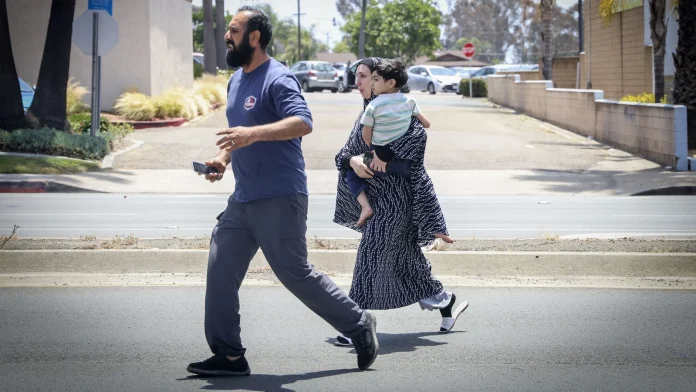
Police vehicles close to the Islamic Center of San Diego after the shooting

They Came for Prayer: A Morning of Violence at San Diego’s Largest Mosque

It was supposed to be a quiet, ordinary morning at the Islamic Center of San Diego — a sprawling complex of prayer halls, classrooms and a day school where children in uniform line up for lessons. Instead, the campus became the scene of a nightmare: three men killed outside the mosque, frantic calls to 911, a lockdown that rippled through surrounding neighborhoods, and the discovery of two teenage shooters who had taken their own lives a few blocks away.

“We are actively investigating this as a hate crime,” San Diego Police Chief Scott Wahl told reporters at the scene, his voice tight with a mix of sorrow and determination. “There was definitely hate rhetoric that was involved.”

Four Minutes

Four minutes. That is how long it took officers to arrive after the first emergency call — a stark number police repeatedly returned to as if timing could explain some of the horror. Officers found three victims outside the mosque. Within hours, a vehicle was located a few blocks away with two young men, aged 18 and 17, dead inside. Authorities said both shooters died by suicide.

“There were no officers involved in firing their weapons,” Chief Wahl said, clarifying what many onlookers feared would be an exchange of gunfire. “We immediately began to deploy with an active shooter response into the mosque and adjacent school.”

The identity of one of the victims has been revealed in news reports as a security guard whose quick actions — according to police — prevented an even greater loss of life. “His actions were heroic and he undoubtedly saved lives today,” Chief Wahl added, the word “heroic” landing heavy in the chilly air outside the mosque.

Community in Shock

Inside the mosque complex, families gathered, some chanting softly in prayer, others staring into their phones for news. Bright Horizon Academy, the Islamic school housed on the property, shut down its classrooms in the wake of the shooting. Teachers comforted children who could not yet fathom the quiet turned violent.

“We have never experienced tragedy like this before,” Imam Taha Hassane told me later, rubbing his temples, the fatigue of grief showing on his face. “All I can say right now is that we are sending our prayers and standing in solidarity with the families. It is extremely outrageous to target a place of worship.”

A neighbor who asked to be identified only as Maria described the scene she stumbled into after hearing sirens. “I came out in my slippers and saw police everywhere. There was this sense you could taste — all of us silent, like we were waiting for the next blow.”

Warning Signs That Were Missed

In a chilling detail, Chief Wahl said the mother of one of the suspects had contacted police two hours before the massacre to report weapons and a vehicle missing. She said her son and a companion were dressed in camouflage, and officers began canvassing local sites — including a nearby mall and the high school the youth attended. Then the calls about the shooting came in.

Police also reported the discovery of a note at the home of one of the boys; Wahl declined to disclose its contents. The presence of such a note raises questions about what family members, friends, schools, or mental-health professionals might have seen, and whether communities are equipped to act when warning signs appear.

What This Means in a Wider Context

How should we understand a violent act that targets a house of worship? Is this an isolated tragedy, or the symptom of a trend? Places of worship in the United States have increasingly become targets over the past decade — Jewish, Muslim, Sikh, and Black churches have each experienced attacks that long ago shattered the idea that sacred spaces are safe from the worst of humanity.

“This attack sits at the intersection of two persistent and interlocking crises: the pervasive availability of high-lethality weapons and the emboldening of extremist hate online,” said Dr. Leila Rahman, a researcher who studies violent radicalization among youth. “Young people who consume violent rhetoric can be radicalized fast, and if they have access to guns, the consequences can be swift and fatal.”

Statistics underscore that reality. The United States has one of the highest rates of firearm deaths among wealthy nations, with tens of thousands of gun deaths reported annually — a grim tally that includes homicides, suicides and unintentional shootings. Communities of faith are not immune; anti-Muslim bias incidents and hate crimes have been documented by both civil-rights groups and federal reporting as a persistent and sometimes growing problem in years of heightened global tensions.

At the Crossroads of Global Tensions and Local Fear

The attack came the week before Eid al-Adha, an important Muslim holiday, and as pilgrims prepare for the annual Hajj in Mecca. That timing has pierced the community’s sense of security. “To have this happen just before a sacred time of reflection and sacrifice — it feels like a wound made to our hearts,” said Amina Farooq, a volunteer at the mosque who helps coordinate holiday events.

In recent months, political and military tensions overseas have often translated into spikes in hate and fear at home. The mosque’s leaders and supporters in San Diego say they have felt that undercurrent. “You can’t separate global geopolitics from what happens on our streets,” Imam Hassane said. “When leaders trade threats and images of war, it filters down to people who want someone to blame.”

Voices from the Statehouse and Beyond

California Governor Gavin Newsom expressed horror over the killings, saying worshippers “should not have to fear for their lives.” He pledged state support and urged communities to stand together. “Hate has no place in California, and we will not tolerate acts of terror or intimidation against communities of faith,” he said on social media.

A White House spokesperson described the shooting as a “terrible situation” and indicated federal resources would be made available, while civil-rights organizations called for swift investigation and accountability.

What Comes Next?

For now, the mosque is at once a crime scene, a grieving congregation, and a community hub trying to stitch itself back together. There will be vigils and services, outreach to counselors for the children, and a push for increased security. There will also be questions — about how two teenagers came to commit such violence, about gun access, about the hardened rhetoric seeping into young minds online.

“We want our children to feel safe to come to school and to pray,” said Farooq. “We will mourn. We will remember. And we will ask how this could have been prevented.”

Questions for the Reader

What responsibility do families, schools and tech platforms share when a young person drifts toward violent rhetoric? How do we protect houses of worship without turning sanctuaries into fortresses? And when the global becomes local, how do diverse communities stand together without ceding the particular dignity of each?

As San Diego’s Muslim community counts its dead and tends its wounded, the questions multiply. In the quiet between prayer and policy, between grief and justice, the answers will have to come from all of us.

Mareykanka oo si toos ah usoo fara galiyay xaaladda Guurka ee dalka, lana kulmay Deni

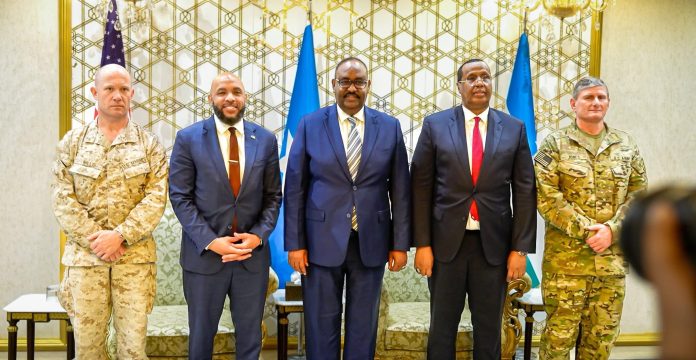
May 20(Jowhar)-Madaxweynaha Puntland, Mudane Siciid Cabdullaahi Deni oo uu weheliyo Madaxweyne Ku-xigeenka Ilyaas Cismaan Lugatoor, ayaa maanta Qasriga Madaxtooyada ku qaabilay wafdi ka socda Dowladda Mareykanka, oo uu hoggaaminayo  Ku-xigeenka Safiirka Mareykanka ee Soomaaliya ahna  sii hayaha xilka Safiirka, Ambassador Justin Davis, ayna qeyb ka yihiin Saraakiisha Howlgalka Africom, oo uu ka midyahay Col. Shane Jones Taliyaha Howlgalada gaarka ah ee maraykanka ee Africa.

Saraakiil Milatari ah oo kusii qulqulaya Baydhabo iyo cabsi ka taagan…..

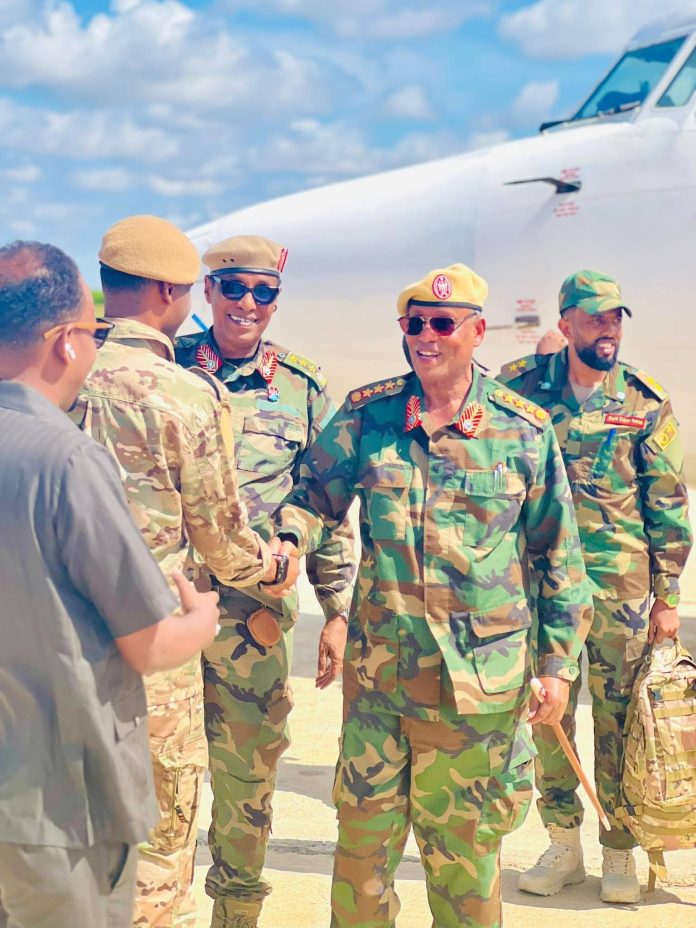
May 20(Jowhar) Kaaliyaha Taliska Xoogga Dalka Soomaliyeed Gen Madey Nurey Shiekh Ayaa gaaray magaalada Baydhabo Ee caasimada ku meelgaarka ah Ee Koofur galbeed.

Meta begins informing Ireland-based employees about planned layoffs

Fears for Irish jobs as Meta confirms global layoffs
Meta's Irish operation employs around 1,800 people

Morning emails, quiet desks: a Dublin day when tech trembles

There was a particular hush in the cafés of Dublin’s Silicon Docks the morning the emails landed.

Baristas who normally greet data scientists and product managers with practiced smiles glanced up as groups of colleagues scrolled through screens, faces folded in ways that made the air feel colder. “I always thought the tech world was a fortress,” said Aisling, who runs a sandwich shop on Sir John Rogerson’s Quay. “But on Tuesday it felt like a neighbourhood watching a storm roll in.”

What happened

Meta—the parent company of Facebook, Instagram and WhatsApp—has told employees worldwide that it will cut close to 8,000 roles, roughly one in ten of its global staff. In Ireland, where Meta employs around 1,800 people, staff received early-morning messages notifying them that they could be affected. The company has lodged a collective redundancy notification with Ireland’s Department of Enterprise, an official step required when 30 or more positions may be lost.

For many Dubliners, the story is not just an HR statistic. It’s about livelihoods, apartment leases, school fees and the rhythm of a city that has grown with big tech on its streets.

AI, reorganisations and ‘flattened’ teams

The cuts come alongside an organisational reshaping at Meta centered on artificial intelligence. Internal briefings—part of a broader memo sent to staff—outlined plans to move around 7,000 employees into new AI-related initiatives while eliminating certain managerial layers. Executives say these moves aim to accelerate AI workflows and make teams leaner and more agile.

“What we’re seeing is not simply fewer people, but different roles,” said Dr. Emile Navarre, a tech labour analyst in Dublin. “There’s a global pivot towards AI-driven productivity. That’s exciting from an innovation standpoint, but disruptive for workforce stability.”

Mark Zuckerberg has publicly signalled that 2026 could be a watershed year for how AI reshapes the company. “We’re starting to see projects that once required large teams being accomplished by a single highly skilled engineer,” he said earlier this year—an observation that, for some, confirms progress; for others, signals risk.

Local memory and the broader rhythm of layoffs

This is not the first time Meta’s Irish operation has felt tremors. In late 2022 and again in May 2023, the company reduced its Ireland headcount; earlier announcements warned of cuts to what it called lower-performing roles. In total, previous rounds reduced the local payroll by several hundred people. The present wave echoes a larger trend: in recent years the global tech sector has shed hundreds of thousands of jobs across startups and giants alike as growth expectations recalibrated and AI shifted business models.

“It’s like a domino effect,” said Fiona Murphy, a recruiter who has worked in Dublin’s tech scene for a decade. “One big shift in a company the size of Meta ripples out to contractors, local suppliers, leasing agents, and the cafes where teams used to spend lunch.”

Who feels the strain — and why it matters

Labour politicians and community representatives in Ireland have urged the government to act. George Lawlor, the Labour Party’s enterprise spokesperson, described the moment as “deeply worrying for families and communities tied to the tech sector” and called on ministers to work with companies to secure fairness for affected workers. He warned about the cumulative impact on those indirectly employed by tech ecosystems—cleaning firms, local catering companies, apartment landlords, and childcare providers.

Ministerial offices have acknowledged the challenge. “We are engaging with employers and workers’ representatives to mitigate job losses where possible,” said a spokesperson for the Department of Enterprise. “Collective redundancy notices trigger a consultation process; the state is prepared to use training and redeployment supports.”

From desk to lived reality: a few human stories

At a co-working floor near Grand Canal, a product manager named Tomas sat with his CV open. “I moved to Dublin for this job,” he said. “The rent’s fixed for a year, but everything else—transport, groceries, plans—becomes complicated if you suddenly find yourself without a paycheck. I’m not just worried about me. My partner’s freelance work is feeling the squeeze too.”

Nearby, a junior engineer, Niamh, tried to balance optimism with pragmatism. “AI can solve things we used to spend months building,” she said. “But that also means companies will look for people who can do ten things instead of one. It pushes you to adapt—fast.”

Local ripple effects

  • Small businesses around tech campuses expect fewer lunch customers and fewer after-work drinks.
  • Renters face uncertainty as job-linked tenancies become precarious.
  • Recruiters and training providers see a surge in demand for reskilling programmes.

Policy, protection and the future of work

The suddenness of these shifts has critics calling for a comprehensive state strategy. Labour and union voices argue the government should set out clear contingency supports—short-term income protection, retraining vouchers, and incentives for companies that redeploy rather than dismiss workers. “Tech is now a core part of the national economy,” Lawlor said. “We need public policy to reflect that reality.”

Experts point out that Ireland’s status as a European hub for multinational tech firms—sometimes called “Silicon Docks”—brings benefits and vulnerabilities. These companies contribute significantly to employment and tax receipts, but they can also change course rapidly in response to global market forces.

“Nations that host big tech must also host strong social safety nets and flexible retraining systems,” added Dr. Navarre. “Otherwise, you get boom-bust cycles that leave communities exposed.”

What the reader can take away

There are no easy answers. Should governments negotiate binding job protections with tech giants? Can companies balance innovation with social responsibility? If AI can do more with fewer people, who decides how the gains are shared?

These questions matter to anyone who uses social media—and to the neighbourhoods where tech firms are headquartered. They challenge us to think beyond shareholder returns toward the human infrastructure that supports innovation: teachers, baristas, bus drivers, cleaners, and parents who rely on stable jobs.

So I ask you: when progress arrives on a silicon tide, how do we ensure it lifts everyone and not just the yacht at the harbour? What values do we choose to govern change?

Closing scene: the docks at dusk

As evening fell, the glass-fronted offices reflected a pink sky. People cycled home past the canals, some making plans, some making calls. The city doesn’t stop because a company restructures. But it does bear witness—quietly, persistently—to the human cost of rapid technological transformation.

“We’ll get through this,” Aisling told me as she closed her shop, wiping tables where engineers had sat that morning. “But we have to be kinder, and smarter, about how we build the future. That includes the people who make it happen.”

Laba iyo labaatan sano oo la sugayay – sideey Arsenal ay ugu dabaaldegtay hanashada horyaalka

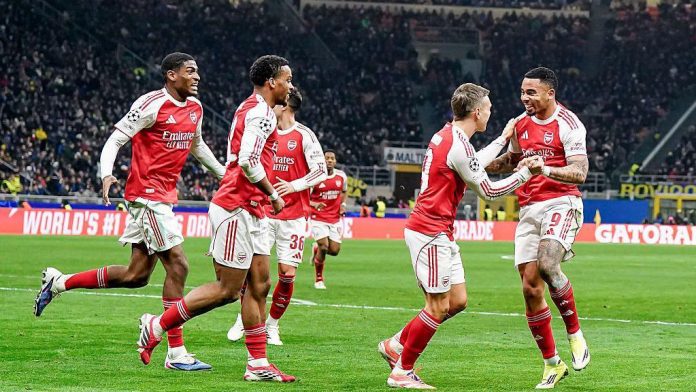
May 20(Jowhar)-Taageerayaasha Arsenal, waxay ahayd waqti aad u dheer oo ay sugayeen inay u dabaaldegaan hanashada horyaalka Premier League mar kale. Markaa waxay hubiyeen in Talaadada ay ahayd habeen gaar ah.

WHO chief sounds alarm over growing scale of Ebola outbreak

WHO chief 'deeply concerned' by scale of Ebola outbreak
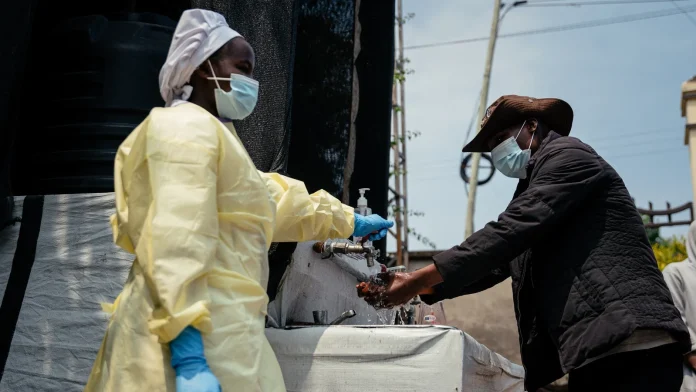
A person washes their hands before entering a hospital in Goma, DR Congro

On a Narrow Road Between Borders, an Old Foe Reawakens

There are places where the map seems to fold into itself: dusty border crossings, mining tracks that stitch countries together, markets where Ugandan shillings and Congolese francs change hands like gossip. It was in one of those liminal spaces — a tented health post at the Busunga crossing, a hand-scrawled poster listing emergency numbers flapping in the wind — that the latest alarm over Ebola began to feel, very literally, close.

You can almost hear the movement that makes outbreaks dangerous: boots on dirt roads, motorbikes loaded with ore, traders who cross the border in the morning and sleep on the other side that night. “People here move like water,” said a miner in Ituri province, wiping grit from his palms. “We go where the work is. If sickness follows, what can we do?”

WHO Sounds the Alarm

From the marble halls of Geneva, the director-general of the World Health Organization issued words that cut through diplomatic caution. “I did not do this lightly,” he told delegates at the World Health Assembly, announcing that the outbreak in the Democratic Republic of Congo and Uganda met the threshold of a public health emergency of international concern. The tone was urgent; the message, clear: this is no local flare-up that will burn itself out unnoticed.

By the latest count shared by WHO briefings from the field, around 500 cases are linked to the current outbreak of the Bundibugyo strain of Ebola, and some 131 suspected deaths have been reported. The Bundibugyo variant — less commonly seen than the Zaire strain that dominated headlines a decade ago — carries a fatality rate estimated as high as 40% in some outbreaks.

“I’m deeply concerned about the scale and speed of the epidemic,” the WHO chief said, echoing the worry felt by clinicians on the ground and public health officials in capitals across Africa. Anne Ancia, WHO’s representative for DRC, told reporters that this is likely to be a long fight, reminding audiences that some Ebola events have persisted for years before fading.

Why Bundibugyo Matters — and Why It’s Hard to Fight

Bundibugyo ebolavirus is not new to the region; the variant was first detected in Uganda in 2007, but it has remained comparatively rare. That rarity is part of the problem: there are no vaccines or specific antiviral treatments officially approved for Bundibugyo. The most widely known vaccine, Merck’s Ervebo, was developed and licensed to target the Zaire strain, and while animal studies have hinted at some cross-protection against Bundibugyo, the evidence in humans remains limited.

“When you have an outbreak with a strain that does not have countermeasures, we have to be pragmatic and creative,” said an epidemiologist working with the Africa Centres for Disease Control and Prevention (Africa CDC). “We will examine data, weigh risks, and recommend the best path forward — whether that means ring vaccination using an existing vaccine, targeted trials, or intensified non-pharmaceutical interventions.”

A WHO-led expert panel has been convened specifically to consider vaccine options. Their task is a tightrope: balancing the urgent need to save lives now against the ethical and scientific imperatives of using products for which evidence is incomplete. The question hovering over their deliberations is stark: is it better to deploy an imperfect shield now, or to wait for clearer data and risk more transmission?

What Tools Are Available?

Right now, the toolbox is smaller than anyone would like. Ervebo (rVSV-ZEBOV), licensed for Ebola Zaire, has been a life-saver in recent outbreaks, but its efficacy against Bundibugyo has only been suggested in preclinical studies. There are experimental therapeutics and platform vaccines in development, but none sealed with the full weight of regulatory approval for this particular strain.

“We have to treat each outbreak with humility,” said Dr. Mosoka Fallah, acting head of science at Africa CDC. “Sometimes we can adapt what we have; sometimes the virus pushes us to innovate faster than our research timelines.”

Movement, Mining, and What Fuels Spread

Ituri province — the epicentre of the current cluster — is a place of contrasts. Lush green between mined scars, small towns humming with trade, and unsteady security where armed groups sometimes control roads. These conditions make public health responses fiendishly difficult. People move across porous borders into Uganda and South Sudan for work, refuge, family, or market days.

“We are a crossroads — and that is the problem,” said a nurse at a clinic in Bunia. “People come in with fever and cough and say they slept in many villages. Tracking them is like chasing footprints in a flood.” Cases have already been reported beyond Ituri: suspected infections in North Kivu and a confirmed case in Goma, a provincial capital of strategic concern where militia activity complicates response efforts.

The Africa CDC has framed the outbreak as a Continental Public Health Emergency, empowering regional mechanisms to mobilize resources, send rapid response teams, and bolster surveillance. “This is occurring in one of the continent’s most complex operational environments,” warned Jean Kaseya, head of Africa CDC. “Insecurity, mobile populations and fragile health systems are a dangerous combination.”

International Ripples: Travel Warnings and Evacuations

The outbreak’s regional reach has prompted swift diplomatic ripples. The US State Department advised Americans to avoid non-essential travel to DRC, South Sudan, and Uganda, and to reconsider travel to neighboring Rwanda — underscoring how quickly a local epidemic becomes an international concern in a connected world.

Germany announced it will admit and treat an American doctor, identified by mission groups as Dr. Peter Stafford, who contracted Ebola while working in DRC. The decision to fly patients out for specialized care is a reminder of both the intricacies of high-level treatment and the stark disparities in health capacity between countries.

“We’re grateful for the international cooperation,” said a representative from the missionary group that supported the family. “But this is also a moment to reflect: why do some countries have to transport their sick abroad while front-line workers in the affected region fight with less?”

Voices from the Ground

In the market towns and the tiny clinics, people tell stories that statistics cannot capture. A teacher in Bunia described three colleagues who fell ill within a week: “We buried one in the morning, and by afternoon others came to us for help. There is fear; there is also a fierce sense of duty. People keep coming to clinic because they must.”

An older woman at a border screening post recounted watching trucks laden with cassava and gold pass, sometimes without inspection. “We try to ask questions, but trucks are heavy and men are quick. They say: ‘We move for our children.’ Who would stop them?”

What Comes Next — and What Can You Do?

No one can promise a tidy ending. WHO officials caution that the outbreak could remain active for months, possibly longer, pointing to the sobering precedent of epidemics that have taken years to extinguish. The immediate priorities are clear: accelerate diagnostic testing, trace contacts, secure protective equipment for health workers, and, if advisable, deploy vaccines and therapeutics under strict monitoring.

But there is also a quieter, persistent need: community trust. “If people hide deaths or avoid clinics because they fear isolation, the virus wins,” said a social mobilizer who has worked through past Ebola responses. “You cannot fight an epidemic with labs alone; you fight it with relationships.”

So ask yourself: when the next outbreak flares — wherever it may be — how do we balance rapid science with local realities? How do richer countries support fragile health systems not with headlines, but with long-term investment? These are not abstract questions; they are the blueprint for resilience.

Closing Thought

Standing at the border at dusk, with mosquitoes skittering and a distant radio blaring a market announcement, it is easy to imagine this patch of earth returning to normal in a month. It would be a relief — and a surprise. Reality is messier. Outbreaks unfurl along the lines of human movement, economic necessity and political will. The story emerging from eastern DRC and across borders into Uganda and beyond is a reminder that our world is stitched together by fragile threads. Strengthening those threads — through science, solidarity and day-to-day public health work — is the task before us.

Tankers Depart Strait of Hormuz as Trump Signals Hope for Iran Deal

Tankers exit Hormuz as Trump talks up Iran deal prospects
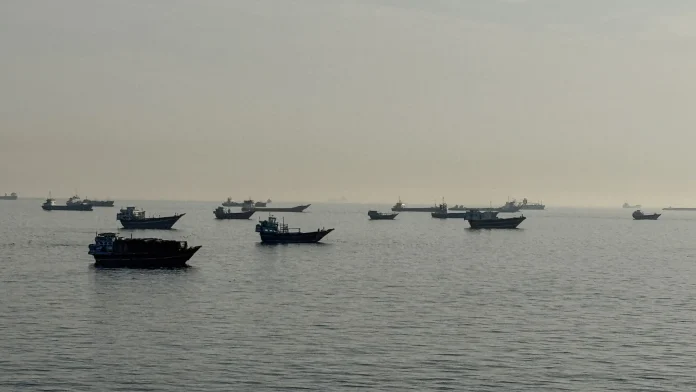
Vessels anchored in the Strait of Hormuz, off the port city of Khasab on Oman's northern Musandam Peninsula

Two Tankers, One Strait, and the Fragile Breath Between War and Peace

There is something quietly cinematic about a supertanker cutting through the wake of the Strait of Hormuz — a hulking shadow moving across a narrow throat of water where a fifth of the world’s seaborne oil once flowed, where the fate of economies and elections can feel as immediate as the salt on your lips.

Last week two Chinese-flagged tankers carrying Iraqi crude slipped out of that chokepoint, according to shipping trackers LSEG and Kpler. Together they carried roughly four million barrels of oil — a small figure in the global ledger, perhaps, but a gargantuan symbol for a world watching whether a three-month-old war between the US, Israel and Iran might be heading toward a fragile ceasefire.

Signals, Not Certainties

The departure of the ships arrived on the back of unusually optimistic language from Washington. President Donald Trump said the war could end “very quickly,” while Vice-President J.D. Vance described the administration as being “in a pretty good spot” at a White House briefing. Mr. Trump even suggested he had been moments away from ordering attacks before pausing to consider a new Iranian proposal.

These are not tidy diplomatic communiqués. They are, instead, the halting syllables of a larger, clumsy negotiation — public, televised, and roiling with domestic politics. “We’re trying to make our red lines clear,” Mr. Vance told reporters, acknowledging the difficulty of talking to a fractured Iranian leadership. His words underscored how much of diplomacy now happens in the glare of global media and the sway of campaign-season pressure.

Investors took the signals seriously. Brent crude sank to as low as $110.16 a barrel before clawing back some ground. “Markets are fragile and reactive; they’re trying to price in hope,” said Toshitaka Tazawa, an analyst at Fujitomi Securities. “Investors want to know if Washington and Tehran can actually bridge their differences — and the tone out of the White House keeps changing.”

What Tehran Says It Wants

On the Iranian side, state outlets described a package of demands: an end to hostilities on all fronts, including Lebanon; the removal of US forces from areas near Iran; reparations for damage; lifting of sanctions; release of frozen funds; and an end to the maritime blockade. Iranian officials framed the pause from Washington as recognition that any new US strike would elicit a decisive response.

“We are not seeking perpetual confrontation,” said a fictionalized version of a senior Iranian negotiator in the kinds of candid moments diplomats sometimes allow themselves in private. “But there must be guarantees — not promises on paper, but concrete measures that rebuild trust.”

Washington has, for now, treated those demands with caution. US officials have publicly insisted that a deal must prevent a regional nuclear arms race and protect American interests and allies. Behind those high-sounding goals sits a humbler reality: a president under political pressure to reduce gasoline prices, reopen a vital shipping corridor, and steady approval ratings ahead of looming elections.

On the Ground: Port Cities, Tanker Crews, and Markets

Down on the docks — whether in Fujairah, Bandar Abbas, or the ash-grey quays of Basra — people measure the conflict in different units: days without work, the price of diesel, the number of colleagues who never came home. A Basra-born tanker mechanic I spoke with over a crackling phone line laughed ruefully when asked if the vessel departures felt like a turning point.

“We have been here before,” he said. “You pray when the seas are quiet, and you pray harder when they are loud. A tanker leaving is not peace; it’s breathing. We will believe in real safety when the pipelines flow and the kids can go to school without sirens.”

The commercial impact has been stark. Shipping analysts say the conflict caused the worst disruption to global energy supplies in recent memory, blocking hundreds of vessels and damaging facilities across the region. Tanker traffic in the Gulf was rerouted; insurance premiums spiked; spot freight rates leapt. For consumers in Europe, Asia and the United States, the shock translated into more expensive fuel at the pump and a new household-level anxiety about scarcity.

  • Estimated share of globally traded seaborne oil that transits the Strait of Hormuz: roughly 20%.
  • Number of barrels aboard the two recently departed supertankers: around 4 million (LSEG and Kpler).
  • Recent low for Brent crude on positive signals: $110.16 per barrel.

Human Costs and the Hard Facts

Behind the economic numbers are human stories that refuse easy summation. Official and media tallies from the region describe thousands of deaths from bombing campaigns, mass displacement in Lebanon, and scores killed by Iranian strikes across Israel and neighboring Gulf nations. Those figures — to heavy to list fully here — are reminders that any diplomatic accord must squarely address reconstruction, accountability, and the long shadow of trauma.

“You can negotiate about barrels and sanctions, but you cannot negotiate away the dead,” said a Beirut relief worker. “Every promise must include practical help for families who lost homes and livelihoods.”

Those realities make the present pause perilous in two ways: first, because a deal cobbled together under domestic pressure could leave core issues unaddressed; second, because the longer gray zones persist, the more opportunity there is for miscalculation — a drone here, a misfired missile there — to reputationally sink fragile diplomacy.

What Would a Deal Actually Look Like?

The contours of any credible pause would likely include several elements: specific, time-bound military de-escalation steps; verifiable arrangements for the release of frozen funds; a phased easing of sanctions; and international mechanisms to guarantee compliance. It might also involve regional confidence-building measures — perhaps new inspections or multilateral patrols in busy shipping lanes.

“Without independent verification, we’re just trading promises,” said an arms control specialist in London. “Verification is the currency of peace.”

Yet both sides bring domestic constraints to the table. Tehran must answer hardliners and a leadership that only recently survived large-scale protests. Washington answers voters and a political class that demands visible results. That is why the Strait — more than geography — has become a barometer of political will.

Broader Themes: Supply Chains, Power, and the New Realities of War

What happens in the Gulf reverberates far beyond the sand and salt. The past year has underlined a simple truth: in a globalized economy, distant conflicts can be felt in suburban garages, in the price of a loaf of bread, in the margins of fragile businesses.

But there is another, quieter lesson. The crisis has shown how diplomacy in the 21st century is a hybrid of negotiation rooms and social feeds — a world where leaders broadcast their bargains and their threats, where markets respond in minutes, and where small gestures (two tankers leaving a strait) can lift spirits and markets alike.

Questions for the Reader

What should count more in the calculus of peace: the immediate return of oil to markets and lower prices at the pump, or deeper, riskier investments in justice and reconstruction? Can a deal that placates markets also heal communities that have been ripped apart by months of war?

As night falls over the Gulf and the two ships continue on their routes, the world watches and waits. For now, there is breathing room. There is hope. There is also the long work of turning a pause into a durable peace — and that will take more than ships moving through a strait.

“If the deal is to last,” the Basra mechanic told me before we said goodbye, “it must feel like life again when you wake up. Not just safer on the maps, but safe at the tea stall.”

Estonia Says NATO Downed Suspected Ukrainian Drone, Officials Report

Estonia says NATO shoots down suspected Ukrainian drone

Midday alarms over Võrtsjärv: how a stray drone jolted Estonia’s calm

It was the sort of quiet afternoon that feels stitched into the Estonian countryside — birch shadows sliding across fields, the surface of Lake Võrtsjärv catching light like a sheet of pewter, and small towns humming gently with their weekday routines. Then, just after noon, the sky spoke.

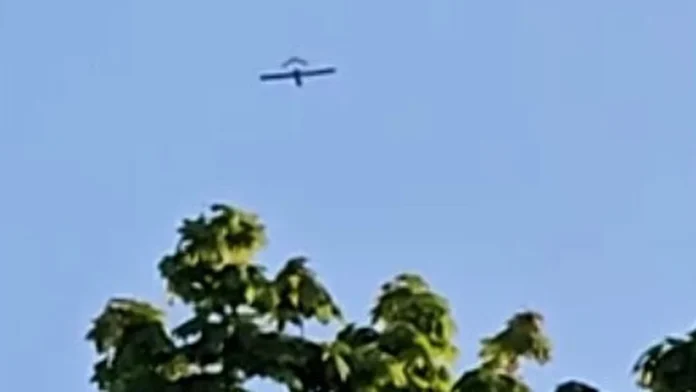
Residents of southern Estonia heard the whine of jets and the low, insistent tone of a military alert. Within hours, tiny shards of wreckage lay scattered near Poltsamaa, cordoned off by police and examined by investigators. Officials announced that a NATO fighter — an F‑16 flown from Romania — had shot down a suspected Ukrainian drone after Estonian and Latvian radars tracked it entering Estonian airspace.

“Our radars picked up a potential threat before it crossed the border,” Estonia’s defence minister later told reporters in Tallinn, his voice calibrated between caution and concern. “When the object entered Estonian territory, we activated the agreed procedures immediately.”

A brief chronology

The timeline reported by Estonian authorities was crisp and unsettling in its simplicity: radar detection, alert across six southern and eastern counties, interception by allied fighters, and fragments falling into a rural municipality. The air threat alert closed after roughly an hour, but the reverberations were only beginning.

Police have blocked access to the site where debris landed, and forensic teams are combing for serial numbers, charred components and anything that might reveal where the drone came from, how it navigated and why it crossed into NATO space.

Voices from the shore: locals respond

People who live near Lake Võrtsjärv — Estonia’s second-largest lake, a broad inland sea of some 270 square kilometres — are still replaying the midday drama as if it were a film. “I was pulling up my nets when I heard the jet,” said Aino Jõgi, a 62‑year‑old fisherwoman from a village on the lake’s western edge. “You don’t expect the sky to be dangerous here. You expect the geese.”

At a nearby bakery, customers exchanged worried looks. “We saw a flash over the trees and figured something had fallen,” said Markus, a cashier who gave only his first name. “For the past years we’ve been used to distant news — now it knocks on our door.”

Not every voice was alarmed. “We are on NATO territory,” shrugged a local farmer. “If something flies over, better they handle it fast. But still — it’s unnerving. My granddaughter asked if war had come to our village.”

Diplomacy on the phone and claims of interference

Within hours, Tallinn and Kyiv exchanged words. Estonia’s defence minister said he received a phone call from Ukraine’s defence minister offering apologies for the incident. Kyiv, embroiled in a brutal conflict with Russia, has repeatedly warned that its weapons and drones can be disrupted by electronic warfare that forces them off course.

Marko Mihkelson, chair of the Estonian parliament’s foreign affairs committee, wrote that the most likely explanation was Russian electronic interference — a familiar tactic that juggles civilian danger with strategic deniability. “When communications and GPS go awry, a fighter‑launched drone becomes little more than a piece of metal falling from the sky,” Mihkelson warned.

Expert perspective: how drones slip the leash

To understand how a drone intended for one target ends up over a friendly country, listen to the engineers and analysts. “Modern conflict zones are now saturated with jamming devices and spoofing signals,” said Dr. Elena Petrov, a European analyst in electronic warfare. “A drone relying on GPS or radio guidance can drift miles if adversarial forces manipulate those inputs. It’s less a deliberate incursion than a side effect of a high‑intensity electronic battlefield.”

Experts also note that the proliferation of inexpensive drones, and their use by both state and non‑state actors, has turned the sky into a crowded, contested commons. “Drones are cheap enough to be disposable, but when they cross borders the stakes are anything but cheap,” another security analyst remarked.

Regional ripple effects: Finland, Latvia and a NATO puzzle

Estonia’s incident is not an isolated ripple. Just days earlier, Finnish authorities issued an alert about suspected drone activity around Helsinki — suspending airport traffic and telling residents to stay indoors, though no drone was ultimately found. Latvia, Estonia’s southern neighbor, has also seen its own airspace concerns increase.

The broader pattern is unmistakable: conflict in Ukraine is leaking into the Baltic airspace, turning national borders into risk zones for unintended encounters. NATO has maintained an air policing presence in the Baltics for years; the alliance rotates fighter jets among member states, and Romania’s F‑16s are part of that collective shield.

  • Estonia and the other Baltic states joined NATO in 2004; the alliance’s collective defense clause means that airspace violations are not just local issues.
  • Estonia, with a population of roughly 1.3 million, has invested heavily in defense and digital resilience — a strategy born of history and geography.
  • Electronic warfare and drone proliferation are reshaping how small states experience security in real time.

So what now? risk, rules and the everyday

For small towns whose lives are threaded through centuries of quiet routines, the question is intimate: how do you wake up to international conflict? For policymakers, the challenge is procedural and political: how to keep airspace secure without escalating confrontations, and how to manage incidents that begin as technical failures but quickly acquire geopolitical meaning.

“We have to be ready for accidents,” said an Estonian border official who asked not to be named. “But we also need clarity — who takes responsibility when a device crosses a border because it was jammed? How do we prevent a mistake from spiraling?”

Beyond the immediate technical fixes — better identification systems, more resilient navigation for drones, clearer communication channels between Kyiv and NATO capitals — there is a cultural conversation taking shape. Can technology be kept humane? Can states find ways to mitigate harm to civilians and preserve the everyday rhythms of life under a cloud of drones?

Questions to carry with you

As you read this, consider: how close do we want warfare technologies to come to our families and streets? How should democracies safeguard public space without militarizing it? And finally, what responsibility do actors in conflict zones have for spillovers that affect nations far from frontline battles?

There are no easy answers. But in a world where a piece of metal can cross a border and change the tenor of a noon at the lake, the small questions — about safety, responsibility and neighborliness — have become urgent. For the fishermen of Võrtsjärv and the parents pacing at their kitchen tables, the phenomenon is no longer an abstraction. It is a reminder that geopolitics, like weather, moves through the places we call home.

Twelve killed, nine injured in Johannesburg shooting

Johannesburg Shooting Leaves 12 Dead and 9 Wounded, Police Say

0
In a chilling overnight raid on the edge of Johannesburg, gunmen swept through an informal settlement and killed 12 people, South African police said. Police...
World's largest whale graveyard discovered by Chinese sub

Chinese sub uncovers the world’s biggest whale graveyard on ocean floor

0
A vast “necropolis” of whales—packed with both fresh remains and fossils millions of years old—has been found on the floor of the Indian Ocean,...
US strikes Iran as Tehran warns of response to attacks

US Launches Strikes on Iran as Tehran Threatens Retaliation for Attacks

0
Fresh explosions rattled southern Iran overnight as the United States launched a new round of strikes, a move that came just hours after President...
460 European figures call on EU to be tougher on Israel

460 European leaders urge EU to take a tougher stance on Israel

0
With war raging in Gaza and tensions rising across the West Bank, a large coalition of veteran European political leaders is urging the European...
Four killed, 20 injured in Russian strikes on Kharkiv

Russian strikes hit Kharkiv, killing four and injuring 20 people

0
A fresh wave of missiles and drones slammed into Ukraine overnight, killing four people in the Kharkiv region and injuring more than 20 others,...