Home Blog Page 40

Retrial Set for U.S. Lawyer Convicted in Wife and Son Murders

Retrial for US lawyer convicted of murdering wife, son
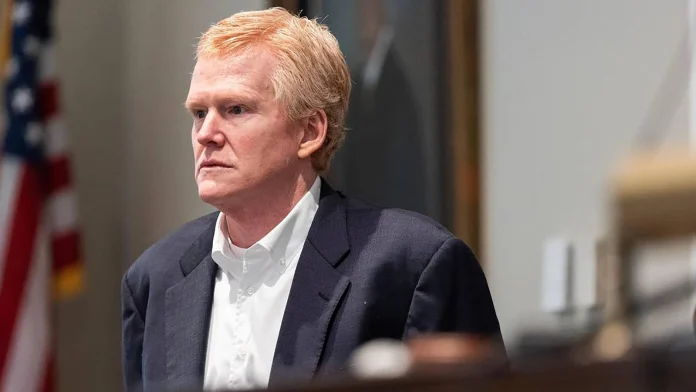
Alex Murdaugh was denied a fair trial because a court clerk influenced the jury, the South Carolina Supreme Court said (File image)

When the Scales Waver: The Overturning of the Murdaugh Murder Conviction

There are moments when a courtroom ruling sounds less like a verdict and more like an earthquake—shaking not just the people directly involved, but the ground beneath public trust. On a humid afternoon, the South Carolina Supreme Court did exactly that: it wiped away a conviction that had riveted the nation, ordering a retrial in the case of Alex Murdaugh, the once-powerful lawyer serving life behind bars for the 2021 killings of his wife and son.

For many, the decision will feel like a jolt—one part legal technicality, one part human drama, and all parts reminder that the justice system is fragile and human at every turn.

A dynasty under a storm

The Murdaughs long cast a long shadow over South Carolina’s Lowcountry: generations of prosecutors, judges and attorneys, a family name spoken with a mix of reverence and resignation in county courthouses and barbershops. Then, on a June evening in 2021, that dynasty cracked. Maggie Murdaugh, 52, and her son Paul, 22, were found slain at the family’s hunting property—an estate of pine trees and Spanish moss that seems plucked from Southern Gothic fiction.

Prosecutors said the killings occurred in the kennel area, mere minutes after Alex Murdaugh was reportedly the only adult present. The case catapulted the Murdaughs from local power to national spectacle, fueled further by allegations that Alex had been siphoning millions from clients and his law firm to feed a hidden opioid addiction. The accusations read like a cautionary tale about privilege, betrayal and addiction—ingredients that made viewers, podcasters and streaming services sit up and take notice.

How a clerk’s whisper unraveled a verdict

At the heart of the Supreme Court’s unanimous ruling was an issue that sounds deceptively small: a court clerk’s improper comments to jurors about how to watch the defendant during testimony.

The justices concluded that Rebecca Hill, a clerk at the trial, had told jurors to “watch his body language” and to “not be fooled” by the strategies of Murdaugh’s defense team—advice that, the court said, amounted to impermissible outside influence. “Hill placed her fingers on the scales of justice,” the opinion declared, “denying Mr. Murdaugh his right to an impartial jury.”

“Jurors are supposed to make decisions based on the evidence and the law, not on an official in the room pointing out nonverbal cues,” said Emily Turner, a constitutional law professor at the University of South Carolina. “When a court officer crosses that line, it corrodes the very foundation of a fair trial.”

Jurors later described feeling nudged. “We were told to really look at him when he was on the stand,” one juror told reporters. “It made us question our first impressions. It’s like someone telling you which painting to like—afterwards you wonder if you ever chose for yourself.”

What the court found

The high court found that the clerk’s comments were not harmless. The influence was external to the deliberation process and, the justices determined, substantial enough to justify overturning the murder convictions. They also signaled that the trial judge had allowed too much evidence about Murdaugh’s financial crimes—details that may have prejudiced the jury by painting a portrait of a man predisposed to wrongdoing, rather than focusing strictly on the crimes charged.

“Courts must be vigilant about the line between relevant background and prejudicial detail,” the ruling read—an admonition that will echo far beyond this case.

Confessions, contrition and contradiction

Murdaugh did not sit idly by in court. He testified in his own defense, a frail figure who admitted to stealing from clients and lying about drugs—telling the court that his addiction to opioids cost him about $50,000 a week at its worst. “I betrayed people who trusted me,” he said at the earlier trial. “I was a liar and a thief. But I did not kill Maggie and I did not kill Paul.”

Prosecutors point to phone data and other records that appeared to place him alone with his family at the estate minutes before the killings. For many viewers the televised trial felt like a slow, public unspooling of a life and career that had been teetering for years—excess, secrecy, and then, catastrophe.

Local voices, national attention

Walk through the small towns of the Lowcountry and you’ll hear this case refracted through a thousand lenses: gossip, grief, a hunt for truth. At a diner near Beaufort, a waitress named Rosa wiped her hands and said, “It’s not about rich or poor—it’s about whether the same rules apply to everyone. We’re all tired of feeling like the little folks get the short end.”

Sam Jenkins, who runs a bait shop two miles from the entrances to the Murdaugh properties, had a different read: “People loved to make TV about him, and they loved even more to watch him fall. But whether he goes to a new trial or not, those graves are still there.” His voice carried the weary skepticism of someone who has seen public passions flare and then burn out.

Universally, locals say the case exposed more than a crime: it lifted the veil off a culture where family connections can feel like unspoken immunity. “This is a small place,” a former prosecutor from the region said on the condition of anonymity. “Everybody knows somebody. That can be a blessing or a poison.”

Why this matters beyond headlines

There are legal lessons, to be sure. The standard for overturning a conviction because of outside influence is high; courts rarely grant retrials on such grounds. The Supreme Court’s decision underscores how seriously judges must guard the integrity of the jury process.

There are also broader social questions. What does accountability look like when institutions are entwined with the people they’re supposed to oversee? How does a community heal when it has been betrayed by a trusted professional? How does the opioid epidemic—responsible for roughly 100,000 overdose deaths in the U.S. in 2021, according to federal data—intersect with financial crime, mental health and family collapse?

“We are seeing a collision of public health, white‑collar crime, and criminal justice,” said Dr. Anika Patel, a sociologist who studies addiction and institutional trust. “It’s a warning sign that spilled into a violent act, and a reminder that complex social problems rarely have simple answers.”

Looking forward: retrial, reflection, repair

The court ordered a new trial, but that is not the same as an exoneration. Prosecutors can try the case again; juries will have to return, witnesses might be reconsidered, and the public will likely watch anew. For some, the decision reopens a wound; for others, it reopens a door to due process.

“My hope is fair play,” said a neighbor who asked not to be named. “Whatever happens next, let it be honest, let it be thorough, and let the victims’ names not be swallowed up by the circus.”

As readers, what should we take away? Perhaps it is the old but necessary reminder that the machinery of justice depends on the small, human things: the words of a clerk, the tone of a judge, the attention of a juror. One misplaced comment, one rushed decision, one moment of bias can tip the scales—raising questions not just about one man’s guilt or innocence, but about how we, as a society, want justice to be done.

Will the retrial bring clarity, or will it deepen the mystery? Will a community that watched a family fall apart find new ways to protect its own? These are not easy questions. They are, however, the kind that demand attention—not only from lawyers and judges, but from everyone who believes the rule of law should be more than a slogan.
Corbyn says Starmer is unlikely to survive as prime minister

Hard to see Starmer surviving as PM - Corbyn

A Party at Sea: Why Corbyn Thinks Starmer’s Premiership May Not Last

There are moments in politics that feel less like a slow boil and more like standing at the lip of a storm. You can hear it in the cadence of a speech, in the muttering at the back of a constituency meeting, in bannered messages outside union halls. Recently, former Labour leader Jeremy Corbyn offered a line that landed like thunder: he said he found it “hard to see” Keir Starmer surviving as prime minister. That simple remark — blunt, provocative, unvarnished — exposes fault lines that run deeper than any single leader’s fate.

Walk the streets of any British town and you encounter the reasons for both pessimism and hope. In a café in Sunderland, a retired teacher stirs his tea and sighs, “We voted for change, but I don’t know who’s steering the ship.” In a bakery in Brixton, a young parent shrugs: “Give them time to fix things — there’s a lot to do.” These are small scenes, ordinary, human. They are also the theatre in which national destiny is being debated.

What Corbyn’s Words Reveal

Corbyn’s blunt assessment is not just personal provocation; it’s a mirror to the uneasy coalition that is modern Labour. Since Starmer became leader, his mission has been difficult: reassure middle-ground voters scarred by past controversies while holding together a party with an active, sometimes insurgent left. Corbyn’s comment resonates with activists who feel their priorities — redistributive policy, bold public investment, pro-worker stances — have been sidelined.

“We’re seeing a party trying to be everything to everyone,” says Dr. Aisha Rahman, a political sociologist who studies party identity. “That breeds fragile majorities inside the party. When internal trust frays, it shortens the political horizon of any leader.”

On the Ground: Voices from Across Britain

For many voters, the question isn’t just about personalities. It’s about whether politics can meet bread-and-butter needs. A nurse in Manchester told me, “Staffing on the wards is a daily crisis. Party debates feel a long way from the patient’s bedside.” A bus driver in Cardiff laughed, then added, “If a leader can’t talk to the unions or the commuters, they’re in trouble.”

Union halls remain a bellwether. A trade union official in Glasgow — speaking on condition of anonymity — explained, “There’s disappointment and fatigue. Members want clear commitments: not slogans, but concrete plans for wages, housing, and public services.” Unions helped power Labour in recent decades; their mood now matters in more than a ceremonial way.

Numbers, Trends, and the Political Weather

Polls and numbers are the weather reports of politics: they tell you what to expect, but not always how the storm will land. Since Starmer’s ascent to leadership, Labour enjoyed a substantial lead in many opinion polls. Yet politics is a theatre of change; momentum can shift quickly when economic anxieties, international events, or internal scuffles seize headlines.

Consider this: across Europe, electorates have grown more volatile in recent years. Economic dislocation, a constant drumbeat of media, and the fragmentation of traditional party loyalties have made governing a matter of delicate balance. In Britain, issues such as housing affordability, the cost-of-living squeeze, and public-sector pay remain the pressures that test any government’s legitimacy.

Party Dynamics: Unity, Discipline, and Dissent

Leadership longevity depends on a mix of electoral success, party unity, and public trust. Corbyn’s remark is as much about the ease of dissent inside Labour as it is about personal criticism. Backstage, factions tangle. Frontbenchers plead for discipline. Grassroots panels demand ideological clarity. The result is a political tug-of-war that can be wearisome for voters and destabilising for a leader.

“Leadership isn’t just about setting the national agenda,” says Eleanor Finch, a veteran political strategist. “It’s about institutional trust. If colleagues are whispering rather than working, that leader exists in a precarious state.”

Local Color: The Cultural Ground beneath National Debate

Part of Britain’s political story is its cultural texture. In seaside towns, where post-industrial decline is visible in shuttered arcades, conversations about immigration, globalisation, and national identity are never abstract. In university towns, debates about tuition fees, research funding, and civil liberties animate cafes and college quads. Even the language of political posters — the fonts, the slogans, the choice of colors — tells you something about whom a party is courting.

At a market stall in Plymouth, a vendor pointed at an old Labour poster and said, “This was my dad’s; he was proud. Today, folks want that pride to mean something practical — jobs, heat, and dignity.” That’s the contest leaders face: translating ideals into everyday gains.

Looking Outward: What This Means for Global Politics

Why should readers outside Britain care? Because the way parties manage internal dissent and public expectation is a global story. Democracies everywhere wrestle with polarization, the erosion of trust in institutions, and the demand for leaders who are both authentic and capable. Britain’s struggles reflect a broader trend: electorates demanding competence and compassion in equal measure.

Moreover, the stakes of leadership extend beyond domestic policy. A prime minister’s stability affects everything from international alliances to trade negotiations. When pundits speculate on survival, the implications ripple into markets, foreign policy, and global perceptions of governance.

So what next?

Will Starmer survive? Corbyn’s words suggest doubt; the public mood supplies the uncertainty. But survival is not merely staying in office. It’s delivering on promises that matter to people’s daily lives, and keeping the party unified enough to govern.

Ask yourself: what do you want from leadership? Bold policy or careful stewardship? Radical transformation or steady improvement? The answers will vary — and that plurality is what makes democracy messy, infuriating, and alive.

In the weeks and months ahead, watch for three signals: clarity of policy, signs of organisational cohesion, and responsiveness to everyday pressures. If Starmer can demonstrate all three, his critics may quieten. If not, the chorus of doubt — voiced by former leaders, union activists, and street-corner conversations — may grow louder.

Whatever unfolds, the conversation Corbyn provoked is useful. It forces a party, and a nation, to reckon with priorities. It forces voters to reflect on what they expect from those they entrust with power. And it forces leaders to remember that political survival, ultimately, hinges on one constant: whether people’s lives are better for the government that leads them.

Trump declares he can end Iran conflict without Beijing’s assistance

Trump says he does not need China's help to end Iran war
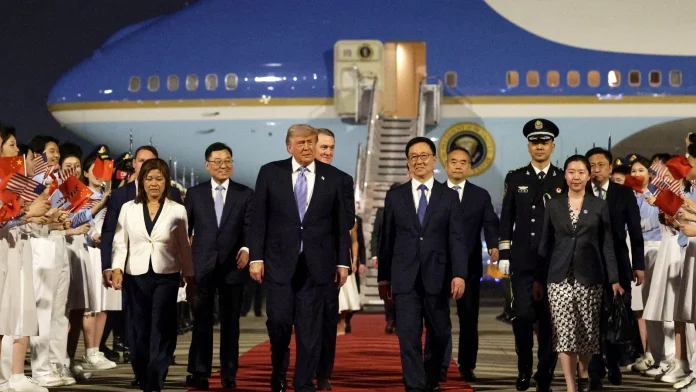
Air Force One touched down at Beijing Capital International Airport after the flight from Washington

Air Force One, a Red Carpet and the Long Shadow of Two Giants

The engines had hardly cooled when the cameras began to hunt for a narrative. Air Force One rolled onto Beijing’s tarmac like a weather front — loud, inevitable, and carrying with it questions that will not be answered by protocol photos alone.

It was more than a presidential arrival; it was a compact, combustible meeting of two worlds. For nearly a decade no American president had set foot on Chinese soil, and now, beneath the sweep of airport lights and the hum of translator booths, history was being retold in the present tense.

The spectacle and the stakes

There will be the pageantry: a reception at the Great Hall of the People, a walk through the glazed tiles of the Temple of Heaven, a state banquet whose menu and music will be parsed for symbolism. But beneath the silk tablecloths and diplomatic bows is the meat of the matter — trade, technology, Taiwan, and a war that has pushed one of the globe’s most strategic choke points to the front of everyone’s minds.

“We’ll win it one way or the other, peacefully or otherwise,” the president told reporters before boarding, a clipped line that landed like a stone in already churning waters. He followed that with a public insistence — repeated with a casual, almost flinty confidence — that China’s help would not be necessary to end the conflict or to keep the Strait of Hormuz open. That strait, remember, funnels roughly one-fifth of the world’s seaborne oil. When an artery like that flutters, economies and politics shiver.

Business on board: a delegation of CEOs and the AI angle

Air Force One carried, beyond the usual aides and security detail, a high-powered cohort of chief executives: the kinds of people who do not travel light on symbolism nor on baggage claims. Jensen Huang, the CEO of Nvidia, was a last-minute addition — spotted boarding during a refueling stop. Elon Musk was also seen in the service cabin, a reminder that this visit is as much about microchips and machine learning as it is about missiles and maritime law.

“We’re here to solve practical problems,” one CEO traveling with the delegation told me. “This is not a PR tour. We want regulatory certainty, access to markets, and predictable rules of the road.”

Nvidia’s presence is no accident. Advanced chips are the fuel of modern geopolitics — in data centers, defense systems and the artificial intelligence models that are reshaping economies. Washington has tightened controls on some high-end chip equipment and semiconductors; Beijing has answered with demands of its own. On both sides, there is hunger for a deal that loosens chokeholds without surrendering strategic advantage.

What the talks are likely to cover

  • Trade: a fragile truce struck last October that paused a cycle of steep tariffs.
  • Technology: disputes over export controls on chips and chipmaking tools.
  • Security: US arms sales to Taiwan and China’s insistence that such moves are destabilizing.
  • Regional conflict: the war with Iran and efforts — halting and fraught — to secure shipping lanes.

Negotiations outside the limelight

While the president prepared for pomp, a different, quieter diplomacy was in motion. Scott Bessent, the administration’s top trade negotiator, concluded hours-long talks with Chinese officials at a reception room in South Korea’s Incheon airport. Officials on both sides called the exchanges candid and constructive. That’s the language of diplomacy; under it are real calculations about supply chains, tariffs, and national resilience.

“We came here to steady a ship that has been listing,” a European trade analyst said. “Neither side wants open conflict, but both have domestic constituencies that demand toughness. That makes any compromise expensive in political terms.”

Taiwan, arms, and the balancing act

Beyond chips and trade lies the thorn that has been present in every US-China encounter for decades: Taiwan. The island’s democratically governed status and its close ties to Western tech supply chains make it a perennial flashpoint. A roughly $14 billion arms package for Taiwan reportedly waits on approval. Beijing views any US arms sale as a direct affront. Washington sees the obligation to help ensure Taiwan can defend itself as a legal and moral commitment.

“Every weapons sale is a test,” said a retired diplomat who has worked on cross-strait issues. “It’s not just about the tanks or the missiles. It’s about signaling. Are you a friend, or a bystander?”

Local color: Beijing’s streets and the undercurrent of expectation

I walked later in the afternoon, when the airport lights had dimmed and the city had reclaimed its rhythm. A tea vendor near a hutong smiled politely at the cameras that had trailed the presidential motorcade earlier. A taxi driver shrugged when asked about the visit: “We get presidents, we get parades. But we also want stability. My cousin exports parts to Europe — if shipping gets disrupted, he worries.”

Traditional motifs — red lacquer, carved dragons, the coiling roofs of centuries-old alleys — held a quiet counterpoint to the modern spectacle. Temples will be toured; fawns-and-phoenixes will be photographed. Yet every incense-scented pause was shadowed by global supply chains and strategic calculations that can’t be soothed by a banquet speech.

Why this matters beyond Beijing and Washington

Ask yourself: who pays when two superpowers posture? Consumers, workers, and farmers do. Supply chains that move everything from smartphones to soybeans can be rerouted only at great cost. Global markets look to Beijing and Washington as twin anchors — when those anchors creak, the rest of the world feels it.

Consider the energy markets. When shipping through the Strait of Hormuz tightens, tanker rates spike and inflationary pressure ripples into grocery bills, commuter costs and national budgets. Consider technology: if export curbs harden, innovation pipelines stall, investments reroute to other hubs, and the next generation of startups may find fewer places to thrive.

Concluding note: the theater and the ledger

Diplomacy is always two things at once: theater and ledger. Tonight, the ceremonial lights will burn bright. Tomorrow, negotiators will return to rooms with closed doors and long agendas. Whether this visit will reshape the ledger — loosening trade snarls, easing the flow of chips, or nudging Tehran toward a settlement — is an open question.

“It’s a reset only if both sides feel they can win something without losing too much,” a Beijing-based geopolitical strategist observed. “If history teaches us anything, it’s that these visits are where signals are sent, not where wars are ended.”

So watch the banquets and the selfies. But also watch the supply chains, the semiconductor orders, and the shipping manifests. Because in the end, the real impact of this meeting will be measured not in toasts, but in whether the world’s traffic — of ideas, goods, and oil — moves a little more freely afterward. What would you want to see come out of these talks? Stability? Clear rules for technology? A slower drumbeat toward conflict? The answers won’t be in the press release; they’ll be in the markets and in the lives of people far from Beijing’s ceremonial lights.

Lebanon reports Israeli vehicle strikes kill 12 civilians

Lebanon says Israeli strikes on cars kill 12
The latest Israeli strikes came on the eve of a new round of direct negotiations between Lebanon and Israel in Washington

In the shadow of Washington: strikes, funerals and fragile diplomacy on Lebanon’s southern shore

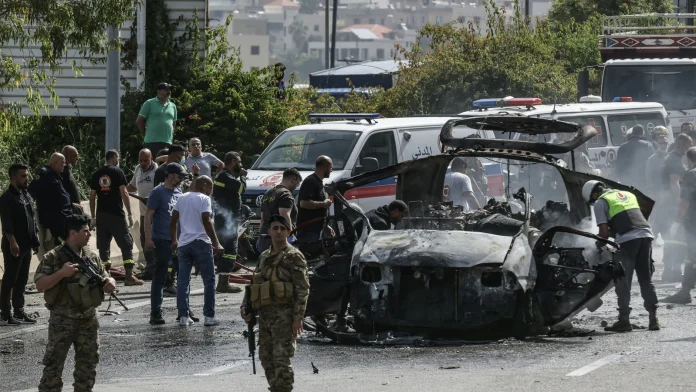
On a coastline where lemon trees meet the Mediterranean and cars weave past fisherman’s nets, the ordinary rhythms of life were punctured by the sound of explosions. In a single day this week, ambulances threaded through smoke and the coastal highway south of Beirut became a corridor of charred metal and grief.

Lebanon’s health ministry counted 12 people killed in a series of strikes that hit cars and small pockets of the country’s south — mostly around Jiyeh, Sidon and parts of the Tyre district. Authorities said two children were among the dead. Photographs from the scenes showed twisted, blackened vehicles and rescue workers carrying bodies into waiting ambulances; at one site near Jiyeh, a burnt-out car still smelled faintly of fuel and burned rubber.

“We heard the blast first, then people screaming,” said Maya Hassan, a shopkeeper in Sidon, who watched ambulances go by that afternoon. “You learn to live with sirens, but you never stop counting the cost.” Her voice cracked when she added, “We are tired of burying people we knew.”

On the cusp of diplomacy

These strikes came on the eve of a new, U.S.-brokered round of direct Lebanon–Israel negotiations in Washington — the most tangible push yet to untangle a frozen, volatile border dispute. For Beirut, the talks are being led by veteran diplomat Simon Karam, a signal that Lebanon is taking the process seriously, even as gunfire and drone skirmishes continue on its soil.

Israel argues it reserves the right, under the terms of the ceasefire issued on April 17, to strike “planned, imminent or ongoing attacks.” Since that ceasefire, AFP’s tally of health ministry figures reported more than 400 deaths in Lebanon. Meanwhile, Lebanese authorities say that since Hezbollah’s wider escalation in early March, more than 2,800 people have been killed across the country — including at least 200 children.

“Diplomacy cannot proceed in a vacuum of violence,” said Dr. Lina Haddad, a Beirut-based conflict analyst. “If the talks are to succeed, there must be trust — and trust cannot be built on charred cars and funerals.”

The human footprint

In Sidon, the grief was visible and ceremonial. Dozens gathered to mourn two civil defence personnel killed in an earlier strike. Their coffins, draped in Lebanon’s flag, passed under an honour guard of colleagues clutching rescue helmets and flak jackets — a striking tableau of public service laid bare in wartime.

“They were the people who came when others ran,” said Captain Rafiq Al‑Taj of the civil defence force, palms blackened from hauling debris in other attacks. “You cannot measure the loss. A rescue team is a small family in a country that keeps losing its families.”

The funerals, the late-night vigils, the impromptu soup kitchens set up by neighbours — these are the textures that statistics cannot convey. Yet statistics matter: they help the world quantify the scale of a crisis and, sometimes, galvanise action. The tally is stark — hundreds dead since the ceasefire, thousands since March — and the numbers keep rising.

Drones, UN peacekeepers and the new geography of warfare

One of the haunting features of this conflict is the increasing presence of drones. Hezbollah has been using low-cost fibre-optic drones to harass Israeli positions and, according to multiple accounts, to conduct strikes. These devices — small, agile, often launched from concealed locations — have altered the battlefield, complicating the calculus of risk and reprisal.

UNIFIL, the United Nations Interim Force in Lebanon, has flagged growing concern over drone activity in and around its positions. Their statement warned that explosions in or near UN bases have put peacekeepers at risk, and reported several detonations near the force’s Naqura headquarters. “This is not theoretical,” a UNIFIL spokesperson told me. “Our personnel are being endangered. Drones are changing the nature of what a buffer zone means.”

The Israeli army said it struck Hezbollah infrastructure, weapons storage facilities and rocket launchers across south Lebanon. Hezbollah, for its part, claimed ambushes and attacks on Israeli troops operating north of the border’s so-called “yellow line” — a zone roughly 10 kilometres north of the formal frontier that Israeli forces have been operating within.

Voices from the ground — fear, defiance and weary pragmatism

A schoolteacher in Tyre, who asked to be identified only as Samir, describes a weary calculus. “We wake, check the news, call relatives. Then we try to teach children colours and numbers while we plan for the next knockout on the phone,” he said. “You teach resilience by necessity.” His school has been damaged by nearby shelling; the blackboard now bears a line of dust where glass shattered during the last strike.

Hezbollah’s deputy leader, Naim Qassem, has warned that fighters will make the battlefield “hell” for Israel if operations continue — language that hardens resolve on both sides. “When words grow sharp, guns answer in ways that aren’t easy to reverse,” Dr. Haddad said. “Words are good for headlines, but ceasefires are kept by restraint.”

Why this matters beyond Lebanon

What unfolds along Lebanon’s southern coastal highway is not an isolated incident confined to local actors. It is a flashpoint in a broader regional dynamic: a battlefield where state and non-state forces test boundaries, where small drones and asymmetrical tactics meet conventional militaries, and where civilians increasingly bear the brunt.

Consider the ripple effects: refugee flows strain neighbouring communities, port closures disrupt trade pipelines, and every cemetery fills with a story that might seed future grievances. The Washington talks are a narrow corridor for de-escalation — but without local buy-in, without mechanisms that protect civilians on the ground, agreements risk being fragile paper amid real gunfire.

And the humanitarian needs are vast. International envoys have warned that rebuilding and recovery — in Gaza as well as parts of Lebanon — will take years and billions in aid. “Removing the rubble, rehousing a million people, restoring water and sanitation — this is a generation of work,” one international official observed, reflecting the scale of the challenge.

What comes next?

There are no easy answers. The Washington talks could open a path to a durable arrangement over maritime borders and access to offshore resources. Or they could become just another diplomatic waypoint in a long, volatile road. Success will require more than signatures — it will require de-escalation on the ground, protection of civilians, and credible enforcement of whatever terms are agreed.

So I ask you, reader: what responsibility does the international community bear when diplomacy sits just a continent away from the blast radius of missiles? When civilians queue for bread beside a memorial to neighbours killed in a strike, what does peace look like?

For now, families in Sidon and Tyre patch clothes, mend nets and fold flags over coffins. Diplomats prepare briefing notes in Washington. And drones continue to hum in the twilight, reminding everyone that the future of this stretch of coastline will be decided not only in grand halls, but in the lives of those who still walk the roads between sea and mountain.

  • Reported deaths in Lebanon since the April 17 ceasefire: more than 400 (AFP tally, health ministry figures)
  • Reported deaths since early March escalation: more than 2,800, including over 200 children (Lebanese authorities)
  • Key locations affected: Jiyeh, Sidon, Tyre, Burj al‑Shemali
  • Diplomatic milestone: U.S.-brokered talks in Washington, led for Lebanon by Simon Karam

Maxaa kasoo baxay shirkii maanta Xalane uga furmay Dowladda iyo Mucaaradka?

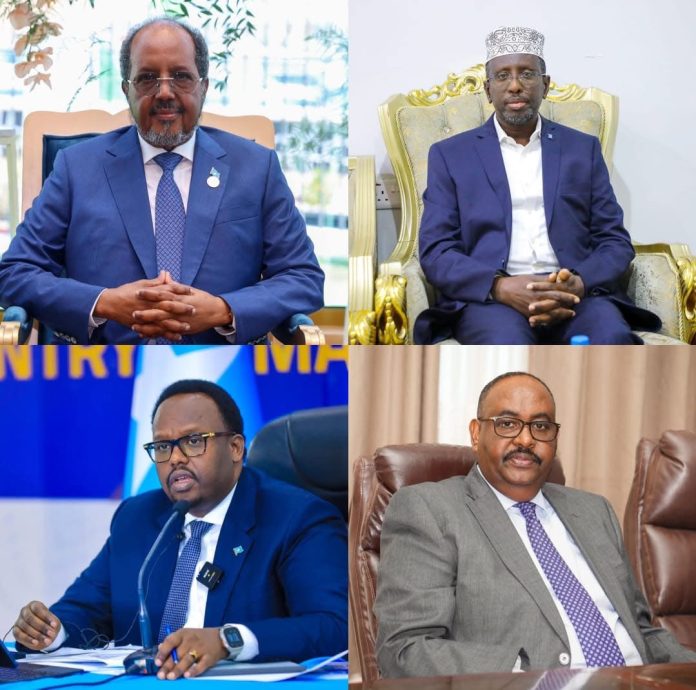
May 13(Jowhar)Waxaa soo idlaaday shirkii maanta Muqdisho gaar ahaan Xerada Xalane ugaga furmay Dowladda Soomaaliya iyo xubno ka tirsan Mucaaradka.

WHO chief: Efforts continue after the hantavirus evacuation

'Work not over' after hantavirus evacuation - WHO chief
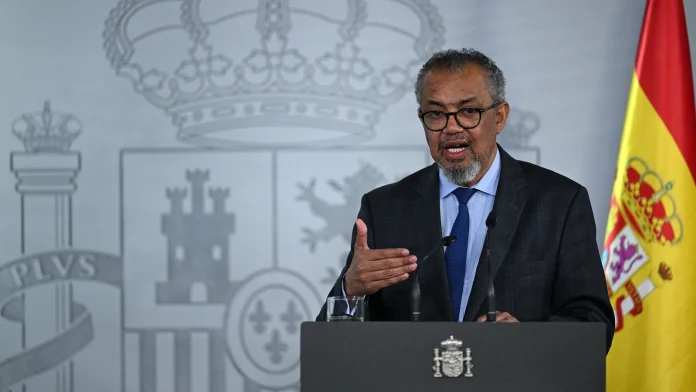
WHO Director-General Tedros Adhanom Ghebreyesus at a press conference in Madrid, Spain

At Sea, Between Fear and Protocol: The MV Hondius and the Quiet Threat of Hantavirus

The image is cinematic: a sleek expedition ship, the MV Hondius, anchored off the sun-drenched coast of Tenerife as health workers in masks and gowns move like careful choreographers along gangways. But this is not a movie set. It is the awkward, urgent choreography of public health in real time — a reminder that the natural world still surprises us, and that global travel can turn an isolated spillover into a diplomatic puzzle.

Three passengers have died after an outbreak of hantavirus aboard the Hondius, and at least seven more people have confirmed infections with an eighth listed as probable. A French woman over 65, with pre-existing medical conditions, remains in intensive care on a ventilator. These numbers have set off alarms and questions, but also a chorus of reassurances from the World Health Organization and national governments: the global risk is low, they say, and there is no sign this is the beginning of a larger pandemic.

“Our work is not over” — a cautious chorus

“Our work is not over,” WHO chief Tedros Adhanom Ghebreyesus told reporters in Madrid, a phrase that felt less like a warning and more like a pledge. “There is no sign that we are seeing the start of a larger outbreak,” he added, but he also reminded listeners that the Andes strain — the variant implicated in these cases and one of the few hantaviruses known to spread between people — can incubate for up to six weeks. That long tail means we might hear of more cases in the weeks ahead.

“We must not dismiss the possibility of spread simply because we want to avoid panic,” a senior WHO epidemiologist said off the record. “Prudence now saves panic later.”

What we know about hantavirus — and what we don’t

Hantaviruses are not new. They are a family of viruses carried by rodents, transmitted to humans through contact with urine, faeces or saliva — usually when contaminated dust is stirred up. The Andes virus, indigenous to parts of Argentina and Chile, is notable for its ability to transmit from person to person, albeit inefficiently compared with respiratory viruses like influenza or SARS-CoV-2.

There is no vaccine and no specific antiviral approved for hantavirus infections. Treatment is supportive: careful intensive care, oxygen, sometimes extracorporeal membrane oxygenation for the most severe pulmonary cases. Historically, hantavirus pulmonary syndrome has carried a high case-fatality rate — often cited in the range of 30–40% — though outcomes can vary widely depending on speed of medical care and the patient’s underlying health.

Numbers and measures

More than 120 passengers and crew were evacuated from the Hondius to the Canary Islands and flown home to a handful of countries. Among the affected nationalities are the United States, the United Kingdom, France, Spain, Switzerland and the Netherlands. Dutch authorities reported that the first flight of 26 evacuees tested negative on arrival in the Netherlands but are still subject to strict quarantine and monitoring.

WHO guidance for contacts of potential hantavirus cases is sober and stringent. The recommended quarantine period is 42 days — six full weeks — reflecting the long incubation window. During that time, high-risk contacts are to be monitored daily for fever and respiratory symptoms. Countries are applying these rules in different ways: some impose mandatory isolation, others recommend home quarantine and active follow-up by public health teams.

  • Incubation period: up to 42 days
  • Confirmed cases from the ship: 7
  • Probable case: 1
  • Deaths: 3

Across borders and political lines

The Hondius voyage began in Argentina on April 1, intended as a leisurely crossing to Cape Verde. Instead, it became a test of international cooperation. Cape Verde refused to accept the ship; Spain allowed it to anchor off the Canary Islands for evacuation, a decision that drew fierce local opposition in the archipelago. Spanish Prime Minister Pedro Sánchez framed the choice as moral: “The world does not need more selfishness or more fear. What it needs are countries that show solidarity and want to step forward,” he said. His words landed like a gauntlet.

“We were nervous,” said Lucía Martín, a nurse in Santa Cruz de Tenerife who volunteered to help screen evacuees. “People here remember the pandemic — we remember the hospitals filling up. But we also remember how neighbours showed up for each other. That’s why we helped.”

Navigating where to take the ship and how to repatriate passengers became a diplomatic puzzle, played out alongside medical triage. Nations weighed public fear against humanitarian responsibility. In the end, coordinated airlifts and quarantine arrangements saw evacuees dispersed to their home countries under a patchwork of protocols.

Onboard voices

For those who were aboard the Hondius, the experience was unnerving and surreal. “One day we were watching dolphins, the next day everything changed,” said a British passenger, who asked not to be named. “You realise how small the world actually is — and how quickly things can pivot.”

Another passenger, a retired teacher from the Netherlands, described the ordeal as a lesson in patience. “You can’t rush biology,” she said with a half-smile. “You can only watch, wait, and trust the people who know more than you.”

Why this matters beyond one ship

There is a tendency, post-Covid, to either over-amplify or shrug off new disease alerts. Both reactions are dangerous. The Hondius incident is a microcosm of broader issues: zoonotic spillovers are likely to become more frequent as human activity encroaches on animal habitats; global travel can accelerate spread; and the patchwork of national policies can complicate coordinated responses.

What the event also highlights is the fragile balance between public health and human dignity. Quarantine is a blunt instrument. It protects populations, yes — but it also isolates people who are frightened and, in many cases, innocent. How we contain disease matters as much as whether we contain it, because the societal trust that permits public health measures to work is earned, not given.

Questions for the reader

What are we willing to sacrifice in the name of safety? How do we balance the urgency of protecting populations with the rights and well-being of individuals? And how do we keep global systems nimble enough to respond without throwing up the default of closing borders?

These are not rhetorical exercises. They are the policy questions national governments and international bodies will keep circling as they monitor passengers, test contacts, and prepare the Hondius for a scheduled disinfecting in the Netherlands.

Looking forward

For now, the message from Madrid, from WHO briefings and from health ministries is one of cautious calm: diligent contact tracing, adherence to quarantine for up to 42 days, and robust monitoring of anyone who might have been exposed. If that sounds tedious, it is — but it is also the best available path between panic and inaction.

“This episode should remind us of two things,” said an infectious-diseases specialist in Barcelona. “First, nature doesn’t give us time to rehearse. Second, the infrastructure we have built in the last decades — surveillance, labs, international cooperation — still works, imperfectly but effectively. We must use it.”

So we watch the reports, follow the quarantine advice, and wait for the incubation clock to wind down. Along the way, there will be stories of sorrow, of frustration, and maybe of quiet heroism — the nurse who volunteered in Tenerife, the doctor who managed a ventilated patient, the crew that stayed aboard to help. The Hondius has become a moving lesson in how we meet contagion: with science, solidarity, and, above all, patience.

Doon xoolo badan siday oo ka baxday Berbera oo ku gubatay Marinka Hormuz

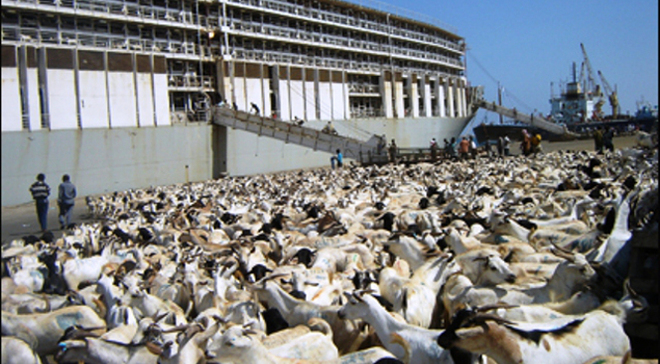
May 13(Jowhar) Sida ay sheegayaan wararka soo baxaya Dooni xoolo siday oo ka baxday magaalada Berbera ee Somalia, taas oo lagu magacaabo Xaaji Cali, kuna sii jeeda dalalka Khaliijka ayaa ku gubatay afaafka hore ee Marinka Hormuz-ka, iyadoo waday xoolo fara badan oo ay lahaayeen ganacsato Soomaaliyeed, sida ay xoguhu sheegayaan.

Starmer holds talks with challenger Streeting amid mounting leadership revolt

Starmer meets rival Streeting amid leadership revolt
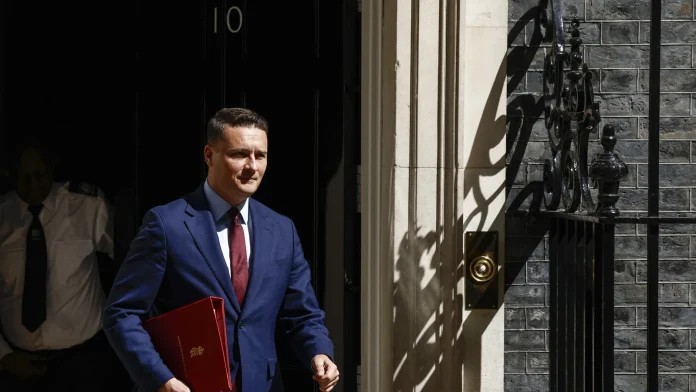
Health Secretary Wes Streeting was inside 10 Downing Street for less than 20 minutes

Downing Street at Dusk: A Party in Turmoil and a Country Holding Its Breath

The lamps along Downing Street threw long, sober pools of light as the prime minister’s motorcade slipped into the courtyard. Journalists huddled under umbrellas. A few tourists lingered, phones raised like small vessels of witness. Inside, the air was taut with argument; outside, the city tried on its usual manners and moved on.

Keir Starmer, who only weeks ago stood as the unquestioned steward of a retooled Labour project, has weathered a political storm that left four ministers packing their desks and at least 80 of his own MPs publicly asking him to step aside. The numbers alone are jarring — for a party used to internal rows, this feels like a reset forced by the electorate and enforced by colleagues.

Into that charged silence slipped Health Secretary Wes Streeting, the man many on the party’s right have eyed as a potential leader. He was inside Number 10 for less than 20 minutes, a handshake, a conversation, and then back out into a Downing Street still littered with umbrellas. He answered no questions; the cameras swallowed him whole.

What just happened — and why it matters

One can map the immediate shock to three converging pressures. First, the raw political arithmetic: recent local and parliamentary results — described by unions and senior figures as “devastating” — have shaken confidence in the direction of the party. Second, a bruising round of resignations, including senior MPs who publicly called for change, signalled a rupture in trust. Third, the trade unions that built Labour have stepped in with a chorus for new leadership and a reorientation back toward working-class priorities.

“This isn’t factional theatre,” said a union official who insisted on anonymity. “It’s an existential moment. People who stood on picket lines and in factories for this party need to know we’ll fight for them. Electorates can smell drift. They punished us for it.”

The TULO group — the Trade Union and Labour Organisation that speaks for 11 unions such as Unite, Unison and the GMB — released a terse statement insisting the party “cannot continue on its current path.” They argued it was clear Starmer would not lead Labour into the next election, and that a formal plan for leadership succession had to be mapped out. In a room in the heart of Westminster, old alliances began to whisper about new bargains.

Faces in the Frame: Potential Contenders and the Art of the Pause

Wes Streeting, who left Number 10 with his collar turned up against the drizzle, is widely regarded by colleagues as a centrist option who can reach voters in suburban Britain. Yet, the Guardian and other outlets reported that Streeting was stepping back from launching an immediate leadership bid. Whether that pause is tactical or reflective remains to be seen.

On the soft left, Greater Manchester mayor Andy Burnham is a familiar presence on the national stage — compassionate, a canny retail politician — but he is not currently an MP and would need an MP to step aside to fight a by-election. Then there is Ed Miliband, another soft-left figure whose office has reportedly denied plans to run. All the while, the party’s internal map feels like a game of musical chairs, and someone will inevitably be left without a seat.

“If you look at our recent electoral map, there’s a clear message,” said a former cabinet colleague. “We lost touch with the people who built this movement. It’s not about personalities, it’s about whether Labour can again be the party of practical change for working people.”

Unions, Identity and the New Battlefront

Labour’s unions have not only issued public demands — they are mobilising to shape policy and strategy. Joanne Thomas, chair of TULO and general secretary of USDAW, framed the moment starkly: “Our members need a party that will govern in their interests. Increased minimum wages and Employment Rights Act changes are steps forward, but they alone won’t fix the loss of trust.”

Unions see their role as a corrective. They accept some policy progress but argue the narrative is lost. “You can legislate for fairness on paper,” said a union organiser in Sheffield, “but if people still can’t pay the bills and don’t feel listened to, it doesn’t count.”

The Wider Stakes: A Party, a Country, a Global Question

These shifts in Labour’s corridors are not merely an intra-party quarrel. They reflect a larger global pattern: voters weary of technocratic promises, hungry for tangible improvements in wages, housing and public services, and sceptical of elites who seem far removed from everyday struggles.

Right-wing populists and single-issue movements have filled the vacuums offered by centrist parties around the world. In the UK, the spectre of Reform UK and its leader Nigel Farage has been invoked as a motivator for some MPs: better to fix Labour from within than to hand power to a figure who “disrupts and divides”, as one York MP put it in a radio interview. “I will do anything to safeguard our communities,” she said, the words ringing like a plea and a warning.

This is where the stakes sharpen. Will Labour recalibrate around a clear, tangible economic programme that ties public investment to social solidarity? Or will it continue on a path that pleases markets but leaves the party vulnerable at the ballot box?

Small Scenes, Big Signals

Walk through a northern market and you will hear the human contours of the crisis: a butcher in stocky boots talking about energy bills, a teacher in a laminate-floored staff room fretting about workload, a nurse who says her shift patterns make life a scramble. These are the threads voting decisions are woven from.

“People are asking simple questions again,” said a campaigner in Leeds. “How will this help me? How will this help my kids? If you can’t answer that plainly, you will lose people.”

  • House of Commons: 650 seats — a small swing in key areas can change outcomes dramatically.
  • Local elections: recent poor results for Labour in some regions have been cited by unions as a wake-up call.
  • Unions: Organisations like Unite and Unison remain pillars of Labour’s base, with millions of members combined.

What Comes Next — and What This Means for You

Starmer told his cabinet he would “get on with governing.” He refused to turn the cabinet room into an audition stage for rivals, and he declined to discuss his leadership in detail during the meeting. Yet the demand for a plan — not for drama but for direction — grows louder.

For the public, the immediate consequence is uncertainty. For Labour, it is a choice between reinvention and retrenchment. For the country, it is a test of whether mainstream parties can renew themselves in a political moment that rewards clarity and punishes ambiguity.

So I ask you, reader: what would you want from a party that claims to represent you? A new leader with a fresh rhetorical edge? A clear economic programme that puts wages and services front and centre? Or a Labour that risks alienating its roots to chase a broader, but shallower, electoral base?

Politics often returns to the simple arithmetic of trust. Rebuilding it will take policy, persuasion and, crucially, time — and perhaps a little humility. For now, Downing Street at dusk is full of people bargaining for the future. Outside, the city carries on, indifferent to the urgent, human work of remaking a party for the next era.

Former Zelensky aide rejects corruption accusations as groundless

Ex-Zelensky aide says corruption allegations 'unfounded'
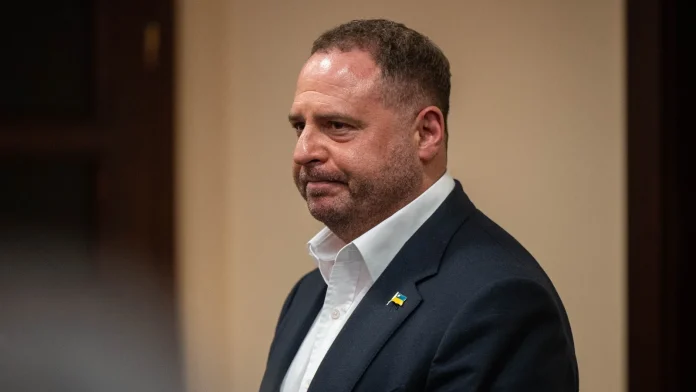
Andriy Yermak dismissed corruption allegations as 'unfounded'

In the Dock and on the Frontline: Ukraine’s Two Unfinished Stories

The courtroom clock clicked like a metronome over a country that has learned to measure time in sirens and summonses. On a rainy morning in Kyiv, Andriy Yermak — once the closest aide to President Volodymyr Zelensky — stood under the scrutiny of judges, cameras and a public hungry for answers. He told the court, and a nation watching from phones and kitchen tables, that the accusations against him were “unfounded.”

“As a lawyer with more than 30 years of experience, I have always been guided by the law,” Yermak wrote on Telegram after the hearing. “Now I will likewise defend my rights, my name, and my reputation.” It was a line delivered with the calm of someone used to the glare of public life, but the circumstances could not have been more combustible: a high-profile resignation in November 2025 after a dramatic raid on his home, and prosecutors alleging he played a role in siphoning roughly 460 million hryvnias — about €8.9 million — through an organized group tied to luxury development projects.

Operation Midas and the politics of wartime corruption

The probe, dubbed Operation Midas, has been described by investigators as sweeping and meticulous. Prosecutors say the money was funneled into construction projects on the so-called “Dynasty” cottage site, and that the scheme included other notable figures such as former Deputy Prime Minister Oleksiy Chernyshov and businessman Timur Mindich.

“The individuals who used funds for the construction of objects on the territory of the ‘Dynasty’ cottage site… planned to carry out further actions aimed at legalising such property,” a prosecutor told the court. The words were clinical, the implications seismic. For Ukrainians, corruption is not an abstract concept; it is a thread that still frays the fabric of democratic reform and foreign assistance.

“Corruption is the second front we fight,” said Olena Kovalenko, a civil-society activist who helped organize the 2014 Maidan protests. “When guns are firing at one border and kleptocrats steal from the other, the suffering is doubled.”

Anti-corruption agencies, born from the ashes of the 2014 uprising, have long been Ukraine’s bulwark against elite capture. Yet last summer the government attempted to curb the independence of those very institutions — a move that sparked rare and vocal protests during wartime and led Kyiv’s Western backers to demand a rollback. “When you attack anti-corruption bodies, you do not just weaken institutions; you erode international trust,” a European diplomat told me off the record.

Voices in the city

Outside the courthouse, the mood was a strange alloy of weary cynicism and cautious hope. A middle-aged woman selling knit scarves near the Maidan, who only gave her name as Marta, rolled her eyes. “We have seen so many promises. I want to believe in justice, but I also want my son to come home.” Her son, like many, is serving on the frontlines.

A legal scholar at Kyiv’s national university, Dr. Ihor Melnyk, suggested the spectacle reflects deeper institutional growing pains. “This is the state trying to assert that no one is above the law, even if that someone used to be the president’s right-hand. It’s messy. But it is a necessary mess,” he said.

Ceasefires, drones, and diplomatic fog

While the courts held their drama, a different kind of theatre played out in the skies. Days after a three-day ceasefire announced by US President Donald Trump — an extraordinary diplomatic interlude in the worst European war since 1945 — the quiet shattered. Both Moscow and Kyiv accused each other of violations; by dawn the truce had unraveled into fresh strikes. Ukraine reported more than 200 attack drones launched overnight, damaging power infrastructure and killing at least one civilian. Moscow countered that it had downed 27 Ukrainian drones.

“The humanitarian ceasefire is over. The special military operation is continuing,” Kremlin spokesman Dmitry Peskov said in Moscow, employing the language of a state at war with a narrative of inevitability. Yet when President Vladimir Putin suggested over the weekend that the conflict might be “heading to an end,” his own administration dialed back the optimism. “There are no specifics,” Peskov said. “The president said that work has been done in a trilateral format…but at the moment it is not possible to speak about any specifics.”

It is a kind of diplomatic ambivalence that leaves ordinary people stranded between hope and habit. In Nikopol, a frontline city along the Dnipro River that has become familiar with evacuation orders, families with children were told to leave parts of the city. “We packed what we could in two bags and took the bus,” said Oleksandr, a father of three. “You can live without radios, but not without your children.”

When peace becomes a word, not a plan

Talks to stop the fighting have sputtered for months amid broader regional tensions, not least the escalating conflict in the Middle East that has diverted diplomatic bandwidth. Mr. Zelensky insists Russia must make the first move. “Russia itself chose to end the partial silence that had lasted for several days. Overnight, more than 200 attack drones were launched against Ukraine,” he said, pointing a finger at Moscow.

But Moscow’s position — that Kyiv must yield on ground it still holds in the east — remains a nonstarter for Ukrainian negotiators. The gulf is not just a matter of territory; it is about identity, sovereignty and a postwar settlement that would not leave Ukraine weakened or divided.

“Any peace that is imposed without justice will be a short-lived peace,” said Maria Sanchez, a conflict-resolution expert at a European think tank. “Peacemaking needs credible guarantees, reconstruction funds, and mechanisms that prevent a return to the conditions that led to war.”

What both stories tell us

At first glance, a corruption trial and a breakdown of a ceasefire are discrete events. Viewed closely they are converging narratives about trust — in governments, in institutions, in the international system. They ask uncomfortable questions: Can a nation wage an existential war while repairing the rot inside? Can international partners commit billions in aid when domestic oversight is fragile?

Consider these facts that help frame the stakes:

  • Prosecutors allege about 460 million hryvnias (€8.9m) were laundered through a network tied to luxury construction projects.
  • Anti-corruption bodies in Ukraine were established after the 2014 Maidan uprising and have become central to foreign aid and domestic legitimacy.
  • The conflict has caused hundreds of thousands of deaths and forced millions to flee their homes — an ongoing humanitarian crisis with regional and global ripple effects.

What comes next is as much a moral question as it is a strategic one. Will Kyiv follow through with transparent, demonstrable justice? Will Moscow offer a realistic path to peace beyond vague hints? Will the international community sustain pressure and support, or will geopolitical distractions win out?

“Peoples’ patience is not infinite,” Marta the scarf seller warned as she folded her wares. “We can forgive, but we will remember.”

Where to from here?

Maybe the most humane response is to hold both tensions at once: demand accountability and demand peace. Both are non-negotiable if Ukraine is to rebuild not just its cities and infrastructure, but the faith of its people in the state itself.

How do you imagine justice and peace being balanced in a country at war? What would you prioritize if you had to choose? The answers are not simple, but they are the work of societies, not just courts or battlefields. And until those answers emerge, Ukrainians will continue to live — courageously, stubbornly — in the space between sirens and subpoenas.

Xogaha ka cusub kulanka Xalane ee dhinacyada Soomaalida iyo safiirada Mareykanka iyo UK

May 13(Jowhar) Barqanimada maanta ah xayndaabka Xalane ayay Hoggaamiyayaasha Golaha Mustaqbalka & Madaxweyne Xassan Sheikh ku yeelan doonaa  wada hadalo ku sal go’an geedi socodka doorashooyinka dalka iyo sidii Is faham looga gaari lahaa, iyadoo isku keenida ay leeyihiin Reer Galbeedka, shirkuna ku qabsoomayo xarunta JOCC.

Son of Norway's crown princess denies rape charges

Norway Crown Princess’s Son Convicted in Rape Case, Court Finds

0
Norway’s royal family has been thrust into an extraordinary legal reckoning after Crown Prince Haakon’s stepson, Marius Borg Høiby, was convicted of rape and...
Eight feared dead as US bomber crashes in California

Eight Presumed Dead After U.S. Bomber Crashes in California

0
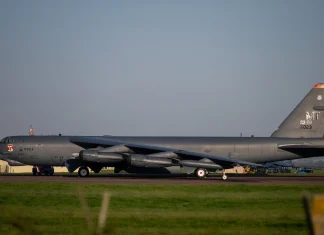
Fear spread quickly across the desert airfield at Edwards Air Force Base on Monday after a US B-52 bomber crashed shortly after takeoff, with...
Irish man 'very wary' after Sydney shark attack

Irish man remains highly cautious following Sydney shark attack

0
Coogee Beach is welcoming swimmers back but with lifeguards on high alert and drones sweeping the water after a weekend shark attack that critically...
Australia social media ban for under 16s to take effect

UK Plans to Prohibit Social Media Access for Children Under 16

0
A sweeping crackdown on children’s online access is coming to the UK, with Prime Minister Keir Starmer announcing a ban on social media for...
Russian strikes kill 11 and set Kyiv monastery alight

Russian attacks kill 11 and ignite historic monastery in Kyiv

0
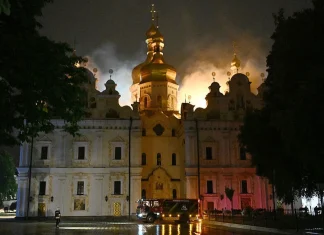
Flames tore through one of Kyiv’s most revered landmarks after Russia unleashed a sweeping overnight assault on Ukraine, a barrage that authorities say killed...