Home Blog Page 50

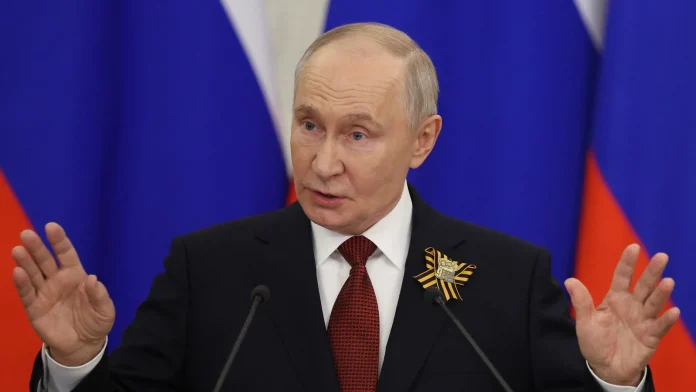
Putin says he believes Russia-Ukraine war is nearing its end

Putin says he thinks Russia-Ukraine war is ending
Mr Putin was talking to the press after the scaled-back Victory Day parade in Moscow

Red Square in an Unsettled Spring: A Parade, a Promise, and a Pause

On a cool May morning, under the brooding façade of the Kremlin, Moscow staged a Victory Day that felt like an echo and a warning at once — familiar ritual refracted through the prism of a war that has already reshaped Europe.

There were the veterans, stoic and small in the face of history; the young cadets, their boots synchronized on the cobbles; the orange-and-black St. George ribbons pinned to coats like stubborn talismans. But instead of the thunder of tanks and the metallic clatter of missile systems, giant screens narrated the might of the military: rolling footage, close-ups of hardware in action, the polished choreography of an army shown at a distance.

And then, in the same afternoon, President Vladimir Putin stepped into the softer light of the Kremlin press terrace and said something that landed like a pebble in a pond of long, dangerous ripples: “I think that the matter is coming to an end.”

What Did He Mean?

Those eight words have been unpacked and repacked across newsrooms and dinner tables. For some, they were a genuine olive branch; for others, a tactical pause, a headline-grabbing line meant to reset the narrative without changing the reality on the ground.

Putin did not, however, retreat from months of rhetoric that framed the campaign as a “special military operation” with aims yet to be fulfilled. He also floated an unusual preference for a negotiator: Gerhard Schröder, the former German chancellor now widely seen in Europe as a controversial Moscow ally. That choice raised eyebrows in capitals where Schröder’s close ties to Russia have long been a political red line.

If you squint at the timeline, the comments arrive at an awkward historical intersection. The invasion of Ukraine in 2022 fractured relations between Russia and the West in a way not seen since the Cold War. Since then, the conflict has stretched — as both sides alternately tightened and loosened their grips — through more than four years of fighting, draining economies, displacing millions, and leaving new scars on the European map.

Ceasefires, Exchanges, and the Politics of Pause

In recent days, diplomacy has come with short windows. The U.S. announced a three-day ceasefire that Moscow and Kyiv each appeared to support, and both sides spoke of prisoner exchanges. President Donald Trump, who has been promoting his own role as a potential broker, told reporters he wanted the pause extended: “I’d like to see it stop,” he said.

Ceasefires have punctuated this conflict before. Some have held for weeks, others for days. The pattern is familiar: a mutual easing followed by a recrudescence. That makes it essential to ask: when a leader of one of the principal parties says he believes “the matter is coming to an end,” is he describing reality, or shaping it?

Voices from the Street: Moscow, Kyiv, and Somewhere Between

“We still bring flowers to the memorials,” said Ekaterina, a 68-year-old pensioner who stood near a war memorial watching the footage on the screens. “Victory Day is the day we remember those who fought fascism. But this… I do not know what to feel. Pride? Fear? It is confusing.”

Across the border in Kyiv, a schoolteacher named Olena folded a student’s drawing of a sunny house into her palm and said, “Any talk of peace is welcome. Children have asked me if the sirens will ever stop. We want a real, lasting agreement—not a pause so someone can regroup.”

A Western diplomat in Brussels, speaking on background, summed up the dilemma: “We welcome any sign of de-escalation. But we cannot mistake a tactical lull for strategic victory. The European security architecture is damaged — trust takes years to rebuild.”

And in a makeshift kitchen near the frontlines, a medic who asked to be identified only as “Ihor” laughed bitterly when asked whether the war could end soon. “We hear these words often,” he said. “Peace always sounds close on the broadcast. Then the field hospital fills again. I want to believe it. But belief is expensive when it means buying bandages.”

The Cold Arithmetic of a Hot War

Numbers do not capture grief, but they contour the conversation. Moscow controls just under one-fifth of Ukrainian territory — a statistic that frames both bargaining chips and strategic dead ends. The war’s duration has already exceeded the length of the Soviet Union’s own Great Patriotic War campaign in 1941–45, a grim historical irony that Russians and Ukrainians know intimately.

Economically, analysts speak of pressure on a roughly $3 trillion Russian economy stretched thin by sanctions, military spending, and the long-term costs of a protracted conflict. Millions of Ukrainians have been displaced. Civilian and military deaths, widely reported as numbering in the tens of thousands and possibly far higher, remain contested and difficult to verify independently.

Negotiations, Mediators, and the Architecture of Security

When Putin mentions altering the security arrangements of Europe, he treads into territory that many Western leaders regard as non-negotiable. The post-1989 order — built on commitments, treaties, and institutions like NATO and the EU — is not simply about lines on maps. It’s about trust, predictability, and a balance of influence.

Calling Gerhard Schröder as his person of choice to mediate may have been a signpost: Russia wants interlocutors who, at minimum, are sympathetic to its view of history and of Western duplicity. For many in Europe, Schröder’s candidacy would be unacceptable. For Russia, it may have been an attempt to shift talks to a friendlier stage.

European leaders have repeatedly said that Ukraine must be able to defend its sovereignty and territorial integrity; some have even insisted that “defeat” of Russia is necessary to prevent further aggression. That rhetorical firmness is rooted in real fears: a Europe that cannot guarantee its own borders risks sliding into renewed insecurity. The specter of the 1962 Cuban Missile Crisis — when the world came close to nuclear confrontation — reminds us how quickly miscalculation can escalate.

Why This Moment Matters Beyond Eurasia

Ask yourself: why should a pause in fighting on a Ukrainian battlefield matter to someone in Lagos, São Paulo, or Seoul? Because wars disrupt markets, migration patterns, and the rules that underpin global trade. Because energy supplies and grain exports have already ripple-effected across continents, touching lives far from the Don or Dnipro rivers. Because the precedent set by this conflict — how revisionist powers are met or resisted — will shape alliances for decades.

And there is a moral dimension. The images we see on screens, the statements uttered by leaders, the displaced families arriving at borders — these are not abstractions. They are human lives in motion, quickened by fear, hope, and the need for practical remedies: shelter, education, medical care, truth.

What Comes Next?

No one can offer certainty. Negotiations could follow and falter. Ceasefires could stretch into fragile peace, or they could serve as breathing space for renewed offensives. Public opinion in Russia shows signs of strain; in Europe, political leaders juggle solidarity with Ukraine against domestic pressure to reduce exposure to an expensive, distant war.

We should listen to the people who live where the maps are changing. We should watch how the international community responds. And we should ask ourselves: what kind of world do we want when the fighting stops — one built on grudges and spheres of influence, or one that invests in institutions, accountability, and the rights of people to choose their own futures?

On a spring day in Moscow, a parade played footage of hardware and a president spoke of endings. In Kyiv, a teacher folded a child’s drawing into her palm. Between them, the work of turning pause into peace — if peace is truly on offer — will be the slow, stubborn labor of statesmen, soldiers, negotiators, and ordinary citizens alike. Will we choose to help that labor bear fruit?
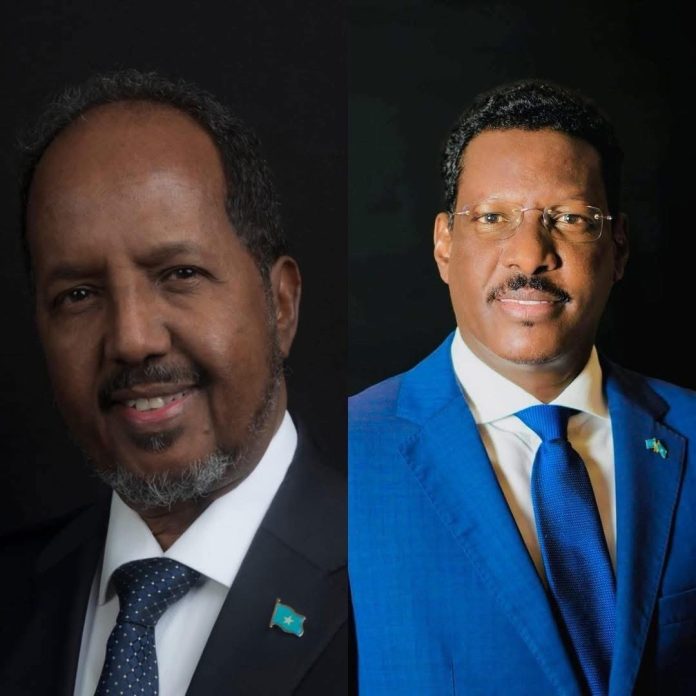
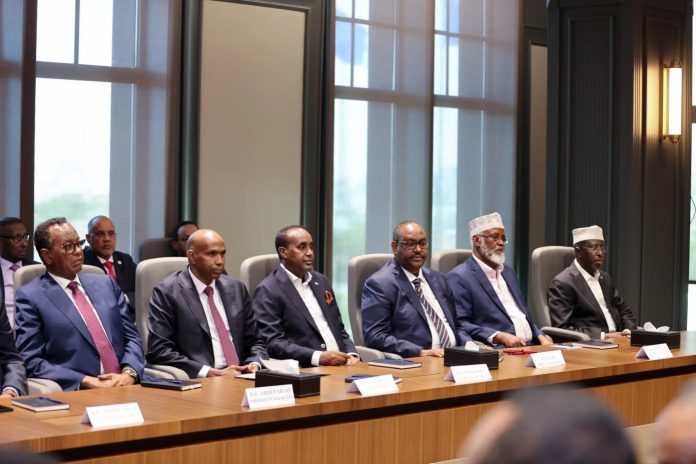
Wadahadal u dhexeeya Villa Somalia iyo Galmudug oo ka furmayo Jabuuti

May 09(Jowhar)Waxaa la filayaa inuu magaalada Jabuuti ka furmo wadahadal u dhexeeya dowladda Federaalka Soomaaliya iyo maamulka Galmudug, xilli ay cirka isku shareertay xiisadda siyaasadeed ee u dhexeysa labada dhinac.

Mucaaradka Muqdisho ku Shiraya oo Maanta Shaacinaya Goobaha Bannaanbaxyada

May 09(Jowhar)-Hoggaamiyeyaasha mucaaradka ee ku shiraya magaalada Muqdisho ayaa lagu wadaa inay maanta si rasmi ah u shaaciyaan goobaha lagu qaban doono bannaanbaxyada la qorsheeyay maalinta berri ah.

World Health Organization Confirms Six Hantavirus Cases to Date

WHO says six hantavirus cases confirmed so far
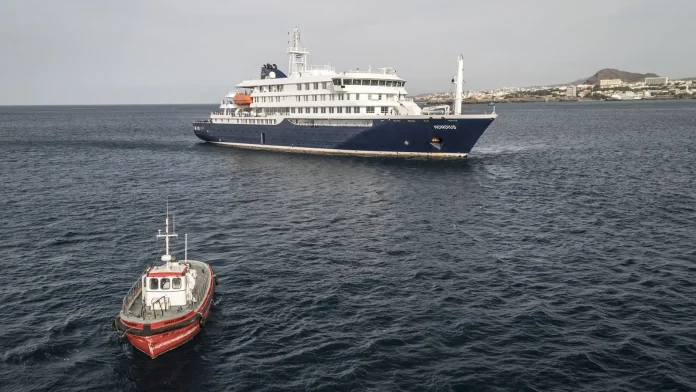
The MV Hondius is expected to arrive in Tenerife tomorrow

The Nervous Approach to Tenerife: A Ship, A Virus, and a World Watching

The MV Hondius cut a pale line across the Atlantic at dawn, a steel spine that has suddenly become more than a vessel for sightseers. On board, blankets and binoculars traded for thermometers and whispered conversations. On shore, officials prepared tarmac, quarantine wards and the kind of careful choreography that turns a routine port call into an international containment operation.

By 8 May, the World Health Organization had tallied eight suspected cases connected to the cruise — six of them confirmed as hantavirus, all identified as Andes virus — and three people had died. That grim ratio, a case fatality rate of about 38% among those reported, sent a ripple through ports, embassies and living rooms from Tenerife to Nebraska.

“We’re treating this with the seriousness it deserves,” a WHO spokesperson said, stressing that globally the risk remains low while the threat to those aboard is moderate. The paradox is stark: a virus that rarely jumps from rodent to human now carries the added chill of documented human-to-human spread in the form of Andes virus.

Repatriation, Quarantine and the Long Corridor Home

For Americans on board, the next steps were mapped with military precision. The US Department of State arranged a repatriation flight that will meet the ship in Tenerife, then shuttle passengers to Offutt Air Force Base in Nebraska. From there, the plan moves them to the National Quarantine Unit at the University of Nebraska Medical Center — a facility purpose-built for this kind of public-health tightrope.

“At this time, the risk to the American public remains extremely low,” the Centers for Disease Control and Prevention said, reassuring millions of other travelers who might be tracking the story. Nebraska Medicine and UNMC echoed that the individuals slated for monitoring are currently well and without symptoms, and that care will be provided in federal quarantine facilities.

“We are in direct communication with Americans on board and are prepared to provide consular assistance as soon as the ship arrives in Tenerife,” a State Department official told reporters, speaking on condition of anonymity. The ship operator, meanwhile, has said there are 17 Americans among the passengers; WHO has noted that nationals from 12 countries had disembarked earlier at the remote island of Saint Helena on 24 April.

What the Numbers Say — and What They Don’t

The headline figures — eight cases, six lab-confirmed, three deaths — are blunt but incomplete. Hantaviruses are a family of viruses typically spread by rodents, and most strains do not pass between people. Andes virus is the outlier: in South America it has been linked to rare, but confirmed, person-to-person transmission, which is what has heightened international concern.

Incubation periods for hantaviruses can vary, generally spanning days to a few weeks, and severe cases can progress quickly to hantavirus pulmonary syndrome, a respiratory failure that can be fatal. Historically, Andes-related outbreaks have carried case fatality rates in the range of 30–40%, which squares with the early numbers from the Hondius.

Voices from the Deck and the Dock

“We came to see ice and penguins and left feeling watched by headlines,” said “Margaret,” a 68-year-old passenger who asked to be identified only by her first name. Her voice carried notebook-paper fatigue — the kind etched by canceled excursions and unanswered questions. “It’s unsettling, but the crew has been calm. That helps.”

At the port of Tenerife, port workers and local officials began to practice a careful choreography: screening, isolation areas, and the delicate business of ferrying anxious travelers to tents and treatment without causing a stampede of fear. “We welcome ships, but we also protect our people,” said a Tenerife municipal official, pausing to adjust his facemask. “This island has faced storms, volcanoes and cruise traffic surges. A virus is another kind of weather.”

Back in Tierra del Fuego, Argentina, where the Hondius made a stop in Ushuaia, provincial epidemiology director Juan Petrina told local reporters that it was “almost zero” likely the Dutch man linked to the outbreak contracted the virus there. He based his assessment on the virus’s incubation period and timing of symptoms — the small calculations that can make a big difference between blaming a town and tracing a chain of transmission.

Expert Take: Why This Matters Beyond a Single Ship

“This is a reminder that our age of rapid, global travel turns a local organism into an international problem in a matter of days,” said Dr. Lena Ortiz, an infectious-disease epidemiologist who studies zoonotic spillovers. “Andes virus is unusual because it can, in documented cases, pass between humans. That changes the calculus of response — contact tracing becomes urgent, and the social side of quarantine becomes crucial.”

Ortiz emphasizes the interplay of culture and containment. “On a cruise, people eat together, talk late in the lounge, attend the same briefings — that’s intimacy. That closeness is what public health teams must respect and work around when they try to break chains of transmission without breaking spirits.”

Small Places, Big Questions

Think of Saint Helena: a speck in the South Atlantic where some passengers disembarked on 24 April. Think of Ushuaia, the windswept edge of Argentina where tour buses rumbled over peat and the world felt very small and very far. Think of Tenerife, volcanic and tourist-crammed, now a junction where global health policy meets human elbow-room. These are not abstract coordinates; they are living communities with markets, cafes and people who will watch the incoming ship with curiosity and fear.

The story also forces broader reflection. How do we balance individual freedoms and rapid repatriation with the imperatives of public health? What responsibility do cruise lines have to passengers and to ports? Are our quarantine infrastructures — often underfunded and politically tricky — prepared for the next time a rare pathogen shows up in an ordinary itinerary?

  • Timeline: ship called at Saint Helena on 24 April; multiple stops followed; Tenerife arrival planned for tomorrow.
  • Health facts: 8 suspected cases, 6 laboratory-confirmed as Andes virus; 3 deaths as of 8 May; WHO assesses global risk as low, passenger/crew risk as moderate.
  • Repatriation flow: Tenerife → Offutt Air Force Base → National Quarantine Unit at UNMC.

What Comes Next?

Public-health teams will continue testing, tracing and, where necessary, isolating. For the passengers, it will be a slow unwinding: the return flights, the checks at Nebraska, the days of watching and waiting while science works in real time. For the rest of us, this episode is a quiet test of global systems — the laboratories, the embassies, the hospitals and the human compassion that must thread them together.

So I ask you: when your next holiday plans pop up on a screen, will you think of the Hondius and the quiet logistics that protect us, or will it all feel too distant? And if the next outbreak starts not on a ship but in your town square, will the nets we are casting today hold?

There are no easy answers. There is, however, an urgency to listen — to health workers in white coats, to porters who greet weary voyagers, to lab technicians who run late-night assays, and to passengers who simply want to get home. Their voices will chart the next chapters of this epic little story, part human drama, part microbial history, and entirely global in reach.

Russia Stages Reduced Parade as Calls for Ceasefire Intensify

Russia holds scaled-back parade amid further truce calls
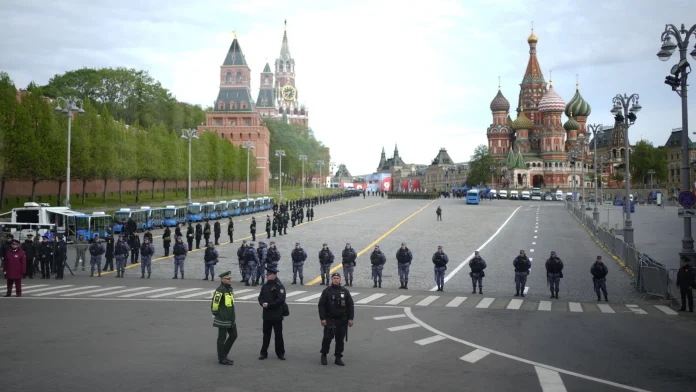
Police officers guard at Vasilevsky Spusk square before the Victory Day military parade in central Moscow

Red Square Without Tanks: A Victory Day Shrunk by Anxiety

Morning on May 9 in Moscow had the rusty comfort of ritual — veterans in battered caps, the clack of unpolished boots on cobbles, a thin spring sun gilding the Kremlin towers — but the parade felt hollowed, like a symphony missing its brass. For the first time in years, the spectacle that once rolled Soviet steel across Red Square arrived without the heavy rumble of tanks; no armored columns crawled over the cobbles to punctuate a nation’s memory with muscle.

“It’s strange,” said Elena Morozova, 68, a retired schoolteacher who carried a faded photograph of a grandfather who fought in the Great Patriotic War. “We come to remember them. Not to see our young men turning into headlines.” Her voice was low, threaded with a grief that has become common on both sides of this long conflict.

Why the Silence of Steel?

The Kremlin called it a practical decision. “In general, everything is as usual, except for the demonstration of military equipment,” Kremlin aide Yuri Ushakov told reporters, offering a bland administrative explanation for a gesture that felt deeply political.

But the context was combustible. After more than four years of fighting since the 2022 invasion of Ukraine, Russia’s leaders evidently judged the optics and risks of rolling heavy armor through the heart of the capital to be unacceptable. Moscow had warned that any attempt by Kyiv to disrupt the event would be met with massive strikes, and foreign diplomatic staff were quietly advised to consider evacuation plans for Kyiv in the event of escalation.

At the same time, an unlikely interlude of restraint emerged: a three-day ceasefire brokered with the public urging of US President Donald Trump — who told reporters, “I’d like to see it stop. Russia-Ukraine — it’s the worst thing since World War Two in terms of life. Twenty-five thousand young soldiers every month. It’s crazy.” The pause was coupled with an agreement to swap 1,000 prisoners, a small piece of humanitarian choreography layered over a war that refuses simple resolutions.

How Victory Day Has Changed

Victory Day, for Russians, is not merely history; it is a sacred calendar marker. On May 9, 1945, Soviet time already made it a day of triumph while Western capitals still marked Victory in Europe (VE) on May 8. For decades, the parade has been a stage for showmanship — nuclear-capable missiles hauled past Lenin’s Mausoleum, veterans paraded shoulder to shoulder with the young men who would someday carry the torch of state power.

This year, fighter jets traced the skies above the Kremlin; soldiers still marched and cheered, and President Vladimir Putin delivered his speech before laying flowers at the Tomb of the Unknown Soldier. The choreography remained, but the props were stripped away, and the absence of hardware felt like a confession: the arsenal that once signaled unchallengeable might is now a liability too dangerous to display.

On the Ground: Moscow in a Box

Security was tight. Checkpoints sprouted like hard, gesturing truths around the city’s center. Roads were blocked. Soldiers perched on pickup trucks — a small, improvisational portrait of an armed society. Around them, life tried to look ordinary: tea poured in sidewalk kiosks, a woman selling St. George ribbons — orange-and-black strips meant to tie the present to the storied past — laughed nervously as she wrapped one around a customer’s wrist.

“We came to honor the past,” said Sergei Ivanov, a market vendor. “But you can feel the worry. People whisper in lines, asking, ‘Will it spread?’”

Pictures circulating online showed the familiar iconography: the red flags, the march past Lenin, the Eternal Flame. Yet the absence of heavy machinery reoriented the whole scene. What had been a blare of strength became a quieter, somehow more fragile tableau.

Voices from the Margins

Opposition voices and hardliners read the change differently. Igor Girkin, a jailed pro-war nationalist and former security officer who has criticized Kremlin strategy, framed the leadership as self-protective. “They are worried about being kicked out of their cabins, not about the ship sinking,” he wrote on social media, using a naval metaphor to describe what he sees as political self-preservation.

Kremlin spokesman Dmitry Peskov, meanwhile, pushed back against speculation that the president’s security had been ratcheted up due to fears of coup or assassination, calling such reports “nonsense.” Whether nonsense or necessity, the day was undeniably smaller in scale and heavier in meaning.

Beneath the Flags: Human Costs and Global Echoes

The War in Ukraine has become the deadliest European conflict since World War II, sparking waves of suffering that ripple far beyond the parade route. Estimates vary, but the death toll now runs into the hundreds of thousands, with millions displaced and cities reduced to rubble. Economies have sagged — trade lines ruptured, investment deferred, sanctions rearranging global markets — even as lines at soup kitchens and volunteer centers lengthen.

“This is not a local quarrel,” said Dr. Ana Petrov, a conflict analyst at a European university. “It is a test of international institutions, of collective security. When a state reimagines its symbols for wartime, you see not only military decisions but social ones: who gets remembered, who gets protected, and who gets sidelined.”

Across the world, people watched the scaled-back parade and asked what it meant about power, memory, and legitimacy. In capitals from Berlin to Beijing, commentators debated whether Moscow’s decision reflected prudence or weakness, resilience or retreat. For those living closest to the front lines, such debates are less academic.

“We don’t care about the parades,” said Mariya, who fled eastern Ukraine in 2023 and now volunteers at a refugee center in Warsaw. “We care about whether our children eat tonight, whether we can sleep without sirens.” Her comment is a sobering reminder: for many, Victory Day’s pageantry is overshadowed by the immediate work of survival.

What Does Memory Owe the Present?

Victory Day is meant to be a bridge between past sacrifice and present identity. But when that bridge is cast in the shadow of a contemporary war, the question becomes thornier. Are we commemorating historical courage, or are we repurposing grief into justification for present struggles? When does remembrance slip into rhetoric?

As fireworks eventually sparkled above the Moscow skyline that night, the shells felt both celebratory and oddly tentative — a city determined to honor a memory while circumspect about the present that memory has been asked to endorse.

So I ask you, reader: what does a nation owe its past when the present is asking so many of its people to pay? And when the instruments of state are too perilous to parade, what does that say about power in the age of modern warfare?

Historic rituals can comfort. They can also reveal. On this May 9, Red Square’s quieter heartbeat told a story that no banner could fully capture: a country insisting on ceremony even as it counts the cost of a war that has touched lives from Kyiv apartment blocks to Moscow kitchen tables — and far beyond.

Hay’adaha caalamiga ah oo ku hanjabaya iney joojinayaan mashaariicda horumarineed ee Soomaaliya

May 09(Jowhar) Sida ay xaqiijiyeen ilo-wareedyada xog-ogaalka ah ee ku dhow hay’adaha caalamiga ah ee ka shaqeeya mashaariicda horumarinta iyo bini-aadantinimada Soomaaliya, walaac xooggan ayaa laga qabaa istaagga mashaariic muhiim ah, ka dib is faham la’aanta hoggaanka Soomaalida.

Welsh First Minister Ousted from Senedd Seat in Election Upset

First Minister of Wales loses seat in Senedd election
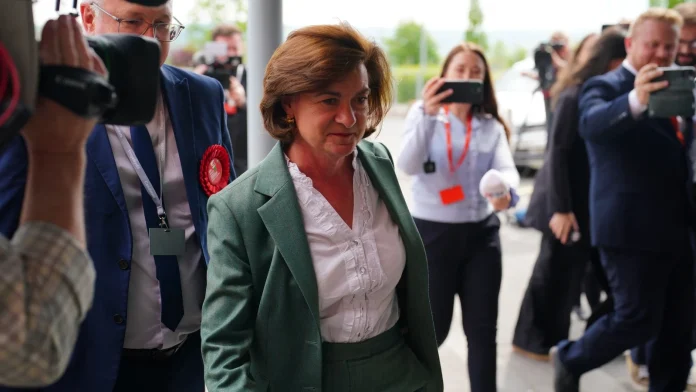
Eluned Morgan arriving at the Ysgol Bro Teifi counting centre in Ceredigion in Wales today

Wales at an Inflection Point: The Fall of a First Minister and the Dawn of a New Political Map

There was a hush in the counting hall — the kind that happens when everyone knows the facts are about to change. Stacks of ballot boxes, a kettle perpetually boiling, volunteers flipping through pages of numbers: it felt less like ceremony and more like history being unstitched. By the end of the night, Eluned Morgan, the First Minister of Wales, would not return to the Senedd. For the first time since the parliament’s birth in 1999, a sitting leader lost their seat. The reverberations are still settling.

The immediate scene: fatigue, disbelief, and resigned applause

“I didn’t expect this,” said Carys Hughes, who runs a small bakery near the counting centre. “People were pinning their hopes on familiarity — but the mood changed in weeks.” Her hands, butter-splattered from the morning batch, nervously tapped the counter. Her words carried a local grief: not just for one politician, but for what the result signals about identity and representation in communities that have long trusted Labour.

For Ms Morgan, who had been a member of the Senedd since 2016 and a minister since 2017, the path to leadership was brief but historic. She became the first woman to hold the role of First Minister of Wales amid turbulence: one predecessor lasted only five months. Now, in an abrupt turn, she has left the chamber she sought to steer.

Numbers and what they mean

The architecture of the Senedd has shifted. Under the new voting system, Wales is divided into 16 constituencies with six Members of the Senedd (MSs) each — 96 representatives in total. Analysts and party insiders said Welsh Labour could be cut down from roughly 30 MSs to about 10. A party spokesperson described the result as “deeply disappointing,” acknowledging that Labour would no longer be in a position to form government and would instead serve as a vocal opposition.

“This has undeniably been a very difficult election for Welsh Labour,” the spokesperson said. “We now expect to lose several hardworking and respected Members of the Senedd. We thank them for their service to their communities.”

Huw Irranca-Davies, the deputy first minister, seemed to accept the bleak arithmetic even as ballots were still being tallied. “I don’t think we’re going to be in that situation,” he told the BBC when asked if Labour could still lead the next government. The language was quiet, resigned—like a captain conceding a storm he couldn’t steer through.

How the ground shifted: the rise of Plaid Cymru and Reform

Long a party of regional pride and cultural advocacy, Plaid Cymru picked up momentum this cycle, topping polls for much of the campaign. Across market towns and coastal villages, red flags were replaced by green conversations about devolution, the Welsh language, and a vision of governance that felt more locally rooted. Meanwhile, Reform — buoyed by national discontent and an increasingly vocal electorate seeking alternatives — also made gains.

“From what we have so far… it’s looking good,” a Plaid Cymru source said as the night unfolded. “The Labour vote has collapsed.”

That collapse is not just a party-level defeat. It’s a reminder of seismic shifts in voter priorities: from bread-and-butter services and union loyalty, to identity, regional autonomy, and a demand for new voices at the table. For many voters, the familiar promise of Labour was no longer serving as a sufficient answer.

Voices from the valleys and the coast

At a community centre in the Amman Valley, retired miner Dai Morgan held court over a chipped mug of tea. “People here are angry,” he said. “Not just with Westminster or Cardiff — with a hollowing out of what used to be our way of life.” His daughter, a teacher, nodded. “There’s a sense that decisions are being made somewhere else, and they don’t see us.”

In contrast, a young nurse, Asha Rahman, spoke of hope. “We want representation that listens. That’s why I volunteered on a Plaid campaign. It’s not hatred of Labour — it’s hunger for change.” Her eyes were tired but fierce. “Politicians should feel the pulse of the wards, the clinics, the schools.”

National ripples: what this means for the UK

The losses in Wales occurred during a broader moment of turbulence for Labour across the UK. British Prime Minister Keir Starmer acknowledged responsibility for a “tough” set of local election results in England where hundreds of Labour councillors were voted out. The Welsh outcomes amplify a critical question: how will Labour recalibrate when long-held strongholds wobble?

Political scientist Dr. Aled Price of Cardiff University offered a measured view. “This is a wake-up call,” he said. “Labour’s machinery in Wales has not been immune to the same trust erosion affecting centre-left parties elsewhere in Europe. Voters are signaling a desire for clearer localism and cultural affirmation.”

He added: “But let’s be cautious about hyperbole. Realignment takes time. Expect an intense period of reflection, policy revision, and re-engagement.”

Beyond party politics: cultural questions and civic fatigue

Wales is small, but its identity is big. From chapel choirs to rugby terraces, language revival projects to local festivals, the cultural bones of the nation dictate political rhythms. The rise of parties emphasizing Welsh distinctiveness is as much cultural as it is political. It’s a reclaiming of narrative and governance — a demand to shape the future without being filtered through Westminster lenses.

Yet there are undercurrents of civic fatigue: lower trust in institutions, anger at perceived elites, and a yearning for more participatory local government. That combination is potent. It is reshaping who gets to speak for Wales, and who gets heard.

What comes next?

For Welsh Labour, the road ahead will be painful and introspective. For voters, it is an invitation to reimagine representation. For the country, it is a test of democratic resilience: can institutions absorb such a shock and channel it constructively?

As the dust settles, one question lingers — and it’s one every reader should consider: What kind of politics do we want in our communities? Do we prefer the comfort of old alliances, or the risk and promise of new voices? Wales has chosen a new chapter; the rest of us are watching, learning, and perhaps asking ourselves the same thing.

Hostage standoff at German bank ends; police confirm no injuries

Hostage-taking at German bank over, no injuries - police
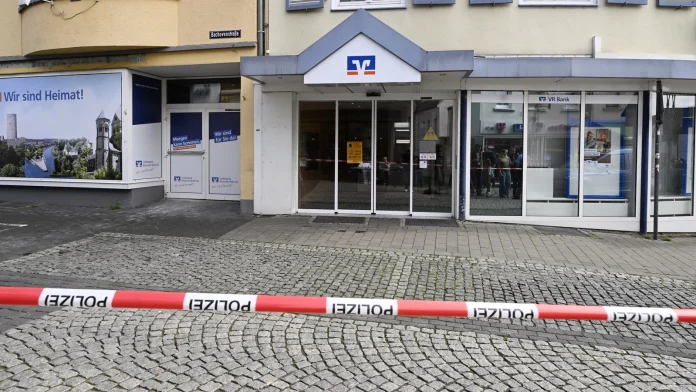
A police cordon in front of a bank following a robbery in Sinzig, western Germany

Morning Tension in a Riverside Town: How Two People Were Freed from a Bank Vault While the Perpetrators Slipped Away

There are towns whose rhythms are measured by church bells and bakery ovens. Sinzig, a compact, cobblestoned town just west of the Rhine between Bonn and Koblenz, is one of them. On an otherwise ordinary morning, that rhythm was broken by a siren, the clack of boots on stone and the hush of people pressed to shop windows, craning for a glimpse of what had happened inside their local bank.

At about 9 a.m., staff at a branch in the town centre triggered an automatic alarm. What followed was taut and surreal: two people were found locked inside a vault and later released unharmed by a specialised police unit, while the alleged perpetrators vanished into the mist of the morning as if by design.

The scene

“We arrived to find the square cordoned off and rifle-bearing officers in helmets and ballistic vests,” said a police spokesman at the scene. “After clearing adjoining buildings we entered the bank and located two people in the vault. They were not injured.”

Local witnesses describe the scene differently depending on where they stood. “I was on my way to the bakery,” said Martina Becker, who runs a newsstand across from the bank. “I saw the cash-van pull up, the men in masks. Ten minutes later, the alarm went off and everyone ran. It felt like a film—except it was our street.”

Police now believe the perpetrators managed to lock the individuals in the vault and then leave the premises before officers could seal the area. “Evidence suggests that immediately after confining the people in the vault, the suspect or suspects departed by as-yet-unknown means,” the local authority said in a brief statement.

How the morning unfolded: a timeline

  • ~9:00 a.m. — An armoured cash-in-transit van arrives at the bank for a routine delivery.
  • Shortly after — Suspects allegedly intercept the van and enter the bank, taking two people into a vault.
  • An automated alarm brings law enforcement to the scene; a containment of the town centre follows.
  • Special units (SEK) enter the bank and free two people unharmed; no suspects are found on site.
  • Searches of neighbouring buildings and streets are launched; a chase remains ongoing.

What we know — and what we don’t

Investigators confirmed the driver of the cash transport van was among the two people locked inside the vault. Beyond that, descriptions of the suspects remain scant. A spokesman at the scene said that searches of surrounding buildings had so far drawn a blank and that the manhunt was active.

“We are following up on several leads,” said Inspector Lukas Haase of the Rhineland-Palatinate police. “At this stage we cannot rule out that the perpetrators had an accomplice or used vehicles staged nearby. For the safety of the investigation, we will release further details later.”

Voices from the town

For residents, the incident revived old anxieties about crime and newer worries about tactics that seem drawn from action movies rather than real life. “It’s frightening,” said Karin Scholz, who runs a small café two doors down. “You never imagine something like this in Sinzig—our children come here after school. You think of big cities, not our cobbles.”

Mayor Thomas Jansen spoke to reporters with composure that mixed relief and concern. “We are grateful the two people are safe,” he said. “But this event leaves questions about public safety and the security of cash transports. We will work with police to review procedures and support the victims.”

Expert perspective: a shift in tactics

Criminologists say the case highlights two trends: first, that criminal groups are adapting to a changing cash landscape; second, that they are increasingly willing to employ bold, time-sensitive tactics to get what they want.

“Across Europe, the number of traditional bank robberies has fallen over the past decade as electronic payments rise,” said Dr. Anna Meier, a researcher at the Institute for Security Studies. “But cash still has value, and organised groups have turned to ‘high-yield’ strategies—ambushing cash-in-transit vehicles, locking people in vaults to buy time, or using rapid escapes that exploit gaps between alarm activation and police arrival.”

Dr. Meier cautioned against panic but urged attention to structural vulnerabilities. “Armoured van deliveries, while designed to be secure, are predictable in time and place. That predictability can be exploited if additional safeguards aren’t layered in.”

Context and numbers

Germany remains one of Europe’s most cash-reliant large economies, particularly for retail transactions and savings. While precise figures fluctuate year by year, policymakers and banks note a gradual shift toward cashless payments—accelerated by the pandemic—but also a persistent cultural attachment to cash, which still circulates widely in the country.

Meanwhile, security experts point out that robberies of cash transports, though rare, can be highly lucrative. Police in recent years have reported several sophisticated heists across Europe that netted large sums and prompted renewed debate on how to safeguard cash logistics and protect employees who handle daily deliveries.

What this means for small-town life

If you live in a place like Sinzig, questions arise quickly: Should banks change how they accept deliveries? Should couriers vary routes and timings? Is there a need for more visible police presence?

“We don’t want our town to turn into a fortress,” said Mayor Jansen. “We want to stay welcoming while ensuring safety. That’s a balance many communities face.”

Locals have also talked about the intangible cost of such incidents. “People will be more cautious,” said Martina Becker. “They’ll check doors twice, pick up children from school sooner. That changes how a town feels.”

Looking outward: broader implications

Beyond the immediate drama is a conversation about how societies value and protect cash, how criminal networks evolve, and how policing adapts to rapid, unconventional threats. The Sinzig incident may be an isolated act, or it might be a bellwether—an early note in a longer, more complex melody of criminal innovation.

As the hunt continues today, one thing is clear: the two people freed from the vault will have to reconcile the shock of being trapped with the relief of escape. And Sinzig—its cafés, its church bells and its cobbled lanes—will be left to patch the small but palpable breach in its sense of safety.

What would you change in your own town if something like this happened? How do we balance convenience and security in an age when the audacity of crime seems to grow as quickly as our technology? These are the questions Sinzig’s residents are asking as they wait for answers from investigators—and for the return of an ordinary morning.

David Attenborough oo ah khabiir dabiici ah ayaa u dabaaldegaya dhalashadiisa 100 saano

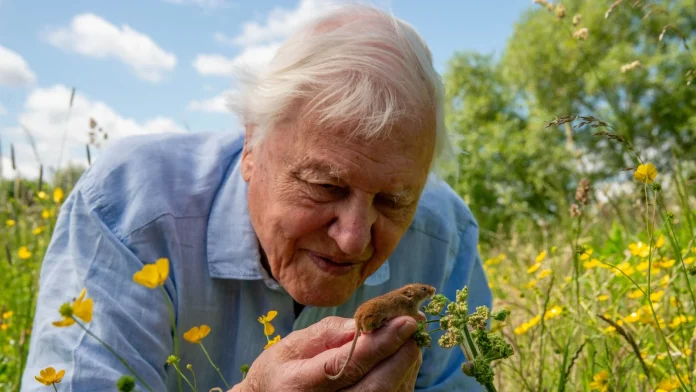
Renowned naturalist Attenborough marks 100th birthday

May 09 (Jowhar)-Sir David Attenborough oo ah khabiir dabiici ah oo Ingiriis ah oo caan ah isla markaana ah weriye ayaa 100 jirsaday intii ku jiray barnaamishka caan ka ah ee dabeecada aan ku nool nahay.

Icelandic referendum on EU membership marks major turning point for Ireland

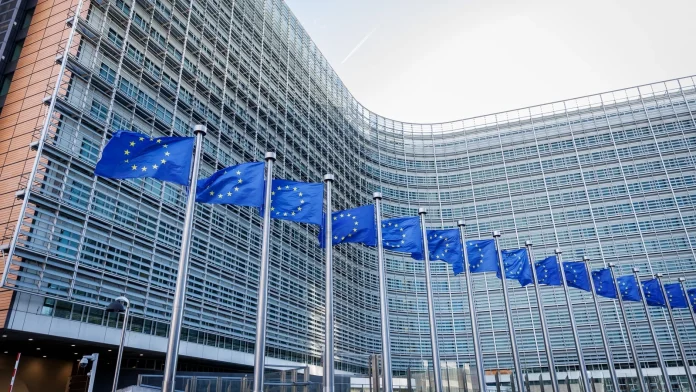
What is the EU's anti-coercion 'bazooka'?
The so-called 'bazooka' is intended to deter economic coercion against the EU

When a Vote in Reykjavik Ripples Across Europe

On a wind-swept morning in Reykjavík, the flags over Alþingi flap like punctuation marks against a gunmetal sky. Coffee steams in cups on café terraces; a fisherman hauls his nets, and a poster with simple blue-and-gold stars appears overnight in a busy square. The question on the horizon is not only legal or technical. It’s intimate: who are we, as a people? And where do we want to stand in a continent that keeps reinventing itself?

On 29 August, Icelanders will be asked whether to reopen talks for membership in the European Union. It is a decision that, for a country of roughly 393,000 people, carries outsized symbolism and real-world consequences — for fisheries and trade, for defence and diplomacy, for language and identity.

Why this matters to Ireland — and to the rest of Europe

In Dublin, Thomas Byrne, Ireland’s Minister of State for European Affairs, speaks with the kind of careful enthusiasm diplomats cultivate. “If Iceland decides to pick up the conversation again, it would be a milestone — not just for them, but for our union,” he told me. “Iceland suspended the accession process years ago. To restart would be like another country saying, ‘Yes, we are ready to belong in a different way.’ That resonates.”

There is practical logic to his interest. Ireland, a long-standing EU member with a proud history of neutrality, sees echoes of its own journey in Iceland’s debate. During the period in which Iceland paused accession talks, an Irish EU presidency coincided with the suspension — an irony not lost on officials who track institutional timelines and the subtleties of European goodwill.

Backing up the drama with facts

Iceland applied to join the EU in 2009 after the financial crisis that shook its economy. Negotiations were paused in 2015 following a political shift at home. Today, Reykjavík is part of the European Economic Area, contributing to the single market in goods and services since the EEA Agreement came into force in 1994. It’s also a member of the Schengen zone, which allows passport-free travel between 29 European countries, and has been part of NATO since its founding in 1949. Any accession would therefore be a recalibration rather than a wholesale reinvention.

There are two votes to consider: first, the referendum on whether to resume negotiations; second, if talks are successful, a future referendum on actual membership. That two-step democratic path is one reason the Icelandic debate feels both cautious and hopeful.

Voices from the island: worry and wonder

On Laugavegur, Reykjavík’s main street, opinions bubble up like geothermally heated water. “My father fished these waters his whole life,” says Sigríður, a woman in her fifties who manages a seafood stall. “We are proud of our quota system. Joining the EU — how will that change what we can catch? That’s the worry.”

Opposite Sigríður’s stall, a young teacher named Jón offers a different tone. “Language is living. Being in Europe could mean more resources, more cultural exchange. I look at Irish. Despite everything, Gaeilge has found a platform in Brussels. That’s something we discuss at school.”

Those conversations are baked into kitchens and pub booths across the country. A retired coast-guard, Gunnar, leans back in a chair and admits: “For us the seas are everything. We want to protect them, but we also want our sons and daughters to have options. If being in the EU opens doors for them, maybe it’s worth the fear.”

Experts weigh in

Dr. Edda Markúsdóttir, a political scientist at the University of Iceland, frames the decision in broader terms. “This is about sovereignty, economy, identity, and security. Iceland has been navigating these waters externally for decades — in the EEA, Schengen, NATO. EU membership would formalise certain things and complicate others. But democratically, it’s healthy that the people choose.”

EU policy analyst Caroline Hughes adds context from Dublin: “Small states often face trade-offs between open markets and political autonomy. Iceland’s economy is highly specialised — fisheries, tourism, renewable energy — and any accession negotiation would be intensely technical.”

Fisheries, language, and the logic of security

Perhaps the thorniest topics are fisheries and defence. Icelandic waters are among the richest in the North Atlantic; control of those resources defines livelihoods and national myth. Brussels’ common fisheries policy has historically been a red line for many applicants. Yet, as negotiators know, transitional arrangements and opt-outs can be crafted — preserves, bridges, and safety valves that respect local specifics.

On security, Ireland offers a lesson in nuance. A neutral country and EU member since 1973, Ireland maintains an opt-out on certain defence commitments. “I explained to my Icelandic colleagues that being in the EU does not automatically pull you into military structures,” Minister Byrne said. “The Union is diverse in how countries approach defence.”

Language too has its defenders. Thórgerður Katrín Gunnarsdóttir, Iceland’s foreign minister, has publicly voiced concerns about preserving the Icelandic tongue. Many locals see this as a crucial piece of the puzzle. “Culture is not a static museum piece,” says Halldór, a librarian. “It lives in schools and online chats, in the slang of teenagers. European membership can bring funds for education and media in minority languages.”

What’s at stake for Europe?

Ask yourself: what does a tiny island in the North Atlantic mean to the future of a continent that’s wrangling with migration, climate change, and a shifting geopolitical map? Iceland’s strategic position in the Arctic, its renewable energy potential (massive geothermal and hydro resources), and its role in fisheries governance make it more than a dot on the map. EU membership would nudge Brussels’ Arctic policy, alter environmental stewardship of sensitive waters, and put another small democracy at the European table.

Already, the EU has levers that affect Iceland: trade agreements, regulatory frameworks, environmental directives. Full membership would consolidate those links — and demand compromises. That is uncomfortable, but it is also the essence of democratic integration: the art of give-and-take.

Looking ahead — a moment to reflect

As campaign posters multiply and political debates intensify, there is a quieter, human story at play. People worry about fish quotas and passports; they hope for cultural support and economic stability. They imagine their children’s futures. They argue in cafés and message threads, and they listen to voices from abroad — including a small nation that once reimagined itself after a crisis and saw Europe as part of the answer.

What would you choose, if you were Icelandic for a day? Would you prioritize sovereignty over shared governance? Security over cultural caution? These are not abstract academic exercises. They are questions that ripple into daily life: the price of bread, school funding for language classes, a son’s ability to work across borders.

Final turn

On 29 August, an island nation will take another look at its future. Whatever the result, the moment is a reminder that European identity is not fixed; it is forged continually in public squares, parliaments, and living rooms. This is democracy doing its messy, luminous work.

And if Iceland votes to resume negotiations, as some expect, it will be more than a diplomatic footnote. It will be a reminder that even the smallest countries can reshape larger conversations about belonging, stewardship, and the global role of regional unions. Europe will be watching — and listening — as a people decide how they want to be known.

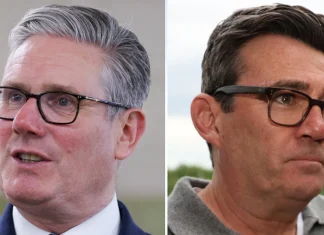
Burnham allies want Starmer to set out timetable to leave

Burnham allies urge Starmer to outline a timeline for stepping down

0
Andy Burnham's supporters are urging British Prime Minister Keir Starmer to spell out, within days, a timetable for stepping aside in September — arguing...
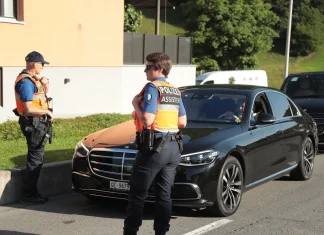
Uncertainty over Iran talks as Swiss meeting scrapped

Uncertainty Grows Over Iran Negotiations After Swiss Meeting Is Canceled

0
Plans for US and Iranian negotiators to sit down in Switzerland today were abruptly shelved, injecting fresh doubt into when the next round of...
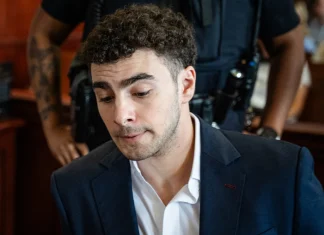
Luigi Mangione withdraws mental health defence for trial

Luigi Mangione Drops Mental Health Defense Ahead of Upcoming Trial

0
In a key shift ahead of a closely watched New York murder trial, Luigi Mangione is—for now—pulling back from a defense that he was...
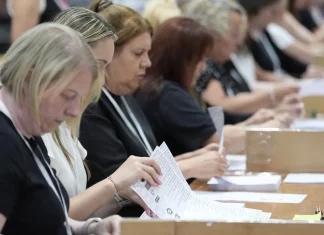
Counting of votes under way in crucial UK by-election

Vote counting begins in pivotal UK by-election as results awaited

0
Ballot papers are being tallied in Makerfield in northwest England after voters cast their verdict in a by-election that many see as a potential...
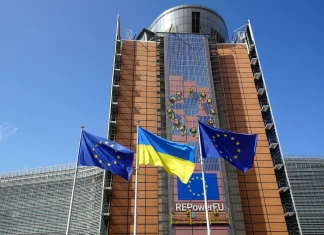
EU should fast-track membership for Ukraine - Zelensky

Zelensky urges EU to fast-track Ukraine’s path to membership

0
As EU leaders gathered to discuss the bloc’s future, Ukrainian President Volodymyr Zelensky delivered a blunt message: Europe’s direction is being forged on the...