A Festival of Flags, Friction and a Cultural Standoff: Why More Than 1,100 Musicians Are Boycotting Eurovision 2026
There is a peculiar hush at the edges of what is usually the music world’s most raucous party. The Eurovision Song Contest—known for its glitter, camp performances, and a viewing audience measured in the hundreds of millions—now finds itself the focus of a political rupture. Over 1,100 musicians, composers and cultural workers have put their names to a public call for a boycott of Eurovision 2026, arguing that the contest should not platform Israel while the conflict with Palestine continues.
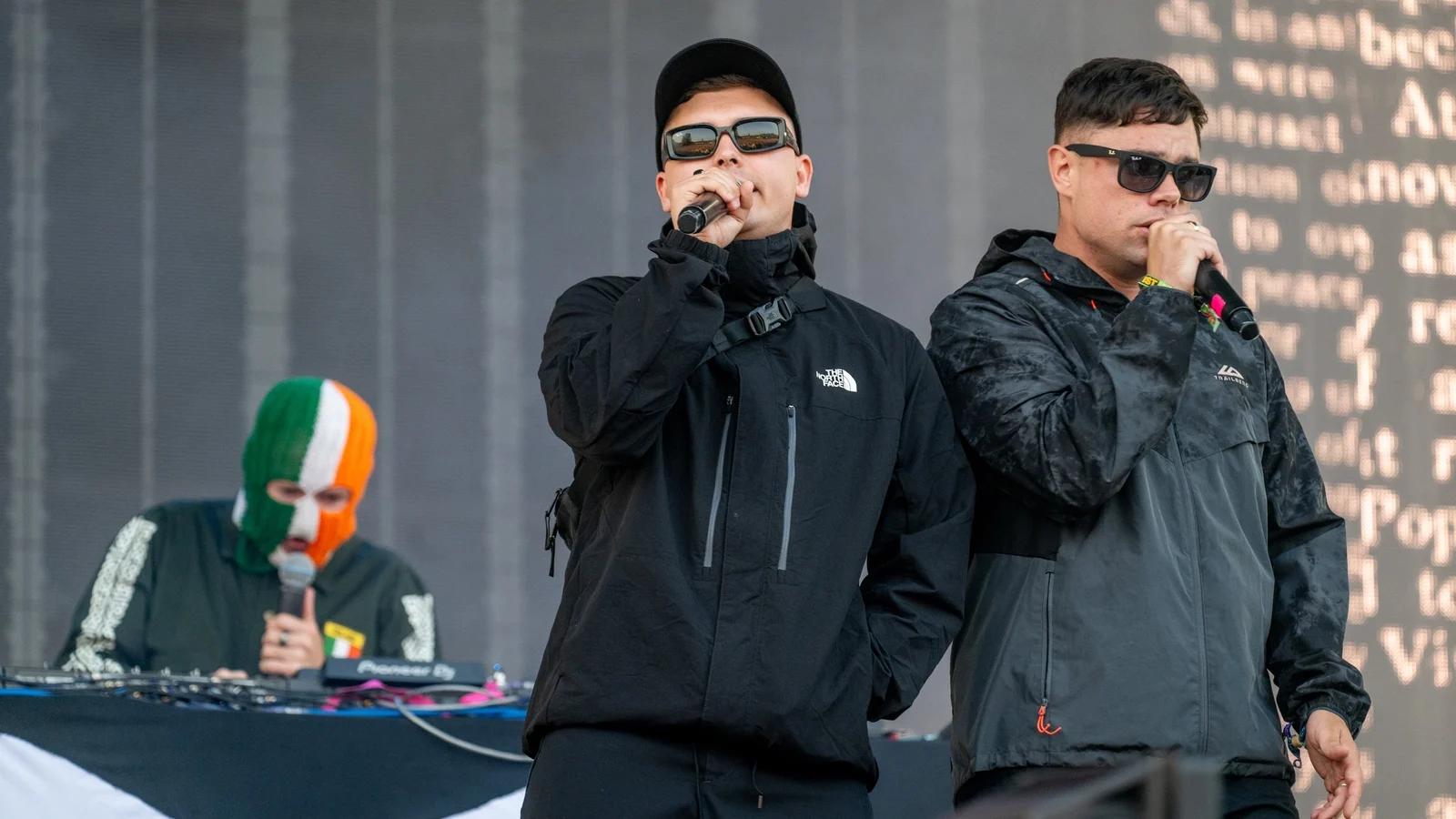
The letter, coordinated by the campaign group No Music For Genocide (NMFG), stitches together an unlikely chorus: veteran rockers, electronic producers, anti-war rappers and festival crew. On the list of signatories are familiar names—Kneecap, Paloma Faith, Massive Attack, Paul Weller—as well as producers and luminaries often tucked behind the scenes: David Holmes, Brian Eno, Peter Gabriel and Macklemore. The signatories demand action from public broadcasters and fans alike: refuse to participate, stop streaming, and do not host or volunteer at Eurovision events until Israel is excluded.
What the letter says — and why it matters
“We refuse to be silent,” reads the letter, whose language moves between moral urgency and cultural strategy. It explicitly accuses Israel of committing genocide in Gaza and says that allowing Israel to perform at Eurovision would amount to the contest “whitewashing and normalising” alleged state violence. The letter also points to precedent: the European Broadcasting Union (EBU), which runs Eurovision, banned Russia in 2022 after its full-scale invasion of Ukraine. The signatories argue that the EBU’s differential treatment reveals hypocrisy.
“Russia was banned from Eurovision in 2022. Israel has been murdering Palestinians for decades and is now committing genocide – and for the third year running, they’re welcomed back onto the stage,” say representatives of Kneecap, the Irish rap trio known for blending political ferocity with traditional music. “That’s not neutrality. That’s a choice.”
Artists who signed say they have already felt the costs of speaking out—lost bookings, canceled tours, even legal troubles. “We’ve paid a price for speaking out… and we’d do it all again tomorrow. Silence is complicity,” the trio adds. “No stage for genocide. Free Palestine.”
Voices from the street and the studio
On a rainy evening in a Dublin pub that usually hosts Eurovision watch parties, the mood is unsettled. “It used to be an excuse to dress silly and drink cheaper wine,” says Aoife, a 34-year-old primary school teacher and lifelong Eurovision fan. “Now people are asking whether it’s right to cheer while people are dying. That conversation is pretty uncomfortable.”
In London, where Massive Attack’s Robert Del Naja was arrested during a mass protest earlier this month, musicians speak with a mix of outrage and weary resolve. “Music has always been political,” says a session drummer who asked to remain anonymous. “When a contest with that kind of viewership becomes part of a diplomatic playbook, artists and crew become complicit in mythmaking if we show up and clap along.”
Not everyone agrees. An unnamed EBU insider told multiple outlets previously that the contest aims to unite, not divide—and that Eurovision has long provided a stage for marginalized voices. “Our remit is cultural exchange,” the source said. “We are not a forum for state policy.” The EBU has been contacted for comment on the boycott and has not issued a public response to the NMFG letter as of publication.
How wide is the boycott call?
NMFG isn’t asking only performers to stay away. Their list is broad: national broadcasters, volunteers, venue technicians, stagehands, fans hosting viewing parties, and online platforms that stream the event. The campaign has also pointed to recent withdrawals by the national broadcasters of Ireland, Iceland, Slovenia, the Netherlands and Spain as models—calling on other countries to follow suit.
The group frames the move as part of a wider, global push to isolate institutions and industries seen as complicit in state violence. “From the Palestinian Campaign for the Academic and Cultural Boycott of Israel to creative collectives in Hollywood and film workers in Europe, this is not an isolated chorus,” an NMFG organiser said. “It’s part of a global refusal to normalise what many believe is ongoing genocide.”
History, hypocrisy and the politics of pop
Eurovision is a soft-power behemoth. For more than five decades it has been a stage for geopolitics disguised as pop spectacle. Israel’s participation has been a recurring flashpoint: the country first entered the contest in 1973, and, according to NMFG, has been present for 53 years—a tenure they say has coincided with policies they describe as apartheid and occupation.
The comparison to Russia’s ban is a central grievance. Critics argue that the EBU’s 2022 decision set a precedent: when a nation’s military actions reach a threshold of international condemnation, cultural exclusion becomes an accepted sanction. Supporters of the EBU counter that the contest was designed to bridge divides, not deepen them.
“Culture can’t be divorced from politics,” says Dr. Lina Khatib, a scholar of cultural diplomacy. “Events like Eurovision have always been about more than catchy choruses. They’re a forum for projecting national identity, and that projection can either humanise or whitewash actions depending on the optics.”
Beyond the headlines: what the stakes are
Ask yourself: what does it mean when art and alliance collide? For fans who love the kitsch and communal joy of Eurovision, the thought of political boycotts feels like an intrusion. For activists and artists who see the contest as a global billboard, playing along may feel like acquiescence to an injustice.
The practical stakes are real. Eurovision seasons generate ad revenue, tourism and platforms for emerging artists. Pulling broadcasters out would change viewership patterns, and a large-scale boycott could force broadcasters and the EBU to make a choice—either maintain the contest’s current policies or confront a mass cultural withdrawal that could reshape the event for years.
How people are responding across the cultural ecosystem
- Musicians and road crews are being asked to decline work tied to Eurovision until Israel is excluded.
- Film Workers For Palestine and academic boycott campaigns are coordinating awareness efforts and cultural strikes.
- In some ports across Italy and Morocco, dockworkers have reportedly refused to service equipment linked to events or broadcasts in solidarity with Palestine.
Where do we go from here?
The coming months will test whether music can be both a balm and a battleground. Will the EBU respond to the moral calculus presented by thousands of signatories? Will broadcasters calculate the political cost of silence versus the financial cost of a withdrawal? And perhaps more intimately, will fans continue to treat Eurovision as a nightly ritual untroubled by the lives and deaths it might indirectly touch?
“I don’t want to see music used to sanitise anything,” says Fatima, a Palestinian cultural worker in Beirut. “But I also know many artists on these lists feel enormous ambivalence. No one wants to see culture weaponised—but turning away is also hard when music is a survival tool.”
Whatever comes next, one reality is clear: Eurovision is no longer merely a contest about catchy hooks and stage pyrotechnics. It has become, for many, a mirror reflecting larger global fractures—questions of accountability, the limits of cultural diplomacy, and whether entertainment and ethics can ever be neatly divorced.
So where do you stand? When the curtain rises in 2026, will the world sing—and at what cost? The debate is no longer backstage. It is playing out under the brightest lights.