When the Market Grew Quiet: Ebola Returns to Eastern Congo
The sun rose over Bunia like any other morning — but the market, usually a tangle of voices, plastic tarps and clattering scales, felt different. Vendors wrapped their wares tighter. Fewer shoppers lingered for the small talk that is the economy’s secret currency. A child chased a goat down the alley and his laughter died fast as people stared at the new posters tacked to the clinic door: “Ebola — Report Symptoms. Avoid Close Contact.”
This hush is the sound of a community remembering an old, terrible lesson. Health authorities in the Democratic Republic of Congo (DRC) have declared a fresh outbreak of Ebola in the northeastern Ituri province, a region that shares porous borders with Uganda and South Sudan. Officials say the virus has already sent a tremor across the border: Uganda confirmed that a 59-year-old man from the DRC died in Kampala earlier this week, and his body was returned home the same day. He has been identified as an imported case linked to the Ituri outbreak.
Numbers that Demand Attention
At the time of reporting, regional health agencies listed 246 suspected cases and 65 deaths inside the DRC. Those figures, raw and grim, tell part of the story: a disease both swift and stealthy, touching remote villages, refugee camps and trading towns where people are always in motion.
“This is not a small flare-up,” said a senior epidemiologist with a West African public health institute. “When you see hundreds of suspected cases and tens of deaths in a short window, that signals a chain of transmission that can accelerate quickly if not contained.”
Why the Strain Matters
Not all Ebolas are the same. Tests on the fatal case treated in Uganda show infection with the Bundibugyo strain — a species of the Ebola virus first identified in the mid-2000s. Unlike the Zaire strain, for which we have licensed vaccines and which has produced some of the deadliest epidemics on record, Bundibugyo currently lacks a widely available, approved vaccine.
“We have tools for some strains, but not all,” said a World Health Organization outbreak specialist. “That complicates the response because ring vaccination — one of the fastest ways to stop spread — is not an option with Bundibugyo in the same way it has been for Zaire.”
That gap matters. Vaccines such as rVSV-ZEBOV have been game-changers for Zaire Ebola virus outbreaks, helping blunt chains of transmission across past epidemics. The absence of a similar, approved countermeasure for Bundibugyo makes classic public-health tactics — rapid diagnosis, isolation, contact tracing and safe burials — even more critical.
On the Front Lines: People, Places, and the Strain on Systems
Ituri is a place of intense human movement. For decades, insecurity and economic desperation have pushed families to flee, trade and regroup across borders. “People here are used to crossing for markets, for family, for safety,” said a nurse who has worked at the Bunia health center for 14 years. “When you add a virus that spreads through close contact, that movement becomes our greatest vulnerability.”
The DRC is no stranger to Ebola. Since the virus was first identified in 1976 near the Ebola River — within the borders of what was then Zaire — health workers in the country have repeatedly faced the same enemy. The North Kivu outbreak of 2018–2020, the country’s largest in recent memory, provided hard-earned expertise in community engagement and rapid response. Yet it also exposed limitations: fragile health systems, intermittent access for responders because of insecurity, and the deep mistrust that can crop up when communities have been failed by authorities for years.
“Experience helps, but every outbreak is its own challenge,” said an international public-health adviser currently embedded with Congolese teams. “Here, the security situation and cross-border human flows make containment more complicated. We can do everything right medically and still lose ground if people are moving because they must.”
Voices from the Ground
“We are scared,” said Anne-Marie, a Bunia resident who runs a tea stall near the market. “When they told us it was Ebola, people stopped coming. But who will buy tea? We need to survive. How do you avoid life when life itself is a market?”
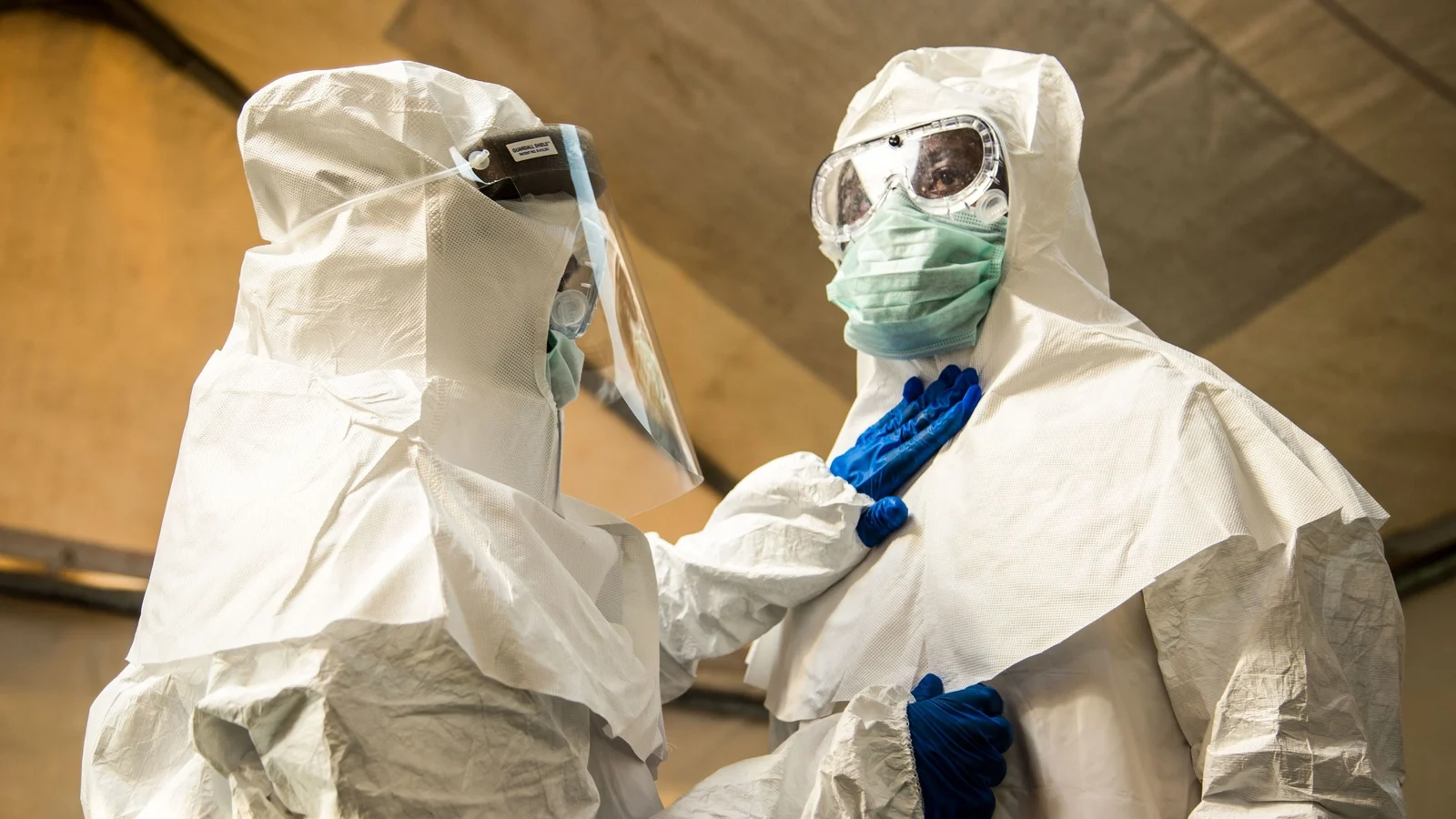
A community health worker added, “We put on protective gear, but the heat is unbearable. People ask questions we cannot answer: ‘Will they come?’ ‘Can this cross to our village?’ We try to reassure them while racing the clock.”
Across Borders: The Ugandan Connection
Public health knows no borders. Uganda’s quick confirmation of the imported fatality — and the fact that the body was repatriated the same day — underscores the cross-border realities. Health officials in Kampala emphasized that they had not detected any local transmission but raised the alarm early.
“This was an imported case, and there is no evidence of community transmission in Uganda at this time,” a Ugandan health ministry spokesperson told reporters. “But we are increasing surveillance at border points and working with our neighbors to track contacts.”
That sort of cooperation will be essential. In past outbreaks, porous borders and movement of people have turned localized flare-ups into regional crises. The economies of East and Central Africa are interlinked; informal trade routes, family ties, and displaced populations mean health threats can jump borders faster than formal notices can travel.
Why the World Should Care
Ebola is not just a local problem; it’s a global one. Infectious diseases exploit weakness — in health systems, in governance, in social safety nets. The current outbreak raises broader questions about preparedness and equity. Why do some pathogens continue to outpace the tools we have? Why are certain communities repeatedly the frontlines of global health emergencies?
Consider the data: while the Zaire strain tends to have higher case-fatality ratios in many outbreaks — sometimes exceeding 50% — other strains can still inflict severe illness and death. Bundibugyo’s prior appearances have shown variability in virulence, and the absence of a specific vaccine means reliance on the nuts-and-bolts public-health work: testing, tracing, treating and culturally appropriate community engagement.
What to Watch
- Numbers: new confirmed and suspected cases, and any local transmissions reported in Uganda or South Sudan.
- Response measures: deployment of rapid response teams, laboratory capacity, and community engagement efforts.
- Cross-border coordination: joint surveillance, traveler screening, and communication between ministries.
- Humanitarian access: whether insecurity prevents teams from reaching hotspots and conducting safe burials.
Hope, Resilience and Hard Work
Even in the thick of fear, there is resilience. Health workers in the region have seen worse and returned to the trenches with a knowledge that is both technical and human. They know how to sit with families, how to explain why a cloth face is not enough, how to organize a safe burial that honours the dead and protects the living.
“You see courage every day here,” said a local NGO coordinator. “Mothers who bring children for screening. Volunteers who sleep at the clinic. These are the people who will win us time.”
Winning time matters. Each delay gives the virus sunlight to jump, to travel, to spread. Each rapid test, each phone call to check on a contact, each PPE suit and trench of messaging can slow that march. For the rest of the world, this is a reminder that global health security depends on the dignity and strength of communities we rarely meet — and that investing in their resilience is not charity, but self-preservation.
Questions to Carry With You
As you read this from wherever you are, consider: How prepared are our global systems to respond when a pathogen resurfaces in a fragile region? What responsibilities do governments, global agencies and private donors have to back up local responders before the headlines begin? And perhaps most pressingly: how do we center the voices of the people who live with these outbreaks every day, rather than speaking over them?
There are no easy answers. There is, however, urgent work to be done — on the ground, at borders, and in labs racing to broaden the tools in our arsenal. For Bunia and the towns and camps across Ituri, the coming days will be a test of patience, solidarity and science. For the rest of us, it is a moment to watch, learn and act.