Home Blog Page 11

King Charles to champion British-American unity in US address

Charles to promote British-American unity in US speech
Queen Camilla, King Charles III, US President Donald Trump and First Lady Melania Trump pictured yesterday in Washington DC

Across the Aisle and Across an Ocean: King Charles’s Quiet Plea for an Imperfect Alliance

There is an almost theatrical hush that falls over the United States Capitol when foreign dignitaries cross the marble floor to speak to Congress. It is a room built for grand gestures — and on this evening, under the high domed ceiling and the watchful eyes of history, King Charles III will step into that long tradition.

But make no mistake: this is not pageantry alone. This visit, framed as a four-day state trip and timed to mark roughly 250 years since the United States declared independence, arrives at a knotty moment. The so-called “special relationship” between Britain and America — a phrase polished and deployed for decades — looks a little scuffed at the edges. There are arguments over strategy and stance on the Middle East, barbed exchanges about defence commitments, and a White House-Britain relationship that has been tested by public criticism and blunt private memos.

A speech that sidesteps sparks but summons shared duty

According to aides close to the palace, Charles intends to keep his remarks to about 20 minutes — compact, carefully measured, full of tone rather than trench warfare. “He doesn’t want to fan the flames between political leaders,” said a senior palace aide. “His aim is to remind people what ties us together: values, history, and a duty to protect democracy.”

That duty, the aide added, will be framed in broad strokes: the promotion of peace, compassion, religious freedom and environmental stewardship. It is a language the king has cultivated over decades — a royal grammar that stitches together public service, environmental advocacy and a lifelong affection for the sea after his time in the Royal Navy.

Charles will be the second British sovereign to address the US Congress; his mother, Queen Elizabeth II, famously spoke to both houses in 1991. There is symbolic heft in that fact alone: continuity, an acknowledgment that nations are conversations that last longer than any single administration.

Why now? The political and emotional backdrop

Why deliver such a speech at a time of strain? Because the visit is both public ritual and diplomatic repair shop. Tensions have bubbled over differences in policy toward Iran, and in recent weeks there has been unusually public friction between Washington and London. An internal Pentagon email hinting that the US could reassess its stance toward UK claims over the Falkland Islands added a sour note to state-level relations. In another corner of the political landscape, leaders have sparred rhetorically over who should shoulder the burden of supporting Ukraine and the broader defence of NATO’s eastern flank.

“All alliances are messy,” said Dr. Aisha Rahman, a security analyst at a London university. “But when two nations with shared institutions and intertwined economies argue publicly, it doesn’t just affect policy — it affects public trust. The king’s plea for unity is as much about public sentiment as it is about strategic coherence.”

Scenes from the State Visit: Tea, Tents and Small-Talk

The visit began with the archetypal royal tableau: an afternoon tea at the White House with President Donald Trump and First Lady Melania Trump, followed by a garden party at the British ambassador’s residence. Invitations included Washington media heads, social figures and officials — a blend of the city’s power circuits and its chatter.

“He smiled, he asked about the navy, he talked about the trees,” offered a camerawoman who worked the event. “It was unmistakably King Charles — conversational, but with an eye to larger stories.”

Tonight’s state dinner will follow the congressional address, and after Washington the royals will travel to New York to commemorate those who died on September 11, 2001. The visit closes in Virginia, where Charles will meet conservationists — a reminder that this trip is as much about the monarch’s environmental legacy as about geopolitics. Bermuda is reportedly next on the itinerary, a quiet punctuation to a high-profile visit.

Small rituals, big meanings

For many Americans, the sight of a British monarch in the nation’s capital is a glance back through the years — a curious mirror of shared institutions and shared cultural threads. For Londoners, the trip is a reminder that the monarchy is a diplomatic instrument as much as a symbol of continuity.

“We sell postcards with the Tower on them and now demand is up,” laughed Sofia Martinez, a shopkeeper near Buckingham Palace who sells souvenirs of the royal family and — she noted warmly — “a good slice of Anglo-American kitsch.”

Tensions, Trade and the Global Stakes

Beyond ceremonies, there are concrete stakes. The United Kingdom and the United States are economic heavyweights for one another: two-way trade is measured in the hundreds of billions of dollars each year, and both countries are among each other’s largest foreign investors. Defence ties are comparably deep: shared intelligence, joint training, and historic military cooperation have long formed the spine of the relationship.

But alliances are also asking questions about burden-sharing. NATO’s long-standing guideline asks members to spend at least 2% of GDP on defence — a target that has driven debate in capitals from Berlin to London. Meanwhile, the war in Ukraine continues to test the capacity and political will of European states to sustain a costly, prolonged response.

“No one expects a monarch to lecture elected leaders on policy,” said a former diplomat who watched the speech plans take shape. “But an appeal from a figure who sits outside party politics can reset the tone. It can say: remember why you do this in the first place.”

Security unease and public anxiety

The visit has not been free of security drama. Events like the White House Correspondents’ dinner were marred by a shooting earlier in the week — an incident the king is expected to reference with empathy. In a moment when civil discourse feels frayed and security concerns are visible in public life, the optics of a well-protected, globe-trotting monarch are double-edged: comforting to some, dissonant to others.

“People want the basics: dialogue that doesn’t humiliate allies, and policies that keep civilians safe,” a veteran US lawmaker told me. “If Charles can nudge that conversation, that’s useful.”

Why the Visit Matters Beyond Headlines

State visits are rituals of reassurance. They do not, on their own, resolve policy disputes or close rifts, but they create space for conversation. They also tell a story about identity and belonging. For Britain, the monarchy is a living shorthand for national continuity; for Americans, hosting a monarch — a descendant of the same island that once was a colonial ruler — invites reflection on how relationships can evolve from conquest to partnership.

At a time when democracies around the world are grappling with polarization, migration pressures, climate risk and economic reconfiguration, the US–UK relationship is a small laboratory of larger trends: how do old alliances adapt to new challenges? How do ceremonial bonds translate into practical cooperation?

As King Charles walks into the Capitol tonight and faces members of both parties, he will be speaking to a room full of history — and to a world watching how democracies treat one another amid strain. Will his words be a stitch or a patch? Will they soothe or merely postpone the next argument?

We watch, because these rituals matter. We listen, because unity requires more than grand speeches: it requires decisions made the morning after the applause. What do you think: is the “special relationship” durable by habit and ceremony, or does it require a new kind of politics to survive? The answer may decide more than just diplomatic dinners.

European Parliament approves new protections for cats and dogs across EU

EU parliament adopts new rules to protect cats and dogs
Bans on ear cropping and tail-docking are among the new rules

A new chapter for Europe’s pets: what the EU’s landmark rules mean for dogs, cats — and their people

In a packed chamber in Strasbourg, lawmakers leaned into a long-gestating promise: to reshape how the European Union treats two of its most constant companions. The European Parliament voted decisively this week — 558 in favour, 35 against, 52 abstentions — to approve the bloc’s first comprehensive standards for dogs and cats. It is the kind of law that will ripple through city parks, country lanes, veterinary clinics and online marketplaces from Lisbon to Lviv.

What passed is not a list of minor tweaks. It is a sweeping attempt to stop the worst abuses of the pet trade, to make breeding more humane, and to give animals a digital identity that follows them across borders. Microchips, interoperable national databases, strict rules on breeding and a series of bans on cruel practices are all part of this package — but so are human questions: Who pays? Who enforces it? And how will centuries of local practices adapt to a unified European standard?

What’s changing — in plain terms

At the heart of the new rules is traceability. Every dog and cat sold inside the EU will have to be microchipped and recorded in a national database that can talk to others across the bloc. Animals imported from outside the EU for sale must be microchipped before arrival and entered into the receiving country’s system. Pet owners bringing an animal into the EU will need to pre-register the microchip, unless it is already logged in an EU database.

Some breeding practices will be outlawed entirely. The legislation bans mating between parents and their offspring, between grandparents and grandchildren, and between siblings and half-siblings — tight inbreeding that fuels genetic disease. It also clamps down on breeding for “exaggerated” traits: think extreme short faces or unnaturally sculpted bodies that cause chronic suffering. Cosmetic mutilations for shows are forbidden. Tethering — leaving an animal tied up for long periods — will be prohibited except for medical necessity. Prong and choke collars without built-in safety mechanisms will also be banned.

Timing and the fine print

If you run a kennel, a shelter or sell pets, you have four years from the legislation’s implementation to comply. Private owners who don’t sell animals will face mandatory registration later: after ten years for dogs and after 15 years for cats. The rules must still pass the European Council before they become law; the Commission first proposed the measures in December 2023.

Why now? A market that outgrew its morals

There is a practical urgency behind the politics. The Commission estimates that around 60% of owners now purchase cats or dogs online — a convenience that has also become a conduit for unscrupulous sellers and cross-border puppy trafficking. The legal trade in pets within the EU is worth roughly €1.3 billion a year, and the pandemic pet boom accelerated demand, sometimes bypassing safeguards in the rush to find a companion.

“We saw a tidal wave of demand during Covid,” said Dr. Sofia Martinez, a veterinary surgeon who runs a busy clinic in Barcelona. “People wanted company, and unscrupulous traders exploited that. Microchipping and a single, interoperable registry will make it harder for traffickers to move puppies under false pretences and will help vets trace medical histories.”

Voices from the ground

“My rescue dogs came from two different countries,” said Luca Bianchi, who manages a small shelter outside Bologna. “We’ve always cooperated across borders, but tracing histories has been a nightmare. This law could cut out the middlemen who profited from misery. Still, shelters worry about added bureaucracy and costs. We need funding and training, not just rules.”

Opposition hasn’t vanished. “We support animal welfare, but these timelines and the administrative burden could hurt small, traditional breeders,” said MEP Jürgen Adler, who voted against the text. “A one-size-fits-all approach risks sidelining regional practices that have cultural value.” His concern echoes among some rural communities where local breeds are part of heritage.

“Balancing respect for local traditions with basic welfare standards is the challenge,” said Professor Hanna Rask of the University of Helsinki’s Veterinary Ethics Unit. “Genetic health is not a niche. When you mate close relatives, you multiply rare hereditary conditions. Over time, that costs lives and carries high veterinary and emotional costs for families.”

Local color — the everyday scenes these rules will touch

Walk any European city and you’ll see the stakes. In Amsterdam’s canal-side parks, brachycephalic dogs — flat-faced breeds like French bulldogs and pugs — pant in summer heat, their owners fanning them with grocery receipts. In Warsaw’s Saturday markets, improvised stalls sometimes sell puppies to passersby. In coastal Portugal, terrier-type street dogs are part of the neighborhood fabric, rescued and rehomed with careful patience.

“People don’t always ask where a puppy came from,” said Elena Petrova, a translator in Sofia who bought a rescue cat last year. “You don’t want to imagine cruelty behind something that brings you joy. These rules will force that imagination — in a useful way.”

Global echoes: traceability, public health and ethics

Europe’s move is part of a larger pattern. Governments are increasingly worried about animal welfare intersecting with public health, irresponsible breeding, and illegal trade networks. Traceability measures have been successful in agriculture for controlling disease outbreaks and food fraud; applying similar logic to companion animals is a natural extension.

There are also climate and migration angles. As people move, they move animals. Easier, reliable cross-border registration helps governments and owners handle reunifications after disasters and control the spread of diseases such as rabies, which remains a concern in pockets around the world.

Questions for readers

Do you know where your pet came from? Have you ever bought an animal online or adopted one without complete medical records? Would you be willing to microchip and register your companion to help stop illicit trade and genetic abuse — even if it meant a small fee and a registration form?

These are not just policy abstractions. They are decisions that will alter how Europeans live with the animals they love and how the market that supplies them is regulated. For many, the changes are overdue. For others, they are a reminder that modern convenience can come with moral costs.

What comes next

The Parliament’s vote is a major milestone, but it is not the finish line. The European Council must adopt the measure before it becomes law, and then countries will have to set up interoperable databases, create enforcement systems and — crucially — fund shelters and small breeders through the transition.

“This is a chance to make the EU a global leader in companion animal welfare,” said MEP Ana Kovac, a supporter of the legislation. “But leadership needs resources and cooperation. Otherwise, this could become a paper promise.”

On quiet evenings across Europe, people will still sit with their dogs and cats on sofas and balconies. The law will not change the warmth in those moments. What it aims to change is much quieter — the hidden suffering of abused animals, the secretive trade that profits from it, and the long-term health of breeds we have shaped with our hands. That, if the vote becomes law, is a subtle but profound shift: a promise that the creatures who share our lives will be treated not as commodities but as beings with histories, names and rights that cross borders just as their people do.

Man Faces Trial Over Alleged Plot to Attack Taylor Swift Concert

Man on trial accused of Taylor Swift concert attack plot
A defendant is led into the courtroom by masked police personnel

When Pop and Panic Collide: Vienna’s Empty Stadium and a Trial That Reverberates

The summer air in Vienna was supposed to smell of sunscreen, pretzels and the faint electric tang that precedes a stadium singalong. Instead, it smelled of closed gates and unanswered tickets—after three nights of Taylor Swift’s record-shattering Eras tour were abruptly cancelled in 2024. What followed was not just a logistical nightmare for fans and promoters, but a criminal case now unfolding in an Austrian courtroom that reads like a grim echo of our fraught global moment.

On a grey morning in court, a 21-year-old man identified as Beran A. was led in by masked police officers. He has been in detention since his arrest in August 2024 and now faces a raft of charges, including terrorism offences for allegedly planning an attack on one of the concerts at Vienna’s Ernst-Happel-Stadion. Prosecutors say he acted as part of an extremist network aligned with Islamic State (IS), sharing propaganda, seeking weapons and working on a shrapnel-type explosive.

The case in brief

Here are the essentials you need to know, laid out plainly:

  • Three Taylor Swift performances at Vienna’s Ernst-Happel-Stadion were cancelled in summer 2024 after authorities warned of a planned attack.
  • Beran A., 21, has been detained since August 2024 and is standing trial on terror-related charges; prosecutors say he faces up to 20 years in prison if convicted.
  • Authorities allege he was part of a cell that shared IS propaganda and planned multiple attacks, with alleged plots stretching beyond Austria to cities such as Dubai and Istanbul.
  • Two other suspects have been linked to the case: a second 21-year-old, Arda K., who is on trial with Beran; and a third defendant, Hasan E., who is imprisoned in Saudi Arabia.
  • In a related strand of the investigation a Berlin court sentenced a Syrian teenager to an 18-month suspended sentence for contributing to the same plot — authorities say US intelligence helped uncover the scheme.

Voices from the emptied stands

<p“People came from all over—fans from Italy, Poland, Turkey,” remembers Martina, a 34-year-old concert-goer who had planned to see the show with friends. “We’d booked flights, hotel rooms, time off work. The cancellation felt like someone had reached into summer and taken a piece out.”

At a café near the Danube, a stadium vendor named Omar, who sells scarves and soft drinks at events, tapped his clipboard and shook his head. “We depend on those nights,” he said. “A stadium full of singing people is a small economy: buses, kebab stands, hotels. When the shows were cancelled, it wasn’t just disappointed fans. Families who plan a month to work those nights lost income.”

Security staff and police officers, speaking to reporters at the time, framed the cancellations as a painful necessity. “The intelligence we had was specific enough that we could not risk going ahead,” one official told the press. “Our job is to protect people, even when protection means let-downs.”

From chatter to charges: How authorities say the plot developed

Prosecutors say the plot was more than online bluster. They allege that the defendants shared IS propaganda across messaging platforms, publicly aligned themselves with the extremist group, sought weapons, and worked on the construction of a shrapnel device described in court papers as “specific to IS attacks.” Investigators also say the defendants received instructions from other IS-affiliated individuals on handling explosives. The accused deny wrongdoing or offer limited comment; the trial is expected to last four days.

These are serious allegations with a dangerous logic: large-scale live events like stadium concerts are attractive to terrorist groups because of the density of potential victims and the global publicity an attack would create. The cancellation of three nights at a single venue may have been a small tactical victory for security services, but it also sparked a cascade of consequences that are only now being litigated and debated.

Beyond Vienna: a pattern and a test

Concerts and mass gatherings are increasingly complex to protect in an era of decentralized extremist networks and encrypted messaging. Since 2015, intelligence agencies across Europe and beyond have documented the use of social media and messaging apps by IS sympathisers to disseminate propaganda and operational advice. Publicly available figures on extremist content removal show spikes in takedowns correlated with geopolitical crises, but those numbers rarely capture the private channels where real plotting can take place.

“This case is emblematic,” said a Vienna-based analyst who studies radicalisation, speaking on background. “It brings together online radicalisation, transnational networking, and the targeting of cultural events. The offensive capacity may be limited, but the symbolic effect—fear inflicted on the populace, disruption of ordinary life—is precisely the point.”

Artists, audiences and the currency of safety

Taylor Swift herself addressed the cancellations on social media at the time, writing: “the reason for the cancellations filled me with a new sense of fear, and a tremendous amount of guilt because so many had planned on coming to those shows.” Her words landed like a confession from an artist who has spent her life in front of roaring crowds—acknowledging both vulnerability and responsibility.

For many performers and event organisers, the Vienna episode has prompted a reassessment of what it means to tour in the 2020s. Will more shows require heightened security checks, restricted bag policies, or even rerouted tour calendars? These measures can add cost, inconvenience and a sense of being policed that changes the live-music experience in ways fans and artists don’t relish.

“People come to concerts to feel free,” says Ana, a 22-year-old student who follows the Eras tour closely. “When security tightens, it’s necessary, but you can feel the loss of spontaneous joy.”

Wider questions: freedom, fear and resilience

We must ask ourselves what we are willing to alter in daily life in the face of sporadic but devastating threats. Do we accept the cancellation of cultural nights and the economic ripple effects that follow, as the price of safety? Or do we search for a different balance—better intelligence, smarter protection technologies, community resilience, and clearer public communication—so that fear does not become the victor?

There are no easy answers. What the Vienna trial forces upon us is a moral and practical examination: how to preserve the pulse of communal life—concerts, markets, festivals—without letting those very gatherings become instruments of terror.

Looking ahead

The trial of Beran A. and his co-defendant Arda K. will play out over the coming days. If convicted, Beran could face up to 20 years in prison. For the families of victims, concert-goers who never made it to the stadium, stadium workers who lost shifts, and a global fan community that watched a summer unravel, the verdict will be another turn in a long, wrenching conversation about safety and freedom.

As readers around the world scroll past this story, perhaps between playlists and dinner plans, ask yourself: when was the last time you felt truly safe in a crowd? And what would you change in your city, your concert venue, or your own habits if you could? The balance between living boldly and living cautiously is not just a political debate—it is a personal one, stitched through the lives of those who sing together under the open sky.

Afghanistaan oo si rasmi ah u bilowdag howlaha qodista shidaalka shan ceel oo cusub

Apr 28(Jowhar) Afghanistaan ayaa si rasmi ah u billowday hawlaha qodista Shidaalka 5 ceel oo cusub, kuwaas oo ku yaalla deegaanka Zumurd Say ee dooxada Amu Darya ee waqooyiga Afghanistaan.

Trump rejects Iran’s latest peace proposal to end war

Trump unhappy with Iran's latest proposal to end war
A US official said that Donald Trump was unhappy with Iran's proposal

On the Edge of the Strait: A War, a Proposal, and the Fraying Threads of Global Order

There is a smell to this conflict that lingers in places far from the battle lines: diesel and salt on the lips of port workers, the metallic tang of fear in a Tehran teahouse, and the acrid scent of political smoke wafting through Washington corridors. Two months into a war that has rattled energy markets, killed thousands and left trade routes ghosted, diplomats have been hustling between capitals with a single urgent question—can the fighting be stopped? The answer, for now, is no.

Over the weekend, Iran’s foreign minister ferried a new proposal through Islamabad, then Oman and finally to Moscow, seeking a phased path out of the violence. At its heart was a pause—an agreement, Iran said, to push the thorny debate over its nuclear programme to a later stage, after the guns fell silent and the shipping lanes reopened.

But the United States, led by President Donald Trump, brushed that aside. A White House official told Reuters that Mr. Trump wanted the nuclear dossier addressed from the outset. “We’ve been clear about our red lines,” White House spokeswoman Olivia Wales reiterated, encapsulating a posture that mixes caution with impatience.

A proposal in stages — and a president’s impatience

The Iranian blueprint, according to senior sources who asked not to be named, was deliberately incremental. Step one: an end to the US–Israeli campaign against Iran, accompanied by legally binding guarantees that Washington would not reignite hostilities. Step two: a lifting or at least a practical easing of the maritime blockade choking Iran’s exports, including in and around the Strait of Hormuz. Only then, step three, would negotiators re-open the nuclear question—one that Tehran still wants recognized as including a right to uranium enrichment.

“We need to get to the table without preconditions that make it impossible to talk,” a diplomat close to the negotiations in Islamabad told me. “But the problem is trust—no one believes the other side won’t renege.”

President Trump’s frustration is more than posture. Domestically, he faces slumping approval and a public weary of conflict. Internationally, he’s under pressure to show results for a war that, in his own words to advisers, needs a clear endgame. Yet Ankara, Moscow and Beijing are watching closely too, weighing where influence—and advantage—might shift as the conflict drags on.

Strangled shipping and rising pumps

For traders, the math is brutally simple: if oil doesn’t flow through the Strait of Hormuz, prices rise and so does global pain. On the day Iran’s proposal surfaced, oil prices climbed roughly 3%, extending gains from the previous session. “For oil traders, it’s not the rhetoric that matters any more, but the actual physical flow of crude oil through the Strait of Hormuz, and right now, that flow remains constrained,” market analyst Fawad Razaqzada told clients.

Numbers tell the story of a strangled supply chain. Before the war, between 125 and 140 ships passed through the strait each day. In the last 24-hour snapshot reported by maritime analysts, only seven vessels moved through—and none were bound for the wider global oil market. Ship-tracking data showed at least six tankers laden with Iranian crude turned back to Iranian ports in recent days after interdiction by US forces.

“It felt like half the world just evacuated,” a captain of a refitted tanker anchored off Bandar Abbas said, asking that his name not be published. He spoke of masked navy men boarding ships and radio checks that became interrogations. “We are sailors, not soldiers. Nobody wants to be the match.”

Iran’s foreign ministry blasted the US actions as “outright legalisation of piracy and armed robbery on the high seas,” a line that was reposted and amplified through state channels. Tehran’s government, however, insists it anticipated maritime pressure and has been ready for months, rerouting commerce via northern, eastern and western corridors away from Gulf ports. “There is nothing to worry about,” government spokesperson Fatemeh Mohajerani told state media—an attempt to soothe domestic markets even as global traders shrug and buy insurance.

Across the border: Lebanon on edge

The ripple effects of this regional conflagration are not contained to oil terminals. In southern Lebanon, Israeli military warnings prompted an immediate exodus from more than a dozen towns after intelligence indicated Hezbollah had breached a ceasefire arrangement. Beirut’s health ministry reported four civilians killed and 51 wounded in recent strikes—a grim human tally amid the high-stakes political theater.

Hezbollah’s firing of rockets into northern Israel has dragged Lebanon back into a full-blown front in a conflict that began elsewhere. The militia’s deputy leader has dismissed direct talks with Israel as a “grave sin,” while Israeli politicians and military commanders warn of extended fighting in 2026. “You can feel it in the streets—people are buying bread and batteries and then sitting down, not talking much,” said Leila Haddad, who runs a small grocery in Tyre. “We have learned to live with sirens, but it does not make it easier.”

Alliances and the shifting map of power

In Moscow, Iran’s delegation received a warm handshake from President Vladimir Putin, a reminder of the geopolitical chessboard at play. Tehran has also floated the idea of sharing defensive capabilities garnered from what Iranian commanders call “America’s defeat” with members of the Shanghai Cooperation Organisation—an alliance that now counts Russia, China, India and Pakistan along with several Central Asian states.

“This is not merely a Middle East quarrel,” said Dr. Anjali Rao, a geopolitics scholar in London. “It’s a test of global governance. When major powers and regional heavyweights move pieces openly—naval interdictions, proxy conflicts, trade re-routing—the rules-based order gets eroded, and that has consequences for everything from shipping insurance to investor confidence.”

What happens next—and what it means for the rest of us

So where does the world go from here? Diplomacy has not been extinguished, but trust is in short supply. Iran’s phased plan is an attempt to lower the temperature and buy negotiating space; the US demand for immediate nuclear guarantees is a mirror image of mistrust. Meanwhile, the human toll in Lebanon and the economic toll around the globe keep rising.

As consumers, what can we do? Not much to alter geopolitics directly, but much to watch: rising fuel costs feed inflation, which in turn impacts wages, food prices and the fragile social contracts in many countries. As citizens, the question to ask our leaders is simple: what is the endgame?

“War is a terrible clarifying lens,” said a veteran diplomat in Islamabad. “It shows what nations value most—security, resources, reputation. The harder question is whether we can coordinate to repair the damage before the next crisis arrives.”

Back on the docks, the tanker captain stares out at a narrowing horizon as crew members sip tea and scroll newsfeeds. “We were born to cross seas,” he said quietly. “Now we have to learn how to live with closed lanes.”

Will the next round of talks bridge the gulf between stepping-stones and red lines, or will waterways stay barricaded while global prices climb and families count the cost? For many, the answer cannot come soon enough.

Final negotiations kick off over last unresolved element of pandemic treaty

Final talks begin on missing piece for pandemic treaty
The treaty aims to prevent a repeat of the disjointed international response that surrounded the coronavirus crisis

A week in Geneva that could reshape the world’s pandemic playbook

On a gray spring morning, the halls of the World Health Organization in Geneva thrummed with a nervous energy that felt almost cinematic: clusters of negotiators bent over laptops, translators whispering into headsets, coffee cups proliferating like little flags of endurance. Outside, a tram clattered past the lake; inside, diplomats and scientists were counting down to a Friday deadline that could decide how the planet shares the microscopic things that threaten us all.

The subject under debate is breathtakingly small and immeasurably consequential: genetic material from viruses and other pathogens. How and when countries hand over samples, and who benefits afterward, sits at the heart of a treaty adopted last year to make the world less vulnerable to the next pandemic. But one of the treaty’s most sensitive features — the Pathogen Access and Benefit-Sharing system, or PABS — was deliberately left unfinished. Now negotiators from wealthy capitals and low-income nations are squaring off to decide what fairness, accountability and practical operation look like in a world still scarred by COVID-19.

Why PABS matters

At stake is more than lab data. PABS is the mechanism meant to turn a vial or a swab into a rapid-test, a diagnostic kit, a vaccine dose — and to ensure that the benefits of those products reach everyone, not just the highest bidders.

“If countries feel they’ll hand over their virus samples and see nothing in return, trust evaporates,” said a senior African delegate who has been in Geneva since the talks began. “We saw that happen during COVID. We don’t want a repeat.”

The treaty that delegates are trying to operationalize emerged after more than three years of wrangling, borne of the chaos and inequity witnessed during the coronavirus pandemic. The agreement aims to strengthen global coordination, surveillance, and equitable access to medical countermeasures. But negotiators deliberately tabled PABS in 2025 to secure the broader deal — a strategic pause that has now turned into the most contested piece of the puzzle.

The cleavages: trust, money, and capacity

The cleavages are stark and ideological as much as technical. Low- and middle-income countries, particularly across Africa and parts of Asia and Latin America, want binding obligations: clear rules that ensure when they share pathogen samples, they do not end up empty-handed while others profit. Their mistrust is rooted in recent history: samples from outbreaks in poorer nations have, at times, been taken to labs elsewhere and commercialized with little benefit returning to the source communities.

“We’re not asking for charity,” said a public health researcher from West Africa. “We’re asking for a written commitment that the fruits of our science are shared equitably.”

On the other side, many high-income states and some industry representatives worry about the incentives to innovate. Pharmaceutical firms say they need predictable returns to invest in rapid development and scale-up. “If there is no business logic, factories will stay idle,” a European industry adviser told negotiators. “That undermines everyone’s security.”

A diplomat from Brazil noted the standoff bluntly: “Progress has been slow. Everyone says they want fairness, but when you ask what that looks like, the answers are miles apart.”

Practicalities under the microscope

The PABS debate is a tangle of legal text, lab protocols and ethical demands. Key questions include whether laboratories submitting samples to a global database should be required to register users, whether access should be anonymous, and what percentage of production pharmaceutical companies must pledge to the WHO for redistribution in a crisis.

Under proposals on the table, companies would earmark a portion of their vaccine, test and therapeutic output for the WHO. One draft enshrines an idea that has already provoked heated discussion: that at least 20% of a manufacturer’s pandemic-related production be made available for WHO-led distribution, with half of that as donations and the rest at prices deemed “affordable.”

“Those numbers are a meaningful start,” said an emergency physician who spent the COVID era trying to secure oxygen and essential drugs in a resource-scarce hospital. “But the devil is in the definitions: who decides ‘affordable’? How do you enforce donations and delivery timelines?”

Database transparency vs. privacy and security

One of the thorniest technical fights concerns whether access to pathogen genetic data should be anonymous. Some European nations — Germany, Norway and Switzerland among them — have argued for anonymized access to encourage rapid scientific work. Others say anonymity would make it impossible to track misuse and the flow of benefits back to origin countries.

“Anonymous access would be like leaving your door unlocked and hoping for the best,” said K.M. Gopakumar, a researcher focusing on global health equity. “Without traceability, we can’t verify benefit-sharing; we can’t protect source communities.”

A coalition of non-governmental organizations, including major humanitarian actors, has urged the WHO to reject anonymity. “In practice,” their joint letter warned, “this would allow genetic resources from developing countries to be accessed, commercialized and exploited with impunity.”

Voices from the ground

Across the hall from the negotiating chamber, the conversation grows more human. A laboratory technician from Kinshasa, who asked not to be named, described nights spent processing samples during the Ebola outbreaks. “We do the hard work,” she said, “but when a treatment or test is developed elsewhere, we get the leftovers.”

An MSF representative recalled stark images from past crises: “I saw containers of vaccines stacked in warehouses in wealthy countries while clinics in affected regions were empty.”

And then there are the quiet pragmatists. “We want a system that works in practice,” said a mid-ranking official from a Scandinavian health ministry. “That means enforceable timelines, clear legal pathways for manufacturing transfer, and mechanisms that protect intellectual property while allowing for emergency compulsory licensing if supply is withheld.”

What’s on the table — and what happens if talks fail?

Negotiators have a tight calendar. The hope is to lock in PABS language in time for the World Health Assembly later this month. Failure to reach consensus would be a blow to global momentum for pandemic preparedness and could leave trust frayed between regions that already felt betrayed during COVID-19.

Here are some of the key sticking points being debated:

  • Mandatory vs. voluntary contributions of vaccine and treatment stocks to a WHO-managed pool.
  • Requirements for user registration and traceability of database access versus anonymity for researchers.
  • Enforcement mechanisms and timelines for delivery of promised goods.
  • Safeguards to protect intellectual property while enabling rapid local manufacturing where needed.

Big picture: why this matters to you

This is not an abstract bureaucratic spat. The way PABS is settled will influence whether the next outbreak — whether influenza, a novel coronavirus, or something we cannot yet imagine — remains a local flare-up or becomes another global catastrophe. It will also determine whether scientific collaboration is experienced as fair partnership or as extractive practice.

Do you want a world where a rural clinic’s sample is the basis for a vaccine that only wealthier nations can afford? Or do you prefer a system that builds capacity where outbreaks begin and treats countries as partners rather than suppliers? Those are not rhetorical questions; they’re choices being hammered out in Geneva right now.

Looking ahead

The outcome of this week’s intensive negotiations will reverberate for years. A workable PABS could help build a more resilient global health system — stronger surveillance, faster sharing, and distribution mechanisms that prioritize need over purchasing power. A breakdown, by contrast, risks further entrenching the inequities that defined the last pandemic.

Negotiators describe the atmosphere in Geneva as both tense and hopeful. “No agreement is perfect,” one WHO scientist told me, “but it can be fair, and it can be functional.” Whether the world chooses that path will come down to whether goodwill can be translated into enforceable rules, and whether power can be balanced with moral obligation.

So I’ll ask you: when the next tiny threat arrives at the edge of human sight, would you rather live in a world prepared to share, or in a world that hoards? The answer — and the treaty language this week — will help decide our fate.

Dances With Wolves actor sentenced to prison after sexual assault convictions

Dances With Wolves actor jailed for sexual assaults
Nathan Chasing Horse has been sentenced to life in prison

When a Halo Cracks: The Fall of a Film Face and the Long Road to Justice

The courtroom was cold in ways both literal and moral. Nathan Chasing Horse — once the sunlit face of a Lakota youth in an Oscar-winning film, now a defendant in handcuffs — sat in a navy jumpsuit and looked ahead as a litany of hurt was read into the record.

“He used our prayers against us,” a woman who stood in front of Judge Jessica Peterson said, her voice steady despite the tremor beneath. “He turned our ceremonies into a weapon.”

On a gray Monday in Nevada, a jury’s earlier verdict was sealed by a judge: life in prison for Chasing Horse, 49, who was convicted on 13 counts largely related to the sexual assaults of Indigenous women and girls. He will be eligible for parole after serving 37 years — a sentence that has rippled through communities across the United States and Canada and reopened raw questions about power, faith and accountability.

From Smiles a Lot to the Witness Stand

To millions, Chasing Horse will always be Smiles a Lot, the young Sioux portrayed in Kevin Costner’s Dances With Wolves. That role, released in 1990, carried him beyond the reservation: film festivals, powwow circles, healing ceremonies and speaking tables where his name conjured recognition and, for some, trust.

To the women who testified against him, that fame became a mask. Prosecutors said Chasing Horse parlayed his public image and his self-styled role as a medicine man to manipulate and abuse — a pattern of exploitation that prosecutors described in court as a “web” spun over almost two decades.

“People came to him seeking relief — from grief, from sickness, from spiritual needs,” a prosecutor told the jury. “He built influence, and then he preyed on that influence.”

Voices from the Inside: Survivors Speak

Impact statements filled the courtroom with intimate detail: of ceremonies that were meant to heal, of instructions couched as spiritual mandates, of threats wrapped in prophecy. One woman recounted being 14 years old when she says Chasing Horse told her a spirit demanded she give up her virginity to save her mother’s life. The assault, the woman said, began that day and was followed by threats should she ever speak out.

“He told me silence kept my mother alive,” she said. “That lie devastated me and my family in ways I’m still pulling pieces back together from.”

Another survivor described complications after an assault that culminated in an ectopic pregnancy and surgery. A mother of one victim spoke into the hush: “We brought our babies to dances and powwows to see hope. We never thought we’d be burying it.”

There is anger, yes, but also a wearying grief. “I have to relearn what it means to be in a sacred space,” one woman told reporters outside the courthouse. “Part of me is afraid of the drums now.”

Cross-Border Justice and Unfinished Cases

The Nevada conviction closes one chapter, but other legal threads remain taut. In Canada, British Columbia prosecutors have charged Chasing Horse in connection with an alleged sexual assault near the village of Keremeos in September 2018; that case was first laid in February 2023. Proceedings there were paused and later resumed as U.S. criminal actions moved forward.

“We continue to coordinate with our partners in the United States,” said a spokesperson for the British Columbia Prosecution Service in an emailed statement. “Once appeals have run their course here, we will evaluate next steps.”

Meanwhile, a warrant remains outstanding in Alberta, the Tsuut’ina Nation Police Service said following the Nevada conviction, noting ongoing communication with provincial Crown prosecutors. In other words: this is not the last legal stage for the accused.

Why This Matters Beyond One Man

There is a familiar sorrow in Indigenous communities across North America when a trusted figure is accused of harming the vulnerable: it is not just the act itself, but the fracture of trust. Spiritual leaders can occupy a space where the lines between authority and intimacy blur, and when that boundary is crossed, the social cost is enormous.

Scholars and advocates point out that Indigenous women face disproportionate rates of sexual violence. While exact numbers differ by study and jurisdiction, public health reports and community organizations consistently highlight elevated risks and systemic barriers to justice — including jurisdictional confusion that can delay or complicate prosecutions when crimes cross tribal, state and national lines.

“This case is emblematic of broader issues,” said an advocate who works with survivors of sexual abuse. “When fame and spiritual authority combine, people can be isolated from other supports. That isolation is where abuse flourishes.”

Community, Culture and the Work of Repair

Outside the courthouse, traditional regalia sat folded like private relics — jingle dresses hung beside park benches, a cedar bundle tucked under an arm. Powwows and healing circles, which many survivors once attended with faith, now carry a complicated weight.

“The powwow drum has always been medicine,” a Lakota elder said. “When that medicine is poisoned, our first job is to purify it — to make space where people can pray without fear.”

Autonomy over ceremony, and who leads it, has become a conversation across tribes. Some communities have tightened protocols: licensing for healers, elders’ councils vetting those who lead ceremonies, and renewed emphasis on consent and community accountability.

Organizations that support survivors are also trying to expand culturally specific services. United Natives, an Indigenous-led group that assists people who have experienced sexual abuse, has emphasized the need for both legal and spiritual healing. “Our focus is on restoring agency,” an advocate from the group told me. “Justice is a part of healing, but so are ceremonies rebuilt on trust.”

Questions We Should Be Asking

As readers, we can ask uncomfortable questions: How often do charisma and celebrity grant a shield? What systems allow a person to move between borders and roles unchecked? How can communities protect the sanctity of spiritual practice while also ensuring transparency and accountability?

And beyond policy: how do survivors rebuild when the places that once gave them solace become reminders of harm? That is a long, living answer that will vary for every person and every community.

Where Do We Go From Here?

This conviction is a milestone for some survivors — a moment of validation in a timeline that has included silence and shame. But for many, it is also a beginning: the start of long healing processes, legal follow-ups in other jurisdictions, and the slow labor of restoring confidence in cultural spaces.

“I don’t want revenge,” one survivor said. “I want to dance again.”

Trust, once broken, can be rebuilt. It requires honesty, structural change and collective care — and an attention to the quiet, ordinary work of making sacred spaces safe. As this case continues to echo across reservation halls and courtrooms, communities will have to keep asking not only who harmed them, but how they will guard against harm in the future.

If you’re reading this and wondering how to help from afar: support Indigenous-led advocacy groups, listen to survivors without presumption, and remember that accountability is more than a headline — it’s a practice that requires patience, vigilance and compassion.

Australia will tax tech giants unless they pay news outlets

Australia to tax tech giants unless they pay news outlets
Australia is proposing that tech companies will pay local news companies for the news they share (Stock image)

When Canberra Raised the Stakes: Australia’s Bold Bet to Make Big Tech Pay for News

It was a clear Canberra morning when the prime minister stepped up to the microphone and, with a quiet intensity, put big tech on notice. The room hummed with the kind of tension you get when laws meet culture — when the steady beat of a newsroom collides with the algorithms that have remade how we get our world.

“Large digital platforms cannot avoid their obligations under the news media bargaining code,” Anthony Albanese told reporters, naming Meta, Google and TikTok as the three companies now in the crosshairs. The new draft legislation laid on the table is simple to state and messy in consequence: strike voluntary deals to pay Australian news outlets for their journalism — or face a compulsory levy equal to 2.25% of your Australian revenue.

Not just a technicality — a fight for stories, audiences and livelihoods

At first glance it’s a policy about contracts and balance sheets. Zoom out and it’s a fight over what counts as public life in the digital age. For small regional papers in Queensland, for Indigenous outlets covering remote communities, and for city dailies trying to fund investigative teams, the economics have been brutal. Advertising dollars have migrated into the arms of a few platforms; audiences have migrated to their feeds.

“People are increasingly getting their news directly from Facebook, from TikTok and Google,” Communications Minister Anika Wells said. “We believe it’s only fair that large digital platforms contribute to the hard work that enriches their feeds and that drives their revenue.”

She wasn’t speaking into a void. A University of Canberra study — one of several recent surveys — found that more than half of Australians now use social media as a source of news. The flows of attention that once arrived at a newsroom’s front desk now pass through opaque ranking systems that reward novelty, not necessarily verification. Meanwhile, digital advertising remains concentrated. Google and Meta together take a dominant share of the online ad market, leaving a shrinking slice for publishers trying to keep reporters on the street.

The 2.25% lever and its purpose

The draft laws give platforms a clear choice: negotiate content deals with Australian publishers — or pay the levy. The 2.25% figure is designed less as punishment than as leverage: a fiscal nudge meant to prevent tech companies from simply removing news from their services when asked to pay, the avoidance tactic they’ve used before.

“What we are encouraging is for them to sit down with news organisations and get these deals done,” Mr Albanese said. It’s a diplomatic carrot-and-stick approach that remembers history: when Australia first pushed a bargaining code in 2021, Facebook temporarily blocked news, and more recently, when Canberra floated similar ideas in 2024, Meta closed its “news” tab to Australian users.

Inside a newsroom: the human stakes

Walk into the office of a small regional paper — the kind that covers council meetings, school fetes and the wonky plumbing of local democracy — and you feel a different heartbeat. There’s the smell of burnt coffee, a photocopier that’s been in service since the turn of the century, and a wall of framed photos that tell the story of a town. There’s also fear.

“The algorithms don’t call us for comment,” said Maya Patel, editor of an independent weekly on the outskirts of Melbourne. “But they harvest our stories, send people to our pages or else show extracts right in the feed. We do the reporting. We shoulder the costs. If these platforms keep taking the value and not returning any of it, our newsroom shrinks. And when our newsroom shrinks, people lose a part of their civic life.”

Patel’s voice betrays more than professional concern. Her paper recently cut two reporters; the sports writer now also covers council. “You can do that for a while,” she said, “but you can’t do that forever.”

Voices from the street and the city

Outside a cafe near Sydney’s Circular Quay, a university student scrolling TikTok shrugged and said, “I don’t mind getting news in my feed. It’s quick. But I don’t always know what’s real.”

Meanwhile, an elder from a remote community, who asked to be identified only as Aunty Rose, offered a different perspective: “Our stories are small but they matter. We need to be seen and heard. If someone else uses that story to make money and we get nothing — that is not fair.”

What this means beyond Australia

Australia’s policy move is part of a global conversation about the roles and responsibilities of platforms. In Europe, regulators have pushed sweeping rules like the Digital Services Act and the Digital Markets Act; elsewhere, lawmakers are experimenting with variations on the idea that digital platforms should pay or be more accountable for the content they distribute. Canada, Britain and the EU have all had their own brushes and debates.

For tech companies, the calculus is commercial and reputational. Google has previously warned it could restrict services if forced into payments. Meta’s past responses — refusing to renew news deals in several countries or removing news tabs — have shown platforms are willing to use product changes as bargaining chips.

For democracies, the calculus is about information ecosystems. Who funds fact-checking? Who pays for reporters to chase the stories that hold power to account? The worry is that if no sustainable funding model emerges, communities will live in news deserts where misinformation and rumor flourish.

How it could unfold: scenarios and stakes

  • Best-case: Platforms do deals with a cross-section of Australian publishers, money flows into newsrooms, investigative reporting is preserved, and the levy becomes unnecessary.
  • Compromise: A mix of deals and targeted payments, alongside enhanced platform transparency and support for local journalism initiatives.
  • Worst-case: Platforms withdraw features or content, audiences fragment further, and smaller outlets are left to struggle or close.

“We are not trying to pick winners,” said an academic who studies media policy, Professor Claire Montoya of a leading university. “We’re trying to rebalance an ecosystem that tilted dramatically in favour of a handful of global intermediaries. The question is whether these policy tools will be precise enough to save journalism without unintended harm.”

Questions for readers: what kind of information commons do we want?

As you read this on a screen that probably contains feeds curated by algorithmic tastes, ask yourself: do we want our local stories to be free for platforms to harvest? Is journalism a private commodity or a public good? Should a global corporation be able to build products off the unpaid labor of newsrooms around the world?

These are not abstract policy queries. They are choices about whether your next mayor’s corruption is ever exposed, whether a remote community’s needs are visible, whether a child’s school closure is reported and questioned. They shape the civic fabric.

What happens next

The draft laws are out for public consultation, with submissions closing in May. Parliamentarians will take up the issue later in the year. In the meantime, the debate will continue — inside boardrooms, in small-town cafes, across social media feeds that are itself the center of the storm.

“We want them to sit down with news organisations and get these deals done,” Mr Albanese said — an appeal that is at once practical and, for many in Australia’s newsrooms, existential.

Whatever the outcome, the conversation is global and urgent: how do democracies sustain the infrastructures of truth in an era when the platforms that carry us also capture much of the wealth that journalism used to create? That is the question Canberra has hurled into the world — and now, in coffee shops, parliament houses and editorial rooms, people are trying to answer it.

Wakiilada beesha caalamka oo bilaabay cadaadis ku aadan iney dhacdo doorasho heshiis lagu yahay

Apr 28(Jowhar) Wakiilada Beesha Caalamka ayaa todobaadkan dib u bilaabay la xariirka Madaxtooyada Federaalka & Mucaaradka golaha Mustaqbalka oo ay kala hadlayaan sidii xal loogu heli lahaa hanaan doorasho oo haysta heshiis wadar ogol ah oo dhinacyada kuqanacsan yihiin.

Lebanese President Aoun brands Hezbollah’s wartime conduct ‘treason’

Lebanon's Aoun accuses Hezbollah of 'treason' over war
Israeli air strikes in southern Lebanon continued despite the ceasefire

Smoke over the Bekaa: Lebanon at the Edge of Another Unruly Dawn

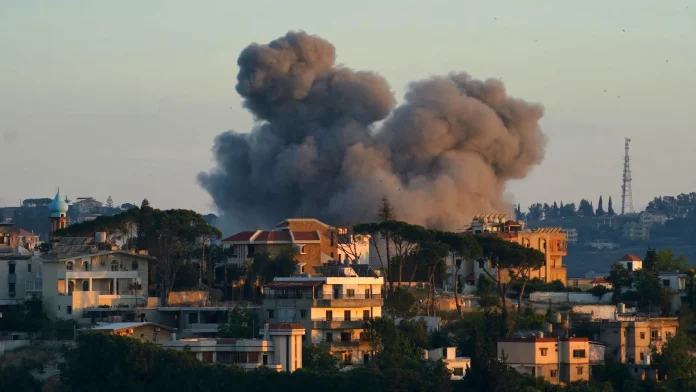
There is a particular way the Bekaa smells after dusk — a mix of grape vine dust, diesel, and something metallic that hangs in the throat. On a recent evening, that scent was interrupted by the sting of cordite and the orange bloom of flares cutting through the valley’s low clouds. Smoke threaded the hills like smoke from a cigarette: slow, stubborn, and impossible to ignore.

On the road into southern Lebanon, a campaign billboard of President Joseph Aoun towers above a traffic jam: “The choice is for Lebanon,” it proclaims in bold letters. Drivers inch past, children peering from the back seats. The billboard is new; the choices feel painfully old.

A president’s gamble — negotiations, rebuke, and the language of treason

President Aoun has been speaking in a tone that mixes statesmanship with exasperation. He told the nation that direct talks with Israel were not a betrayal but an attempt to finally end the state of war between Lebanon and its neighbor — an end he likened to the 1949 armistice. “My goal is to reach an end to the state of war with Israel,” he said, and added a vow that any settlement would not be humiliating.

But his message carried a sharper edge, aimed at those he says dragged Lebanon into this conflict. “Those who took us to war for foreign interests are committing treason,” he declared, implicitly singling out Hezbollah without naming it. In a country where allegiance, identity and survival are braided together, that accusation is both calculated and combustible.

Strikes resume in the Bekaa — an uneasy ceasefire frays

Despite a US-mediated ceasefire that began on 16 April and was extended to mid-May, drones and artillery sounds have threaded across the horizon. The Israeli Defence Forces said they renewed strikes in the Bekaa valley, targeting what they called Hezbollah infrastructure — rocket launchers, weapons depots, and fighters — while warning residents of seven towns to evacuate north and west.

Lebanon’s health ministry reported a grim tally from a single day of renewed strikes: 14 people killed and 37 wounded, including two children and two women. Since the latest round of fighting began on 2 March, the ministry says more than 2,500 people have died in Israeli strikes — a figure that includes 277 women, 177 children and roughly 100 medics. The ministry does not distinguish between combatants and civilians in its counts; Hezbollah has not released an aggregate toll for its fighters, though the group has held a string of mass funerals for fallen members.

Voices from the ground

“My brother’s shop is gone,” said Rami, a shopkeeper from a southern border town, his voice low over the phone. “We took shelter in a school. The children try to laugh but at night you can hear them counting the minutes until morning.”

In a crowded ward at a hospital in Beirut, Nurse Fatima wipes her hands on her scrubs and leans forward. “We are full. We cannot close our doors. People come with shrapnel, with burns, with fear. They need bandages, yes, but they also need a future where the night is not a war siren.”

Cross-border dynamics and the shadow of wider regional conflict

The fighting did not arise in isolation. Analysts point to a complicated web of triggers — including recent strikes against Iranian targets — that have ratcheted up tension across the region. Israeli officials, including Prime Minister Benjamin Netanyahu, have framed their actions as necessary for the security of their soldiers and communities, insisting they act in accordance with understandings brokered with Washington and, ostensibly, with Lebanon.

Hezbollah’s response has been unequivocal: it will not stop its operations against Israeli forces in Lebanon or its raids on northern Israeli towns so long as it says Israel continues to violate the ceasefire. “We will not rely on diplomacy that has proven ineffective,” a Hezbollah statement read, and the group said it would not trust Lebanese authorities it believes have failed to protect the country.

A region awash in proxies

“This is a classic proxy environment,” said Dr. Lina Haddad, a regional security expert based in Beirut. “You have local actors who pursue local agendas, but they also act as nodes in wider regional rivalries. When those external pressures rise, local disputes ignite like tinder.”

Dr. Haddad warns that repeated cycles of flare-up, truce, and flare-up again erode civic trust. “Ceasefires can create breathing room, but only a political solution that accounts for governance, security and economic recovery will prevent the next flare,” she said.

Human cost and displacement — the numbers behind the headlines

The casualty figures are stark. Lebanon’s health ministry’s count of more than 2,500 dead since 2 March includes hundreds of women, children and health workers; Israeli officials report that Hezbollah attacks have killed two civilians in Israel and that 16 Israeli soldiers have died in Lebanon in the same period. The recent Israeli military statement also said one soldier was killed and six wounded in renewed clashes.

Beyond fatalities there is displacement. On the roads north of the Litani River, traffic resembled a human exodus: pickup trucks piled high with mattresses, pots, a goat, sometimes a single remaining olive tree. Families drove through checkpoints they could not fully trust, carrying what little they could salvage of their lives.

  • Ceasefire start: 16 April (US-mediated)
  • Extension: To mid-May
  • Lebanon ministry toll since 2 March: >2,500 dead (includes 277 women, 177 children, ~100 medics)
  • Israeli military toll since 2 March: 16 soldiers killed in Lebanon; Hezbollah-linked attacks killed 2 Israeli civilians

Culture, memory, and the ache of normal life

Walking the souks of Sidon, you can still hear the clink of coffee cups and the rattle of spice jars. A grocer named Amal hands you a sprig of mint with a smile and says, “We sell hope by the kilo.” It’s a small quip, but it is a kind of resistance: a merchant’s refusal to let war be the only narrative here.

Lebanon’s landscapes — cedar-studded mountains, terraced vineyards in Bekaa, the salt breeze of the Mediterranean — are as much part of the story as the headlines. They are living reminders that the stakes are not just territorial but civilizational: livelihoods, heritage, memory.

What now? Questions for the weary and the watchful

Can diplomacy stitch together what years of conflict have frayed? Will a renewed focus on negotiation be enough to counter the centrifugal forces pulling Lebanon apart? And perhaps most urgently: who will stand between communities and renewed ruin?

There are no simple answers. The president’s push for talks argues that the path toward peace must be direct, even if it risks political ruptures at home. Hezbollah’s insistence on resisting what it calls Israeli violations points to a parallel logic: security through deterrence. Each claim has a constituency, and each risks a different kind of damage.

Closing — a plea and a pulse

As night falls again over villages on both sides of the Litani, the human rhythms endure: someone lights a cigarette, a child practices the alphabet by a weak light, a woman boils lentils on a cracked stove. War insists on being extraordinary; everyday life insists, with equal stubbornness, on being ordinary. Which force will win out is not just a question for strategists and statesmen — it is a question for each of us who watches and cares from afar.

What will we do with what we know? Will we let numbers become mere data, or will we let them be a summons to attention, advocacy, and—if possible—action? The Bekaa waits for an answer.

Israel extends detention of flotilla activists to weekend

Israeli authorities prolong detention of flotilla activists into the weekend

0
Two Activists, One Cell: A Small Ashkelon Courtroom and a Big, Complicated Debate In a courthouse that smells faintly of coffee and disinfectant, two visitors...
WHO confirms two cases of hantavirus on cruise ship

WHO Investigates Possible Human-to-Human Spread Aboard Cruise Ship

0
Stranded at Sea: A Cruise Ship, a Silent Virus, and the People Waiting to Go Home The MV Hondius sits like a slow-moving question mark...
Man shot after firing on agents near White House

Suspect shot after opening fire on agents near the White House

0
Gunfire, a Sprint, and an Unnerving Pause at the Gates of Power Washington hums with a thousand small certainties: the rhythm of the Metro, the...
Stars shine at Met Gala, fashion's biggest night

Celebrities dazzle at the Met Gala, fashion’s most glamorous night

0
Midnight at the Met: When Fashion Became a Gallery and the Red Carpet Felt Like a Canvas On a humid Manhattan night, the steps of...
WHO confirms two cases of hantavirus on cruise ship

WHO Reports Two Hantavirus Infections Detected Aboard Cruise Ship

0
Anchored Between Seas and Fear: Life Aboard the MV Hondius During a Hantavirus Scare Picture a ship the size of a small village, its hulking...